

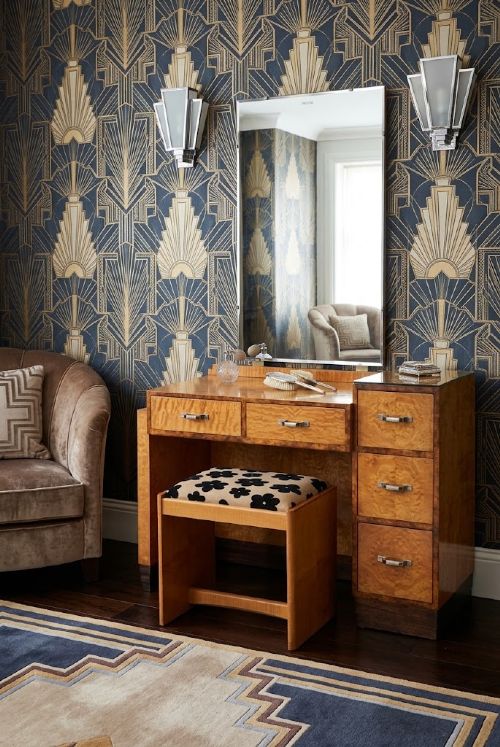
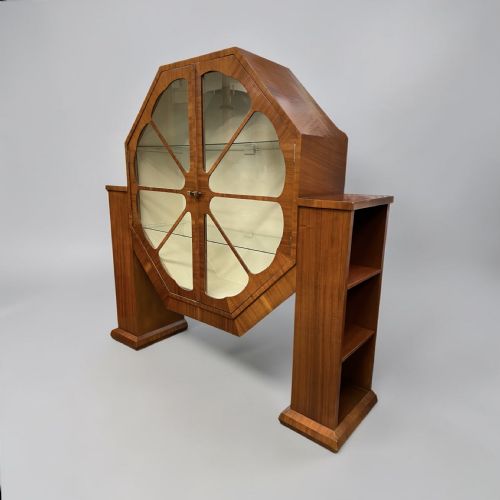
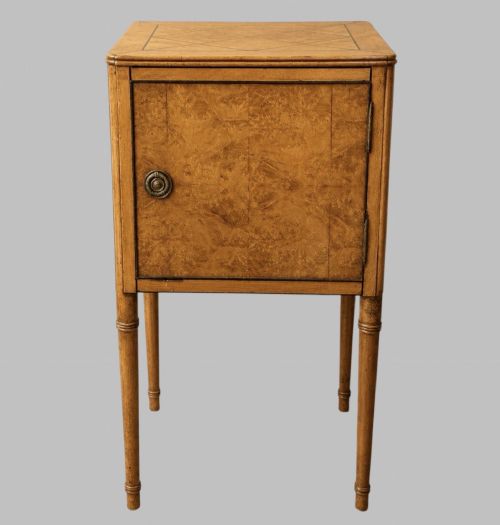
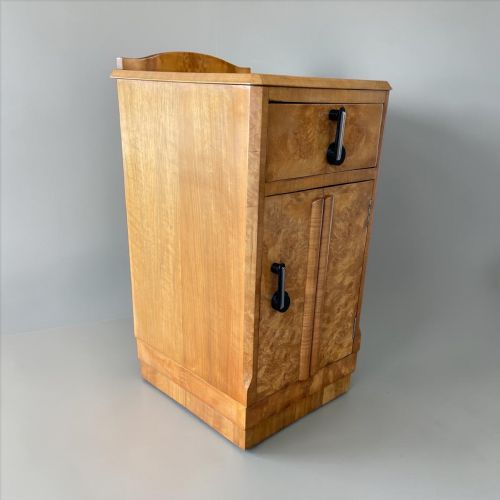



Art Deco Pedestal Cabinet
An art deco pedestal cabinet brings striking geometric presence and clever bedside storage to a room, valued for its bold veneers and compact upright proportions.
Art Deco Pedestal Cabinet
An art deco pedestal cabinet serves primarily as a bedside table, nightstand or compact cupboard, though related forms include display cabinets and sideboards. These pieces date predominantly from the nineteen thirties and nineteen twenties, anchored firmly in the height of the style.
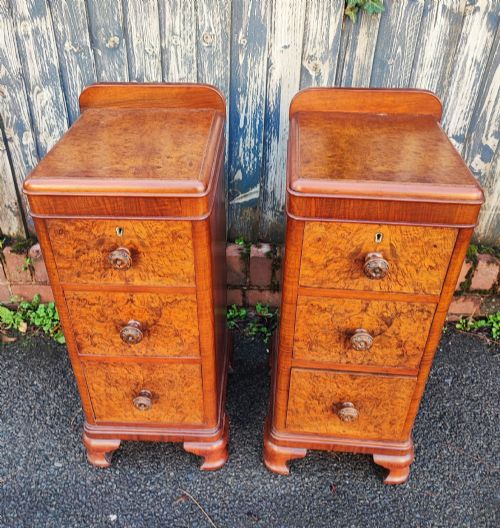
Bedside cabinets and pot cupboards form the bulk of what appears here, often found as matched pairs alongside single display pieces and side cabinets. The upright pedestal format makes efficient use of floor space while offering enclosed storage behind a single door or drawers.
How they were made
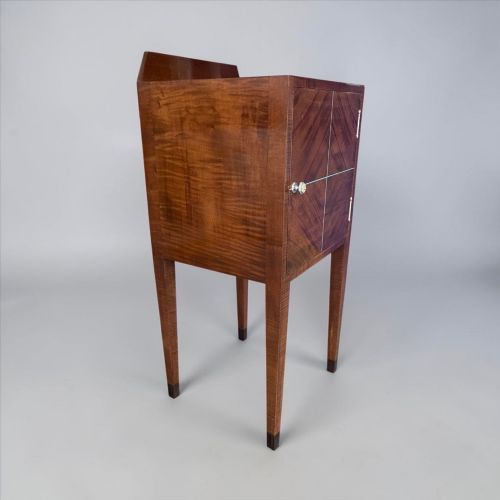
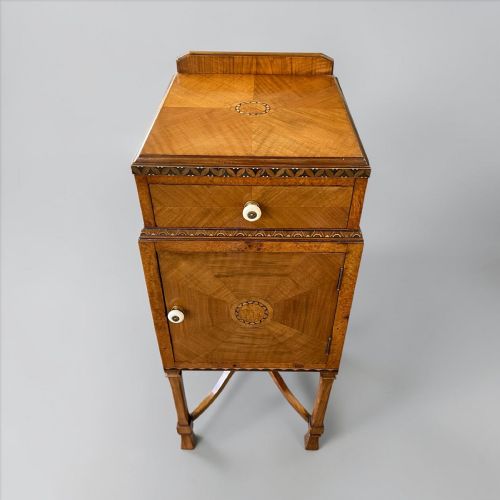
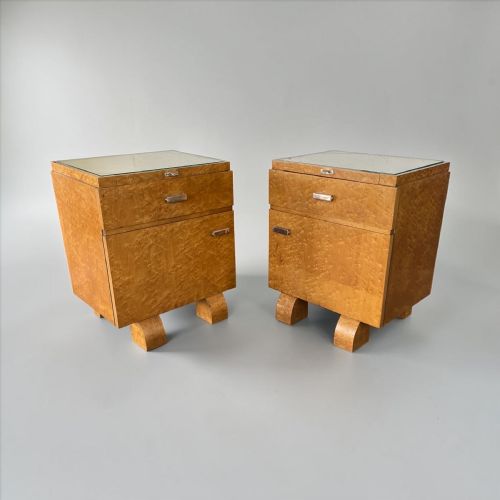
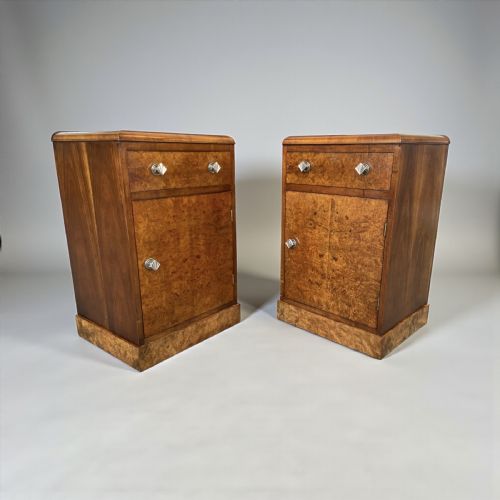
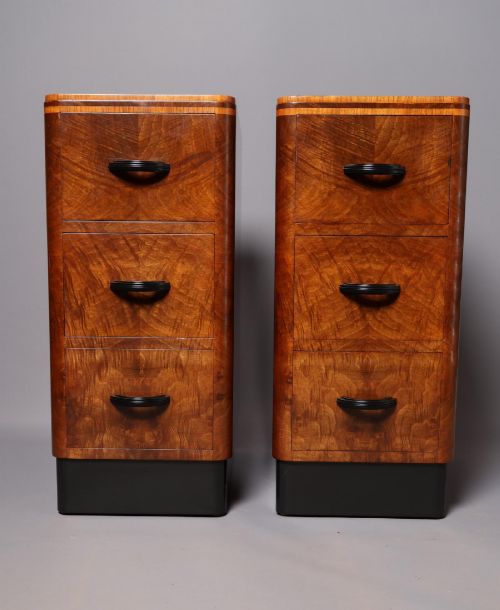
Cabinetmakers relied on figured hardwoods like walnut, burr walnut, birds eye maple and satinwood, sliced thin to create dramatic symmetrical grain patterns across doors and drawer fronts. These timber surfaces were frequently contrasted with glass tops, metal trim, chrome or brass hardware and occasional bakelite details.
Construction techniques combined traditional carcase building with curved wooden bends and applied veneers, creating the characteristic smooth waterfall edges and stepped profiles associated with the period.
Art Deco Pedestal Cabinet Retail Price Guide 2026
Typical asking prices for art deco pedestal cabinet among the pieces listed under this phrase on Sellingantiques today, from the lower quarter to the upper quarter. They describe what is for sale here now, not the wider market.
Materials across these listings span walnut, burr walnut, glass, brass, metal, birds eye maple, chrome, and bakelite.
What varies in quality
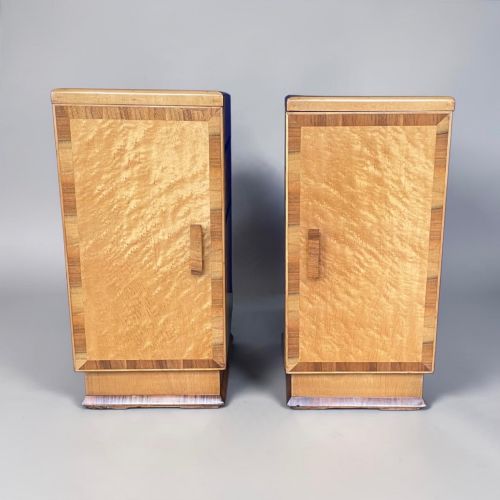
The visual strength of an art deco pedestal cabinet rests entirely on the selection and matching of its wood veneers. Book-matched burr walnut or blonde birds eye maple displays deliberate symmetry that elevates a piece far above plain timber carcases.
Subtle details separate standard production from superior workshop output, including integrated plinth designs, original hardware such as chrome handles, and fitted interior shelving rather than simple void space.
Walter Carter Harrods·Epstein·Maurice Adams·Harry and Lou Epstein
The Art Deco Pedestal Cabinet Glossary
- Burr walnut
- A highly figured wood grain obtained from the knot growths of walnut trees, prized for its swirling, mottled patterns. It was frequently used on door fronts to create striking decorative panels.
- Birds eye maple
- A figured maple timber showing small, circular eye formations across the grain. This pale wood provides a distinct blonde contrast to darker walnut framing.
- Book-matching
- A veneer technique where adjacent slices of wood are opened out like pages of a book to mirror each other. This creates symmetrical patterns across cabinet doors.
- Pot cupboard
- A traditional term for a small bedside cabinet designed originally to house a chamber pot. In this period, the form evolved into streamlined bedside storage.
Art Deco Pedestal Cabinet: Frequently Asked Questions
Are these cabinets sold individually or as pairs?
Many listings offer matched pairs specifically for bedside placement, though single cabinets and display pieces also appear frequently.
Buyers seeking symmetry should check titles carefully for references to pairs before purchasing.
What wood types should I expect to find?
The selection relies heavily on walnut, burr walnut, and birds eye maple, often paired with contrasting satinwood or oak elements.
Surfaces are frequently enhanced with glass tops, chrome handles, or brass details appropriate to the period.
How do I date an art deco cabinet?
Dating relies primarily on construction methods, material combinations, and stylistic traits originating from the nineteen twenties and nineteen thirties.
Most pieces documented here sit firmly within the nineteen thirties, reflecting standard production eras of the style.
How do I care for polished veneer surfaces?
Polished wood veneers require protection from direct sunlight, excess moisture, and extreme temperature shifts to prevent warping or fading.
Regular dusting with a dry cloth helps preserve the original shine of walnut and maple finishes.