




Geometric Glazing Cabinet
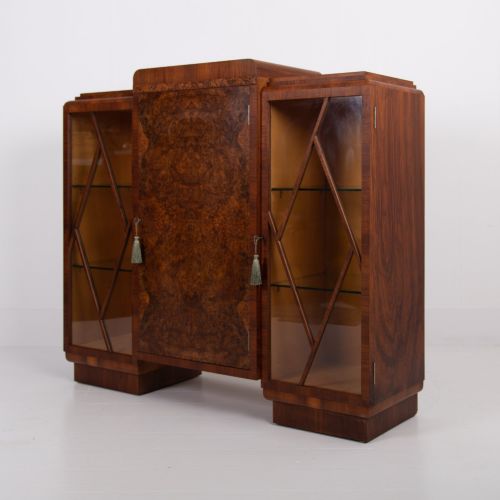
A geometric glazing cabinet brings architectural order to a room, offering glazed panels that frame books or display pieces with striking linear patterns.
Geometric Glazing Cabinet
A geometric glazing cabinet encompasses a variety of storage and display furniture, notably display cabinets, bookcases, corner cabinets, and bureau bookcases. These pieces serve to showcase collections or house books while introducing strong structural lines to an interior.
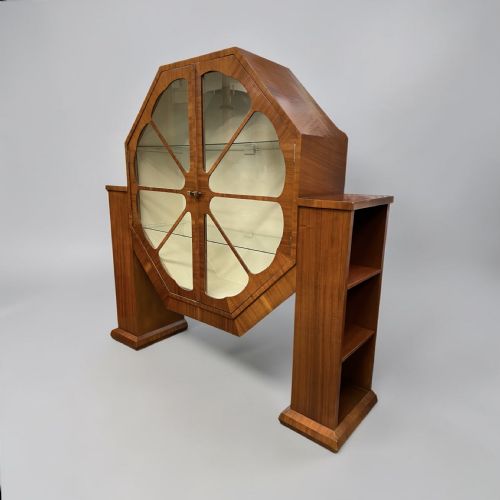
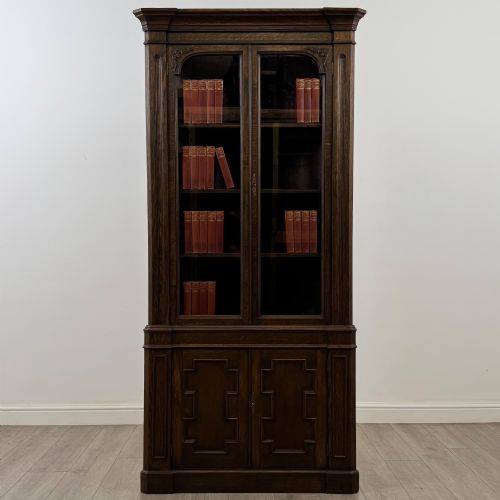
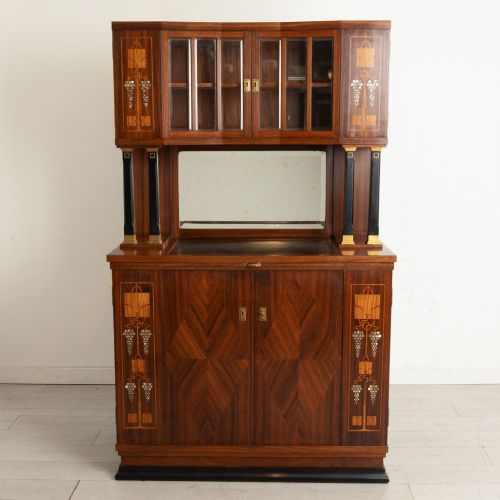
The selections available here span several distinct periods, reaching from the nineteenth century through the Edwardian era into the interwar years. Pieces from the 1930s predominate, bringing characteristic Art Deco and Viennese Secessionist forms alongside earlier revival styles.
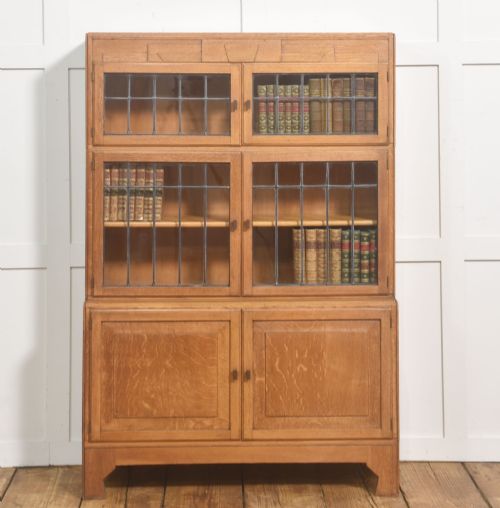
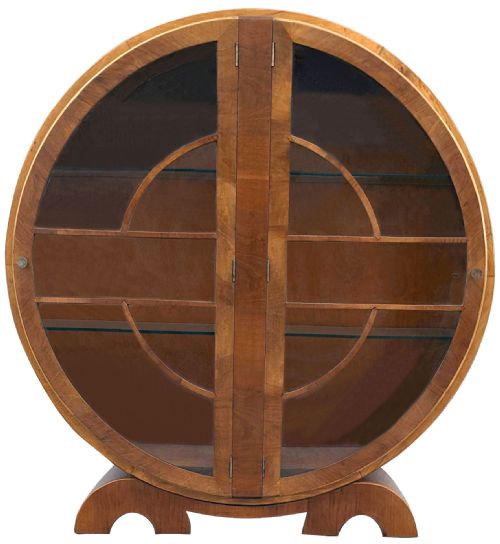
Makers and workshops utilised specific timber forms to complement the patterned glass panels. Buyers frequently encounter upright display cabinets and spacious bookcases executed in walnut or oak, alongside more specialised circular and hexagonal variations.
Materials and construction methods
Cabinet makers relied primarily on solid timbers and veneers, working extensively in walnut, oak, and rosewood. These woods provided a sturdy carcase capable of supporting heavy glass doors and internal shelving.
Glazing techniques defined the aesthetic of these cabinets, utilising lead to secure individual glass panes into complex geometric patterns. Brass fittings and occasional mother-of-pearl details added contrasting metallic and iridescent touches to the woodwork.
Listings feature walnut, oak, and rosewood combined with lead and brass to construct geometric glazing cabinets across the nineteenth and twentieth centuries.
Distinguishing quality across the range
Quality in these cabinets rests upon the precision of the joinery and the complexity of the timber selection. Figured walnut veneers and carefully matched grain patterns distinguish superior examples from simpler utilitarian furniture.
The execution of the leaded glass work marks a clear division in grade. Clean, sharply soldered geometric leads and robust brass hardware indicate a higher standard of manufacture than standard commercial production.
August Ungethüm·Rurka
The Geometric Glazing Cabinet Glossary
- Glazing
- The process of fitting glass into windows or cabinet doors. In these pieces, it frequently incorporates lead cames to form geometric patterns.
- Ebonised wood
- Timber treated to resemble ebony through a dark staining or finishing process. This technique creates a stark contrast against lighter glass and brass elements.
- Bureau bookcase
- A combination of a sloping desk compartment and upper shelving enclosed by doors. These units provide both a writing surface and organised storage.
- Viennese Secessionist
- A stylistic movement originating in Austria focusing on clean lines and geometric forms. Pieces from this tradition emphasise structural clarity over excessive ornamentation.
- Came
- A slender strip of cast lead with a grooved channel used to hold panes of glass together. Cames form the rigid gridwork behind the geometric designs.
Geometric Glazing Cabinet: Frequently Asked Questions
What periods do these cabinets come from?
The listings span the nineteenth century, the Edwardian period, and the 1930s. This broad timeline covers everything from William IV rosewood pieces to interwar Art Deco designs.
Each period brings distinct stylistic traits, allowing buyers to match a cabinet to an interior scheme ranging from nineteenth-century revival to twentieth-century modernism.
How were these cabinets used originally?
These cabinets served primarily to store libraries or display valued objects within a home. Bureau variants offered a dual function as a writing desk with concealed compartments.
Display cabinets and corner units placed prized collections behind protective glass while contributing architectural structure to a reception room or study.
How do I identify Art Deco examples?
Art Deco pieces from the 1930s often feature striking walnut veneers, symmetrical geometry, and unconventional shapes such as circular or hexagonal carcases. They prioritize clean lines and streamlined silhouettes.
These designs frequently incorporate leaded glass patterns that reflect the machine-age aesthetics popular between the wars.
What timbers should I expect to find?
Oak and walnut dominate the construction of these cabinets, appearing across various styles from Jacobean revivals to interwar modernism. Rosewood and ebonised wood also appear in specific nineteenth-century pieces.
Makers paired these durable hardwoods with brass hardware, lead came, and occasional mother-of-pearl inlay to complete the decorative scheme.