




Round Display Cabinet
A round display cabinet gives your room a striking focal point while keeping curiosities and fine china safely enclosed behind curved glass.
Round Display Cabinet
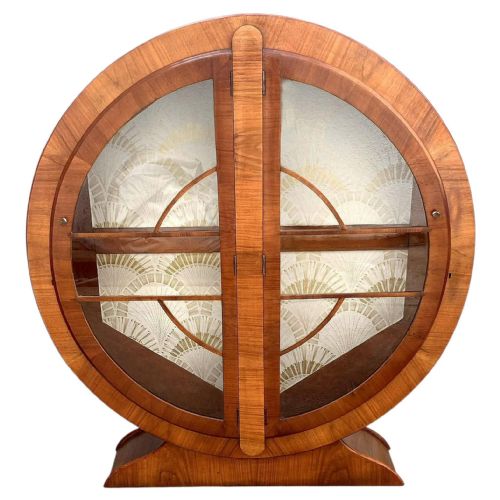
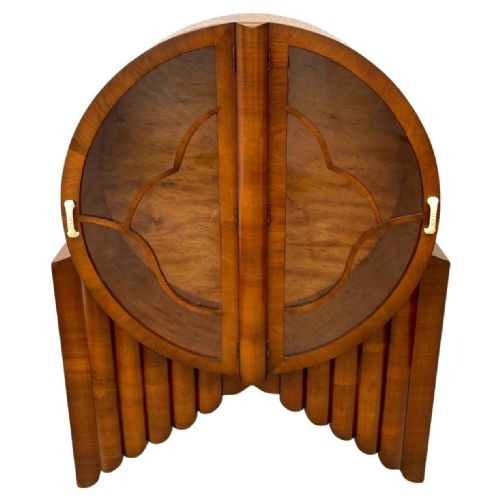
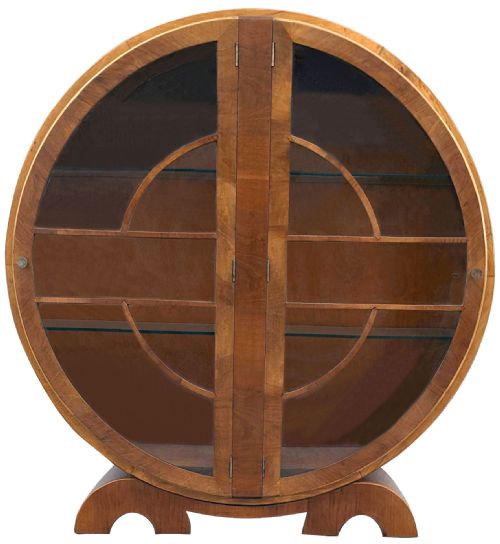
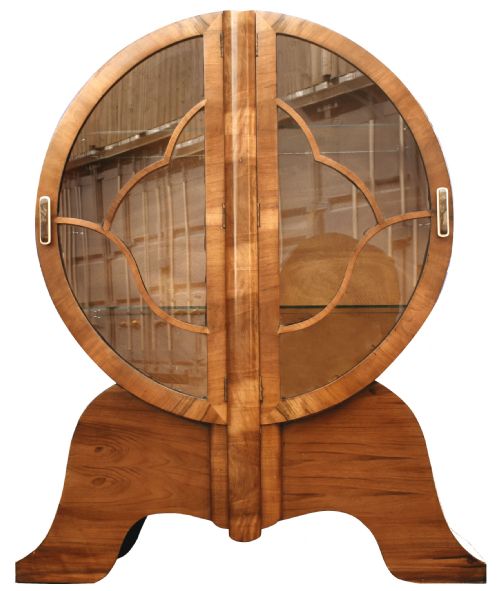
When you search for a round display cabinet, you meet tall circular freestanding vitrines, smaller bijouterie tables, and table-top domes designed to showcase precious items from all angles. The selection spans the Victorian era up to the 1930s, with the majority taking the form of English and continental Art Deco circular cabinets.
Forms vary from stepped clove-shaped silhouettes and rocket cabinets to half-round variations and low glazed tables. These pieces serve to present collections cleanly within domestic rooms, utilising curved glass panes and fitted shelving.
How they were made
Cabinet makers utilised rich timbers including walnut, figured walnut, kingwood, mahogany, and maple for the structural frames, often combining multiple veneers to create patterned surfaces. Metal mounts, brass details, and leaded came work secure the curved and flat glass panes within the wooden carcasses.
Interior surfaces frequently feature fabric linings to cushion displayed items, while glass doors and panels are fitted carefully into circular or curved rebates to maintain airtight presentation spaces.
The listings show walnut as the dominant timber for 1930s pieces, paired with bent glass and fabric linings.
What varies in quality
The distinction between ordinary and exceptional pieces lies in the choice of timber veneers, the precision of the curved glazing, and the complexity of the cabinet silhouette. Elaborate geometric figures in walnut or intricate marquetry inlay elevate a piece above standard veneered carcases.
Hardware choice, such as substantial cast brass fittings and well-integrated leaded glass details, marks the difference between standard workshop production and finer bespoke commissions.
Lennards
The Round Display Cabinet Glossary
- Vitrine
- A glass-fronted cabinet or display case designed specifically for showing porcelain, curiosities, or fine objects. These pieces rely heavily on glass panels to maximise visibility from multiple angles.
- Bijouterie table
- A low glazed display table with a hinged lid, traditionally used for holding small valuables and jewellery. They often feature fabric-lined interiors to protect delicate items.
- Display dome
- A blown glass cover mounted on a base, used to protect and exhibit taxidermy, models, or delicate ornaments. They provide an unhindered circular view of a single object.
- Leaded glass
- Small panes of glass joined together by strips of lead, known as cames, forming geometric patterns. This technique appears frequently in Art Deco cabinet doors.
- Kingwood
- A dense, heavily figured exotic timber utilised in high-end cabinet making for decorative banding and veneers. It brings rich dark tones and striking grain patterns to nineteenth-century furniture.
Round Display Cabinet: Frequently Asked Questions
What fits inside a round display cabinet?
These cabinets suit collections of small curiosities, glassware, ceramics, and ornaments that benefit from being viewed in the round.
The curved internal shelves require careful arrangement to balance items without overcrowding the glazed space.
How do I tell Victorian from Art Deco cabinets?
Victorian examples tend to use mahogany or kingwood with ornate brass mounts and fabric-lined bijouterie wells, dating from the nineteenth century.
Art Deco pieces from the 1930s favour figured walnut, geometric silhouettes, and clean, streamlined circular frames.
Are round display cabinets fragile?
The extensive use of curved glass panes means these cabinets require steady placement away from heavy traffic areas.
Opening heavy doors fitted with leaded or bent glass needs gentle handling to protect the original frames.
Where should I place a round cabinet?
Freestanding circular cabinets work best in corners or as freestanding room dividers where light can pass through the surrounding glass.
Low bijouterie tables suit central positions in a room as flat surface displays.