



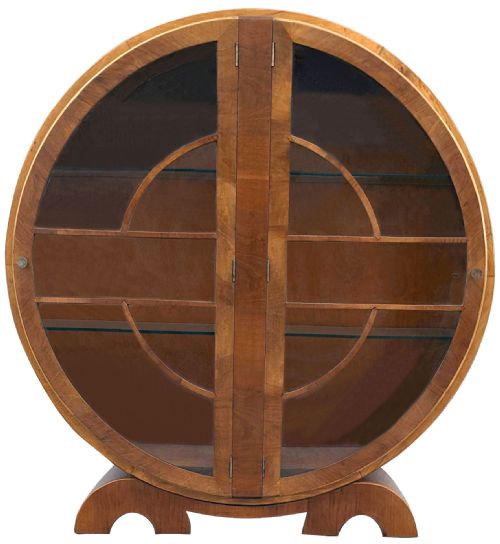

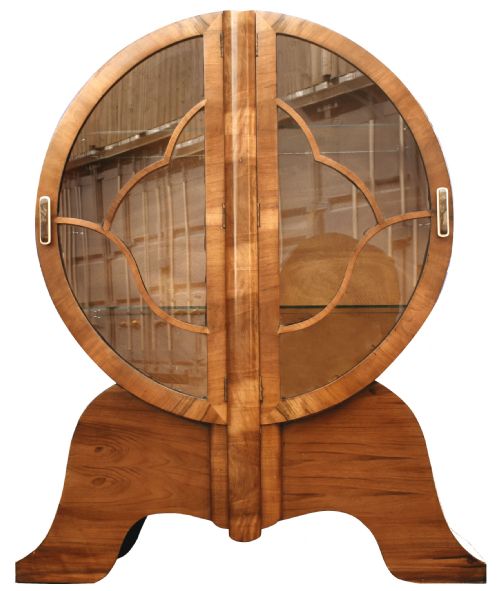

Circular Walnut Bookcase
A circular walnut bookcase offers a practical centrepiece for books and display, combining rich timber grain with curved shelving.
Circular Walnut Bookcase
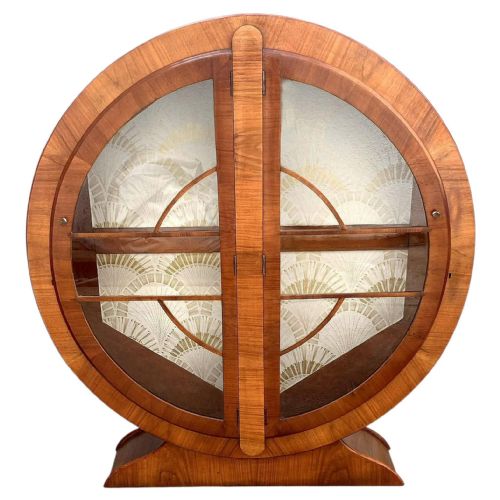
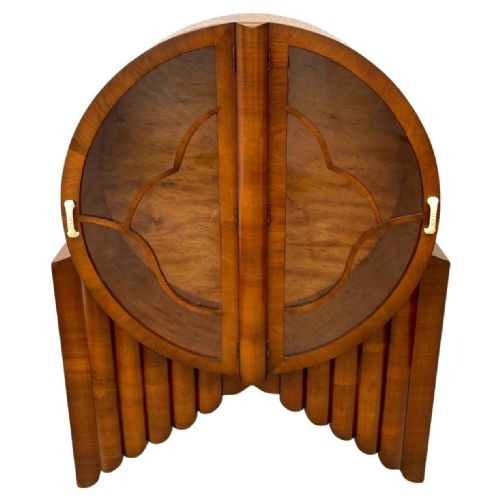
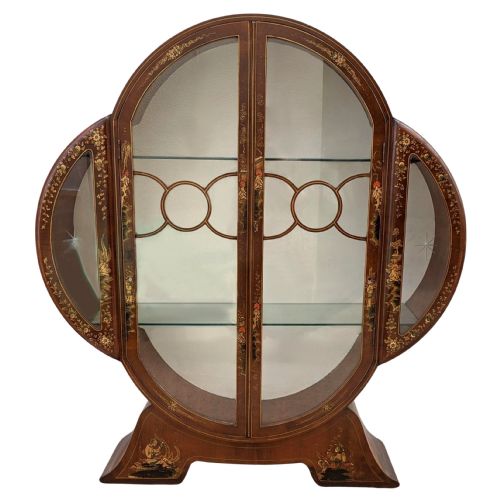
The most common examples you meet on this page date from around 1930 and follow the Art Deco style. These pieces often incorporate glass doors, leaded glass, or metal and brass details alongside the curved timber frames.
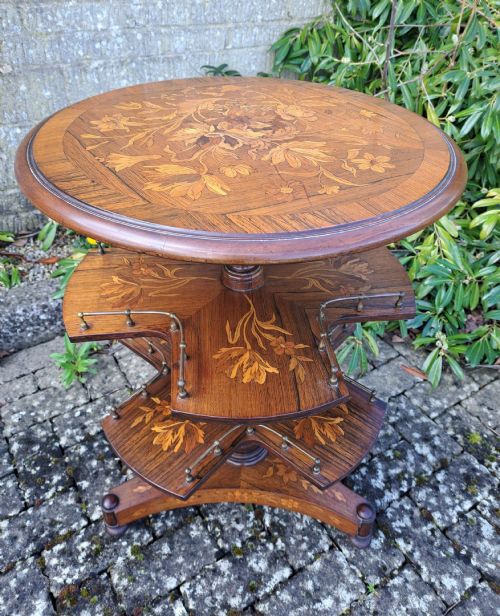
Earlier variants from the Georgian and Victorian periods tend toward library tables and revolving designs. These sometimes feature fruitwood inlay, Dutch floral marquetry, and parcel gilt highlights.
How they were made
Makers utilised solid walnut and decorative burr walnut veneers to achieve the curved bodies characteristic of these cabinets and tables. Timber selection was vital for creating smooth, continuous lines around the circular forms.
Glazing techniques varied, employing plain glass, leaded glass, and metal frameworks to enclose the display sections. Inlay work, including fruitwood and Dutch floral marquetry, added ornamental detail to surfaces on the earlier library tables.
Hardware such as brass and lead components provided structural and decorative accents. Gilt wood and parcel gilt finishes also appeared on selected Victorian and later library tables.
Listings on this page span the Georgian, Victorian, and 1930 periods, uniting display cabinets and revolving library tables in walnut and burr walnut.
What varies in quality
The choice of timber veneer dictates much of the visual appeal, with burr walnut offering complex grain patterns that set apart superior items. Plain walnut surfaces rely heavily on precise construction and proportion.
The intricacy of additional ornamentation marks a difference between standard production and finer execution. Marquetry, fruitwood inlay, and parcel gilt details require skilled handwork that elevates the piece.
Joinery and glazing integrity define the structural standard of the circular frames. Cabinets with tightly fitted leaded glass and smooth-operating revolving mechanisms demonstrate greater workshop ability.
The Circular Walnut Bookcase Glossary
- Burr walnut
- A figured timber obtained from tree growths, highly prized for its swirling grain patterns. It provides a decorative surface on cabinet doors and tabletops.
- Vitrine
- A glass-fronted display cabinet designed to show books or ornamental objects. These pieces often feature curved glass to match circular footprints.
- Marquetry
- Inlaid wood designs applied to furniture surfaces to form pictorial patterns. Dutch floral examples appear on certain revolving library tables.
- Parcel gilt
- A finishing technique where portions of the furniture receive a thin layer of gold leaf. This highlights specific carved details or mouldings.
- Revolving bookcase
- A rotating table or shelving unit designed for easy access to books from any angle. They are constructed in timber with central pivot mechanisms.
Circular Walnut Bookcase: Frequently Asked Questions
What periods do these pieces come from?
The selection includes items from the Georgian and Victorian eras alongside a substantial group from around 1930. Art Deco designs dominate the mid-twentieth-century examples.
Earlier pieces comprise revolving library tables with marquetry, while the later items focus primarily on display cabinets and vitrines.
How do revolving bookcases function?
Revolving library tables sit on central pivot mechanisms that allow the upper tiers to turn freely. This enables users to reach multiple shelves of books from a single seated position.
The stable base supports the weight of the timber and volumes while ensuring smooth rotation.
What materials are used in construction?
Walnut and burr walnut serve as the primary timbers across the tables and cabinets. Secondary elements incorporate fruitwood inlay, maple, and gilt wood.
Glazing methods feature plain glass, leaded glass panels, and brass or metal framing components.
How do I identify an Art Deco piece?
Art Deco items from the 1930s often emphasise streamlined circular geometry and uncluttered walnut surfaces. They frequently take the form of display cabinets, rocket cabinets, or china cabinets.
Ornamentation is typically minimal, relying on the natural grain of the timber rather than heavy carving.
Where were these pieces used historically?
Library tables and revolving bookcases found placement in studies, libraries, and drawing rooms for accessible book storage. Display cabinets and vitrines served to house fine volumes and decorative objects.
Their circular footprints allowed them to stand efficiently in room corners or central spaces.