
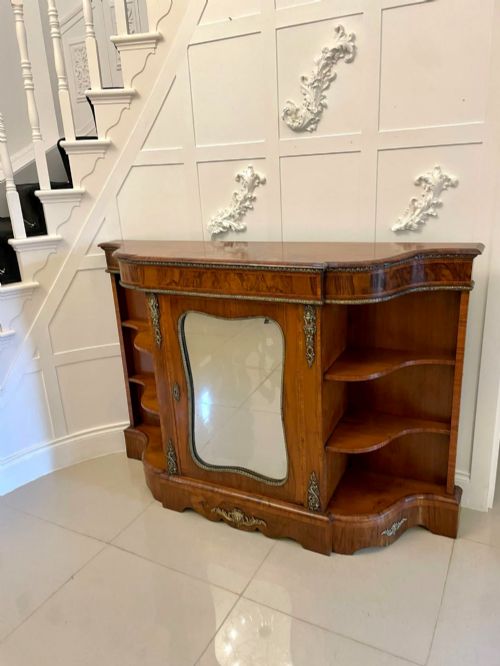
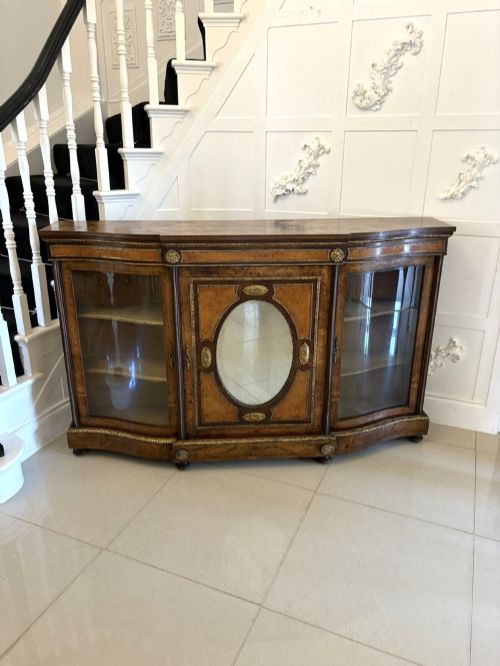
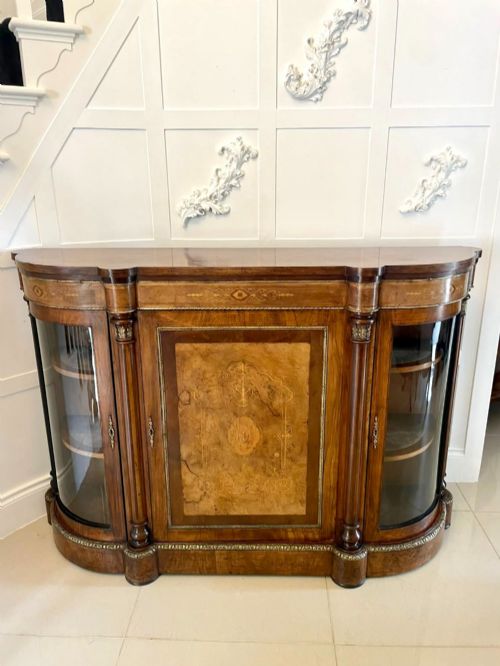
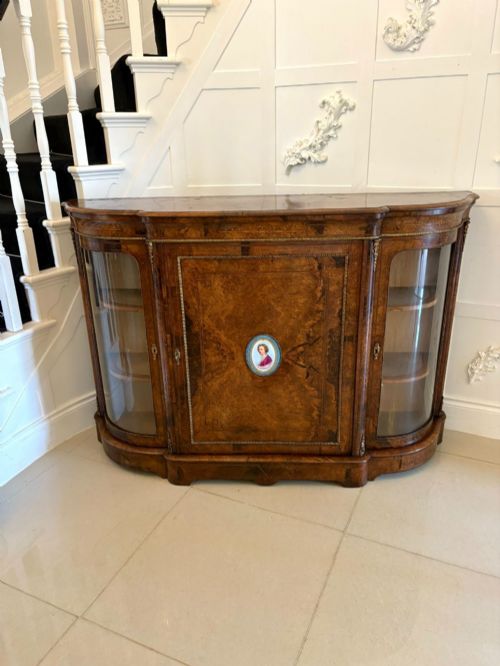

Curved Walnut Display Cabinet
A curved walnut display cabinet brings warmth and glass-fronted elegance to a room, storing treasured objects with style.

Curved Walnut Display Cabinet
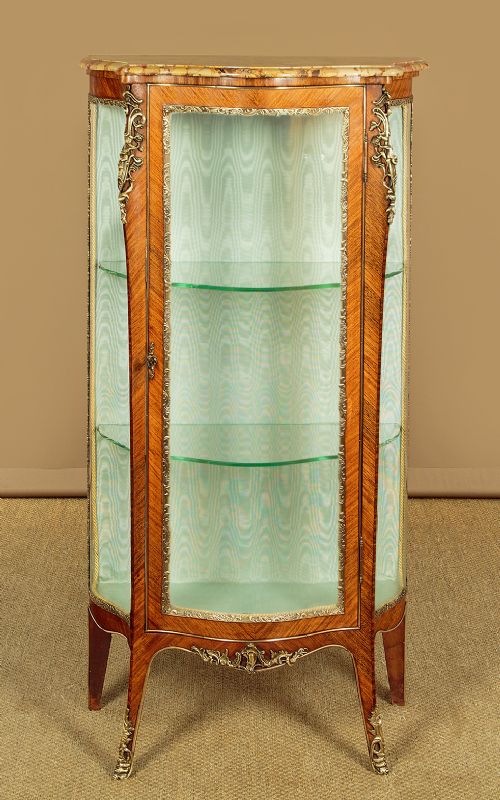
When searching for a curved walnut display cabinet, buyers encounter a distinct range of antique and vintage furniture designed to exhibit ceramics, glassware, and collections. The selection spans robust Victorian credenzas and side cabinets alongside streamlined Art Deco vitrines and oval display cabinets.
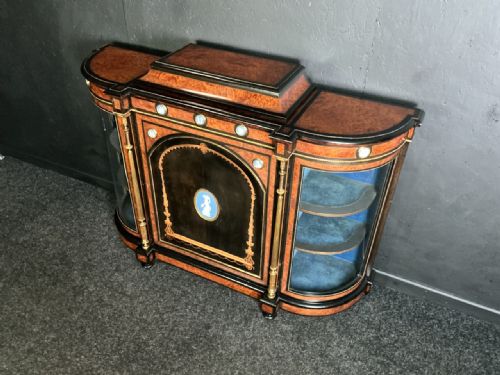
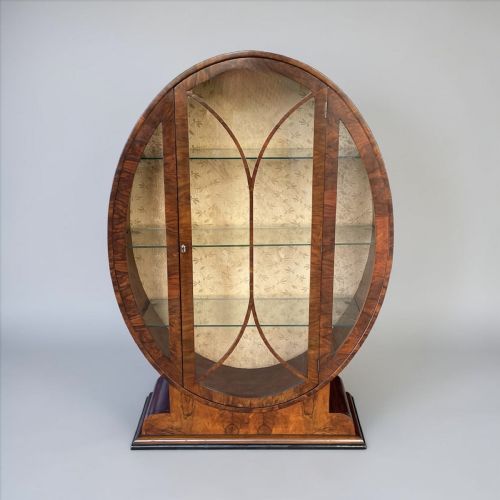
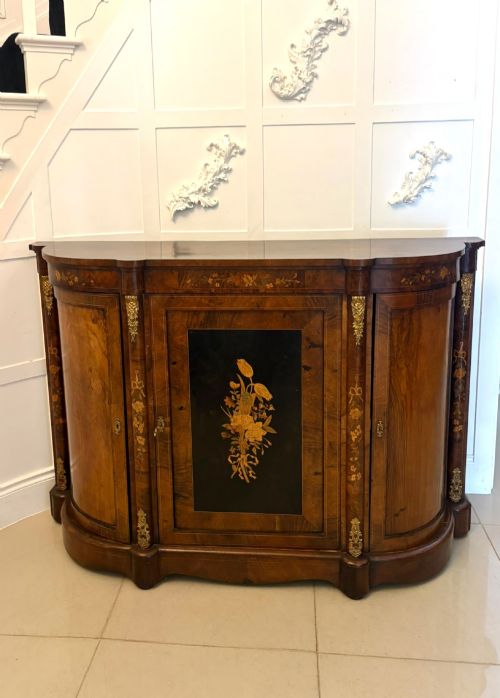
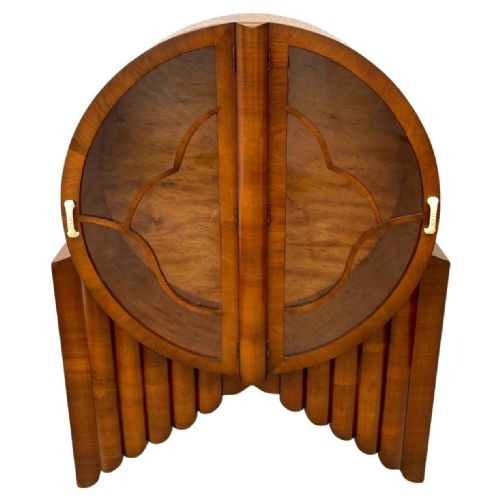
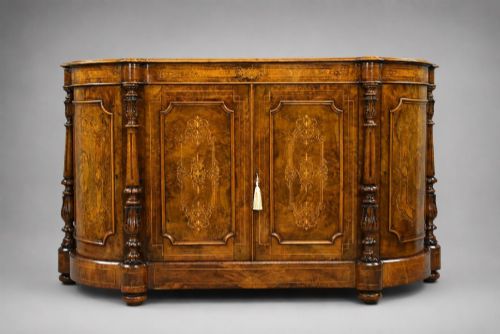
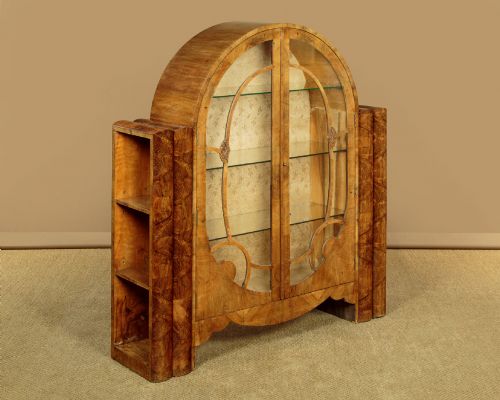
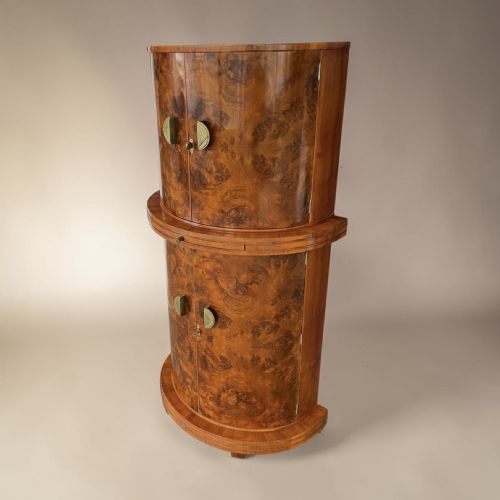
Victorian examples frequently incorporate burr walnut veneers, floral marquetry, and ormolu mounts, often taking the form of credenzas with glass doors. Art Deco pieces introduce geometric shapes, including clove-shaped, circular, and rocket-style cabinets in figured walnut.
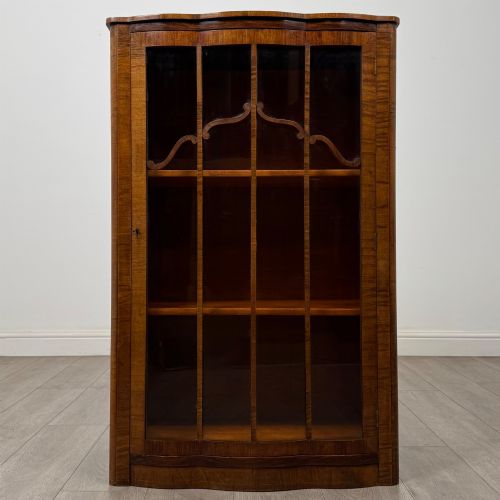
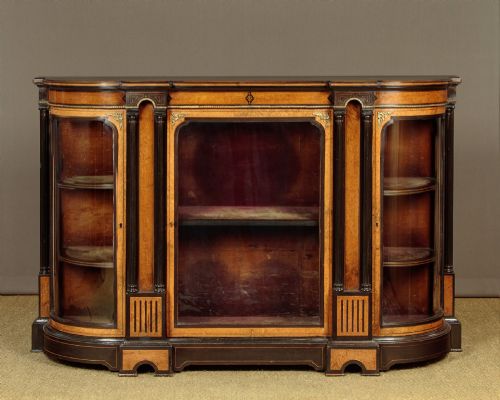
Origins stretch from English workshops to French makers, encompassing Edwardian variations and mid-nineteenth-century sideboards. Buyers will find both freestanding corner cabinets and large serpentine credenzas that utilise curved glass to soften architectural corners.
How they were made
Cabinet makers utilised walnut and burr walnut veneers applied to solid timber carcases, creating rich grain patterns across curved surfaces. Marquetry inlay utilising boxwood added botanical and geometric detail into the wood surface.
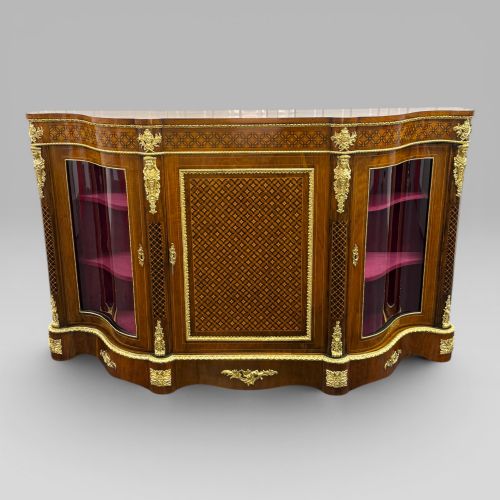
Mounts in cast ormolu accented corners and borders, whilst porcelain plaques and Sevres panels frequently decorated Victorian credenzas. Curved glass doors required specialist bending techniques to fit the sweeping contours of vitrines and display cabinets.
The available selection spans Victorian, Edwardian, and Art Deco periods, alongside Louis XV Revival and Aesthetic Movement styles.
What varies in quality
Quality reveals itself in the choice of veneers and the precision of the marquetry inlay. Figured burr walnut with deep, natural figuring sits above plain timber surfaces.
The integration of cast ormolu mounts and porcelain plaques elevates certain pieces, showing heavier investment in decorative hardware. The complexity of the cabinet shape, such as serpentine curves and fitted curved glass, demands advanced carpentry skills.
Maison Gagneau·Maurice Adams
The Curved Walnut Display Cabinet Glossary
- Credenza
- A low cabinet, typically enclosed by glass or wooden doors and often featuring curved side sections. This form frequently includes ormolu mounts and marquetry inlay.
- Burr Walnut
- A timber derived from walnut tree growths, prized for its swirling, highly figured grain patterns. Cabinet makers utilised this veneer on prominent exterior surfaces.
- Ormolu
- Gilded bronze used for decorative mounts and edgings on furniture. Makers applied these metallic ornaments to highlight corners and door frames.
- Marquetry
- Decorative woodwork where pieces of veneer are fitted into a ground material to form patterns. Floral motifs commonly decorate nineteenth-century examples.
- Vitrine
- A glass-fronted cabinet designed for displaying porcelain and decorative objects. These pieces rely on clear visibility through curved or flat glass panels.
Curved Walnut Display Cabinet: Frequently Asked Questions
What is a curved walnut display cabinet?
A curved walnut display cabinet is a storage and exhibition piece built with sweeping glass panels and walnut timbers. These items serve to hold and present decorative items within a domestic interior.
Designs range from Victorian burr walnut credenzas with marquetry to Art Deco circular and rocket-shaped vitrines. Each era brings distinct silhouettes, from serpentine fronts to smooth geometric curves.
How do I date a walnut cabinet?
Dating relies on examining the timber veneers, decorative hardware, and overarching style. Victorian pieces frequently feature floral marquetry, ormolu mounts, and porcelain plaques.
Art Deco examples shift toward unadorned figured walnut with streamlined, curved silhouettes. Edwardian and mid-nineteenth-century variations show distinct construction methods and inlay techniques particular to their decades of production.
Where should I place a credenza?
Credenzas suit principal reception rooms, dining spaces, or hallways where glass-fronted display is desirable. Their low profiles allow surfaces to hold lamps or decorative objects above.
Corner cabinets fit neatly into architectural angles to utilise unused space. Placing them away from direct sunlight protects the walnut timber and delicate interior fabrics.
What is burr walnut veneer?
Burr walnut veneer is a thin slice of wood cut from a tree burl, displaying intricate, swirling grain patterns. Cabinet makers prized this material for its decorative impact on primary surfaces.
Applied over stable secondary timbers, burr walnut creates rich visual depth across curved doors and panels. It appears frequently on nineteenth-century credenzas and side cabinets.