

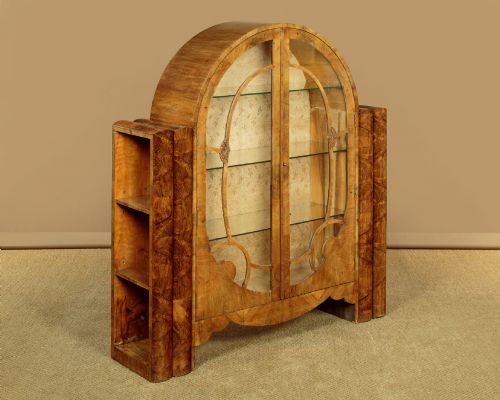


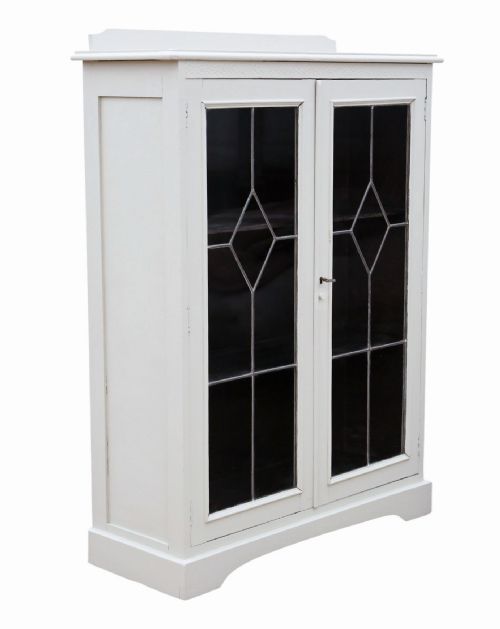


Art Deco China Cupboard
An art deco china cupboard brings geometric elegance and sophisticated display space to a room, making it a favourite for collectors of twentieth-century design.

Art Deco China Cupboard
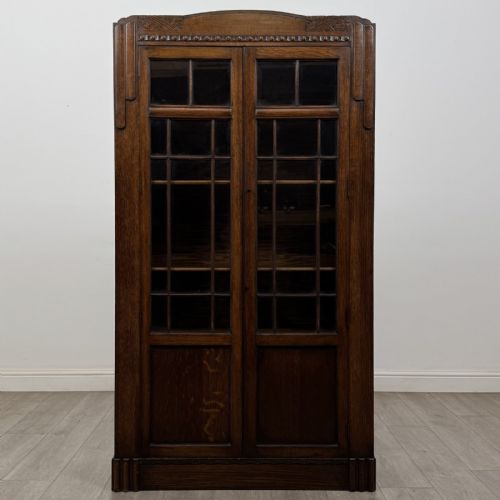
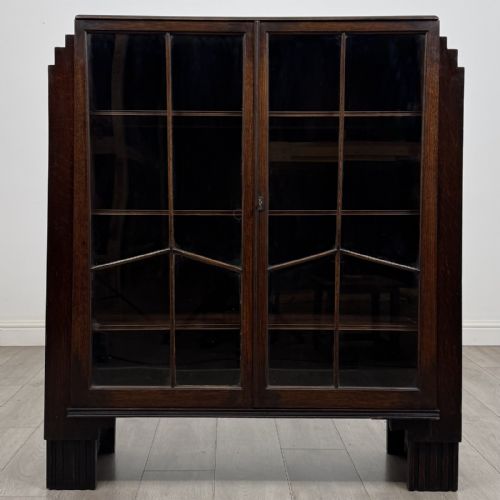
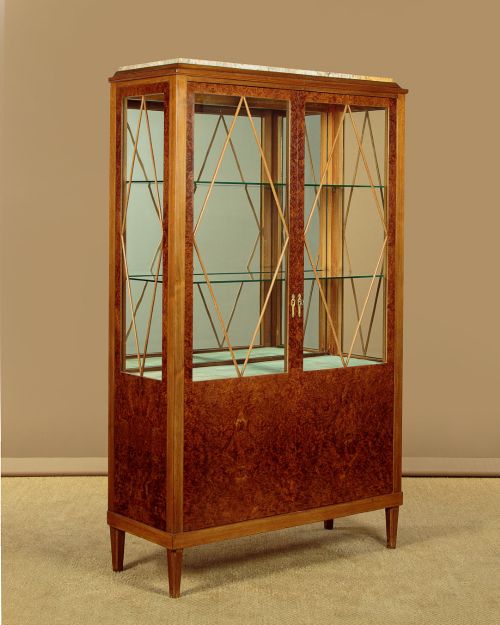
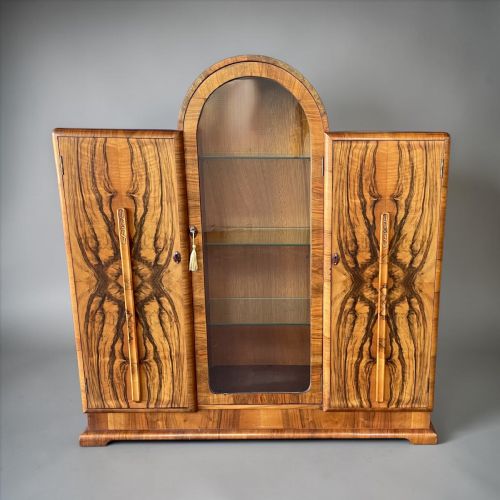
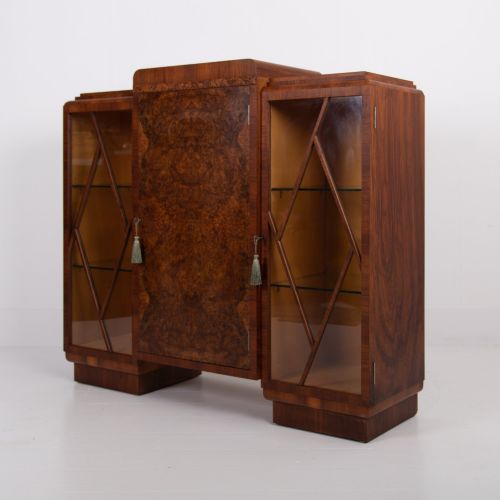
An art deco china cupboard primarily takes the form of a display cabinet, bookcase, or corner cabinet designed to showcase fine porcelain and glassware behind glazed doors. These pieces date predominantly from the nineteen-thirties, reflecting the architectural ambition and streamlined aesthetics of the period.
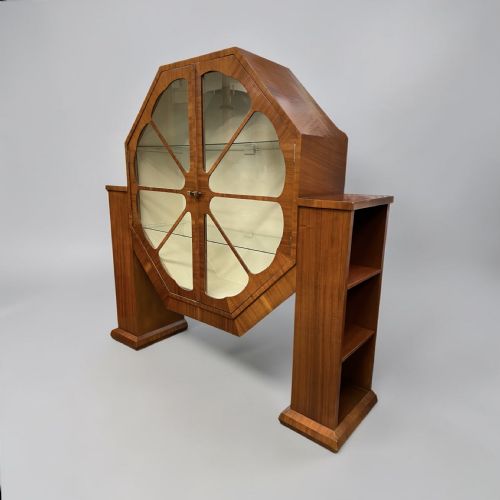
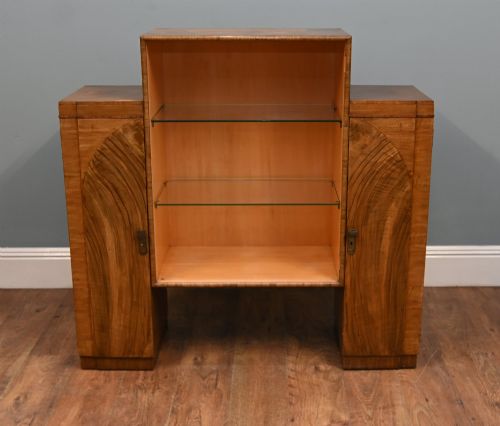
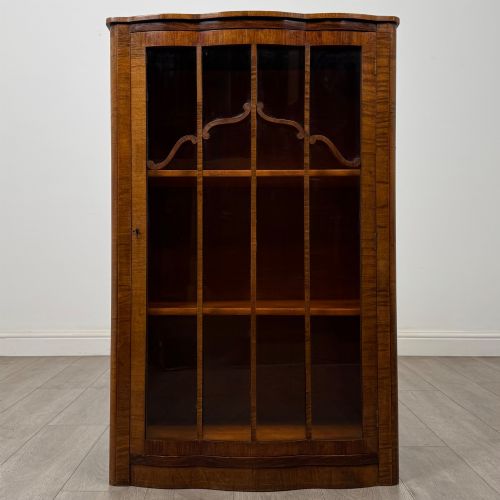
Buyers will encounter various configurations on this page, ranging from standard rectangular display cabinets to striking circular, oval, hexagonal, and octagonal variants. Alongside walnut and burr walnut veneers, examples appear in oak, maple, and mahogany, sometimes echoing earlier revival styles like Queen Anne alongside pure nineteen-twenties art deco.
Makers such as Epstein and Rurka represent the height of cabinet-making ambition during this era, producing fitted and glazed cabinets that double as architectural centrepieces. Whether configured as tall bookcases with glazed sections or dedicated china cabinets, these pieces remain entirely practical for modern interiors.
How they were made
Makers utilised figured walnut, burr walnut veneer, oak, maple, and mahogany over solid timber carcases to achieve rich surface pattern and depth. Veneers were carefully matched and laid symmetrically across curved, circular, and rectilinear doors to create striking geometric grain displays.
Glass panels, often glazed into panelled doors, were combined with brass and metal hardware to accent the architectural lines. Selected pieces also incorporated secondary timbers like sycamore and interior fabric linings to soften the display areas.
Construction techniques allowed for complex shapes, producing clove-shaped, octagonal, and hexagonal bodies that demanded precise carpentry. Cabinets often featured fitted interior shelving designed specifically to hold china and display items securely.
Art Deco China Cupboard Retail Price Guide 2026
Typical asking prices for art deco china cupboard among the pieces listed under this phrase on Sellingantiques today, from the lower quarter to the upper quarter. They describe what is for sale here now, not the wider market.
Some nineteenth-century furniture traditions gave way to clove-shaped cabinets, proving that nineteen-thirties designers liked their dining rooms with a dash of vegetable geometry.
What varies in quality
The selection and arrangement of wood veneers dictate the visual impact, with figured walnut and burr walnut offering superior depth and movement compared to standard plain timbers. Highly inventive geometry, such as circular or hexagonal carcases, requires advanced joinery that separates standard production items from elite workshop output.
Attribution to known makers like Epstein or Rurka introduces a higher tier of craftsmanship, marked by refined interior fittings and superior timber selection. The integration of auxiliary materials like sycamore detailing, quality brass hardware, and specialised painted finishes also elevates the status of a piece.
Epstein·Rurka
The Art Deco China Cupboard Glossary
- Burr walnut
- A veneer sliced from the gnarled growths of a walnut tree, prized for its swirling, highly figured grain patterns. It creates a decorative, mottled surface popular on high-end art deco furniture.
- Veneer
- A thin layer of choice wood applied over a sturdier secondary timber base to provide an ornate exterior appearance. This technique allowed cabinet-makers to display symmetrical grain patterns across large surfaces.
- Display cabinet
- A piece of furniture featuring glazed doors designed primarily to exhibit porcelain, glass, and ornaments. In nineteen-thirties design, these often served as the central china cupboard in a dining room.
- Sycamore
- A light-coloured hardwood frequently used for interior contrasting details and stringing in cabinet-making. It provides a pale visual balance against darker woods like walnut and mahogany.
- Fitted cabinet
- Furniture containing bespoke interior shelving, compartments, or linings tailored for specific storage needs. These interiors often accommodate china services with dedicated precision.
Art Deco China Cupboard: Frequently Asked Questions
What is an art deco china cupboard?
An art deco china cupboard is a glazed storage unit designed during the nineteen-twenties and nineteen-thirties to display porcelain and glassware. These cabinets feature distinct geometric forms and veneered surfaces.
They function primarily as display cabinets or bookcases, combining practical storage with the decorative tenets of the period.
How do I identify nineteen-thirties cabinets?
Nineteen-thirties cabinets are identified by their use of figured walnut and burr walnut veneers, alongside geometric silhouettes like circles, octagons, and stepped cornices. Glazed doors are standard.
Makers of the era often incorporated streamlined brass hardware and contrasting timbers such as maple and sycamore to emphasise the modernist aesthetic.
Where were these cabinets placed?
These cabinets were traditionally placed in dining rooms or living spaces to store and exhibit fine china and glassware collections. Their glazed fronts kept dust away while keeping dinner services visible.
Corner cabinets were specifically designed to utilise awkward room angles, while circular and hexagonal pieces acted as freestanding focal points.
Are these cabinets practical for modern homes?
These cabinets provide functional shelving and enclosed storage suited for displaying modern ceramics, books, or glassware in contemporary spaces. Their architectural proportions fit well into living rooms and dining areas.
The varied forms, from narrow bookcases to wide display units, allow them to adapt to different spatial requirements.