
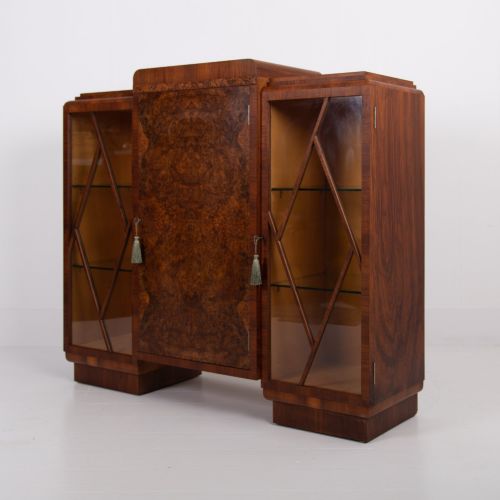


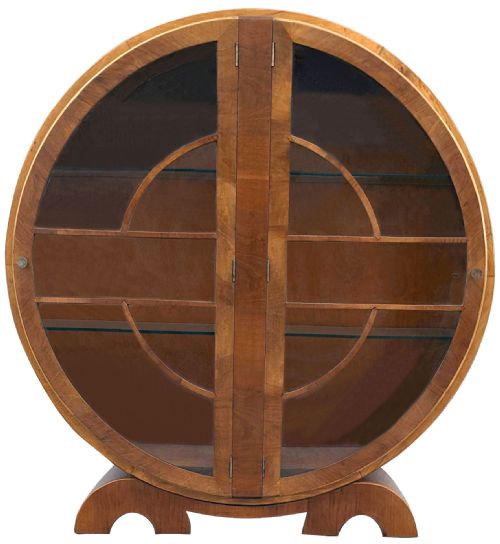


Geometric Glazed Display Cabinet
These geometric glazed display cabinet pieces combine striking architectural woodwork with clear glass, offering a sophisticated way to showcase prized collections.
Geometric Glazed Display Cabinet
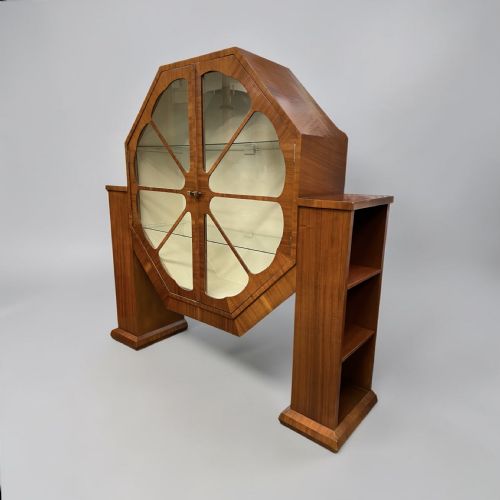
A geometric glazed display cabinet brings together structured framework and large glass panels to present objects safely while keeping them fully visible. Buyers searching for a geometric glazed display cabinet encounter a variety of forms ranging from corner units and tall bookcases to bureau cabinets and circular or hexagonal freestanding display pieces.
The selections span distinct historical periods including the nineteenth century, Edwardian era, nineteen-hundreds, nineteen-twenty, and nineteen-thirty. Stylistic influences vary from Jacobean Revival and William IV to Viennese Secessionist and prominent Art Deco designs.
Origin points and materials define the physical presence of these items, appearing in English and Austrian makes. Walnut, oak, and ebonised wood form the primary structural carcasses, complemented by leaded glass and brass details.
How they were made
Cabinet makers utilised dense hardwoods such as walnut, oak, and rosewood to build sturdy frameworks capable of supporting heavy glass panes and interior shelving. Selected timbers often display rich grain patterns, particularly on prominent surfaces like bureau drops and cabinet doors.
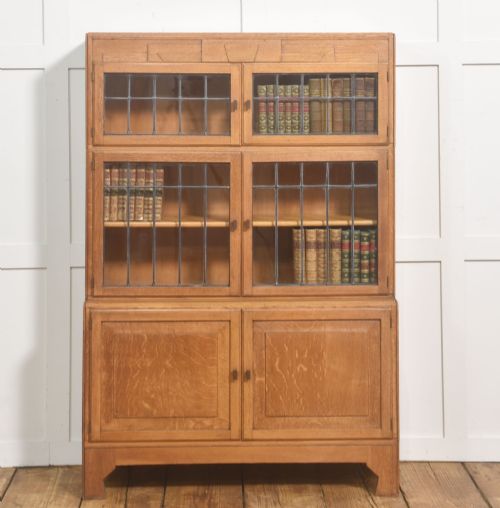
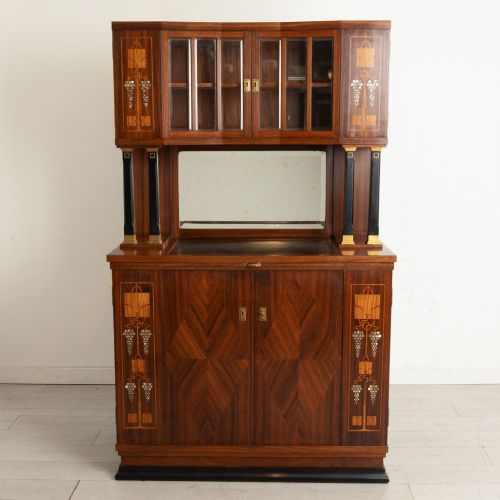
Glazing techniques involve standard glass alongside leaded glass sections that create geometric patterns across the doors. Brass hardware and occasional mother-of-pearl accents provide functional and decorative contrasts to the dark wooden structures.
Listed object types cover display cabinets, bookcases, corner cabinets, dressers, and bureau cabinets.
What varies in quality
The distinction between standard examples and finer items rests in the complexity of the cabinet geometry and the choice of timber veneer. Hexagonal, circular, and specialised bureau forms demand advanced carpentry compared to standard rectangular corner units.
Makers such as August Ungethüm and Rurka demonstrate specific regional craftsmanship, where attention to structural proportions and precise leaded glass work elevate the visual impact of the walnut or oak bodies.
August Ungethüm·Rurka
The Geometric Glazed Display Cabinet Glossary
- Art Deco
- A design style from the interwar period characterised by sleek geometric shapes, streamlined forms, and modern material combinations.
- Leaded glass
- Glass panes joined together by narrow strips of lead to form structured windows or cabinet doors with distinct geometric patterns.
- Bureau cabinet
- A hybrid furniture form featuring a sloping writing flap above lower drawers or enclosed shelving space.
- Jacobean Revival
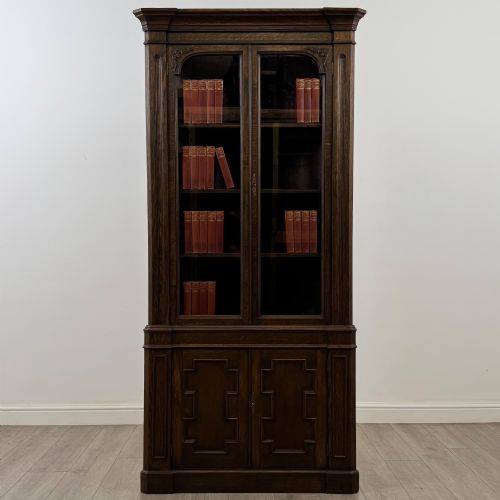
- A nineteenth and early twentieth century style referencing seventeenth century English furniture with dark oak and heavy turned supports.
- Viennese Secessionist
- An Austrian artistic movement from around nineteen hundred focusing on clean architectural lines and refined decorative details.
Geometric Glazed Display Cabinet: Frequently Asked Questions
What periods do these cabinets come from?
The pieces span the nineteenth century, the Edwardian period, nineteen hundred, nineteen-twenty, and nineteen-thirty. They incorporate styles ranging from William IV and Jacobean Revival to Viennese Secessionist and Art Deco.
Specific dates depend on the individual workshop origins, with numerous examples originating from the interwar twentieth century.
What woods were used in these cabinets?
Makers utilised oak, walnut, rosewood, and ebonised wood to construct the frames and exterior surfaces. Selected pieces feature contrasting inlays of mother-of-pearl and brass hardware.
Dark oak appears frequently in revival styles, while walnut and rosewood dominate the interwar Art Deco items.
How do hexagonal cabinets differ from standard ones?
Hexagonal and circular cabinets provide multi-sided viewing angles for displayed objects rather than a flat frontal presentation. These shapes require specialised carpentry to fit curved or angled glass panes into the wooden frame.
Such forms often appear in specific Art Deco designs from nineteen-thirty.
What is a bureau cabinet?
A bureau cabinet combines a fold-down writing surface with enclosed shelving or display space behind glass doors. This dual function allowed owners to store writing materials while keeping books or decorative items visible.
Examples are found in both Jacobean Revival oak and walnut Art Deco constructions.