

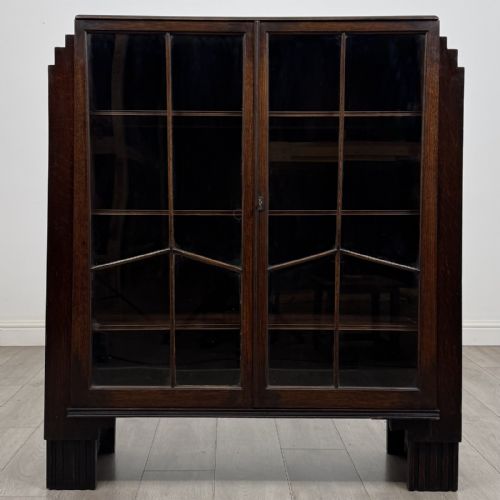
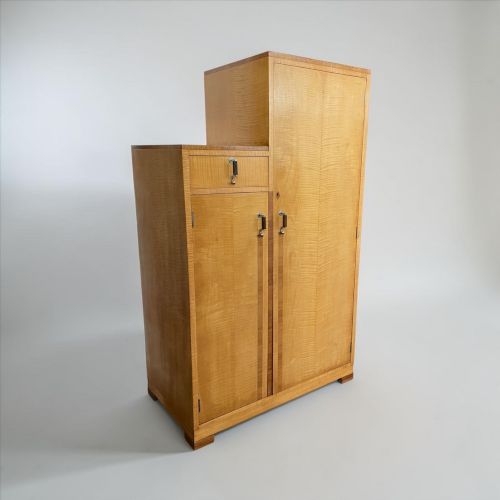
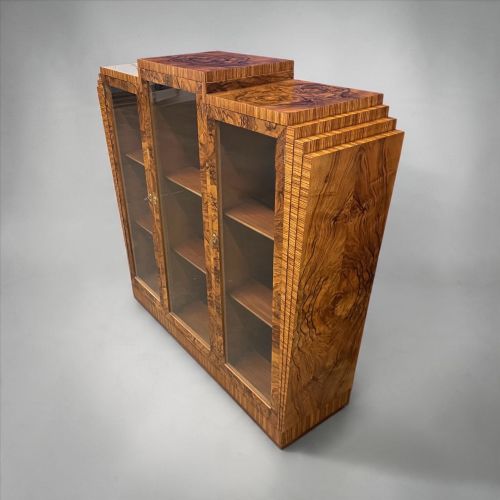

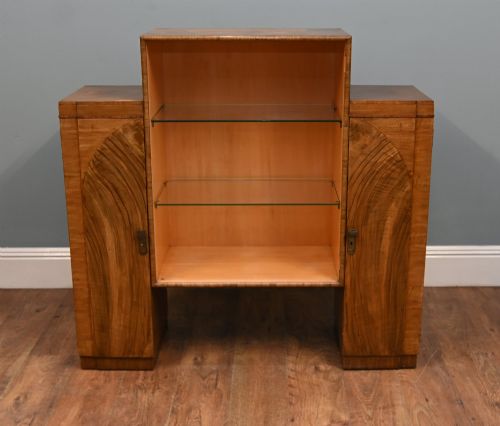




Stepped Art Deco Cabinet
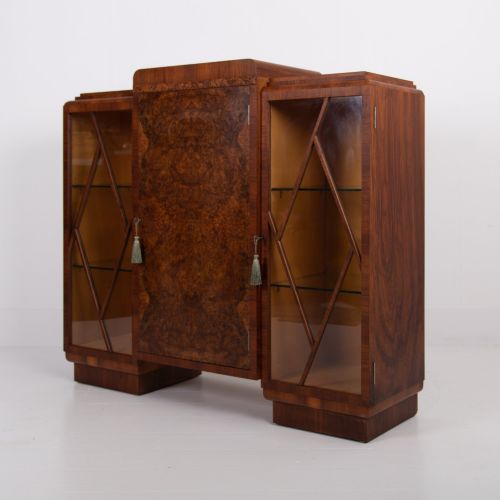
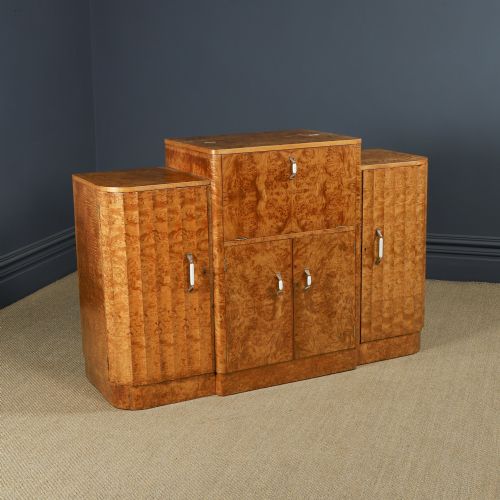
These stepped art deco cabinet pieces bring geometric punch to a room, defined by tiered silhouettes and rich veneers.
Stepped Art Deco Cabinet
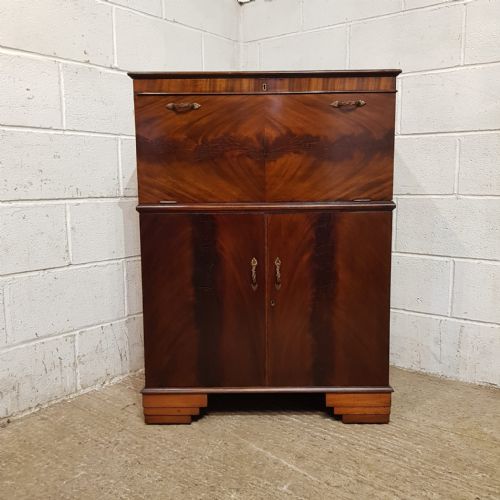
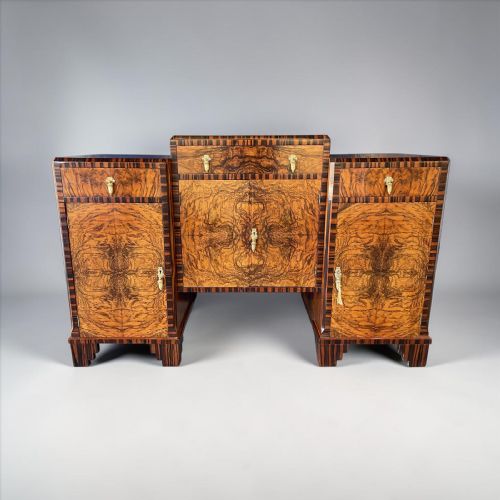
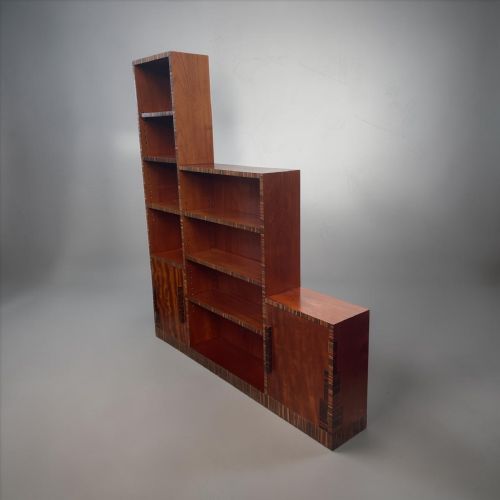
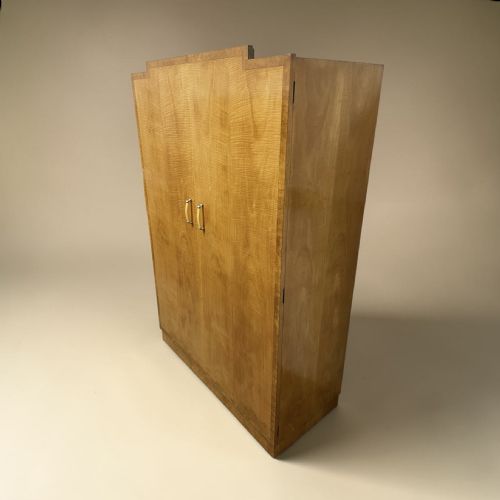
When you search for a stepped art deco cabinet, you find case furniture defined by tiered profiles and setbacks that echo skyscraper architecture. The pieces on this page span the 1920 and 1930 periods, alongside an Edwardian outlier, taking forms such as sideboards, wardrobes, cocktail cabinets, bookcases, and chests of drawers.
You are most likely to meet walnut veneer and burr walnut examples dating from around 1930. These take the shape of drinks cabinets, glazed display units, and compact bedside cabinets, all employing the characteristic stepped silhouette.
How they were made
Cabinet makers applied figured burr walnut, walnut veneer, mahogany, satinwood, and maple over solid carcases to create striking grain patterns across the tiered surfaces. These wooden planes were then combined with contrasting metal mounts and handles.
Details in brass, chrome, and bakelite feature alongside glass panels for doors and display sections. The construction relies on precise veneering techniques to wrap the stepped profiles cleanly without interrupting the wood grain.
Stepped Art Deco Cabinet Retail Price Guide 2026
Typical asking prices for stepped art deco cabinet among the pieces listed under this phrase on Sellingantiques today, from the lower quarter to the upper quarter. They describe what is for sale here now, not the wider market.
Forms range widely from tall wardrobes and sideboards down to compact bedside cabinets and tiered modernist tables.
What varies in quality
The distinction between ordinary and superior pieces rests on the choice of timber veneer and the precision of the joinery. Figured burr walnut with book-matched grain commands greater visual weight than plain oak or standard mahogany.
Original hardware, including cast brass or chromium-plated handles and functional bakelite details, elevates a piece above examples that have lost their period fittings or received unsympathetic modern replacements.
Betty Joel·Harry & Lou Epstein·Hille
The Stepped Art Deco Cabinet Glossary
- Burr Walnut
- A wood harvested from walnut tree growths that produces swirling, intricate grain patterns. It was prized by period makers for high-end cabinet fronts.
- Bakelite
- An early synthetic thermosetting plastic used for handles, knobs, and decorative inserts. Its presence marks pieces securely to the interwar decades.
- Veneer
- A thin layer of choice hardwood applied to a stable secondary wood base. This technique allowed makers to display dramatic grain figures across large cabinet doors.
- Skyscraper Style
- An architectural aesthetic that heavily influenced furniture design. It translates towering city structures into stepped cabinets and bookcases.
Stepped Art Deco Cabinet: Frequently Asked Questions
What is a stepped art deco cabinet?
It is a storage piece featuring a tiered, receding silhouette inspired by 1930s architectural design. The form uses geometric setbacks to create visual depth and height.
Such cabinets serve variously as cocktail bars, bookcase units, sideboards, or bedside storage, uniting practical function with bold modernist lines.
How do I date a cabinet?
Dating relies on combining the stylistic evidence of the stepped silhouette with specific materials like chrome, bakelite, and burr walnut veneers. Most examples date from the 1930 period.
Construction methods, drawer linings, and original hardware provide further clues to distinguish interwar production from later revivals.
Where were they used?
These cabinets sat in reception rooms, dining spaces, and bedrooms of modern interwar homes. Cocktail variants belonged in entertaining spaces alongside sideboards.
Bedside versions flanked sleeping quarters, while bookcases and bureaus served studies and lounges as functional display storage.
How do I care for burr walnut?
Burr walnut veneer requires protection from direct sunlight and excessive heat fluctuations to prevent the wood from drying out or warping. Gentle dusting with a soft cloth preserves the polished surface.
Occasional application of appropriate wax feeding helps maintain the depth of the grain without building up heavy chemical residues.