
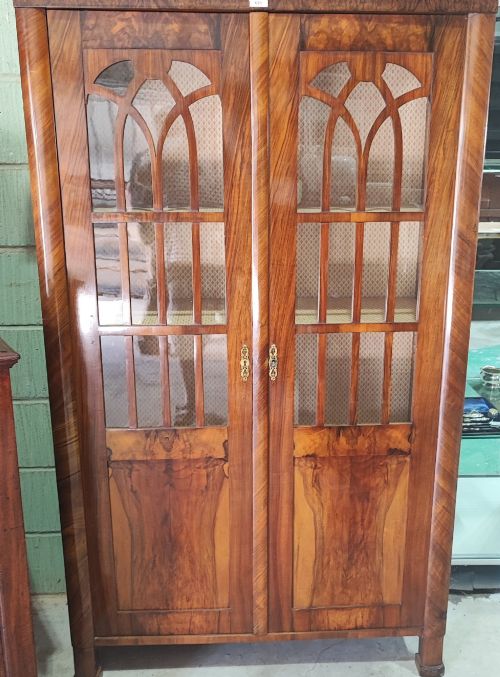
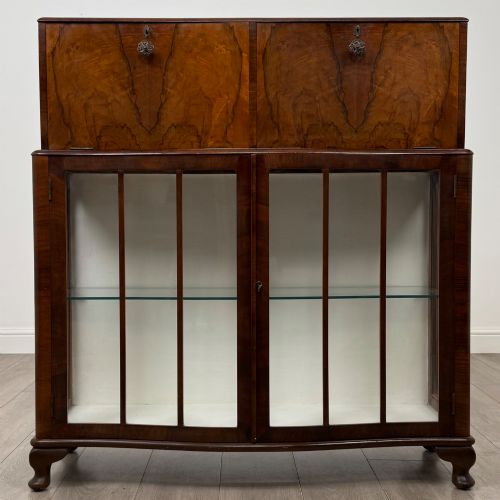
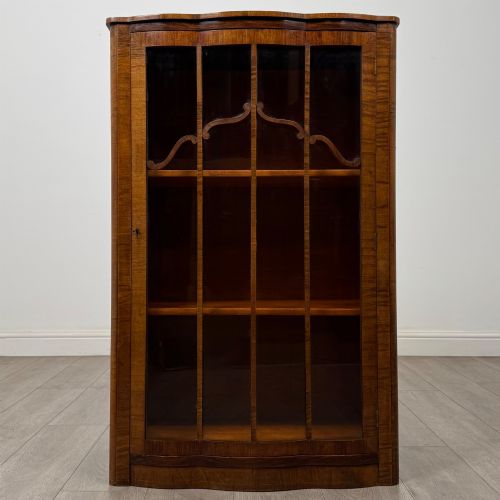
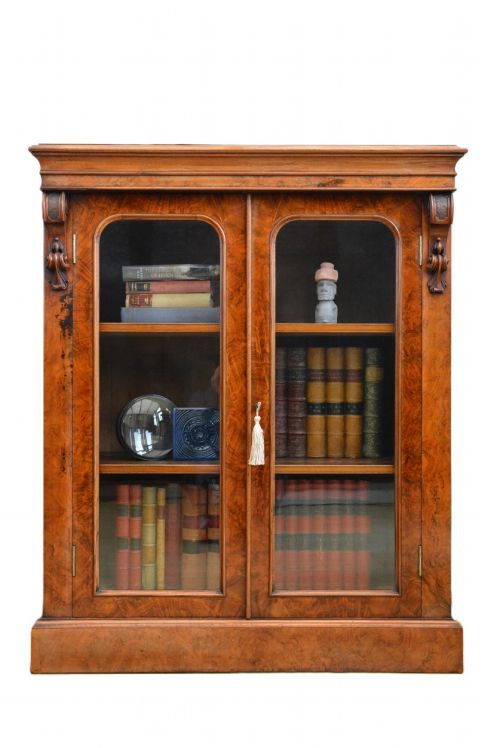


Figured Walnut Bookcase
A figured walnut bookcase brings striking timber movement and architectural presence to a room, ranging from grand Georgian bureau forms to sleek Art Deco display cabinets.

Figured Walnut Bookcase
A figured walnut bookcase combines storage with decorative timber grain, appearing across multiple eras from the 18th century through the Victorian period to 1930. The pieces on this page span tall open library shelves, glazed display cabinets, and complex bureau bookcases with fitted writing compartments.
Victorian examples frequently incorporate glazed doors, marquetry inlay, and lower cupboards, whilst 18th-century pieces favour bureau formats with fall fronts. Art Deco designs from around 1930 introduce geometric shapes, tall vitrines, and book tables that showcase the swirling patterns of the wood.
Buyers encounter everything from dwarf open bookcases to massive breakfront library pieces. The walnut timber provides the unifying thread, displaying rich figuring whether shaped in revival styles or modernist cabinetwork.
How they were made
Cabinetmakers constructed these pieces using solid oak or pine carcasses as a stable base for fine veneers. Burr walnut veneer and figured walnut sections were sliced thin and applied to surfaces to create symmetrical grain patterns across doors and drawer fronts.
Glass doors were fitted into timber frames to protect books and collections, whilst brass hardware, ormolu mounts, and velvet linings added functional and decorative detail. Marquetry inlay and herringbone banding frequently bordered the main panels.
French polishing or wax finishing brought out the natural warmth and grain movement of the timber. Joinery relied on dovetails for drawers and traditional framing for doors to handle seasonal wood movement.
Figured Walnut Bookcase Retail Price Guide 2026
Typical asking prices for figured walnut bookcase among the pieces listed under this phrase on Sellingantiques today, from the lower quarter to the upper quarter. They describe what is for sale here now, not the wider market.
Some Victorian pier cabinets include secret compartments originally intended for hiding letters and small valuables from prying eyes.
What varies in quality
Quality rests primarily on the choice and matching of the timber veneer. The finest pieces display symmetrical, highly figured grain patterns that wrap continuously across drawer banks and cabinet doors, rather than mismatched patches of timber.
The sophistication of the internal fittings defines the tier of the piece, from simple adjustable shelving to elaborate pigeonholes, secret drawers, and fitted secretaire compartments. Crispness in carved details, marquetry work, and original brass or ormolu mounts further separates standard production from exceptional craftsmanship.
Structural integrity and originality of elements such as glass panels, handles, and locks dictate desirability. Pieces that retain their mellow colour and original finish hold greater aesthetic coherence.
Holland and Sons
The Figured Walnut Bookcase Glossary
- Figured walnut
- Timber exhibiting wavy, swirling, or mottled grain patterns prized for decorative furniture surfaces. This grain occurs naturally at points where branches meet the trunk or through specific growth formations.
- Bureau bookcase
- A dual-purpose form featuring a sloping fall-front writing desk beneath a set of enclosed upper shelves. It often contains internal pigeonholes and small drawers.
- Pier cabinet
- A low cabinet designed specifically to fit the wall space between windows. These pieces frequently feature glazed doors and decorative ormolu mounts.
- Marquetry
- Decorative patterns formed by fitting together thin veneers of different woods and materials. It creates pictorial or geometric designs across cabinet doors and tabletops.
- Ormolu
- Gilded bronze mounts and decorative ornaments applied to furniture. It provides metallic contrast against dark walnut timber.
- Secretaire
- A cabinet or desk incorporating a pull-down writing drawer with fitted compartments. It conceals the writing surface behind a dummy drawer front.
Figured Walnut Bookcase: Frequently Asked Questions
What is a bureau bookcase?
A bureau bookcase combines a sloping desk compartment with shelving above for storing and displaying books.
The lower section opens to reveal small drawers and pigeonholes for writing materials.
How do I date a walnut bookcase?
Dating relies on stylistic clues, construction methods, and hardware styles across different periods.
Eighteenth-century pieces often feature bracket feet and fitted bureau interiors, whilst Victorian examples showcase heavy glazing and marquetry, and 1930s pieces lean towards streamlined Art Deco geometry.
Where should I place a display cabinet?
Display cabinets with glazed doors suit studies, drawing rooms, or hallways where books and collections remain visible.
Positioning them away from direct sunlight prevents the walnut veneer and internal velvet linings from fading.
What is burr walnut?
Burr walnut is a specialised timber harvested from tree growths that produce chaotic, highly figured grain patterns.
Cabinetmakers sliced this wood into thin veneers to create dramatic focal points on doors and drawer fronts.