




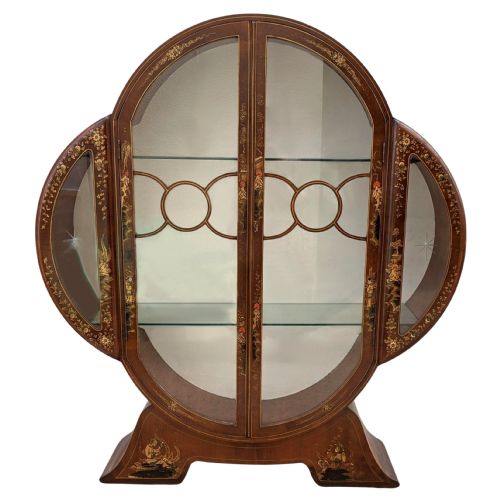

Circular Display Cabinet
A circular display cabinet turns a room's corner or wall into a stage for small treasures, catching light from every angle.
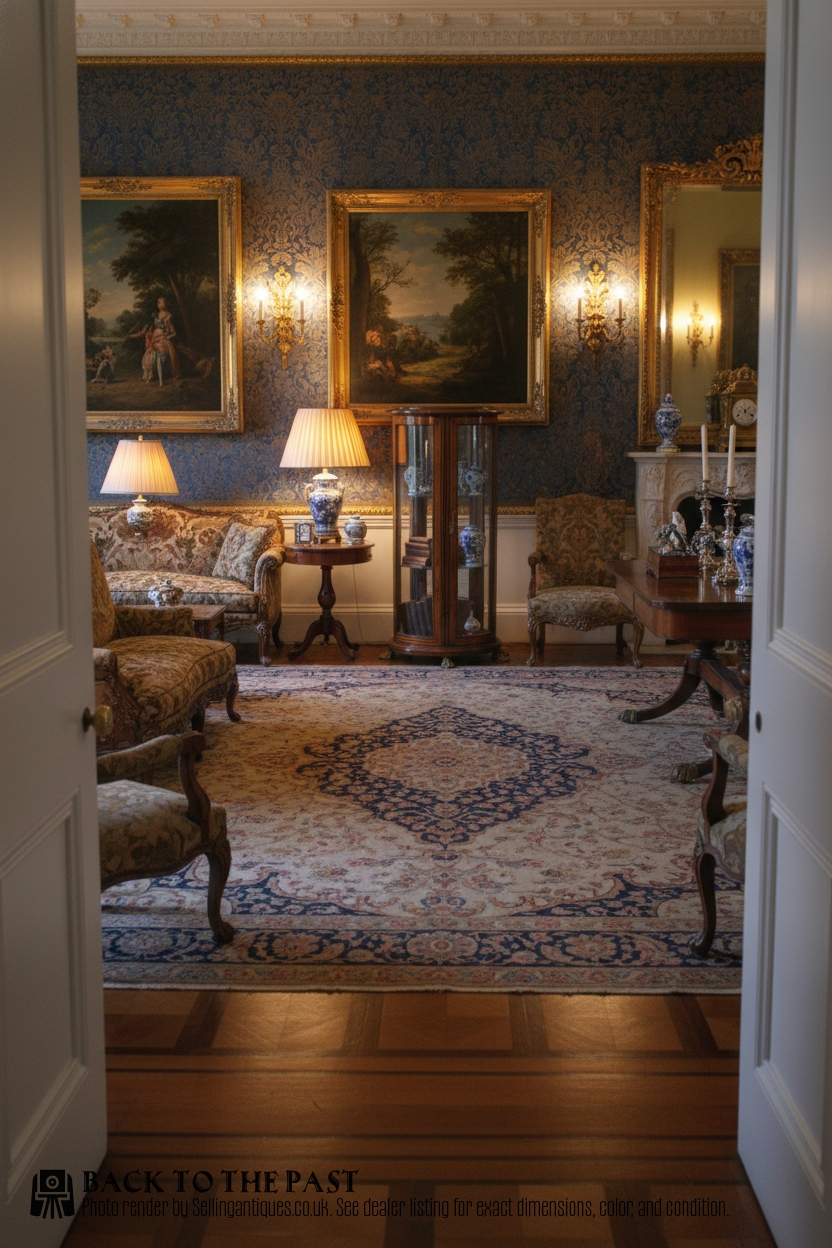
Circular Display Cabinet
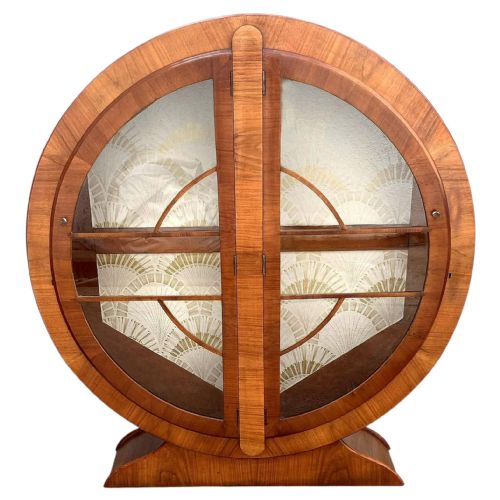
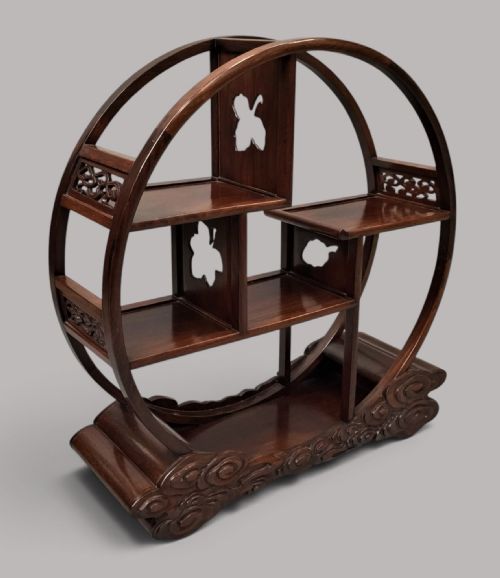
A circular display cabinet is an eye-catching storage piece designed to show off collections from all sides through curved glazing. When you search for a circular display cabinet, you encounter cylindrical forms that range from late nineteenth-century French vitrines to English Art Deco pedestal designs.
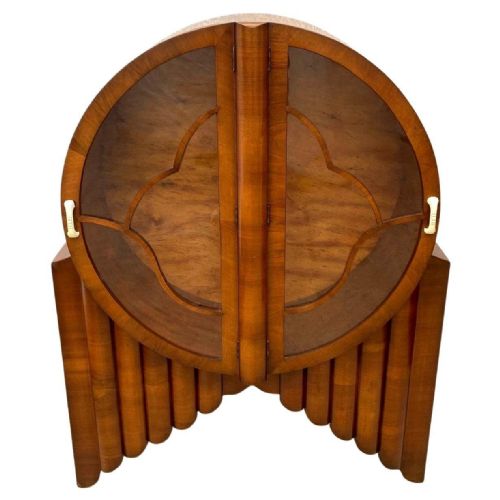
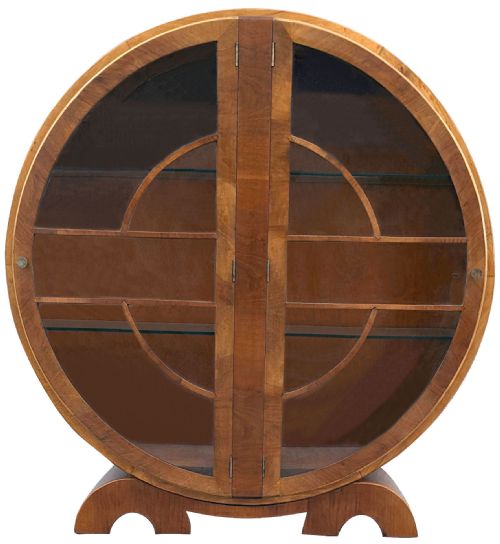
The dominant style on this page is the Art Deco walnut circular display cabinet from nineteen thirty, alongside earlier French inlaid pieces. These cabinets function as freestanding focal points in a room, holding ceramics, glass, or small objets d'art behind glass doors.
Materials and Construction
Cabinet makers utilised solid timbers and applied veneers, particularly burr walnut, walnut, oak, and maple, bent or curved around wooden framing. Glass panels, sometimes leaded, follow the rounded perimeter of the carcass to provide a continuous view of the interior.
Metal and brass components appear in hinges, locks, and trims, while internal shelves are typically glass or wood. Late nineteenth-century French examples incorporate fine marquetry inlay work into their curved wooden surfaces.
Circular Display Cabinet Retail Price Guide 2026
Typical asking prices for circular display cabinet among the pieces listed under this phrase on Sellingantiques today, from the lower quarter to the upper quarter. They describe what is for sale here now, not the wider market.
One nineteen thirties model earned the delightful nickname 'Rocket Cabinet' for its soaring vertical curve.
Judging Quality
The distinction between ordinary and exceptional examples rests on the handling of curved veneers and the clarity of the bent glass. Superior cabinets demonstrate seamless joins in the wood and tight, smooth rotation of the curved doors.
Finer pieces display thoughtful grain matching across the rounded facade, whereas lesser examples rely on flat panels or simpler framing. The presence of leaded glazing or intricate inlaid work elevates the decorative ambition of the piece.
The Circular Display Cabinet Glossary
- Vitrine
- A glass-fronted cabinet designed for displaying fine porcelain or curiosities. These pieces often feature glass on multiple sides to maximise illumination.
- Bijouterie cabinet
- A shallow display table or cabinet traditionally used for small jewellery and trinkets. They frequently incorporate glazed tops or curved glass panels for overhead viewing.
- Veneer
- A thin layer of figured wood, such as burr walnut, applied over a secondary timber base. This technique creates striking visual patterns across curved cabinet surfaces.
- Leaded glass
- Individual panes of glass held together by strips of lead cames. This method allows flat or curved glass segments to form geometric patterns within cabinet doors.
Circular Display Cabinet: Frequently Asked Questions
How do I clean the glass?
Use a gentle glass cleaner applied to a cloth rather than directly onto the surface to protect the surrounding wood frame.
Take care near leaded joints or delicate veneer edges to avoid moisture seeping into the joins.
Can these hold heavy books?
These cabinets are built for display rather than library storage, typically featuring glass or light wooden shelves.
Overloading the internal shelving risks straining the curved frame and the delicate supports.
Where should I place one?
A circular cabinet suits corners or open wall spaces where light can strike the curved glass from multiple angles.
Keep the piece away from direct sunlight to prevent the walnut veneer and internal items from fading.
How do I spot Art Deco style?
Look for streamlined cylindrical forms, geometric symmetry, and the prominent use of figured walnut veneers.
These nineteen thirties pieces eschew heavy ornamentation in favour of clean, curving architectural lines.