






Round Art Deco Cabinet
A round art deco cabinet brings striking geometry to a room, offering curved storage shaped by the 1930s aesthetic.
Round Art Deco Cabinet
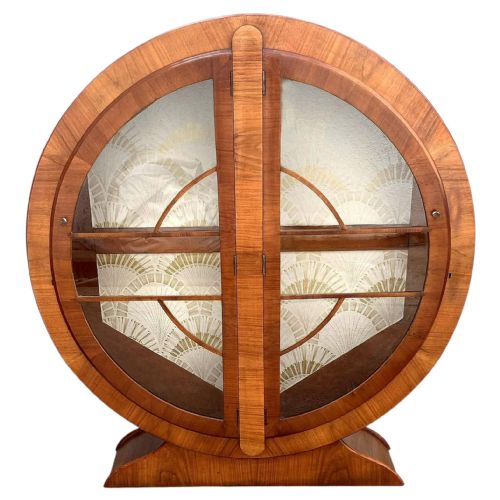
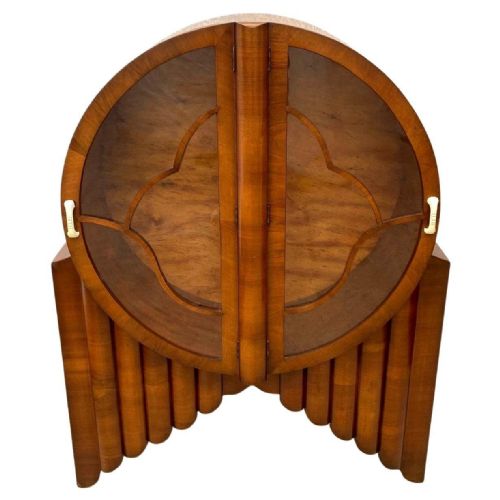
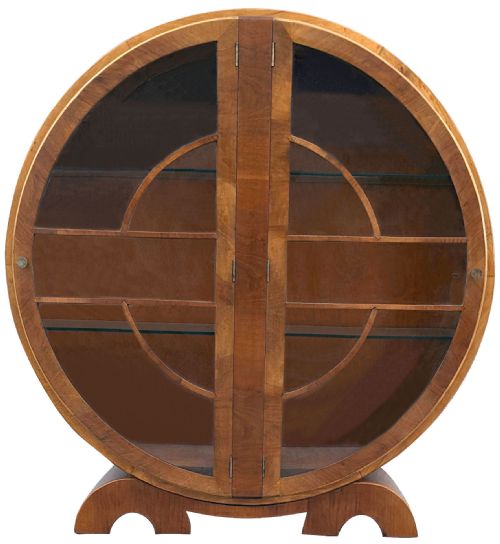
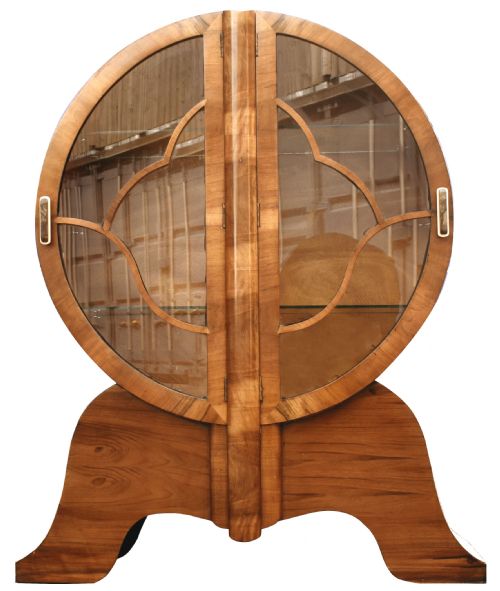
A round art deco cabinet draws the eye through curved silhouettes, circular forms, and cylindrical proportions that define the period. These pieces most commonly appear as display cabinets, vitrines, and bedside tables.
Most examples originate from the 1930s, constructed as freestanding items designed to showcase china, glassware, or bedside objects. English makers feature prominently among the surviving pieces.
The inventory ranges from tall circular display cabinets to drum-shaped bedside tables and clove-shaped variants. Each design utilises the characteristic geometry of the style to maximise visual impact in compact footprints.
Construction and materials
Cabinet makers relied heavily on walnut and burr walnut veneer, laid over solid wood foundations to create rich grain patterns across curved surfaces. Maple also appears alongside walnut in larger china cabinets.
Detailing involves glass doors, sometimes held with lead cames, alongside brass hardware and metal components. Fabric linings and illuminated tops complete the interior specifications of these vitrines.
Round Art Deco Cabinet Retail Price Guide 2026
Typical asking prices for round art deco cabinet among the pieces listed under this phrase on Sellingantiques today, from the lower quarter to the upper quarter. They describe what is for sale here now, not the wider market.
The listings combine walnut, burr walnut veneer, and maple, paired with glass, lead, brass, and fabric elements.
Assessing quality and finish
Quality rests upon the selection and matching of burr walnut veneer across the curved carcass. Superior examples display seamless grain continuity around the entire circumference of the cylinder.
The execution of complex joinery on circular doors and drum shapes dictates the structural integrity of the piece. Precision in fitting leaded glass and brass mounts separates standard production from finer cabinet work.
The Round Art Deco Cabinet Glossary
- Art Deco
- A design style emerging in the 1920s and 1930s characterised by sleek geometric shapes, streamlined forms, and modern industrial materials. It replaced the ornate floral patterns of earlier decades with clean lines.
- Burr Walnut Veneer
- Thin slices of walnut timber taken from a tree growth or burl, prized for swirling patterns and rich texture. Craftsmen apply these veneers to curved cabinet surfaces for decorative effect.
- Vitrine
- A glass-fronted display cabinet designed specifically for showing porcelain, glassware, or treasured objects. The glass panels allow light to enter from multiple angles.
- Lead Came
- A slender grooved rod of lead used to hold individual pieces of glass together in leaded windows and cabinet doors. It provides structural support while creating a geometric grid pattern.
Round Art Deco Cabinet: Frequently Asked Questions
Where should I put a round art deco cabinet?
These cabinets suit corners or open wall spaces where their curved profiles soften rigid room angles. They work effectively in living rooms as display furniture or beside beds as drum-shaped tables.
Placement should account for the swing of circular doors and the need for unobstructed viewing angles around the cylindrical form.
How do I care for walnut veneer surfaces?
Maintain walnut surfaces by dusting with a soft, dry cloth and avoiding direct sunlight that can fade the wood grain over time. Consistent indoor humidity prevents the veneer from lifting off the substrate.
Apply occasional appropriate wax polish to nourish the timber without leaving heavy residue on the polished finish.
Can these cabinets hold heavy items?
Interior wooden or glass shelves suit decorative china, glassware, and lighter collections rather than dense, heavy book collections. The circular internal space distributes weight toward the centre depending on the shelf supports.
Check the stability of internal fittings and the strength of the specific cabinet before loading heavy porcelain inside.
How do I identify a 1930s piece?
Look for characteristic construction methods, specific timber combinations like walnut and maple, and geometric forms typical of the era. The presence of leaded glass or illuminated tops often points directly to this decade.
Compare the proportions and hardware against documented examples from the same period to confirm the date of manufacture.