



1930s China Cabinet
A 1930s china cabinet brings architectural geometry and figured timber into a room, designed to showcase porcelain and decorative objects behind glass.
1930s China Cabinet
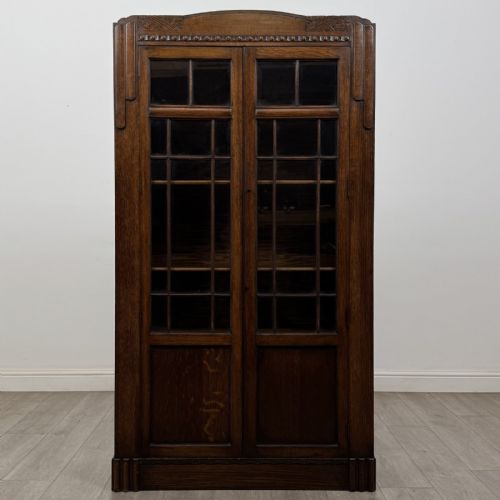
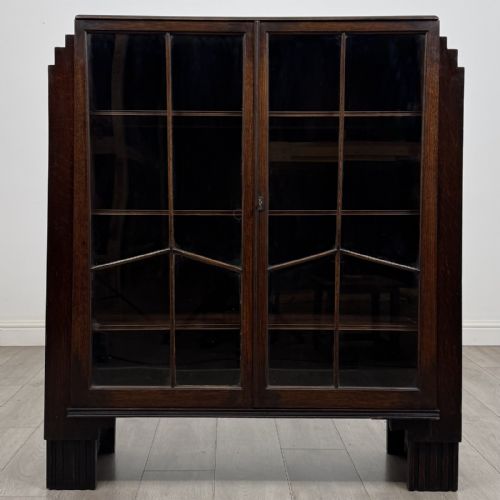
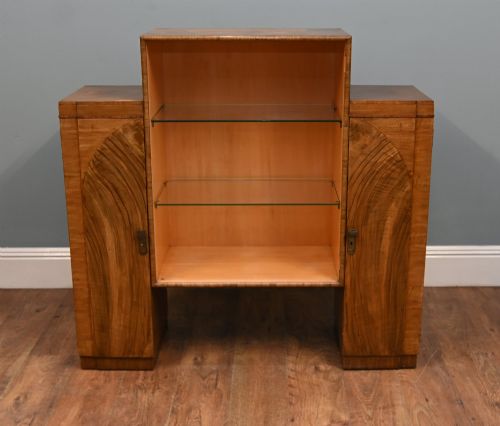
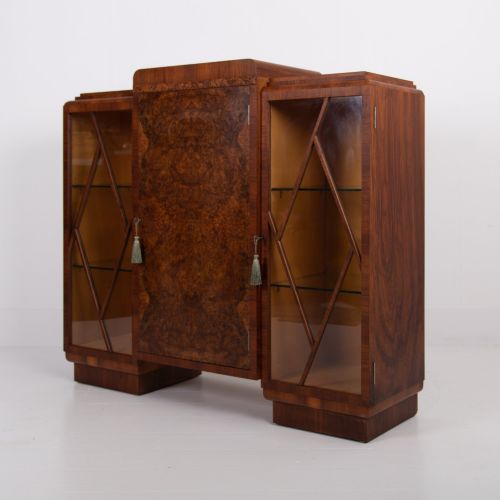
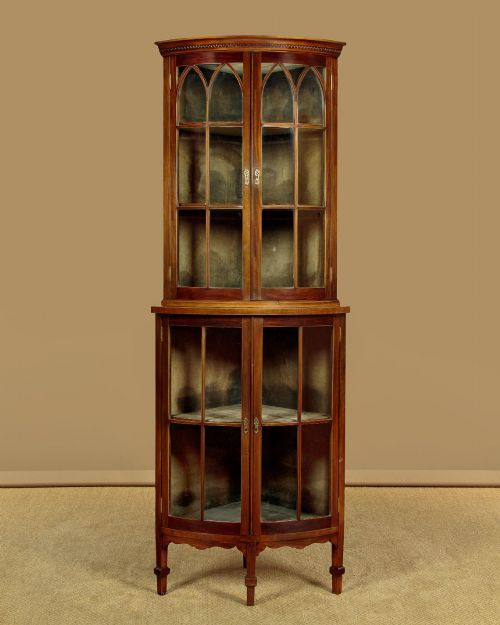
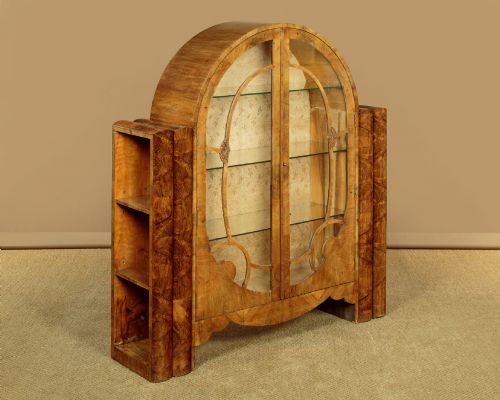
When you search for a 1930s china cabinet, you encounter pieces defined primarily by the bold lines of the Art Deco movement alongside occasional Edwardian revivals. The form appears as upright display cabinets, corner units, and occasional bookcase combinations designed to organise and exhibit domestic items. Walnut dominates the selection, frequently paired with secondary timbers like sycamore, mahogany, or oak to create contrasting borders and panels.
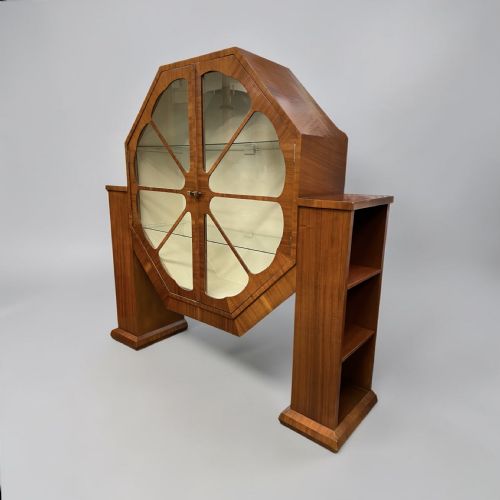
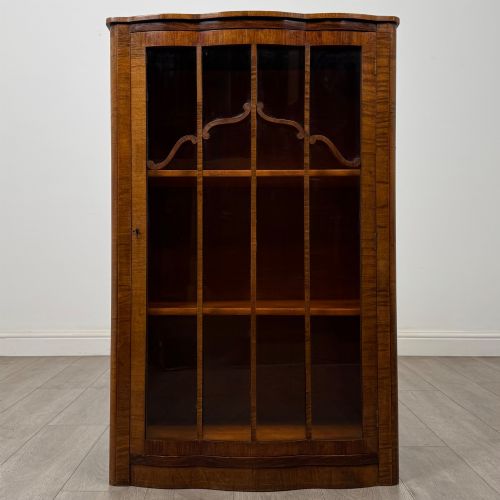
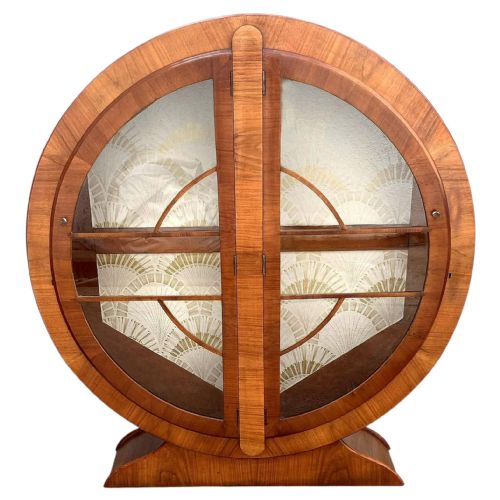
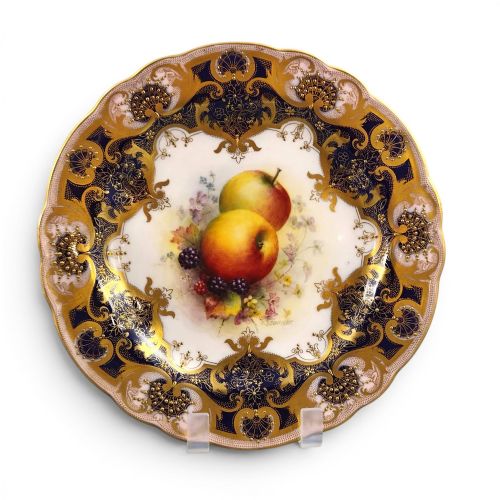
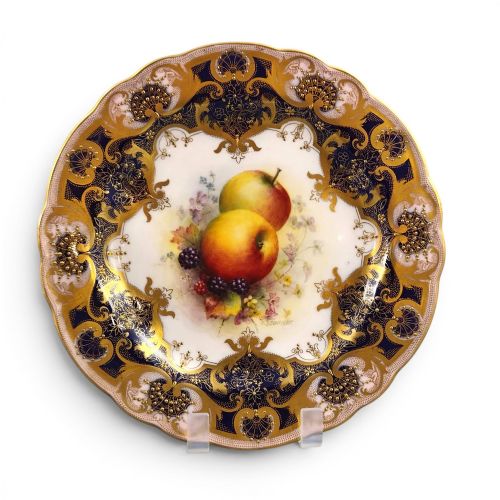
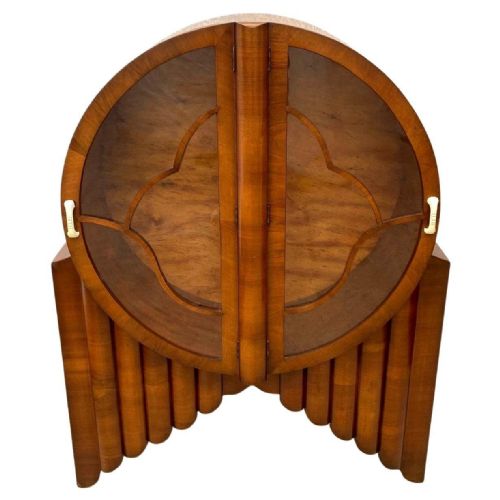
The silhouettes span conventional rectangular shapes, bow fronts, and more sculptural geometries including circular, oval, hexagonal, octagonal, and clove-shaped configurations. Many examples rely on glazed doors with leaded or clear panes that reveal tiered interior shelving. These pieces function domestically as focal points for living spaces, holding everything from display ceramics to cabinet plates painted by artists like Richard Sebright.
Materials and Construction
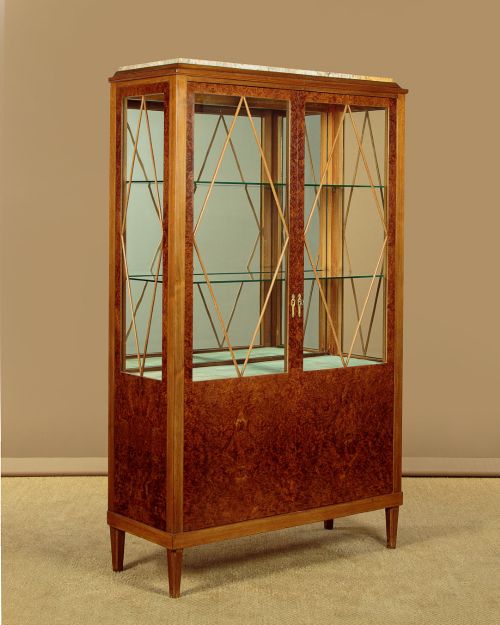
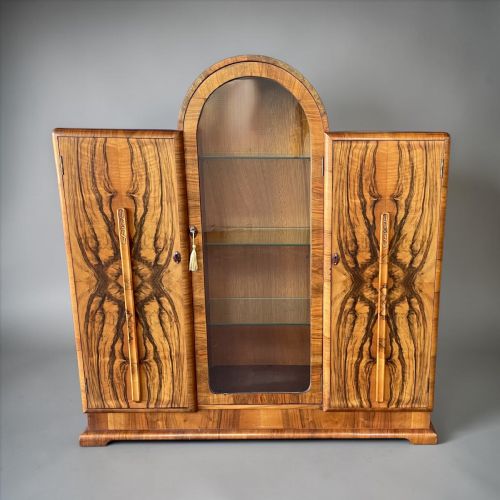
Cabinet makers of this era utilised figured walnut and burr walnut veneers applied over solid timber carcasing to achieve striking grain patterns across flat and curved surfaces. Glass panels were secured within timber frames, sometimes supplemented by lead cames or mounted with brass hardware and fixtures. Specialised forms like the rocket or cathedral cabinets required advanced wood-bending techniques to maintain structural integrity across complex curves.
Internal elements often incorporated contrasting light woods such as sycamore or maple to brighten the display cavity behind the glass doors. Finishing involved careful polishing to accentuate the natural figure of the wood, while specific makers incorporated gold leaf or fabric linings within the display compartments to frame the contents.
1930s China Cabinet Retail Price Guide 2026
Typical asking prices for 1930s china cabinet among the pieces listed under this phrase on Sellingantiques today, from the lower quarter to the upper quarter. They describe what is for sale here now, not the wider market.
Recorded object types range from standard rectangular display cabinets to unusual circular, hexagonal, and rocket-shaped vitrines.
Assessing Craftsmanship and Distinction
Quality in these cabinets rests upon the selection and matching of the walnut veneers across the principal facade, where symmetrical grain patterns denote superior workshop standards. The complexity of the carcass construction - particularly on circular, hexagonal, or rocket-shaped forms - separates standard production pieces from bespoke studio commissions. Named cabinet makers and firms known for high-end Art Deco design demonstrate finer joinery details, superior hardware mounting, and more sophisticated internal timber contrasts.
The integration of glazing bars, leaded details, and brass mounts further distinguishes the range, alongside the presence of documented maker signatures or stamps. Cabinets that retain original interior fabric linings and undamaged leaded glass command higher regard than altered examples.
Royal Worcester·Rurka·Maurice Adams·Epstein
The 1930s China Cabinet Glossary
- Burr walnut
- A prized timber veneer sourced from the gnarled growths of walnut trees, displaying intricate, swirling grain patterns. It was frequently utilised on the primary doors and facades of high-end Art Deco furniture.
- Vitrine
- A glass-fronted display cabinet or case designed specifically for showing porcelain, figurines, or curiosities. These pieces often feature glass on multiple sides to maximise ambient light penetration.
- Cabinet plate
- A decorative ceramic plate intended for display on a stand or mounted within a cabinet rather than for everyday dining use. Notable examples feature hand-painted fruit scenes by artists such as Richard Sebright.
- Leaded glass
- Individual panes of glass held together within a framework of flexible lead cames. This technique allowed makers to construct geometric and decorative patterns across the doors of display cabinets.
- Rocket cabinet
- A colloquial and descriptive term for a tall, streamlined circular or curved display cabinet produced during the Art Deco period. The vertical emphasis mimics the rocket silhouettes popularised in modern design of the decade.
1930s China Cabinet: Frequently Asked Questions
Where should I place a cabinet?
These cabinets suit principal living rooms or dining spaces where natural light can pass through the glass panels. Corner variants make efficient use of difficult angles in smaller rooms.
Ensure the floor is level so the doors swing correctly, and avoid positioning the timber directly against intense heat sources that might dry the veneer.
How do I clean the glass?
Wipe glass panels gently with a soft, lint-free cloth and a mild glass cleaner sprayed onto the cloth rather than directly onto the cabinet. This prevents liquid from seeping into the surrounding timber or lead cames.
Take care around leaded sections and brass mounts to avoid loosening the joints or scratching the surrounding polished wood.
Can I adjust the shelves?
Most period interiors feature fixed wooden shelves integrated into the carcass design to maintain structural stability across curved or upright frames. Altering them generally requires professional joinery work.
Plan the height of your display items beforehand to ensure larger porcelain pieces or cabinet plates fit comfortably within the fixed tiers.
How do I identify Art Deco pieces?
Look for symmetrical burr walnut veneers, geometric silhouettes like octagons or circles, and minimal carved ornament relying instead on clean lines. Hardware in brass and the use of contrasting light woods are standard indicators.
Construction methods such as curved bentwood panels and leaded glass panes further align these items with the aesthetic of the nineteen-thirties.