
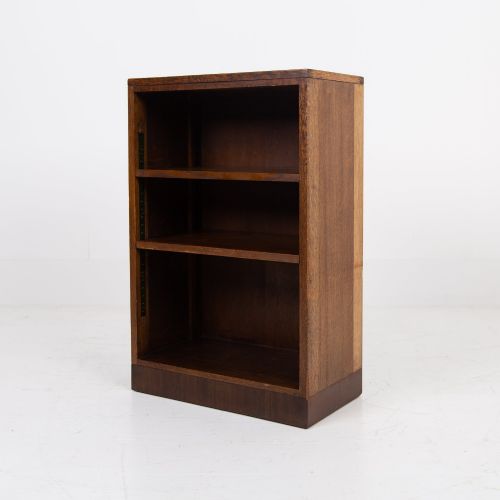


1930s Oak Display Cabinet
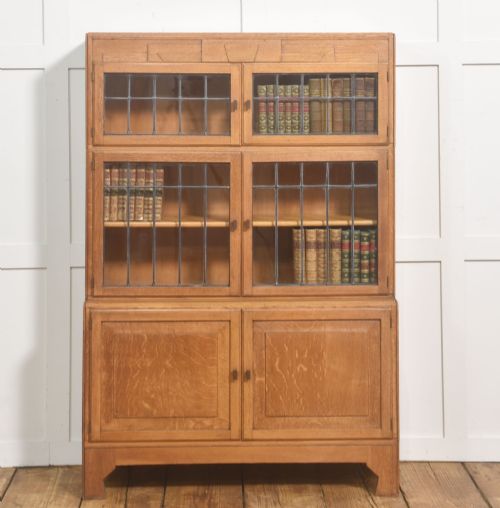
A 1930s oak display cabinet gives a room robust timber storage with clear glass for books or collections.
1930s Oak Display Cabinet
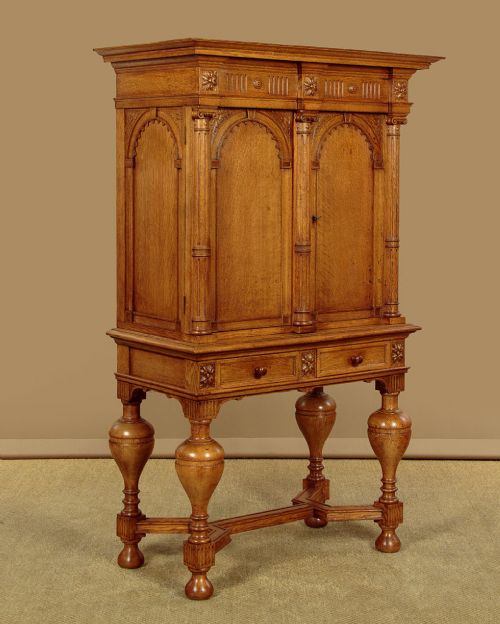
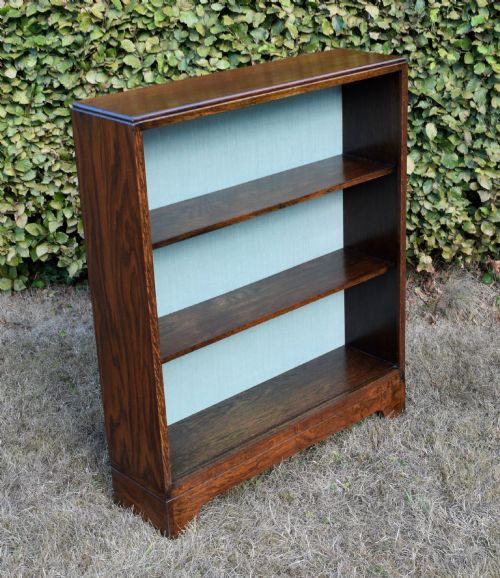
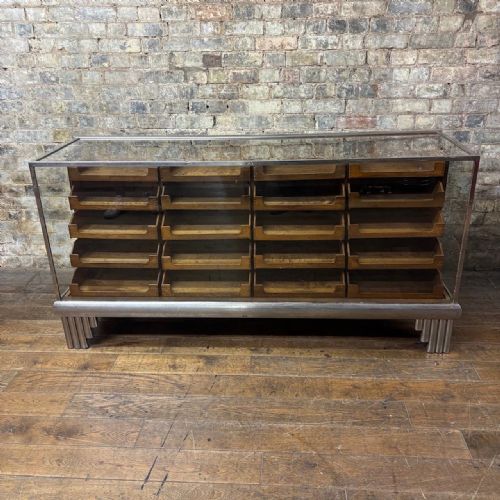
A 1930s oak display cabinet brings together domestic bookcases, shop counters and specialist storage forms made across the interwar period. The examples seen here range from standard glazed bookcases to haberdashery counters, cabinets on stands and corner cabinets.
Most pieces date strictly to the 1930s or slightly earlier, drawing on styles that span Art Deco, Tudor Revival, Arts & Crafts and industrial institutional designs. Buyers frequently select these items to anchor a room with solid timber construction and period character.
Materials and construction methods
Makers built these cabinets predominantly from solid and veneered oak, often pairing the timber with clear glass panels, leaded cames and brass or chrome hardware. Interior fittings occasionally incorporate fabric or leather surfaces to line shelves and worktops.
Construction techniques follow commercial and domestic cabinet-making standards of the era, utilising straightforward joinery alongside metal framing in institutional or shop-fitted pieces. Bronze and lead details appear in specialised display furniture intended for retail or workshop environments.
Listings feature oak paired with unexpected materials including chrome, lead, fabric and bronze.
Judging the range
Quality separates standard mass-produced domestic shelving from bespoke workshop commissions and specialised trade furniture. Pieces associated with named designers or commercial outfitters display tighter joinery and more ambitious styling, such as stepped Art Deco silhouettes or architectural revival details.
The choice of secondary materials also alters the character of a piece, with heavy cast bronze, chrome fittings and leaded glass elevating utilitarian storage into high-status display furniture. Condition of the original glass and timber surfaces marks the difference between well-preserved survivals and heavily altered items.
Dudley & Co·Betty Joel
The 1930s Oak Display Cabinet Glossary
- Haberdashery counter
- A shop display unit featuring multiple glass-fronted drawers or compartments designed for retail stock. These trade pieces translate well into domestic interiors for visible storage.
- Leaded glass
- Glass panes held together within lead cames to form geometric or decorative patterns. This method appears frequently on period bookcase doors.
- Cotswold School
- A regional design movement focusing on honest construction and traditional craftsmanship using solid timber. Pieces from this tradition emphasise natural grain and simple form.
- Cabinet on stand
- A raised storage compartment supported by an open or framed base. This form elevates the display area for easier viewing.
- Stepped bookcase
- A shelving unit featuring ascending or descending shelf heights that create a tiered silhouette. The style is characteristic of interwar design.
1930s Oak Display Cabinet: Frequently Asked Questions
What fits inside a display cabinet?
These cabinets suit books, ceramics and small collections behind their glass doors.
Industrial counters and watchmaker variants also accommodate flat items or curated display objects.
How do I identify a 1930s cabinet?
Look for characteristic interwar proportions, specific timber usage, and hardware styles like chrome or brass.
Stylistic cues range from restrained Art Deco stepped lines to heavy Tudor Revival panels.
Where were haberdashery cabinets used?
Retail drapers and shops originally utilised these multi-drawer glass counters to display dry goods.
They now function in homes to store smaller items while keeping contents visible.
Are these cabinets made of solid oak?
Makers utilised both solid oak and oak veneers across different price points during this period.
Heavier commercial counters and bespoke items often prioritized solid timber framing.