

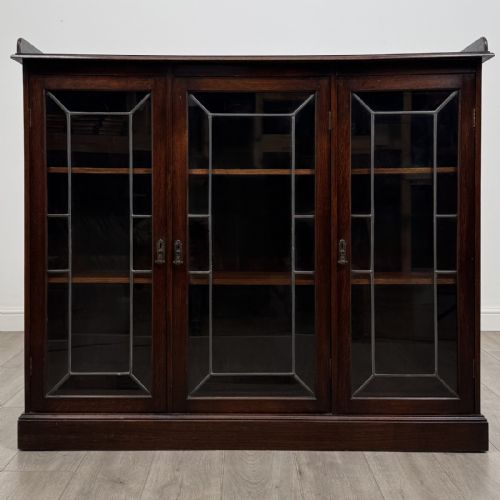
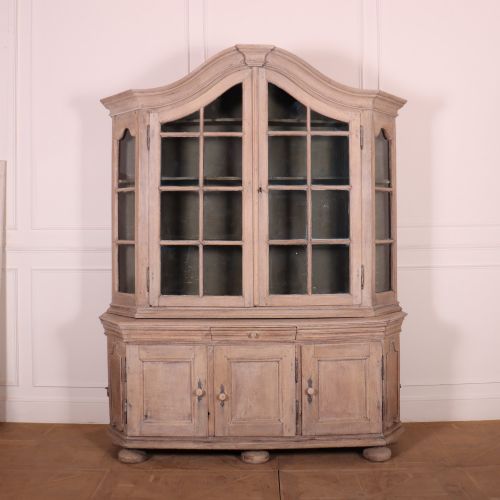
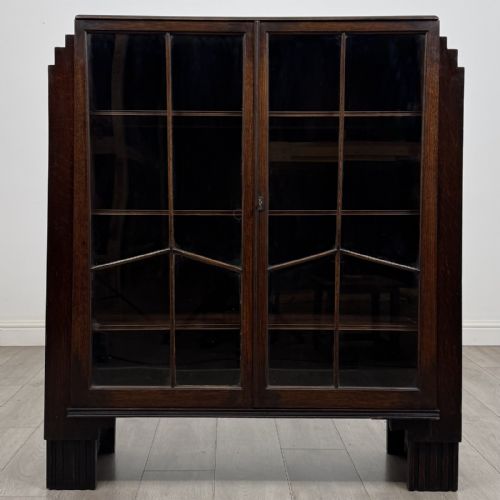
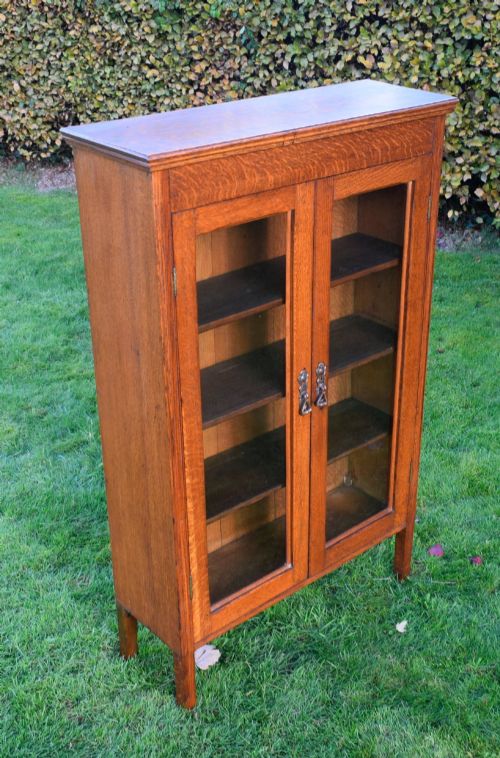

Vintage Oak Bookcase Cabinet
A vintage oak bookcase cabinet combines practical storage with robust timber construction, serving as a sturdy home for libraries and display collections alike.
Vintage Oak Bookcase Cabinet
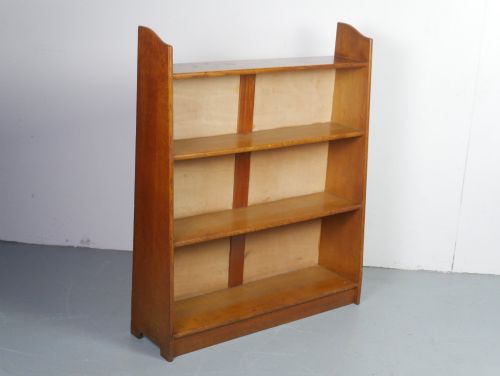
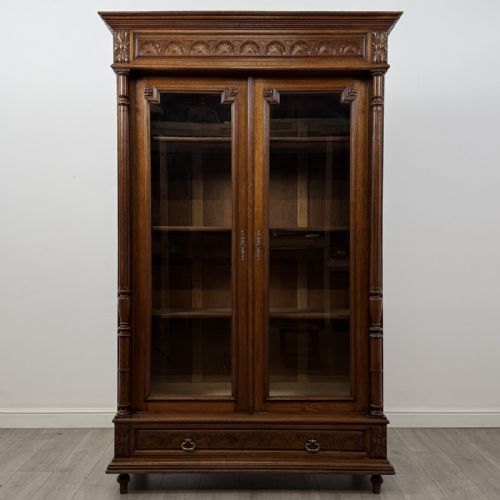
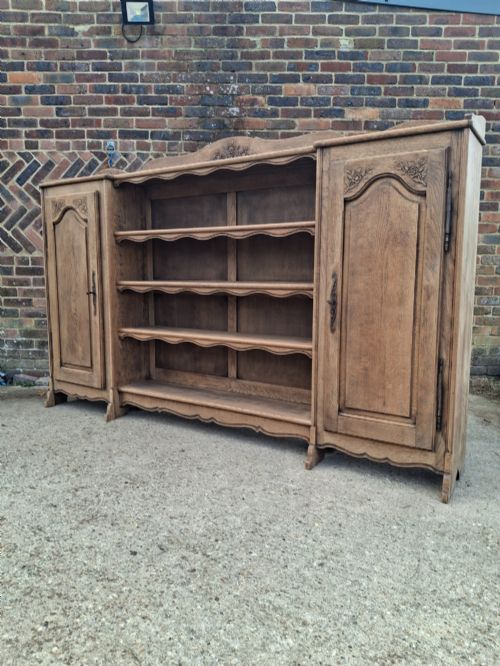
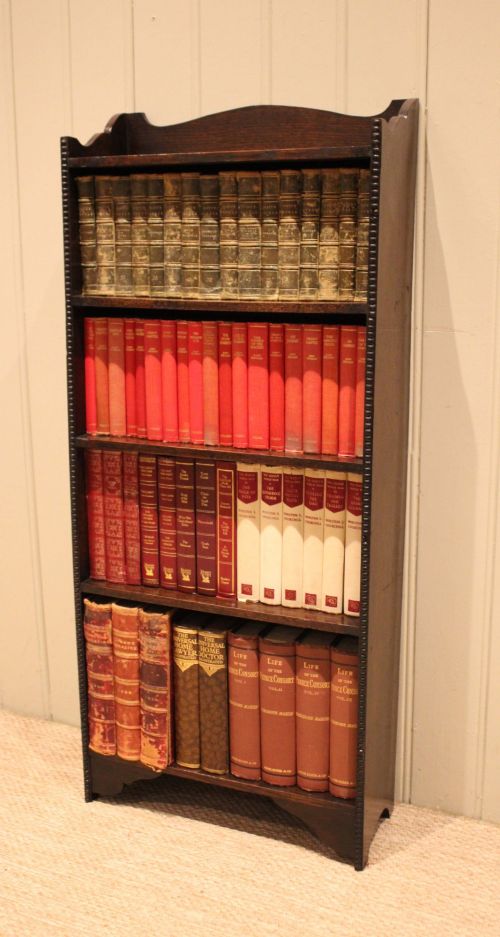
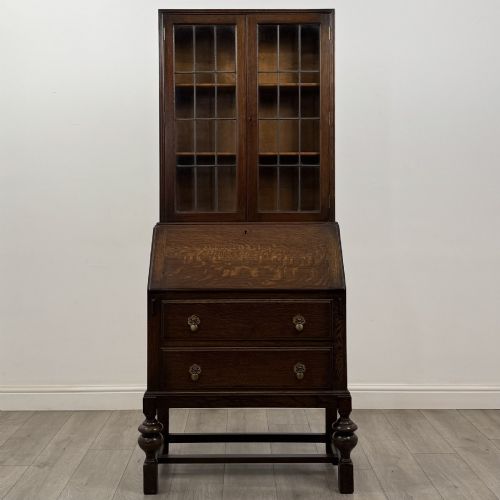
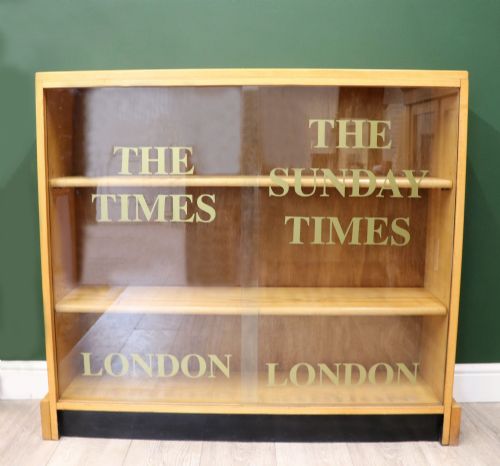
A vintage oak bookcase cabinet provides timber shelving and enclosed storage, appearing primarily in formats from the Edwardian era, the 1920s, and the 1930s. These pieces range from simple open shelving and glazed display cabinets to complex bureau bookcases fitted with drop-front writing desks.
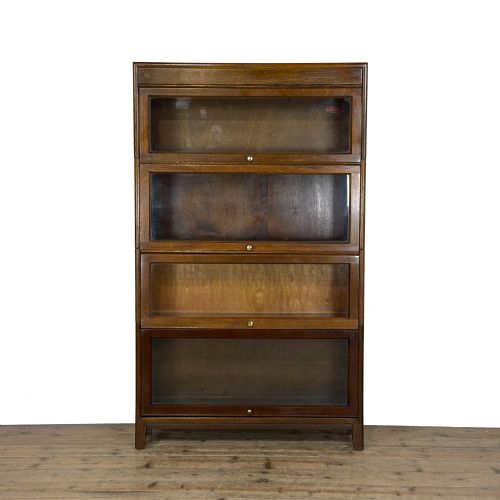
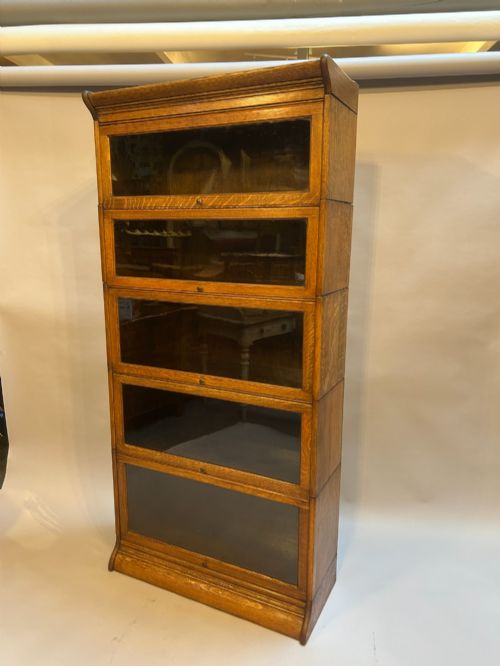
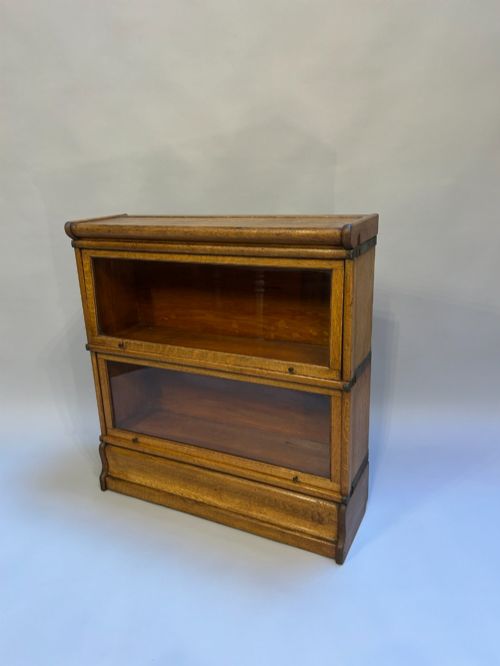
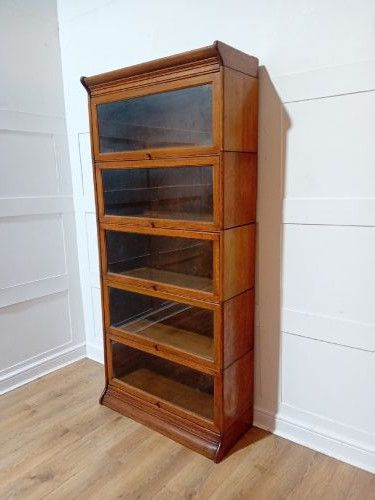
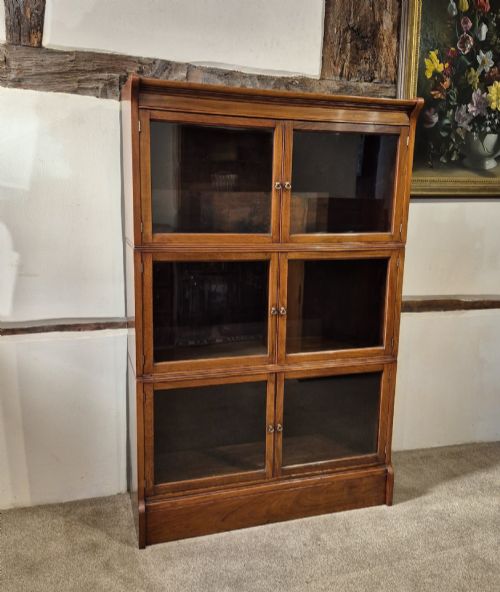
The selection includes modular stacking designs like barrister bookcases alongside Jacobean revival pieces featuring barley twist legs and leaded glass doors. Buyers encounter formats spanning narrow corner cabinets, dwarf cabinets, and multi-tier sectional units designed for domestic and school libraries.
How they were made
Construction relies heavily on solid oak and oak veneers, selected for durability and pronounced grain patterns. Workshops employed traditional joinery techniques alongside carved ornamentation, dentil cornices, and inlaid details.
Doors and apertures incorporate glass, leaded panels, and fabric linings, while hardware utilises brass handles, iron fittings, and specialised locks by makers such as Hobbs and Co. Sectional variants depend on interlocking frames for modular assembly.
Vintage Oak Bookcase Cabinet Retail Price Guide 2026
Typical asking prices for vintage oak bookcase cabinet among the pieces listed under this phrase on Sellingantiques today, from the lower quarter to the upper quarter. They describe what is for sale here now, not the wider market.
Formats range from bureau bookcases and barrister stacks to open shelving and corner cabinets.
What varies in quality
Quality rests on the integrity of the oak timber, the precision of the joinery, and the condition of original hardware like brass handles and leaded glass panels. Pieces bearing maker stamps from established firms or workshops command greater attention from collectors.
The refinement of carved details, such as linenfold panels or barley twist legs, distinguishes standard production items from finer studio or revival pieces. Intact sectional mechanisms and original glazing indicate superior preservation.
Gunn·Minty of Oxford·E Gomme·Globe Wernicke·Lebus·Liberty
The Vintage Oak Bookcase Cabinet Glossary
- Bureau bookcase
- A combination of a sloping desk front and upper shelving or cabinet space. This form allows users to write while concealing paperwork behind closed panels.
- Barrister bookcase
- A sectional cabinet featuring vertically lifting glass doors on each tier. Also known as an elastic or stacking bookcase, it allows modules to be added or separated.
- Leaded glass
- Small panes of glass joined together by strips of lead cames. This technique creates geometric or decorative patterns within cabinet doors.
- Linenfold
- A carved wood panel motif resembling folded cloth. It appears frequently on cabinet doors from revival and Arts and Crafts periods.
- Dentil cornice
- A moulding punctuated with small, equally spaced rectangular blocks resembling teeth. It runs along the upper edge of formal cabinets.
Vintage Oak Bookcase Cabinet: Frequently Asked Questions
What is a barrister bookcase?
A barrister bookcase consists of stacked, modular tiers with glass doors that lift upwards and slide into the cabinet. This design protected law books from dust while allowing lawyers to transport libraries easily.
Today, these sectional units function well in living rooms and studies for organising books and displaying decorative items.
How do I care for vintage oak?
Maintain oak furniture by dusting regularly with a dry cloth and occasionally applying natural beeswax to nourish the timber. Avoid placing cabinets near direct heat sources or in damp environments.
Proper humidity levels prevent the solid oak panels and internal joinery from warping over time.
Are shelves adjustable in these cabinets?
Many open oak bookcases and glazed cabinets feature adjustable shelving supported by rack-and-pinion or metal pins. This adaptability accommodates volumes of varying heights.
Fixed shelving is more common in older Jacobean revival or strictly period reproductions.
What distinguishes Arts and Crafts oak cabinets?
Arts and Crafts pieces emphasise visible construction methods, natural timber grains, and minimal ornamentation such as subtle inlaid details. These cabinets reflect a philosophy of honest craftsmanship.
They often feature hand-hammered brass hardware and leaded glass doors with simple geometric designs.