

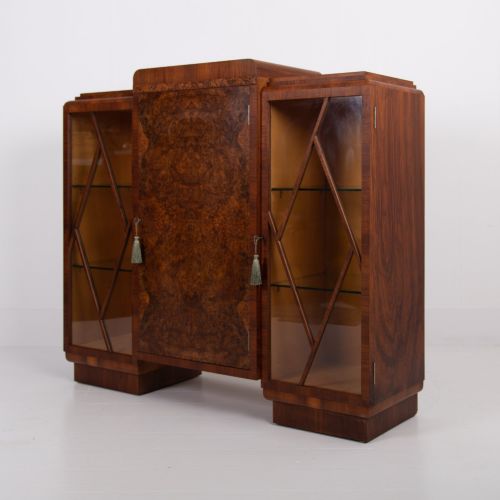


Burr Walnut China Cabinet
A burr walnut china cabinet brings rich, patterned wood grain and glazed display space into a room.
Burr Walnut China Cabinet
A burr walnut china cabinet serves to house and display porcelain and books while introducing striking timber figures into a room. These pieces appear across Victorian, Edwardian, and Art Deco periods, ranging from compact pier cabinets to large glazed bookcases.
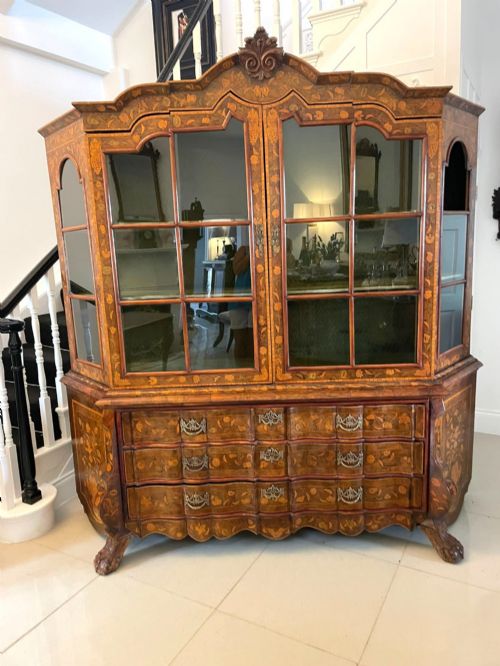
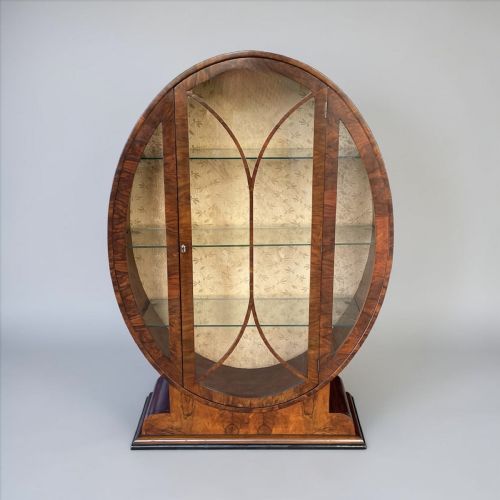
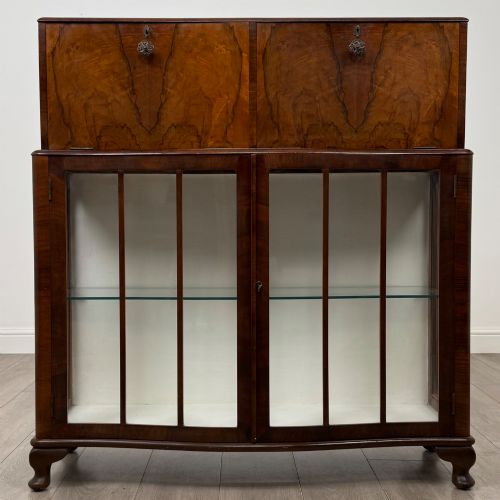
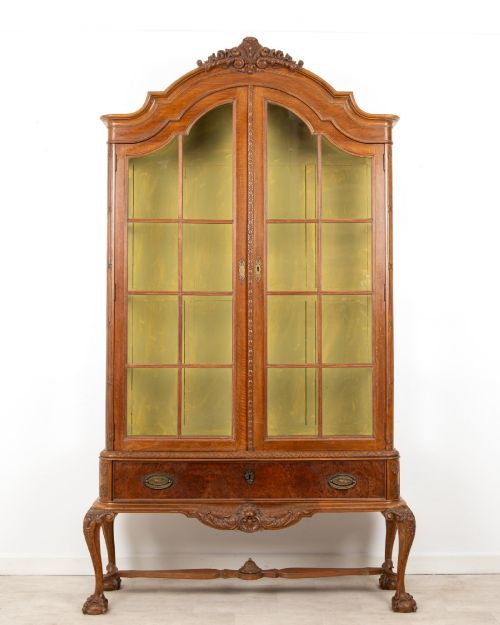
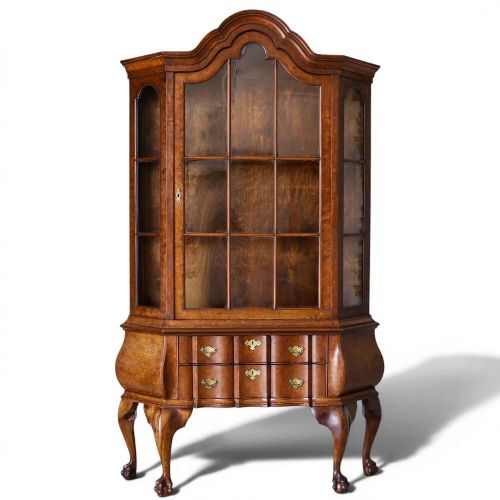
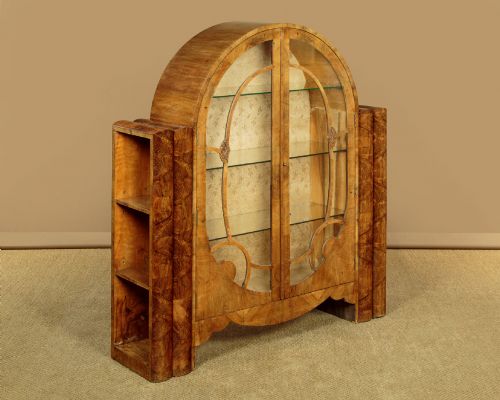
The pieces on this page span the nineteenth and twentieth centuries, encompassing styles such as Dutch Baroque Revival, Queen Anne Revival, and geometric Art Deco forms. Cabinets take various configurations, including corner units, bow fronts, and circular or octagonal display pieces.
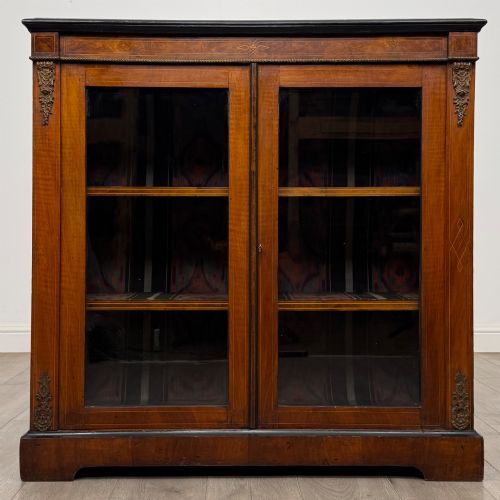
Victorian examples often incorporate marquetry inlay, ormolu mounts, and crossbanding on dark walnut carcases. Later twentieth-century versions favour clean architectural lines in burr walnut veneer, sometimes paired with sycamore.
How they were made
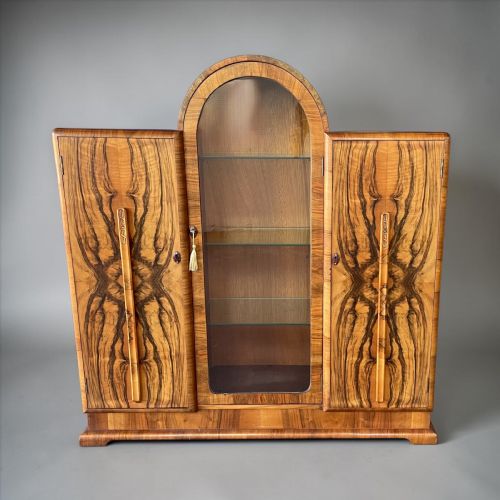
Cabinet makers applied thin slices of highly figured burr walnut veneer over solid timber carcases to create symmetrical grain patterns across the doors and panels. Marquetry inlay, ebonised wood details, and brass hardware completed the construction.
Glazed upper sections used timber framing to hold glass panels, while interior shelving provided structural support for display china. Ormolu mounts and brass edging were frequently added to Victorian and revival pieces for decorative emphasis.
Some Art Deco cabinets went completely circular, ensuring your porcelain spins in style.
What varies in quality
The visual impact of the cabinet depends largely on the selection and matching of the burr walnut veneer across the front doors. Superior pieces display harmonious grain patterns that mirror each other, whereas lower-tier examples show random or mismatched figuring.
Finishing details such as fine marquetry inlay, cast ormolu mounts, and original glass panes elevate the standard of a piece. The crispness of carved elements and the structural integrity of the glazed doors distinguish finer workshops from standard production.
Maurice Adams·Epstein
The Burr Walnut China Cabinet Glossary
- Burr walnut
- A wood veneer taken from the wart-like growths on walnut trees, yielding intricate, swirling grain patterns. This material forms the primary decorative surface on high-end cabinets.
- Ormolu
- Gilded bronze mounts applied to furniture for decorative effect. These metal ornaments are typically found on Victorian revival cabinets.
- Marquetry
- Inlaid patterns of various woods applied to a furniture carcase to form pictorial or geometric designs. Floral motifs frequently appear on Dutch-style cabinets.
- Pier cabinet
- A narrow cabinet designed to stand against the wall space between windows. These nineteenth-century pieces often feature glass doors and velvet-lined interiors.
- Crossbanding
- A border technique where strips of veneer are laid perpendicular to the main grain. This frames the central burr walnut panels on doors and drawers.
Burr Walnut China Cabinet: Frequently Asked Questions
How do I date a burr walnut cabinet?
Dating relies on stylistic clues, construction methods, and period characteristics visible in the piece. Victorian examples often feature heavy ormolu mounts and marquetry, while Art Deco pieces from the 1930s display geometric forms and contrasting veneers like sycamore.
Examining the interior timbers and backboards also helps determine age. Earlier pieces show hand-cut elements and older jointing techniques, whereas twentieth-century items often exhibit standardised manufacturing methods.
Where should I place a china cabinet?
These cabinets suit dining rooms, living spaces, or hallways where they can safely house porcelain and glassware behind glazed doors. Corner cabinets work well for utilising awkward angles in smaller rooms.
Positioning the cabinet away from direct sunlight protects the delicate walnut veneer and internal fabrics from fading. Stable room temperatures also prevent the wood and glue joints from drying out over time.
How do I clean burr walnut?
Dust the exterior regularly with a soft, dry cloth to prevent dirt accumulation in the intricate grain patterns. Avoid using harsh chemical sprays or silicone polishes that can damage the antique finish.
Periodically feeding the wood with appropriate furniture wax maintains the sheen and protects the veneer. Apply the wax sparingly and buff gently with a clean cloth.
What is the difference between a pier cabinet and a display cabinet?
A pier cabinet is typically a narrow, single-door piece designed specifically to fit the wall space between windows in Victorian drawing rooms. Standard display cabinets vary more widely in shape, including circular, octagonal, and multi-door variants.
Display cabinets often provide larger interior volumes for collections of porcelain or books. Pier cabinets focus more on compact, ornate presentation with inlaid wood and decorative mounts.