



Art Deco Glass Cupboard
An art deco glass cupboard brings striking geometric forms and gleaming display space into a room, offering both practical storage and period elegance.
Art Deco Glass Cupboard
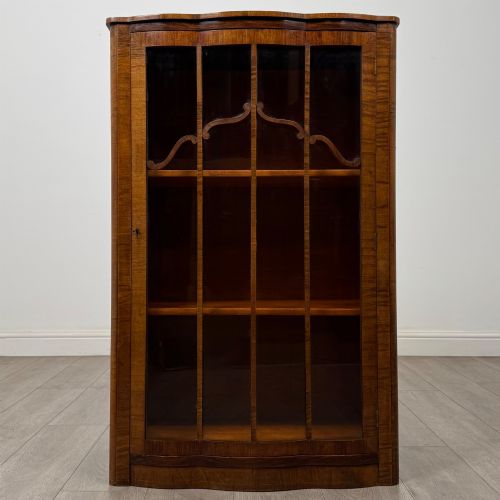
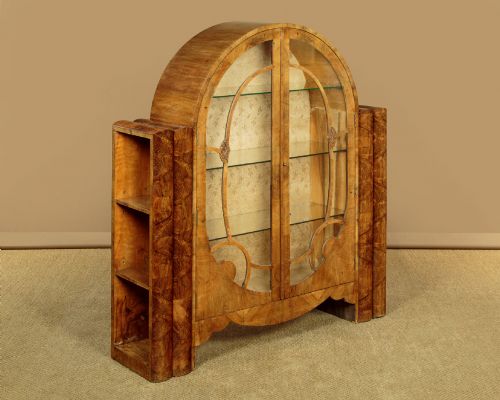
When you search for an art deco glass cupboard, you are looking at glazed cabinets and bookcases designed to showcase decorative objects while keeping them enclosed. The majority of pieces on this page originate from the 1930s and the 1920s, showing the characteristic silhouettes of the period.
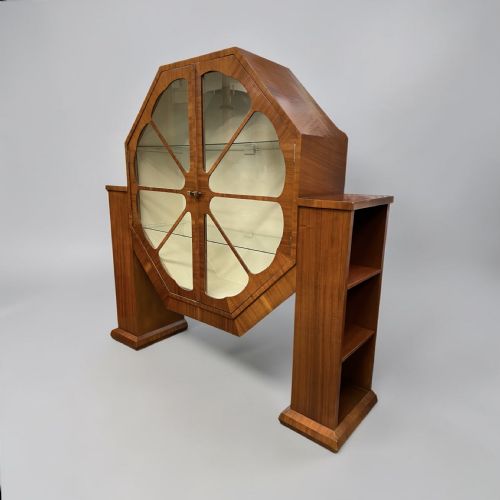
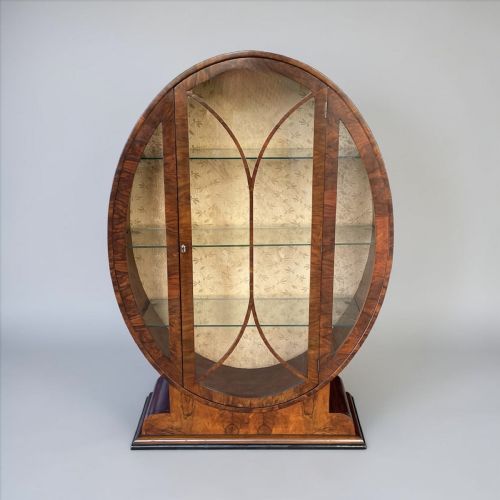
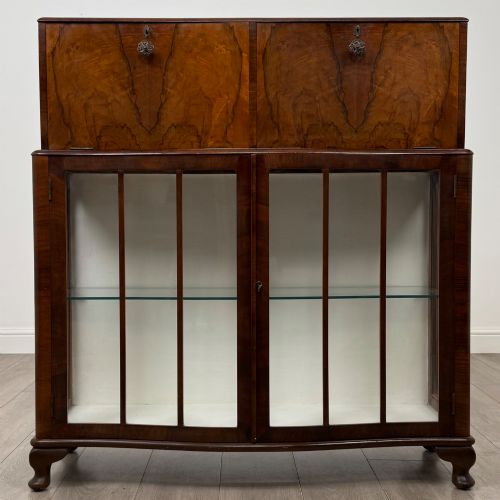
The forms range from traditional rectangular display cabinets to striking circular, oval, octagonal, and clove-shaped configurations. Alongside these standard art deco designs, you will also encounter Edwardian pieces influenced by Queen Anne revival styles and fitted walnut cabinets.
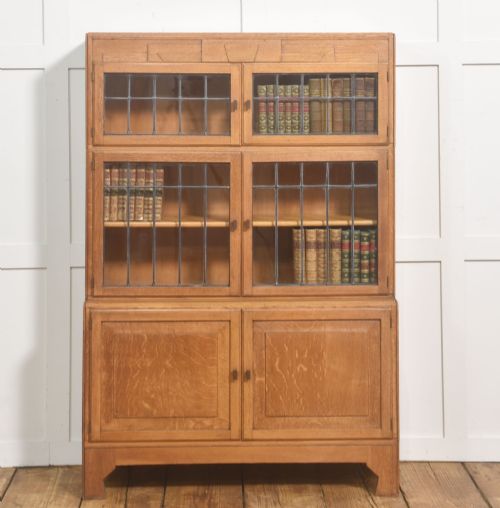
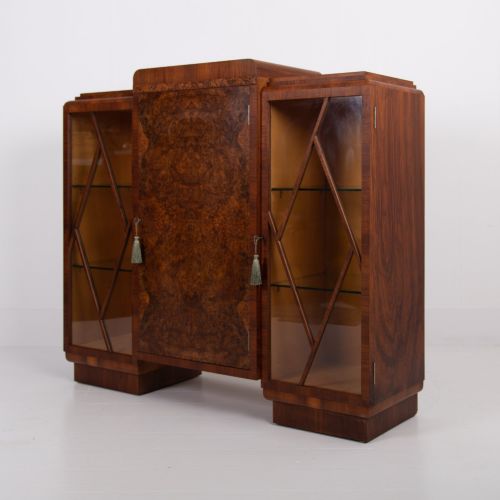
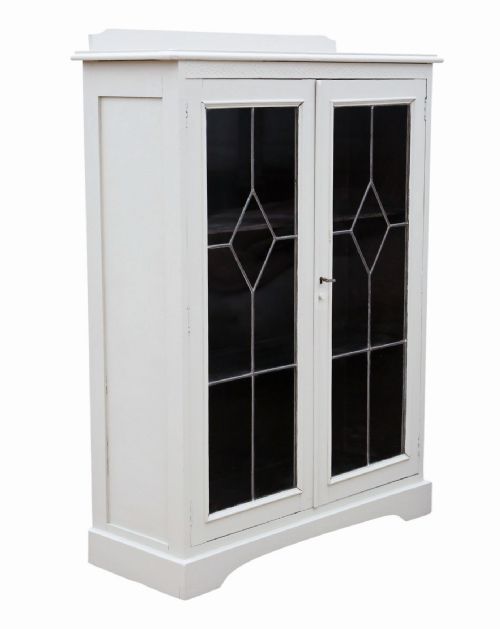
These items serve primarily as bookcases and display cabinets, combining wooden shelving with glass panels. Walnut, burr walnut, and oak form the structural core of most examples, frequently accented with brass mountings and leaded glass details.
Materials and construction methods
Cabinet makers utilised rich timbers such as walnut, figured walnut, burr walnut, oak, maple, and mahogany to build the carcasses. Surfaces were often enhanced with contrasting veneers like sycamore, or finished with ebonisation and paint.
Glazing takes multiple forms, from simple fitted glass panels to leaded glass windows set into wooden frames. Brass components provide structural and decorative hardware, including mounts, handles, and hinges.
Among the geometric silhouettes, a clove-shaped display cabinet brings a distinctly botanical curve to the room.
Distinguishing quality across pieces
Quality reveals itself in the choice of timber and the complexity of the cabinet silhouette. Pieces featuring highly figured walnut, burr walnut, or maple veneers sit firmly above standard plain timber builds.
The execution of unusual shapes, such as circular, octagonal, and clove-shaped frames, demands greater cabinet-making skill than standard rectangular bookcases. Furthermore, individual works by known makers command distinct recognition for their superior joinery and design execution.
Rurka·Epstein
The Art Deco Glass Cupboard Glossary
- Burr walnut
- A wood veneer taken from the growth knots of walnut trees, prized for its swirling, highly figured grain patterns. It provides a rich and decorative surface on cabinet doors.
- Leaded glass
- Glass panes held together within a network of narrow lead cames. This technique creates geometric patterns typical of early twentieth-century window and cabinet design.
- Figured walnut
- Timber exhibiting an attractive, non-uniform grain structure derived from specific areas of the walnut tree. Cabinet makers select it to highlight the front panels of display furniture.
- Ebonised
- Wood treated with a finish that darkens the surface to resemble ebony. This dark treatment offers a sharp contrast against brass mounts and glass panels.
- Queen Anne revival
- A style reviving design characteristics from the early eighteenth century, such as cabriole legs and polished walnut surfaces. It occasionally influences the framing of earlier twentieth-century cabinets.
Art Deco Glass Cupboard: Frequently Asked Questions
What is an art deco glass cupboard?
An art deco glass cupboard is a glazed display cabinet or bookcase designed during the early twentieth century. These pieces combine wooden frames with glass doors to store and exhibit books or decorative objects.
They rely on the distinctive geometric lines and rich wood veneers characteristic of the 1920s and 1930s.
How do I date an art deco cabinet?
Dating relies on stylistic markers such as curved silhouettes, stepped pediments, and specific timber veneers. Most pieces date from the 1920s and 1930s, though some Edwardian examples incorporate earlier revival styles.
Examining the construction methods and hardware, such as brass mounts and leaded glass, helps confirm the manufacturing era.
Where should I place a display cabinet?
These cabinets suit living rooms, dining rooms, and studies where they can function as focal points. Their glass panels allow you to display ceramics, glassware, or book collections safely.
Ensure the cabinet sits away from direct sunlight to protect antique timber veneers and fabric linings from fading.
Are these cabinets used for books?
Many examples function as combined bookcases and display cabinets with integrated wooden shelving. They offer enclosed storage that protects volumes from dust while keeping spines visible through glass.
Larger configurations accommodate extensive libraries alongside decorative display items.