



1930s Walnut China Cabinet
A 1930s walnut china cabinet brings geometric glamour and practical display space to a room, driven by the distinct lines of the Art Deco period.
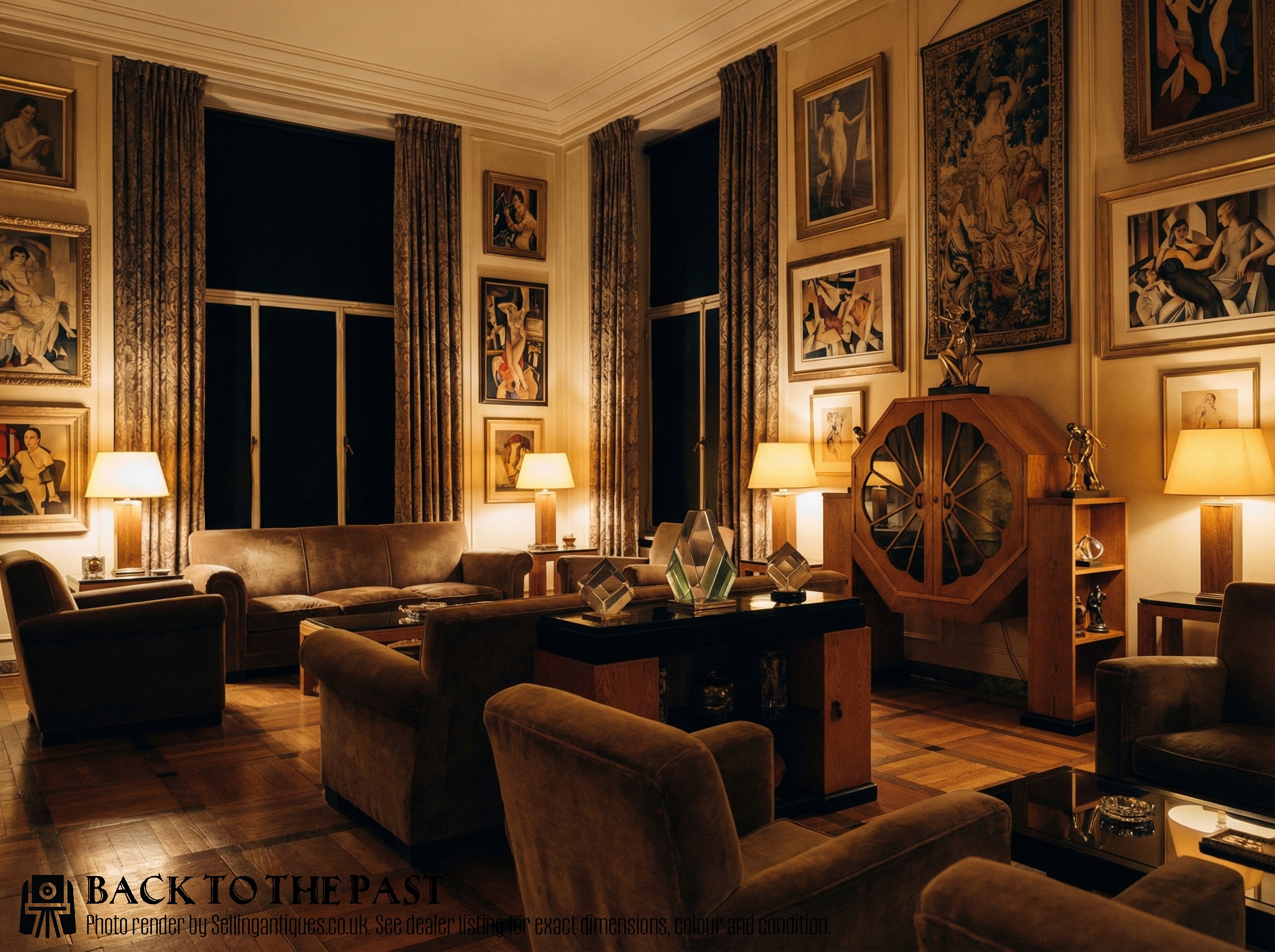
1930s Walnut China Cabinet
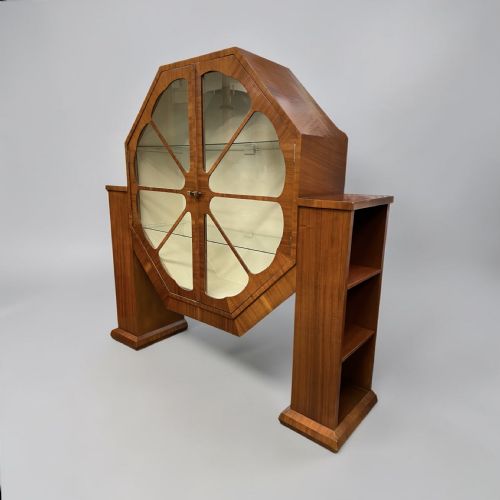
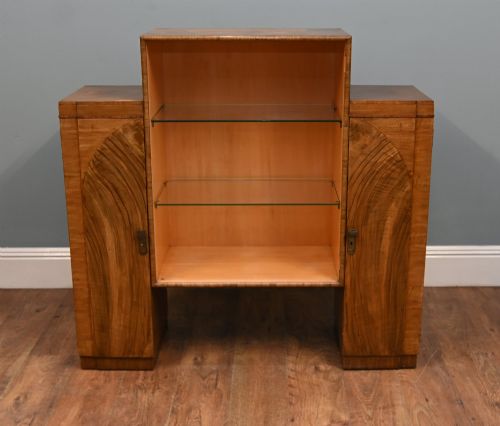
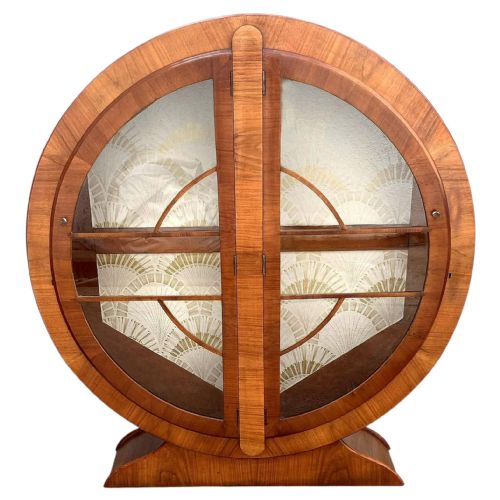
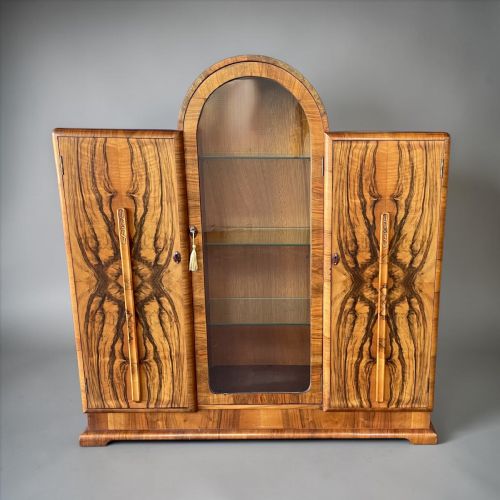
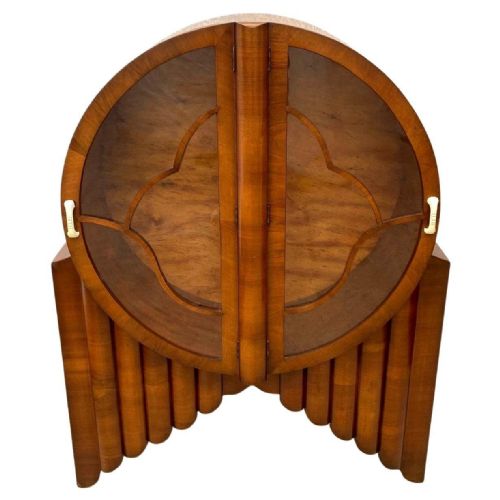
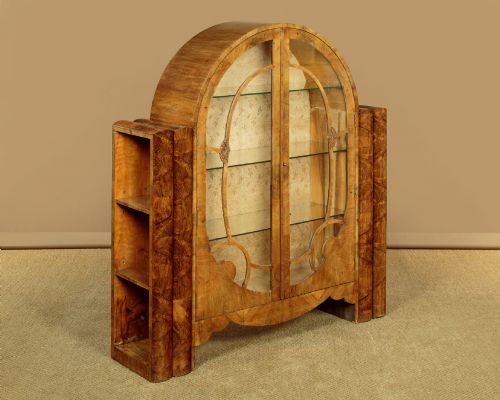
A 1930s walnut china cabinet is primarily defined by the Art Deco style, taking forms such as circular, oval, hexagonal, octagonal, clove-shaped, and corner units designed to house and display tableware.
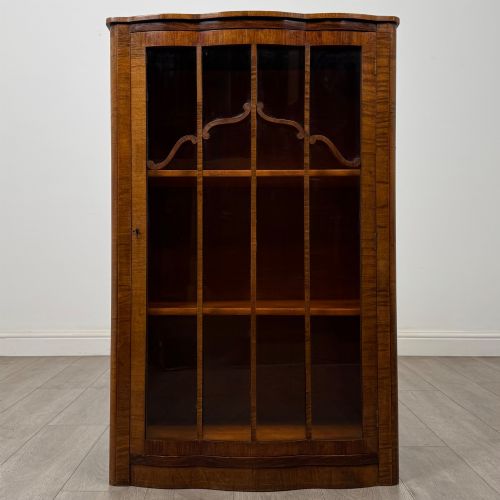
The pieces on this page span the 1930 period and the Edwardian era, predominantly appearing as display cabinets, vitrines, and bookcase cabinets.
Makers such as Rurka, Maurice Adams, and Epstein feature among these English designs, utilising distinctive geometries like the rocket cabinet and cathedral vitrine.
Materials and construction
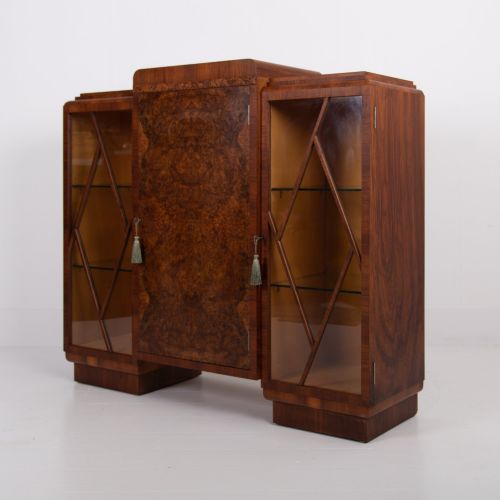
Makers constructed these cabinets using walnut, burr walnut veneer, and figured walnut, often accented with secondary timbers like sycamore and maple to provide visual contrast.
Glazing is central to the form, incorporating clear glass, leaded glass, and brass fittings to secure the doors and illuminate the interior display shelves.
1930s Walnut China Cabinet Retail Price Guide 2026
Typical asking prices for 1930s walnut china cabinet among the pieces listed under this phrase on Sellingantiques today, from the lower quarter to the upper quarter. They describe what is for sale here now, not the wider market.
Cabinet makers of the era built vessels shaped like cloves, rockets, and cathedrals to hold everyday tea sets.
Markers of distinction
The quality of a piece rests on the choice of veneer, where highly figured burr walnut creates dramatic grain patterns across curved and circular carcases.
Construction excellence shows in the precise joinery of unusual shapes like hexagonal, octagonal, and clove-shaped profiles, alongside the integration of leaded glass panels and brass hardware.
Rurka·Maurice Adams·Epstein
The 1930s Walnut China Cabinet Glossary
- Burr walnut
- A thin slice of wood taken from a walnut tree growth, showing intricate, swirling grain patterns used to decorate cabinet surfaces.
- Vitrine
- A glass-fronted cabinet designed specifically for displaying fine china, porcelain, or curiosities.
- Leaded glass
- Small panes of glass held together by strips of lead cames, forming geometric patterns within cabinet doors.
- Figured walnut
- Timber exhibiting natural patterns and swirls in the grain, selected for decorative cabinet fronts.
1930s Walnut China Cabinet: Frequently Asked Questions
What is a rocket cabinet?
A rocket cabinet is an Art Deco display piece featuring vertical, streamlined styling reminiscent of early aerodynamic design.
These cabinets use curved walnut and glass to create a dynamic silhouette while retaining interior shelf space for china.
How do I identify Art Deco cabinets?
Art Deco cabinets are identified by geometric forms, symmetrical lines, and the use of contrasting veneers like burr walnut and sycamore.
They often take unusual shapes, such as circular, hexagonal, or octagonal configurations, rather than traditional rectangular boxes.
Where were these cabinets made?
The pieces listed originate from English workshops and studios operating during the 1930 period.
Prominent makers working in England during this time produced distinctive glazed cabinets utilising native and exotic woods.
How do I care for walnut veneer?
Walnut veneer requires protection from direct sunlight and excessive moisture to prevent fading and lifting of the thin wood layer.
Regular dusting with a dry cloth maintains the polished finish of the burr walnut surface.