
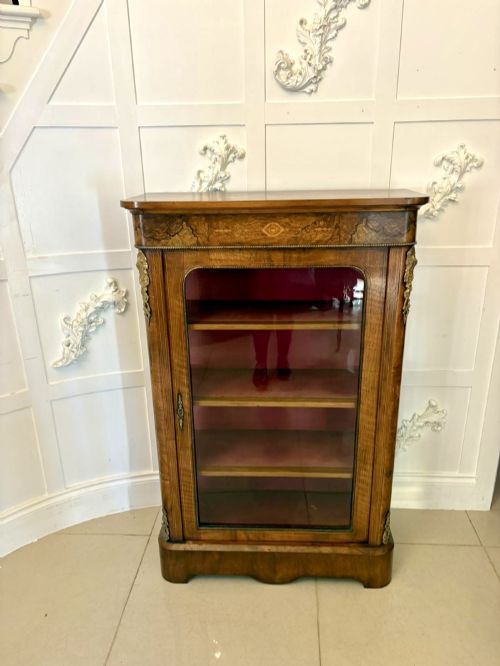


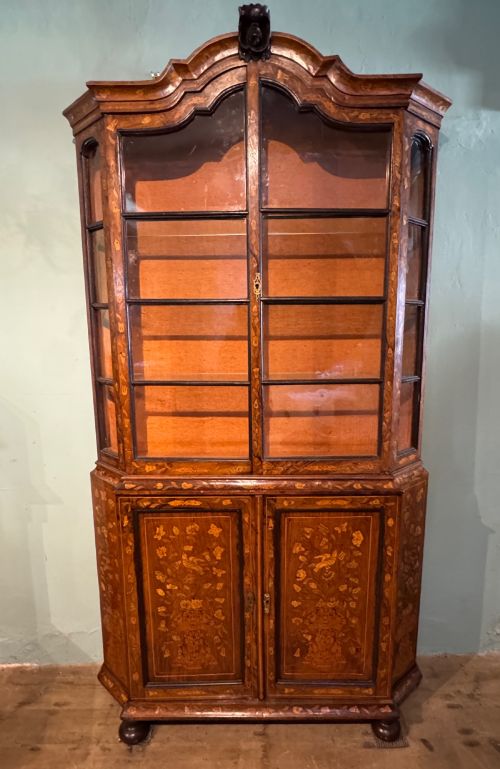
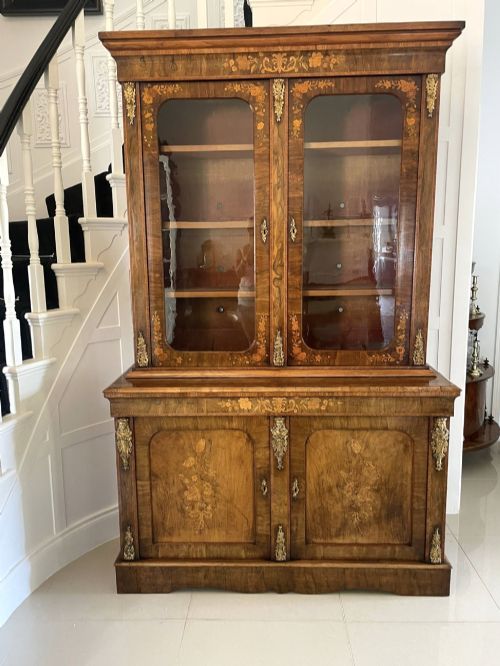
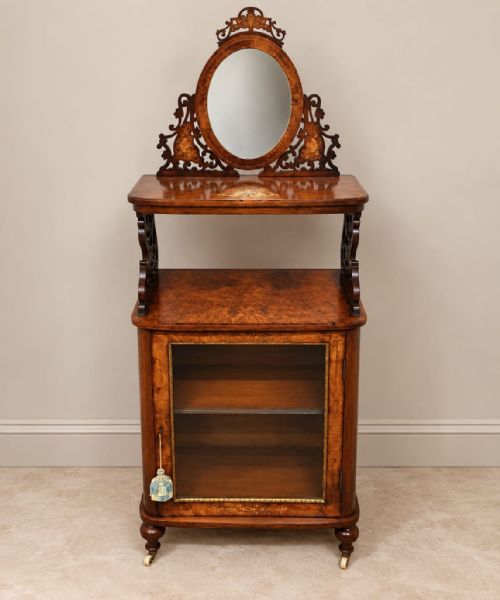
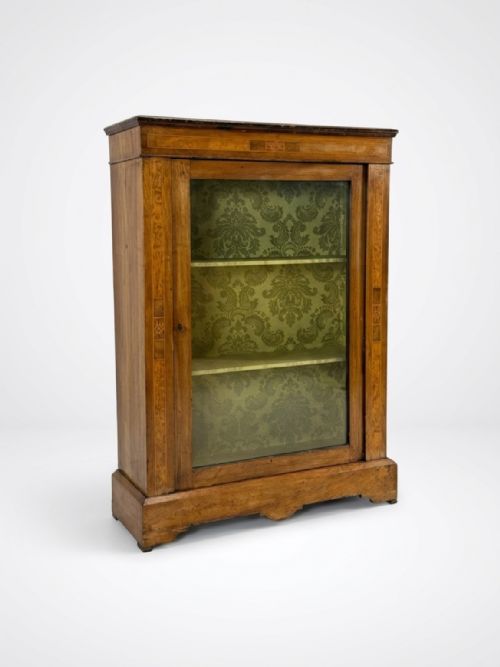
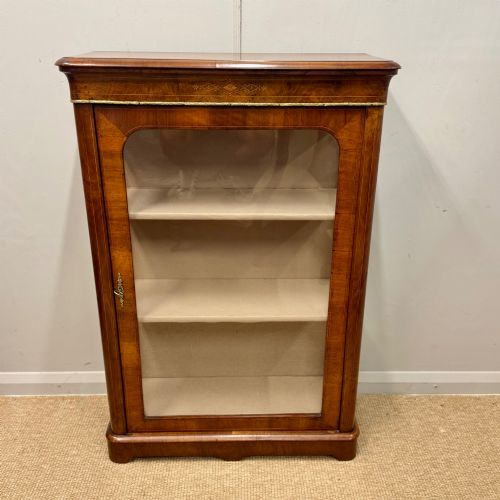
Walnut Glass Display Cabinet
A walnut glass display cabinet brings warmth and polished sheen to a room while securely showcasing cherished collections.

Walnut glass display cabinet
A walnut glass display cabinet combines figured timber frames with glazed compartments designed to showcase objects while protecting them from dust.
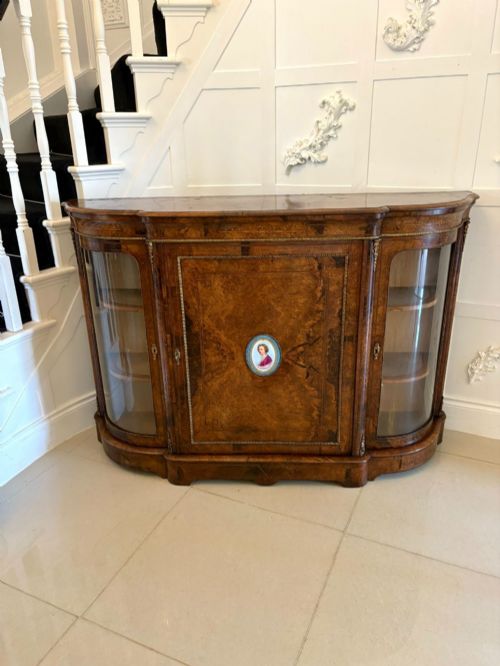
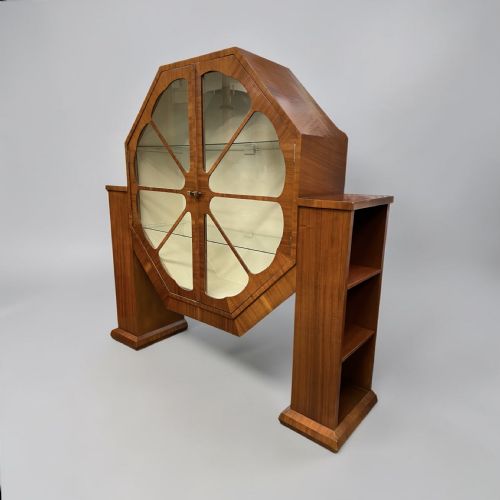
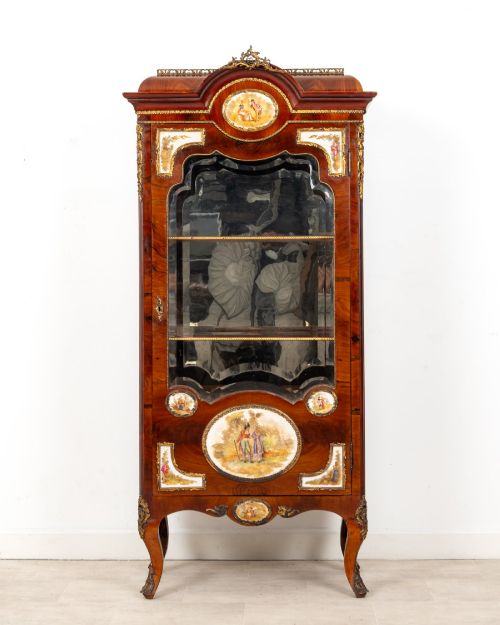
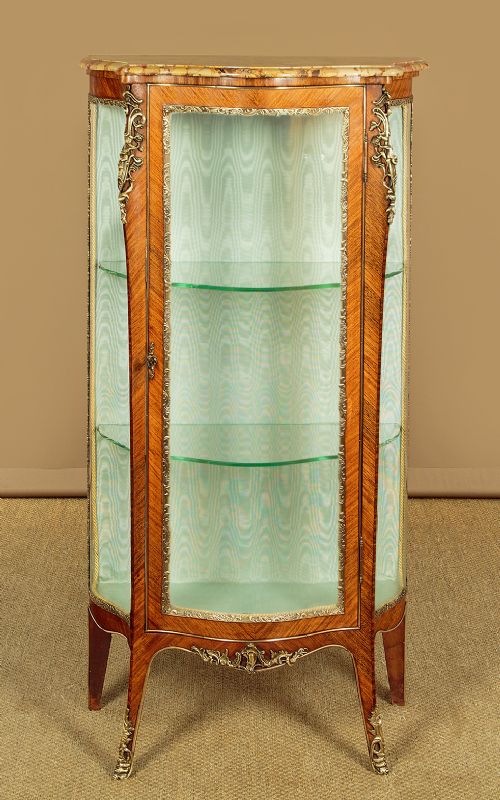
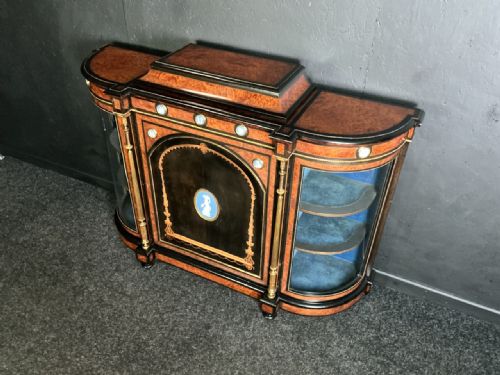
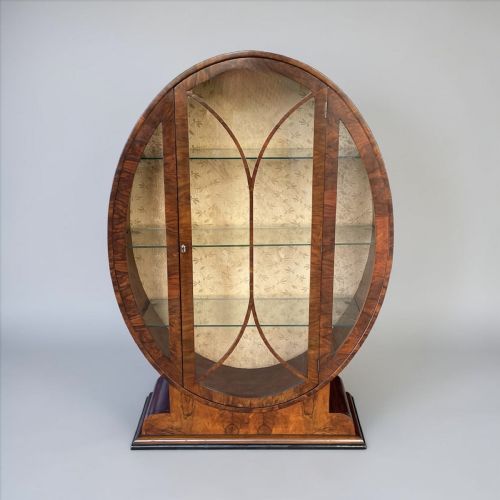
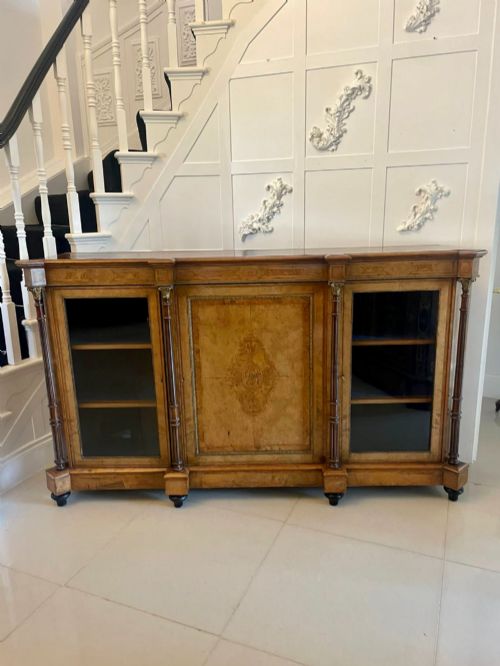
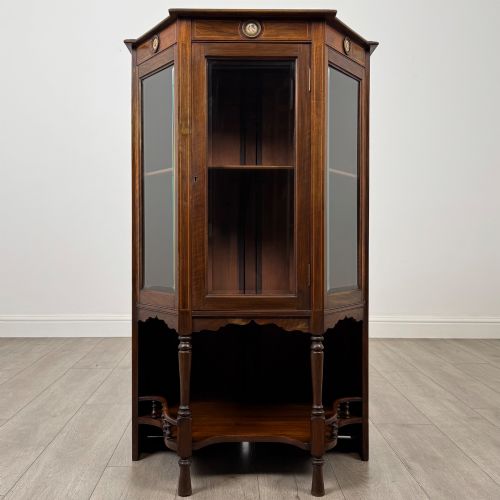
The pieces appearing on this page span Victorian and Art Deco eras, presenting forms from grand credenzas to upright side cabinets and specialised drinks furniture.
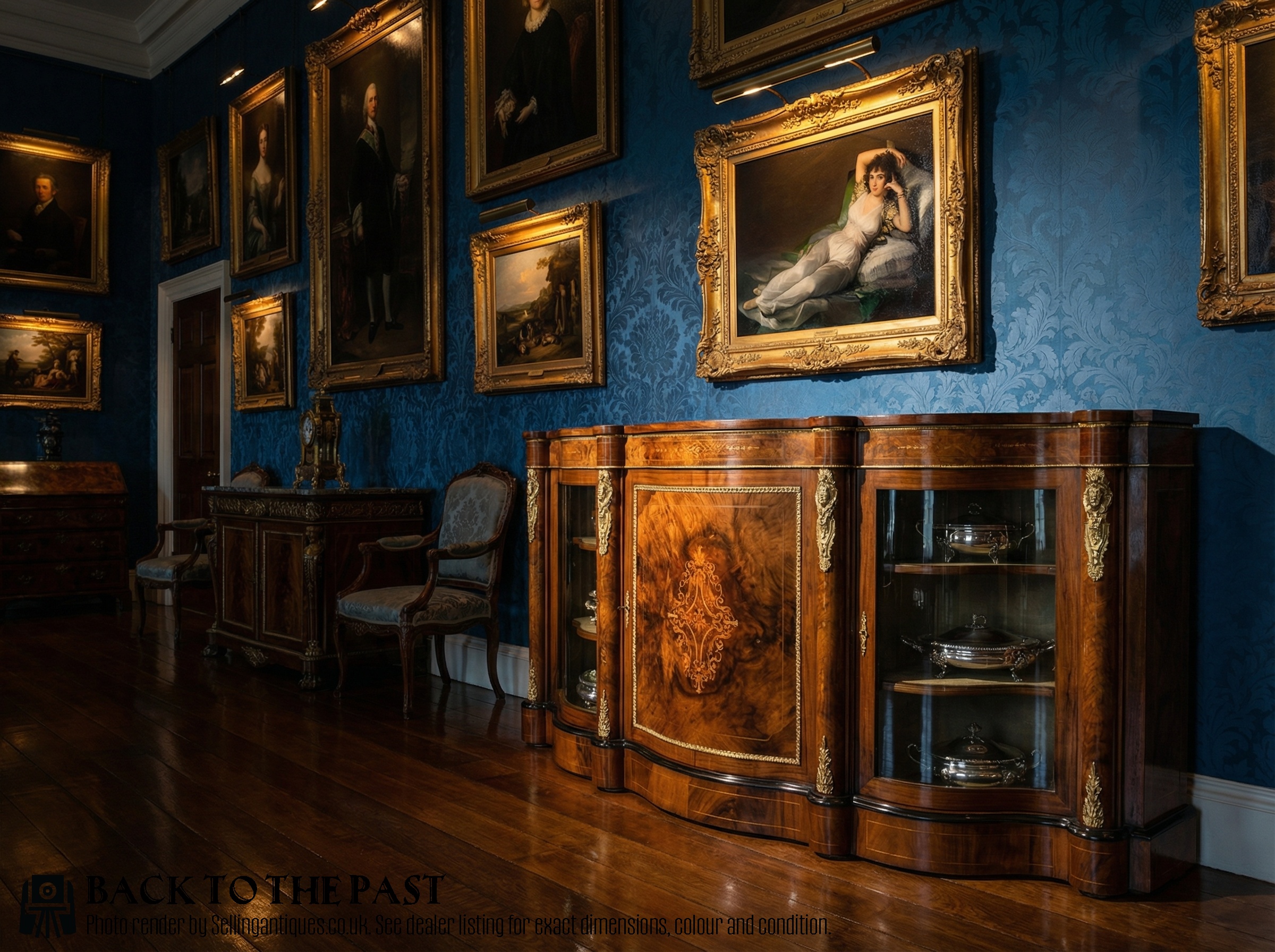
Victorian examples tend to feature serpentine fronts, marquetry inlay and ormolu mounts, whilst Art Deco pieces lean towards clean curved lines and figured veneers.
How they were made
Cabinet makers utilised solid walnut alongside burr walnut and figured walnut veneers, laying thin slices of decorative timber over stable secondary woods to create rich grain patterns.
Glazing takes the form of fitted glass panels held within timber doors, sometimes complemented by leaded details or shaped glass fronts.
Metal elements such as brass, gilt metal and ormolu provide structural mounts and decorative highlights, frequently paired with inlaid marquetry and fabric-lined interiors.
Retail Price Guide 2026
Typical UK retail prices for walnut glass display cabinet, calculated from the Sellingantiques database of over a million retail prices indexed since 2003. This retail price guide relies exclusively on Sellingantiques data; no external sources or auction records are used, so the figures do not describe the wider market.
The records show items originating from the Victorian and Art Deco periods, employing burr walnut, ormolu, and leaded glass.
What varies in quality
The ambition of the timber selection dictates much of the visual impact, with deeply figured burr walnut and symmetrical veneers sitting at the upper end of the scale.
Detailing in the metal mounts, hand-cut marquetry and precision of the glazed door seating separate standard production from more sophisticated cabinet work.

The Walnut Glass Display Cabinet Glossary
- Burr walnut
- A figured wood grain taken from the growth excrescences of walnut trees, prized for its swirling, highly decorative patterns. It is frequently utilised as a veneer on statement furniture.
- Credenza
- A low dining or drawing room cabinet, often featuring glazed side doors and central enclosed shelving. In Victorian design, this form frequently incorporates elaborate marquetry and ormolu mounts.
- Ormolu
- Gilt bronze ornamentation applied to furniture for decorative effect. It provides metallic contrast against dark walnut surfaces.
- Marquetry
- The art of applying small pieces of veneer to a structure to form decorative patterns or pictures. Craftsmen cut contrasting woods to fit precisely within the design.
- Veneer
- A thin layer of superior wood adhered to a base timber carcass. This technique allows makers to display striking grain formations without relying entirely on scarce solid timber.
Frequently Asked Questions
What is a walnut glass display cabinet?
It is a glazed storage piece built from walnut timber, designed to hold and exhibit collections.
Such cabinets range from mid-Victorian credenzas to twentieth-century Art Deco bookcase designs.
How do I date these cabinets?
Stylistic markers such as serpentine shapes and marquetry indicate Victorian origins, while geometric curves and figured veneers point toward the Art Deco period.
Examining the construction methods and glass types further clarifies the manufacturing era.
Where should I place one?
These cabinets suit dining rooms, living spaces and hallways where prized objects benefit from dust-free enclosure.
Their reflective glass and warm timber tones help brighten darker corners of a room.
How do I care for the wood?
Keep walnut furniture away from direct sunlight and sudden temperature shifts to prevent timber movement.
Gentle dusting with a dry cloth maintains the polished sheen of the veneer.