




Art Deco Curio Cabinet
An art deco curio cabinet brings the striking geometry and rich timbers of the interwar years straight into your home.

Art Deco Curio Cabinet
An art deco curio cabinet is a specialised display piece designed to house small collections and decorative objects behind glass panels. These cabinets emerge primarily from the nineteen twenties and nineteen thirties, capturing the defining aesthetic of the interwar period through clean lines and distinctive architectural forms.
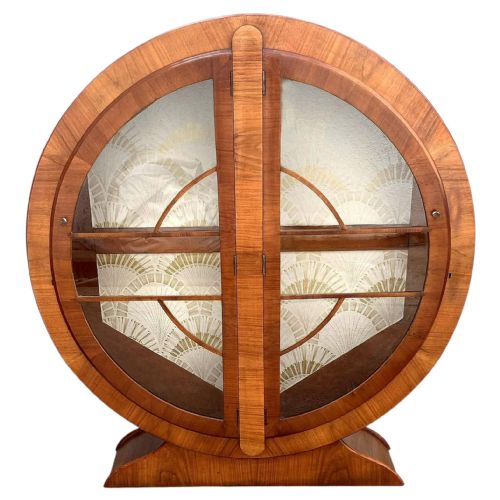
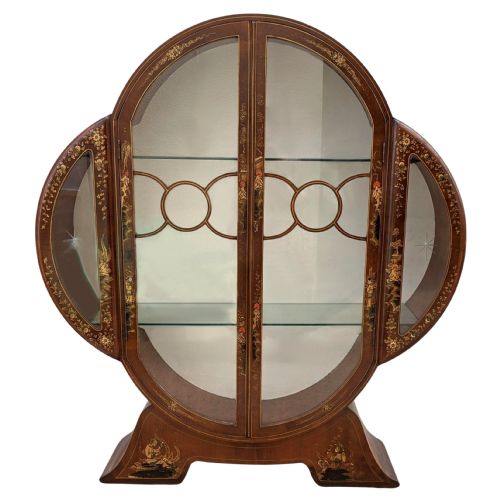
The versions most commonly met on this page take the form of circular, octagonal, or tall tower display cabinets. English makers favour walnut and burr walnut, alongside ebonised wood paired with brass mounts for a sharper contrast.
These pieces serve a functional purpose while acting as sculptural focal points in a room. The integration of glass lets light circulate around the displayed items from multiple angles.
How they were made
Cabinet makers of the period constructed these pieces using solid timbers and decorative veneers such as walnut and burr walnut over stable secondary woods. Ebonised wood provides a dark, uniform surface that often highlights contrasting details like brass mounts.
Glass panels are fitted into doors and sides to enclose the display space, while internal fabric lining occasionally provides a soft backdrop for objects. Metal and brass elements function as structural accents, hinges, and handles.
Art Deco Curio Cabinet Retail Price Guide 2026
Typical asking prices for art deco curio cabinet among the pieces listed under this phrase on Sellingantiques today, from the lower quarter to the upper quarter. They describe what is for sale here now, not the wider market.
Circular walnut cabinets prove that interwar designers believed straight lines had had quite enough attention.
What varies in quality
The distinction between standard examples and superior pieces rests on the choice of timber and the complexity of the cabinet geometry. Cabinets featuring highly figured burr walnut veneers or demanding shapes like circular and octagonal structures represent a more accomplished level of design.
Hardware integration also separates the range, where precise brass mounting and clean ebonised finishes show a higher degree of workshop care. The handling of glass and door fitment completes the structural standard of each cabinet.
Rurka
The Art Deco Curio Cabinet Glossary
- Burr walnut
- A prized timber harvested from walnut tree growths, showing intricate, swirling grain patterns. It is frequently utilised as a decorative veneer on prominent surfaces.
- Ebonised wood
- Timber treated with a finish to imitate expensive ebony. This process yields a deep, matte or polished black surface.
- Display cabinet
- A piece of furniture fitted with glass doors and panels intended for showing objects. These units protect contents from dust while maintaining high visibility.
- Brass mount
- A decorative or structural fitting cast from brass and attached to the exterior of a cabinet. These elements provide metallic contrast against dark or figured woods.
Art Deco Curio Cabinet: Frequently Asked Questions
What is an art deco curio cabinet?
An art deco curio cabinet is a display furniture piece originating from the nineteen twenties and nineteen thirties, characterised by geometric forms and glazed panels.
These pieces were built to showcase small collections while embodying the modern styling of the interwar decades.
How do I date an art deco cabinet?
Dating relies on identifying materials like burr walnut and ebonised wood alongside specific geometric shapes such as circular or octagonal footprints.
English pieces from this era typically align with manufacturing methods and stylistic traits recorded around nineteen twenty and nineteen thirty.
Where should I place a circular cabinet?
Circular and octagonal cabinets work effectively in corners or as freestanding centrepieces where light can reach the glass panels from multiple directions.
Their curved profiles soften rectilinear room layouts and draw the eye toward displayed curios.
What items belong inside these cabinets?
Curios, small ceramics, glassware, and personal collections are traditionally housed within these glazed display spaces.
The enclosed glass structure protects delicate objects from dust while keeping them visible.