


Figured Walnut Vitrine
These figured walnut vitrine pieces bring warmth and striking grain patterns to any room while keeping your treasured displays dust-free.

Figured Walnut Vitrine
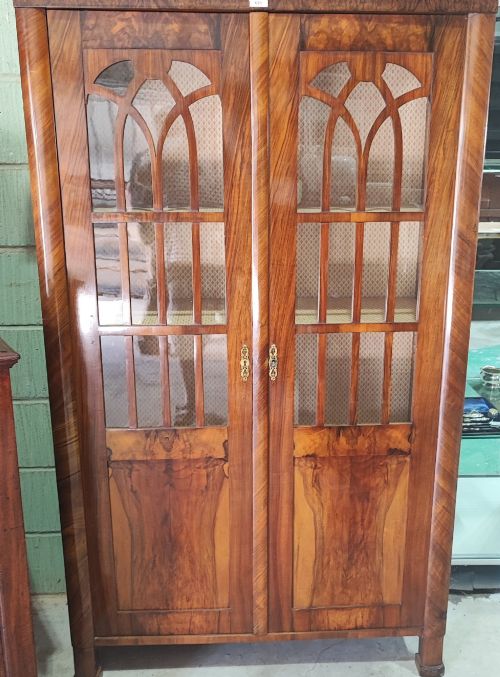
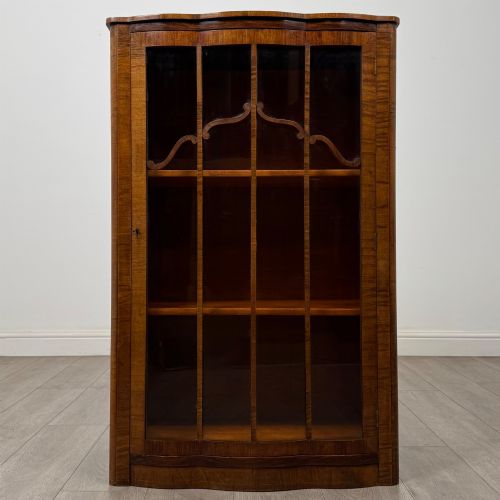
A figured walnut vitrine is a glazed display cabinet showcasing rich timber veneers and timber figuring, spanning the Victorian, Edwardian, and Art Deco eras alongside mid-nineteenth-century French and Biedermeier examples. These cabinets serve primarily to exhibit objects behind glass panels while celebrating the natural grain patterns of walnut.
On this page, you are most likely to meet pieces from the 1930s exhibiting distinct Art Deco styling, often featuring circular or hexagonal forms. Alongside these, nineteenth-century Victorian pier cabinets and marquetry-inlaid two-door glazed versions appear frequently.
How they were made
Cabinetmakers constructed these pieces using walnut timber and figured walnut veneers over robust carcases, often applying glass for the display panels. Metal, brass, and ormolu mounts add decorative accents to doors and cornices.
Interiors frequently incorporate velvet linings to cushion and contrast with displayed items, while lead came secures individual glass panes in specific period configurations.
Listings span the 19th Century, Victorian, Edwardian, and 1930s Art Deco periods, utilising walnut, glass, brass, ormolu, and velvet.
What varies in quality
The sophistication of the timber veneer work dictates much of the visual appeal, with lively, highly figured walnut grain commanding greater interest than plain timber surfaces. Finer cabinets display meticulous book-matching of veneers across doors and panels.
The integration of secondary materials such as ormolu mounts, marquetry inlay, and marble tops separates standard production pieces from more ambitious cabinetmaking. Structural harmony between the glazed display sections and the supporting timber base also defines the upper tier of quality.
The Figured Walnut Vitrine Glossary
- Figured walnut
- Timber veneer showing highly decorative, swirling grain patterns rather than plain straight growth rings. This timber choice was selected for its strong visual impact on primary display surfaces.
- Vitrine
- A glass-fronted cabinet designed specifically for displaying ornaments, ceramics, and curiosities. The term originates from the French word for glass.
- Marquetry
- Decorative patterns formed by fitting small pieces of veneer into a prepared surface. It appears on select Victorian examples on this page.
- Ormolu
- Gilded bronze mounts applied to furniture for decorative effect. These metallic embellishments catch the light and punctuate the dark walnut timber.
Figured Walnut Vitrine: Frequently Asked Questions
What is a figured walnut vitrine used for?
These cabinets serve to display precious items, ceramics, and collections safely behind glass doors while protecting them from dust. The glazed panels and internal shelving allow visibility from multiple angles.
At the same time, the decorative timber grain and period styling ensure the cabinet functions as a strong focal point within a reception room or study.
How do I date a figured walnut vitrine?
Dating relies on observing the structural forms, decorative motifs, and hardware associated with specific historical periods. Art Deco pieces from the 1930s often show geometric shapes and circular or hexagonal footprints, whereas Victorian cabinets feature marquetry and classical proportions.
Examining the construction methods inside the carcase and the type of glass used also helps confirm the manufacturing era.
Where should I place a vitrine in my home?
Position your cabinet away from direct sunlight to protect both the walnut timber veneer and any fabric linings like velvet from fading over time. Placing the piece against a solid interior wall ensures stability and provides a clear backdrop for the items displayed inside.
Consider room traffic to ensure the glazed doors open fully without obstruction, particularly with circular or hexagonal variants.
How do I maintain the walnut wood?
Dust the timber surfaces regularly with a soft, dry cloth to prevent buildup without moisture damage. Avoid silicone-based polishes, opting instead for traditional wax applications sparingly when the timber appears dry.
Keep the cabinet in a room with stable humidity levels to prevent the walnut veneers from lifting or cracking.