



Geometric Art Deco Cabinet
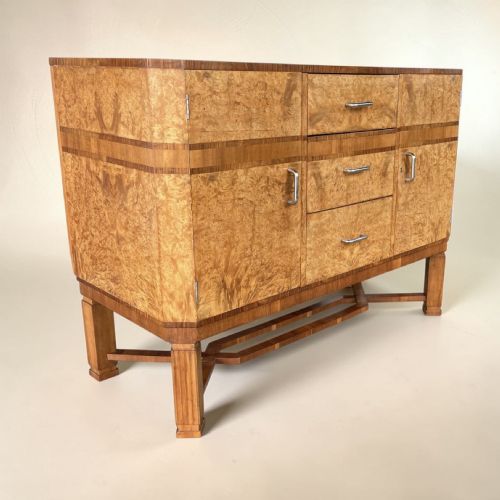
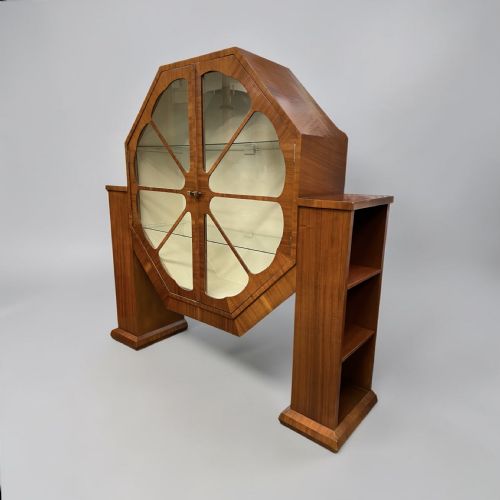
These geometric art deco cabinets combine bold architectural lines with rich timbers, offering practical storage that defines the period style.
Geometric Art Deco Cabinet
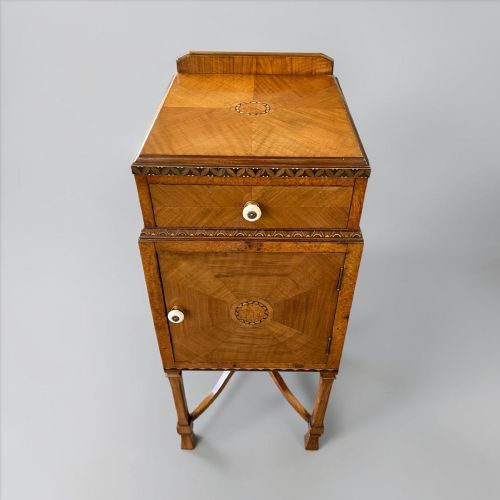
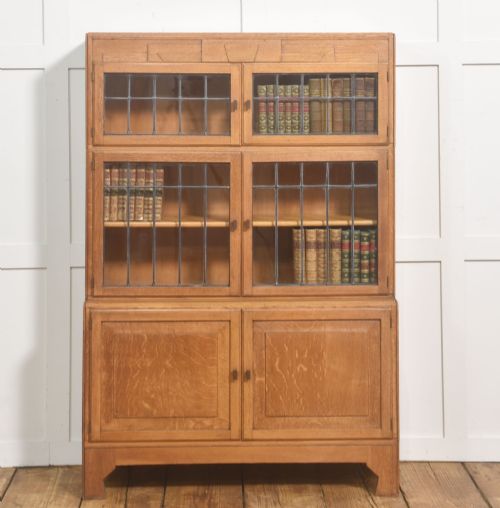
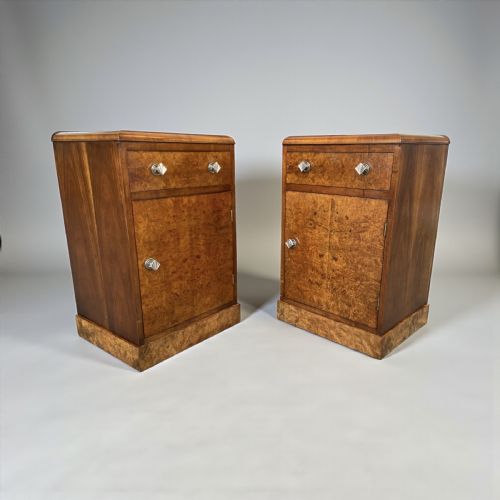
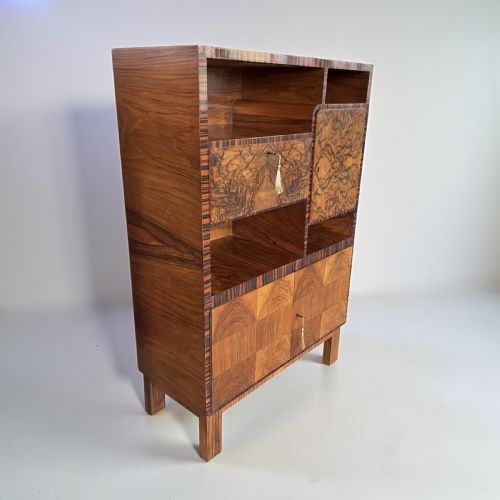
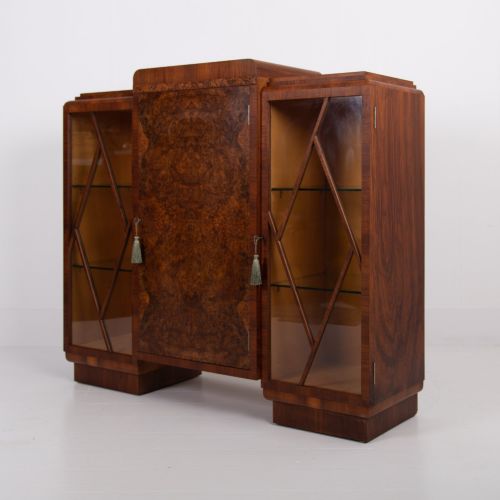
A geometric art deco cabinet brings architectural presence to a room, appearing in forms such as display cabinets, bedside tables, sideboards, bookcases, and bureau cabinets. Most examples date from the nineteen thirties, though some originate from the nineteen twenties and nineteen forties, spanning English and French origins.
The selection ranges from circular and hexagonal display cases to practical linen cupboards and cutlery sideboards. Buyers often encounter walnut and burr walnut models, alongside oak, mahogany, maple, and hardwood variations.
How they were made
Cabinet makers utilised fine veneers over solid timber carcasses, arranging walnut, burr walnut, mahogany, maple, and oak to create striking geometric surface patterns. These timber faces are frequently accented with contrasting woods and polished to a high finish.
Metal fittings in brass and chrome complement glazed sections and leaded glass doors. Limed oak finishes and serpentine curves demonstrate the varied technical approaches employed across French and English workshops.
Walnut and burr walnut dominate the timber choices across these listings, paired frequently with glass, brass, and chrome.
What varies in quality
Quality rests in the precision of the timber matching and the complexity of the geometric veneering across the doors and drawers. Superior examples display seamless grain continuity and carefully chosen burr walnut figures.
Construction standards appear in the weight of the hardware, the clarity of the leaded or plain glass, and the overall rigidity of the carcase. Finer pieces balance robust internal joinery with refined decorative elements like brass and chrome mounts.
Charles Dudouyt·Heals of London·Rurka
The Geometric Art Deco Cabinet Glossary
- Burr walnut
- A figured wood grain taken from the wart or growth on a walnut tree, highly prized for decorative veneer panels. It creates swirling, organic patterns across cabinet doors.
- Veneer
- Thin slices of fine timber applied over a secondary wood base to provide a decorative surface without structural instability. This technique allows for symmetrical geometric patterns.
- Serpentine
- A shape involving a gently undulating front line, curving convexly in the centre and concavely at the sides. It demands high skill from the cabinet maker.
- Leaded glass
- Small panes of glass held together by strips of lead cames, forming geometric or decorative patterns within cabinet doors. This technique originates in traditional glazing traditions adapted for twentieth-century furniture.
Geometric Art Deco Cabinet: Frequently Asked Questions
How do I clean a walnut cabinet?
Dust regularly with a soft, dry cloth to prevent particulate buildup on the delicate veneer surfaces. Avoid harsh chemical sprays that might damage the polished finish.
Apply a quality beeswax periodically to nourish the timber and maintain its natural lustre. Keep the cabinet away from direct sunlight and heat sources to prevent the wood from drying out.
Where should I place a display cabinet?
Position your cabinet against an interior wall away from radiators and damp zones to protect the antique timbers and glass. Adequate clearance ensures doors and drawers operate smoothly.
Consider room lighting so that glazed panels and interior shelves catch natural illumination. A steady floor surface prevents the tall or hexagonal carcases from shifting over time.
Are these pieces English or French?
The selection includes both English and French origins, reflecting the international spread of the design movement. French examples often feature dramatic serpentine shapes and mixed exotic woods.
English pieces tend toward structured oak, walnut, and limed finishes. Both regional traditions embrace strong geometric layouts and high-grade metal hardware.
What is the difference between a sideboard and a credenza?
Sideboards traditionally function as dining room storage units equipped with cupboards and drawers for cutlery and linen. They offer robust storage capacity for domestic settings.
Credenzas share a low profile but historically lacked legs, sitting directly on the floor. In modern categorisation, both serve similar utilitarian and decorative roles within living spaces.