

1930s Walnut Bookcase
A 1930s walnut bookcase brings rich timber grain and bold architectural lines into a room, offering practical storage alongside striking modernist design.
1930s Walnut Bookcase
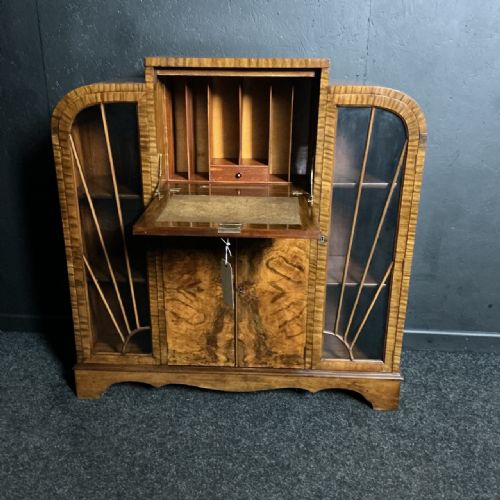
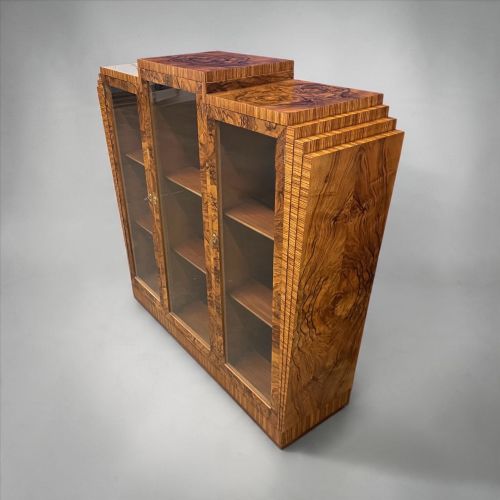
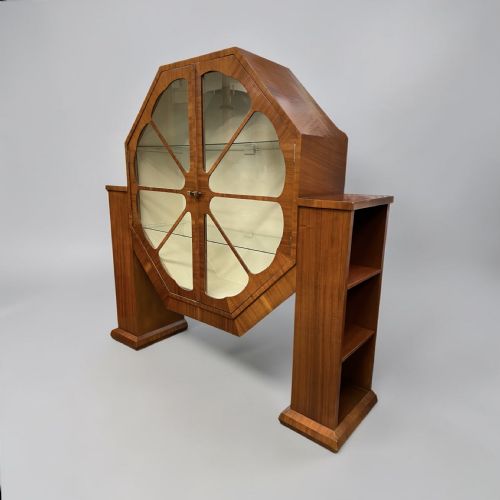
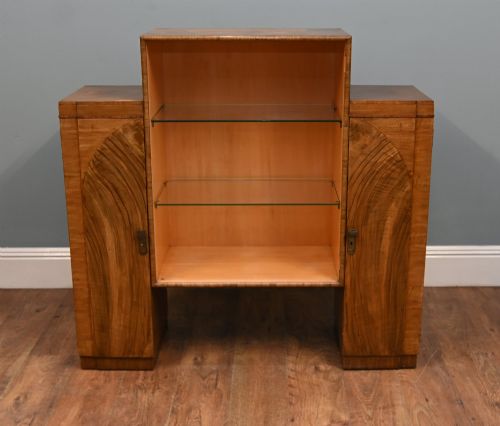
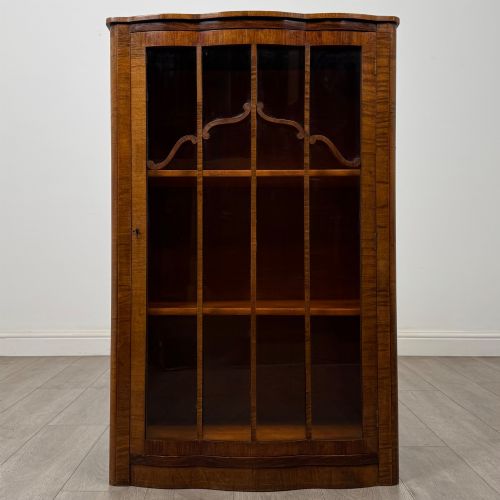
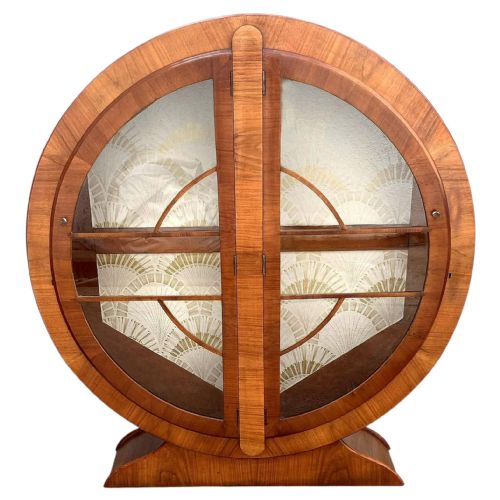
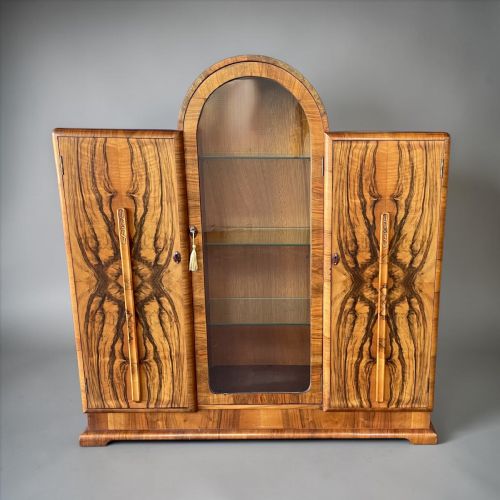
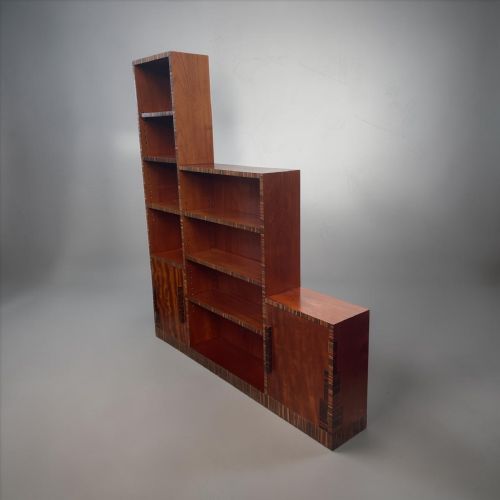
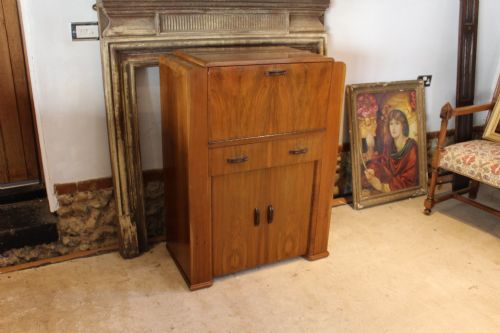
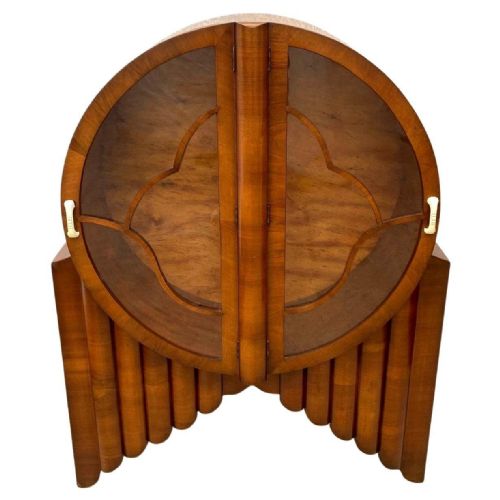
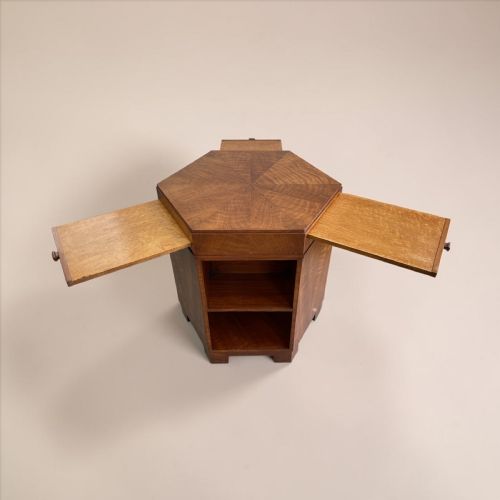
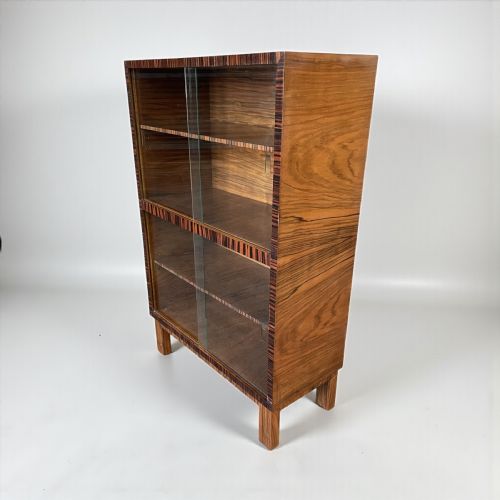
When searching for a 1930s walnut bookcase, collectors encounter items shaped predominantly by the Art Deco movement alongside occasional Edwardian pieces. These examples range from upright glazed cabinets and stepped bookcases to bureau combinations and circular display vitrines.
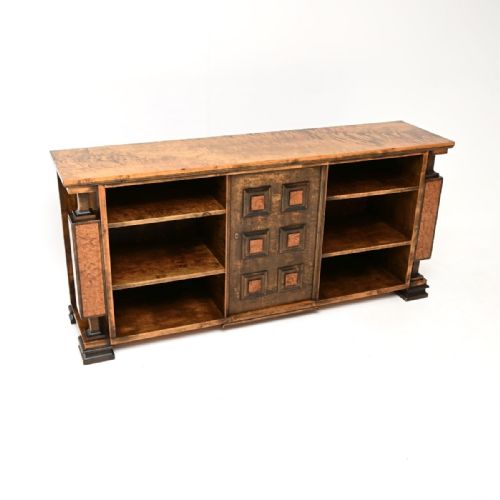
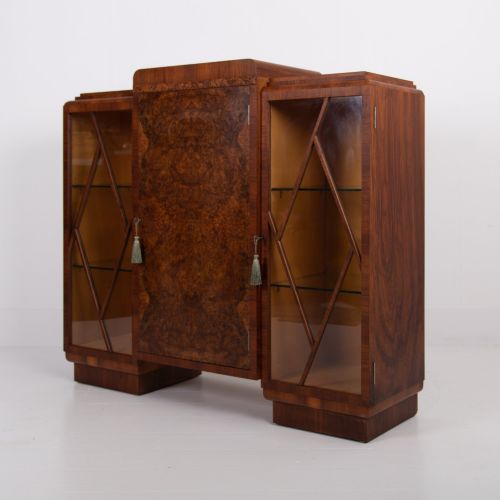
The version most commonly met on this page is the Art Deco display cabinet or bookcase, frequently constructed in England or Sweden. These forms utilise figured veneers and glass panels to balance exhibition space with enclosed shelving.
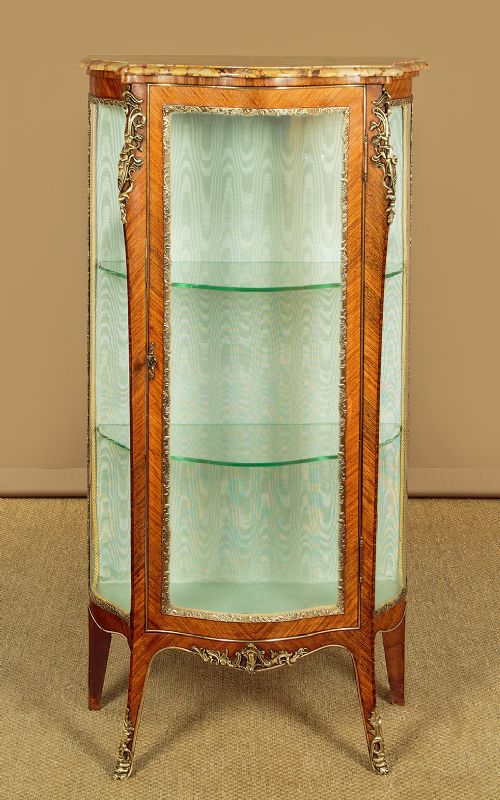
Makers and designers of the period applied distinct geometric arrangements, sometimes echoing earlier Louis XV styles or incorporating sycamore and satin birch details. The resulting furniture serves simultaneously as a functional repository for volumes and a sculptural centrepiece.
Distinctions in Quality
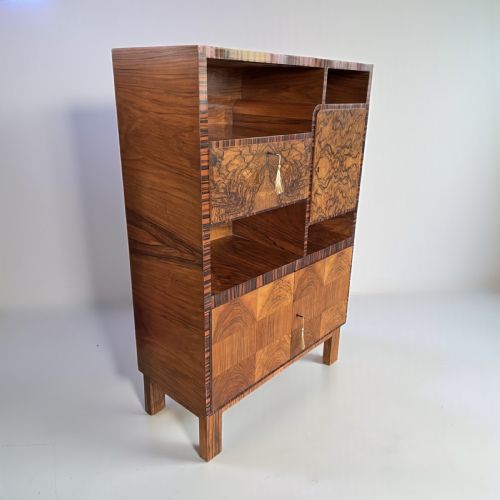
The upper tier of these pieces is distinguished by the ambition of its veneer selection and the precision of its architectural joinery, such as circular carcases or stepped bookcase tiers. Master makers aligned grain meticulously across multiple doors and drawers, creating a cohesive visual rhythm.
Simpler examples rely on standard flat panel construction with more uniform timber surfaces. The presence of secondary contrasting woods like sycamore or satin birch, alongside signed maker attribution, marks out the most accomplished works.
1930s Walnut Bookcase Retail Price Guide 2026
Typical asking prices for 1930s walnut bookcase among the pieces listed under this phrase on Sellingantiques today, from the lower quarter to the upper quarter. They describe what is for sale here now, not the wider market.
Listings span the Edwardian period and the 1930s, uniting walnut, glass, brass, and veneer in forms from library tables to rocket cabinets.
Maurice Adams·Epstein·F.H. Marshall & Co Glasgow·Rurka
The 1930s Walnut Bookcase Glossary
- Burr Walnut
- A veneer sliced from the distorted growth or burl of a walnut tree, yielding intricate, swirling grain patterns. It was favoured by Art Deco cabinet makers for focal panels on doors and drawers.
- Vitrine
- A glass-fronted display cabinet designed for the exhibition of books or decorative objects. These pieces often feature glazed sides to maximise light penetration.
- Veneer
- A thin layer of superior wood adhered to a stable secondary timber base. This technique allowed makers to display dramatic grain figures without the structural instability of solid timber.
- Bureau Bookcase
- A hybrid form combining a sloping writing flap above or below enclosed shelving. It provides both workspace and storage within a single upright carcase.
1930s Walnut Bookcase: Frequently Asked Questions
What defines a 1930s walnut bookcase?
These pieces are defined by their use of figured walnut veneers and the geometric or stepped lines characteristic of the Art Deco period. They frequently incorporate glazed display doors or open shelving.
Many examples merge storage with exhibition space, functioning as vitrines, bureaus, or library tables alongside traditional book storage.
How do I identify Art Deco features?
Art Deco design relies on symmetry, stepped silhouettes, curved glazed sections, and dramatic grain patterns rather than heavy carving. Look for circular forms and contrasting inlay timbers.
Hardware and glass details also signal the era, with clean lines and occasional brass fittings complementing the rich brown tones of the walnut.
Where were these pieces made?
The listings show production originating primarily in England and Sweden, with occasional pieces from Italian workshops. British firms and makers working in major cities contributed significantly to the output.
Regional differences often appear in the choice of secondary woods and the specific interpretation of modernist silhouettes.
How should I care for walnut veneer?
Protect the surface by keeping the piece away from direct sunlight and maintaining stable room humidity to prevent veneer lifting. Regular dusting with a soft, dry cloth preserves the finish.
Avoid chemical polishes that can degrade the historic lacquer or wax protecting the delicate wood grain.