
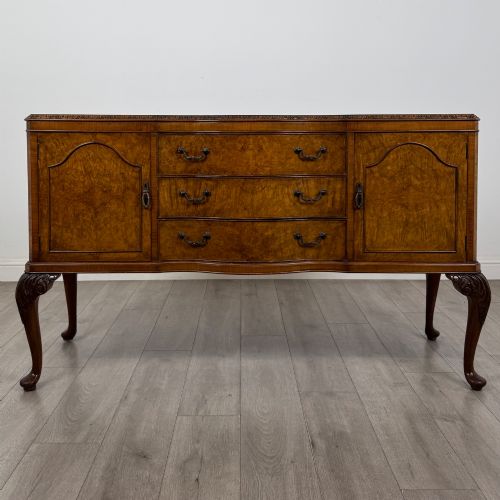
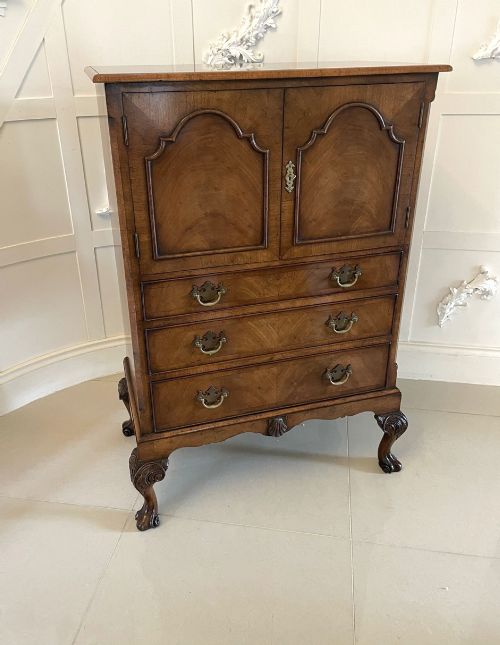
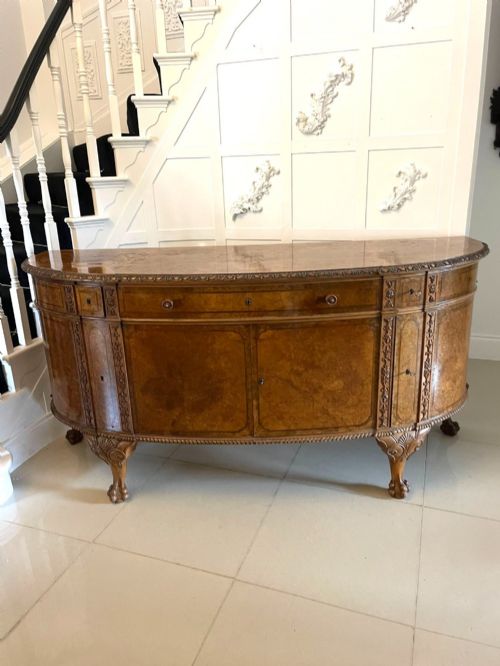
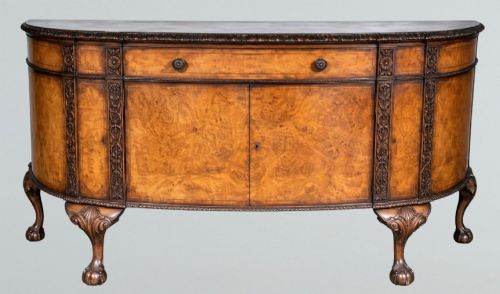
Carved Cabriole Cabinets
These carved cabriole cabinets combine shaped legs with practical storage, offering period character for modern rooms.
How they were made
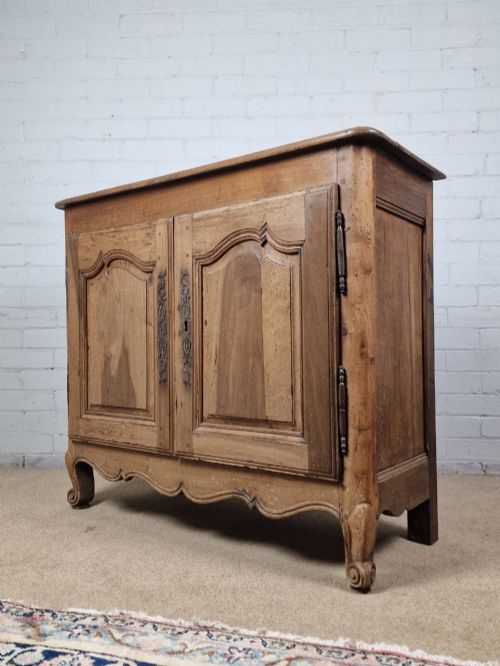
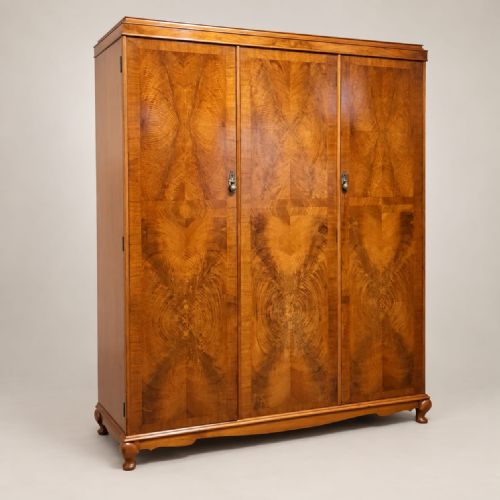
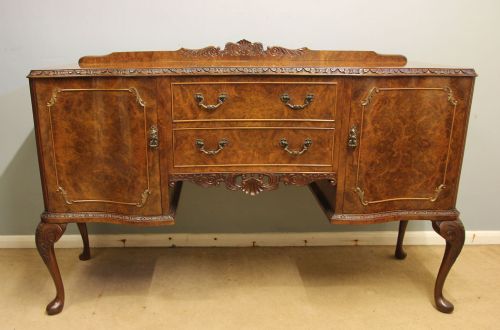
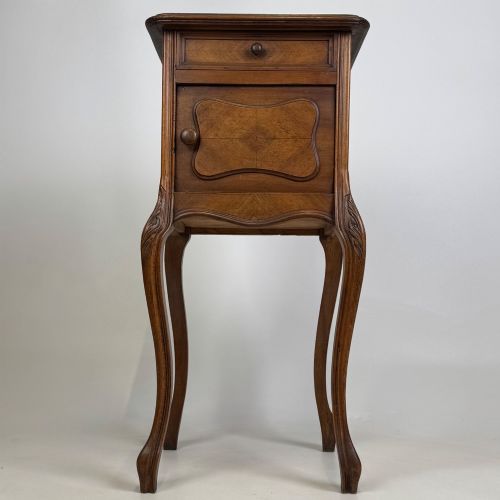
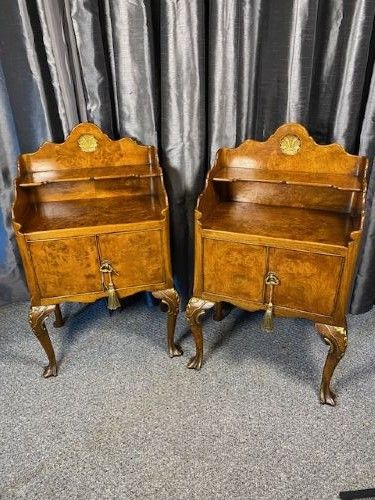
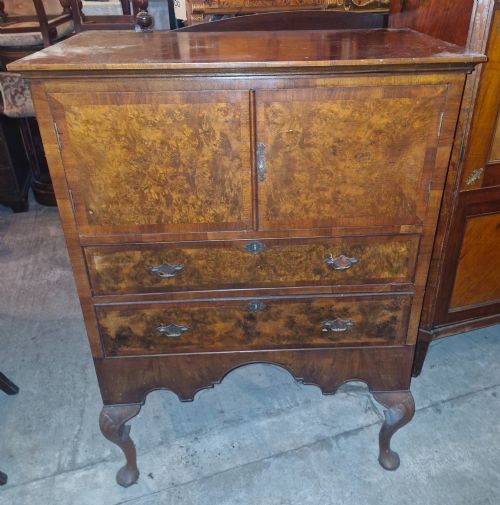
Cabinet makers utilised dense timbers like walnut, burr walnut, mahogany and oak as the foundational materials for these storage pieces. Burr walnut veneer provides distinctive swirling grain patterns across door fronts and drawer surfaces, while solid hardwoods form the structural frames and shaped legs.
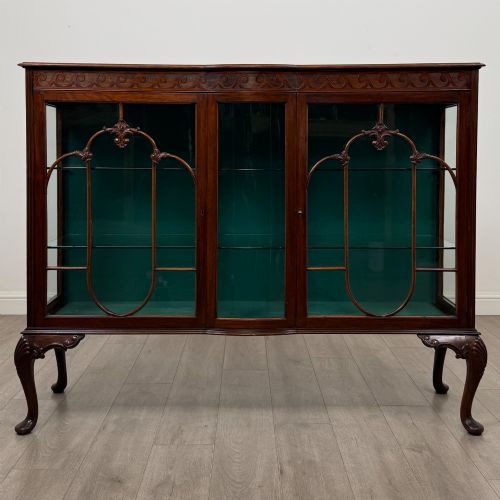
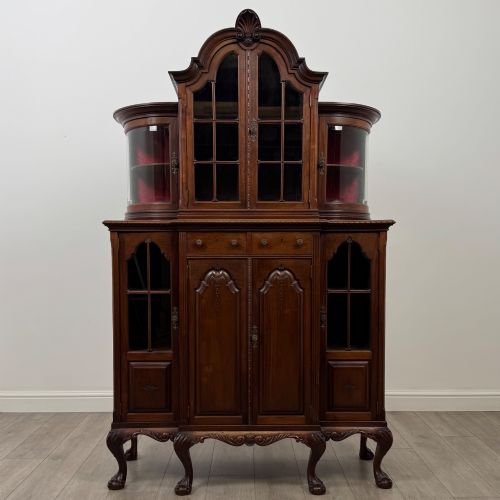
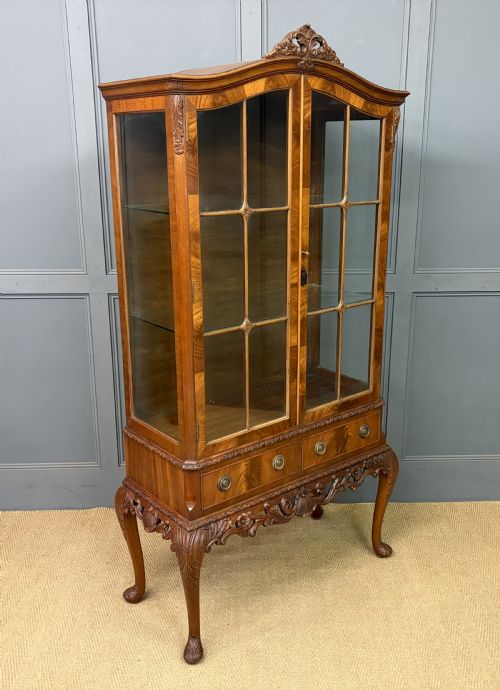
Surface embellishments involve hand carving, often applied to the knees and feet of cabriole supports or along cornice and drawer edges. Additional detailing includes brass handles, inset marble slabs on cabinet tops, and glazed sections fitted into display doors.
What varies in quality
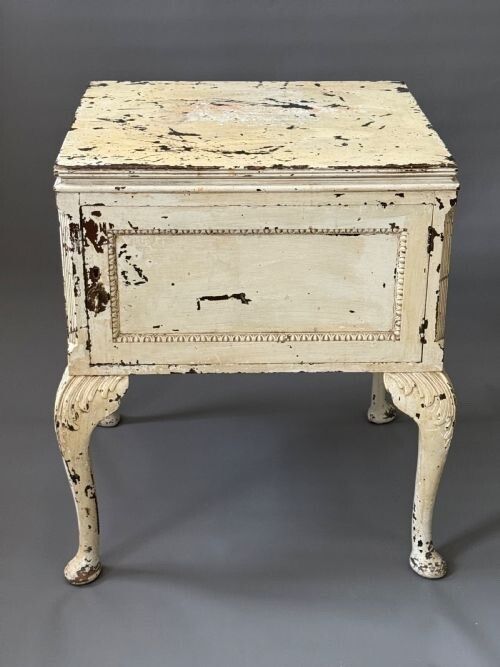
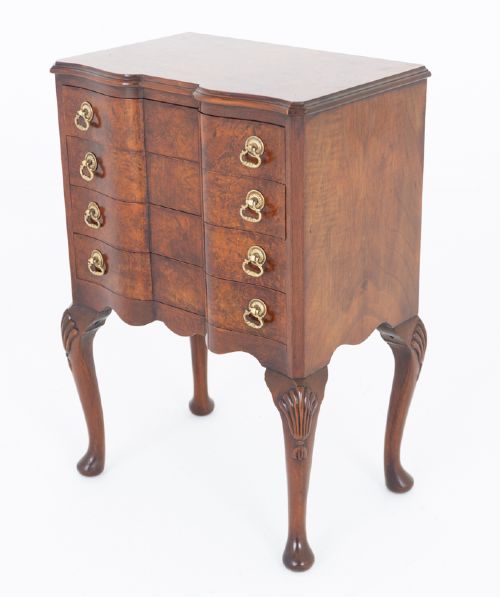
The sophistication of the carved detail separates standard items from superior examples, particularly where floral or shell motifs adorn the cabriole knees. Crisp, deep carving indicates skilled handwork rather than mass production casting.
Timber selection and veneer matching dictate visual depth, especially on burr walnut surfaces where symmetrical grain alignment requires expert craftsmanship. Furthermore, the integration of heavy materials like marble tops and brass hardware reflects the original grade of construction.
Maple & Co.
The Carved Cabriole Cabinets Glossary
- Cabriole leg
- A furniture support that curves outward at the knee and tapers inward toward the ankle, finishing in a pad, claw, or hoof foot. This form originates from classical antiquity and reappeared strongly during revival periods.
- Burr walnut
- Timber taken from a growth or burl on the walnut tree, prized for its intricate and chaotic grain patterns. Cabinet makers slice this wood into thin veneers for decorative furniture fronts.
- Display cabinet
- A storage piece featuring glass panels in the doors or sides to exhibit porcelain, books, or decorative objects. These units often incorporate internal shelving and glazed side panels.
- Serpentine front
- A furniture facade that curves outward in the centre and inward toward the ends in an undulating wave line. This shape demands precise woodworking to follow the curved contour.
- Bow front
- A convex furniture front that curves outward in a continuous arc from side to side. It provides additional internal volume while softening the rectangular profile of a cabinet or sideboard.
Carved Cabriole Cabinets: Frequently Asked Questions
What rooms suit these cabinets?
Bedside tables and smaller cabinets fit naturally beside a bed for concealed nighttime storage. Larger sideboards and display cabinets suit dining rooms or living spaces for tableware and books.
Cocktail and drinks cabinets provide dedicated storage for glassware and bottles in entertaining areas. Their varied footprints allow placement in hallways as well as primary rooms.
How do I identify the period?
Edwardian and 1920s pieces often utilise burr walnut veneers and lighter oak or mahogany constructions. Revival styles draw heavily on eighteenth-century Queen Anne and Chippendale forms while retaining early twentieth-century manufacturing techniques.
Victorian and nineteenth-century examples tend to display heavier proportions and darker timber finishes. Hardware choices and internal construction methods also offer clues to the decade of origin.
Are pairs common?
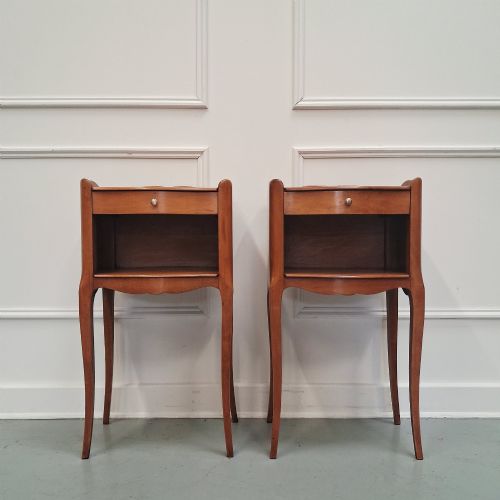
Matched pairs appear frequently among bedside cabinets and smaller side tables. These are specifically sought after for balancing bedroom layouts on either side of a bed.
Larger cabinets and sideboards generally exist as single unique pieces. Finding matching pairs in larger furniture formats is considerably less common.
How do I care for walnut veneer?
Burr walnut surfaces require protection from direct sunlight to prevent the natural timber tones from fading over time. Maintaining a stable indoor temperature prevents the veneer from drying out or lifting.
Dusting with a soft, dry cloth preserves the polished finish. Periodic application of appropriate wax feeding helps maintain the moisture and lustre of the wood.