




Queen Anne Nightstands
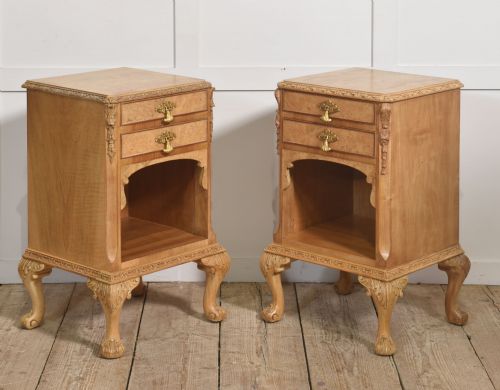
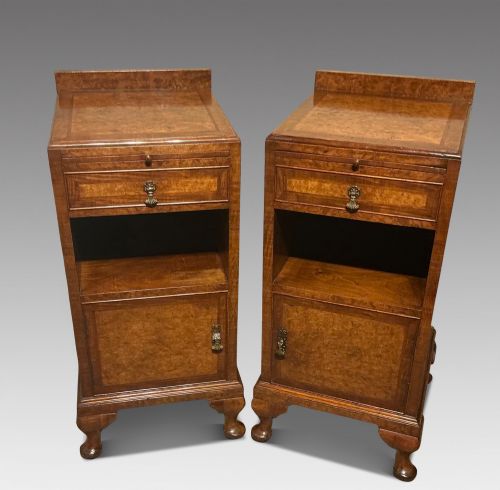
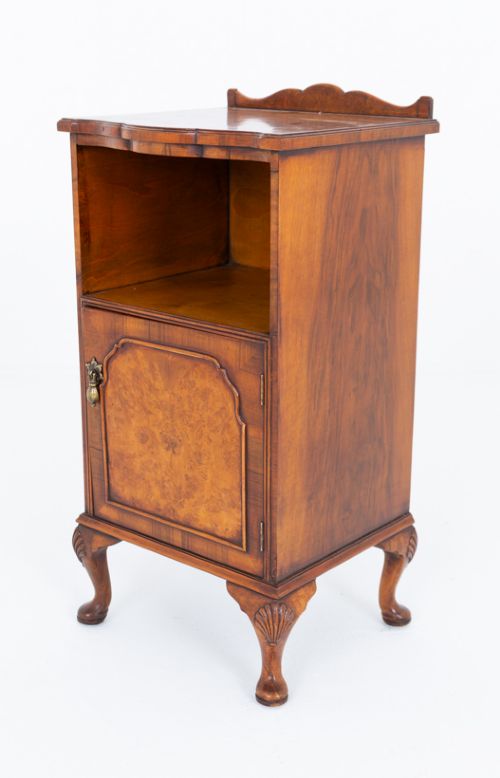
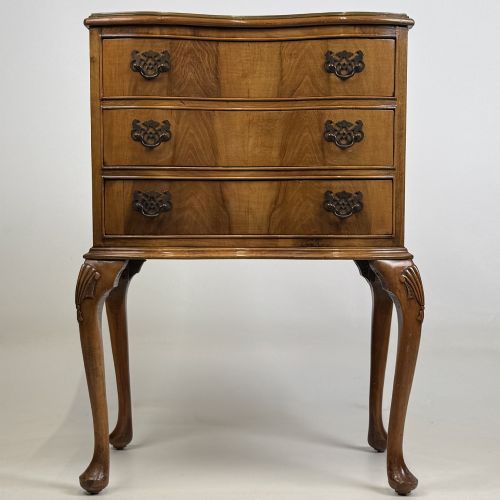
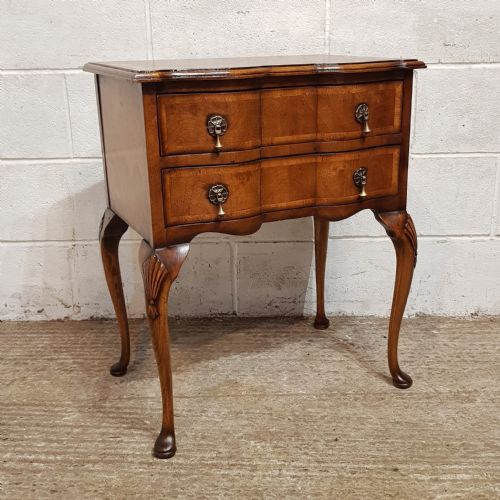
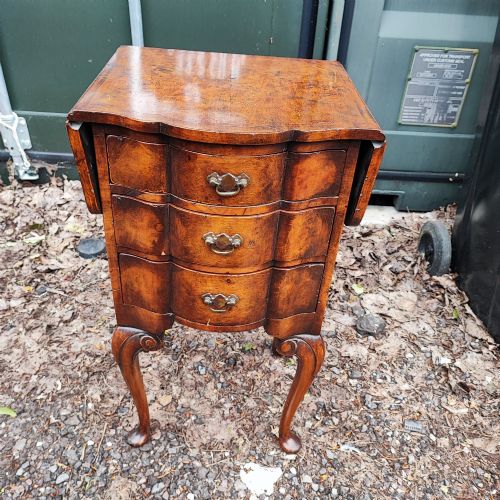
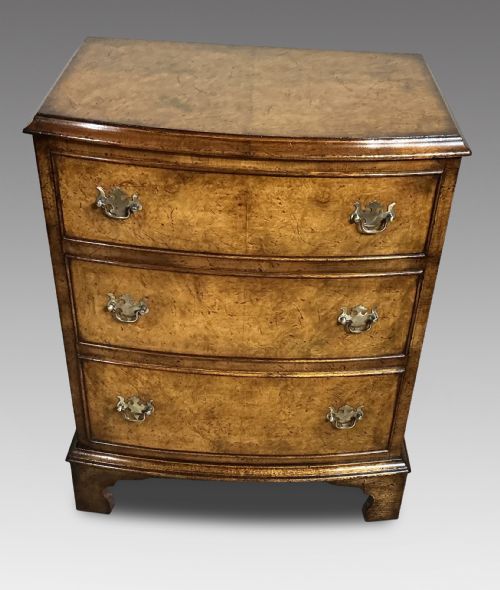
These queen anne nightstands are walnut and mahogany bedside tables and cabinets from the early twentieth century, offering period proportion and practical bedside storage.
Queen Anne Nightstands
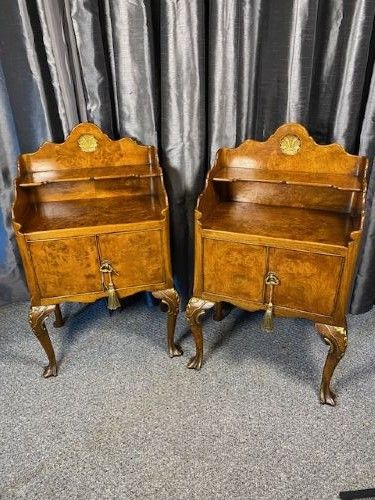
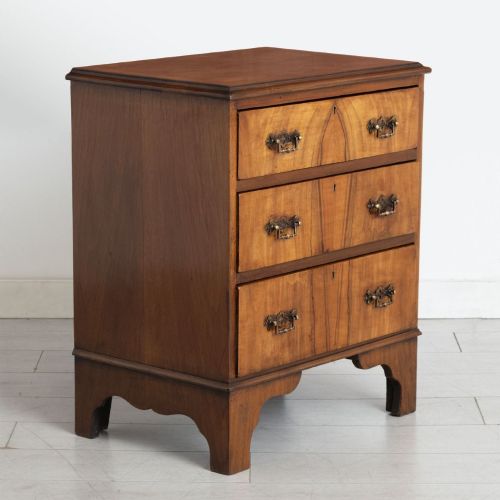
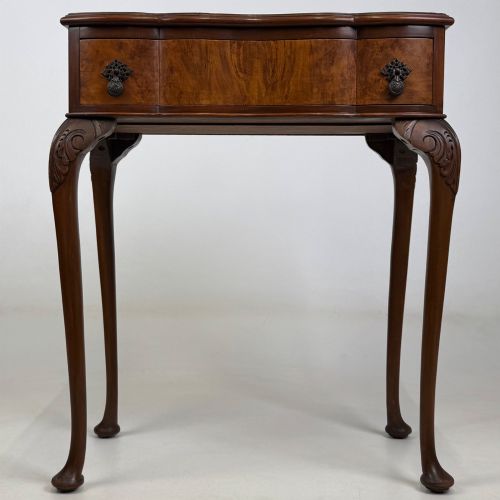
When you search for queen anne nightstands, you encounter early twentieth century bedside cabinets, side tables, and small chests of drawers built in the revival style. The pieces on this page span the Edwardian era through the 1930s, reflecting the enduring popularity of eighteenth-century furniture forms reproduced in the early nineteen-hundreds.
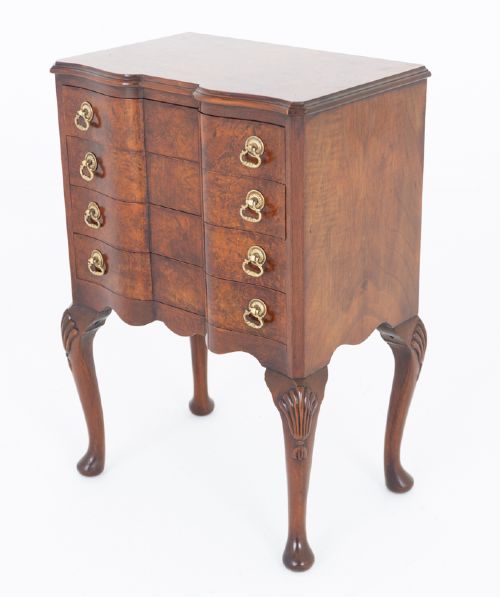
The selection centres heavily on walnut and burr walnut bedside tables, alongside occasional pieces in mahogany. You will find single cabinets and matched pairs featuring bowfronts, serpentine fronts, and tray tops, designed specifically for domestic bedroom use.
What varies in quality
The standard of timber selection and veneer matching defines the upper tier of these pieces. Cabinets featuring highly figured burr walnut across multiple visible surfaces demonstrate greater care in construction than plain walnut alternatives.
Proportion and execution of revival details also distinguish individual pieces. Refined shaping on drawer fronts, crisp execution of serpentine or bowfront profiles, and balanced pairing in matching sets elevate the quality of the bedside furniture.
Listings span the Edwardian period through 1930, utilising walnut, burr walnut, mahogany, and brass.
Maple and Co
The Queen Anne Nightstands Glossary
- Burr walnut
- A prized timber harvested from walnut tree growths, producing swirling, highly decorative grain patterns used extensively for veneer on cabinet doors and drawer fronts.
- Serpentine front
- A furniture front characterised by a concave central section flanked by two convex curves, creating a fluid, undulating line.
- Bowfront
- A convex, outward-curving front profile commonly found on bedside chests and cabinets from the early twentieth century.
- Tray top
- A tabletop finished with a raised edge or gallery designed to prevent small objects from rolling off the surface.
- Edwardian
- Pertaining to the period from nineteen hundred to nineteen ten, influencing the design of lighter, elegant occasional furniture.
Queen Anne Nightstands: Frequently Asked Questions
What periods do these nightstands date from?
The listings on this page span the early twentieth century, covering the Edwardian era, nineteen-ten, nineteen-twenty, and nineteen-thirty.
These dates place the manufacture firmly within the revival periods when earlier eighteenth-century styles were reinterpreted for modern homes.
Are matched pairs common?
Yes, several listings comprise pairs of bedside cabinets or tables intended to flank a bed symmetrically.
Such pairs were constructed together to ensure matching walnut or burr walnut grain patterns across both sides of the bed.
What wood types are used?
Walnut is the predominant timber, appearing as solid wood, figured walnut, and burr walnut veneer.
Mahogany also occurs in specific Edwardian examples alongside brass hardware details.
How were these tables used?
They served as bedside cabinets, lamp tables, and small chests of drawers to hold bedroom items and lighting.
Their compact scale suited the bedroom layouts of early twentieth-century domestic interiors.