


Antique Tray Top Nightstand
An antique tray top nightstand brings practical bedside storage and classic woodwork into the bedroom.
What an antique tray top nightstand is
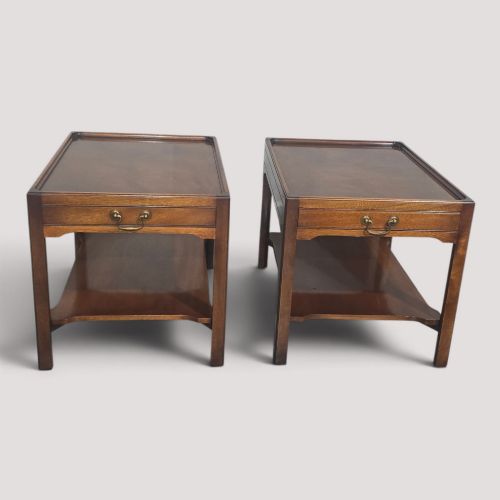
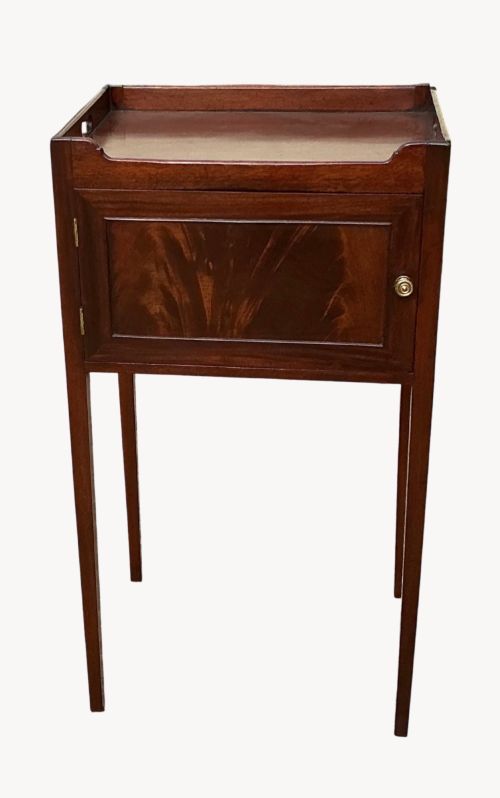
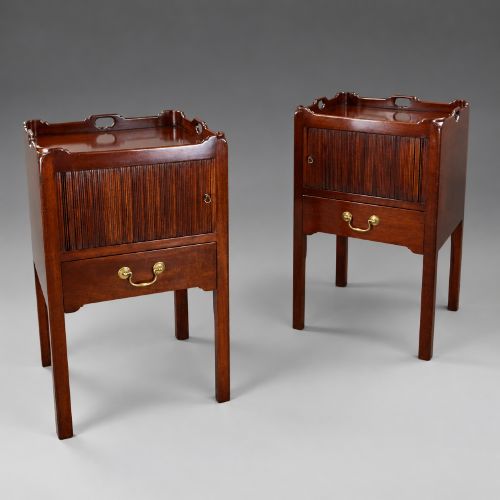
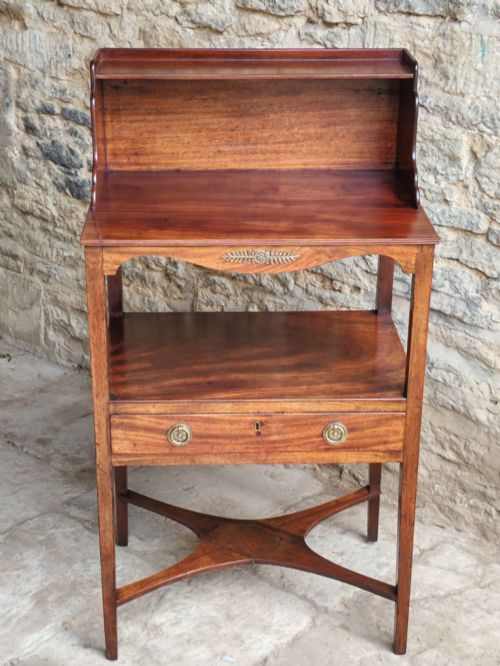
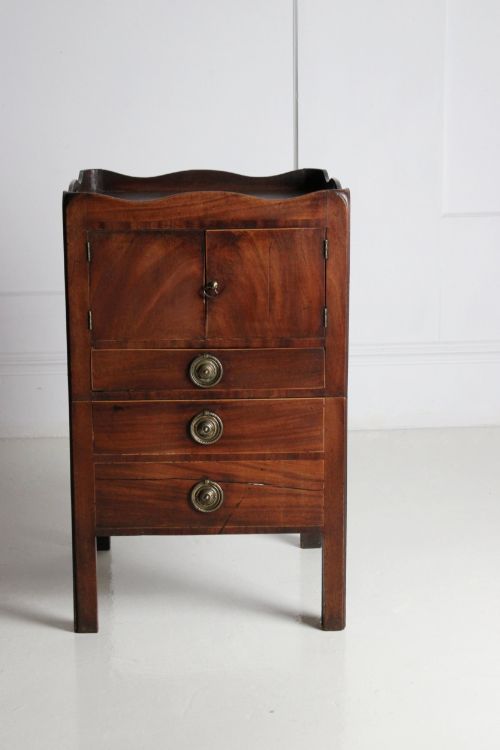
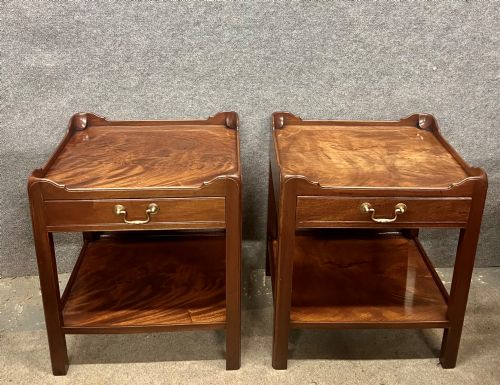
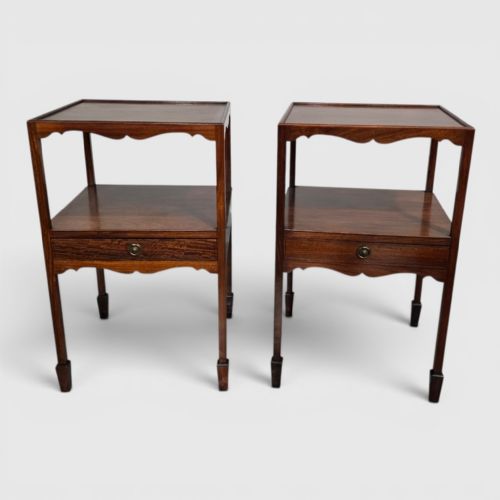
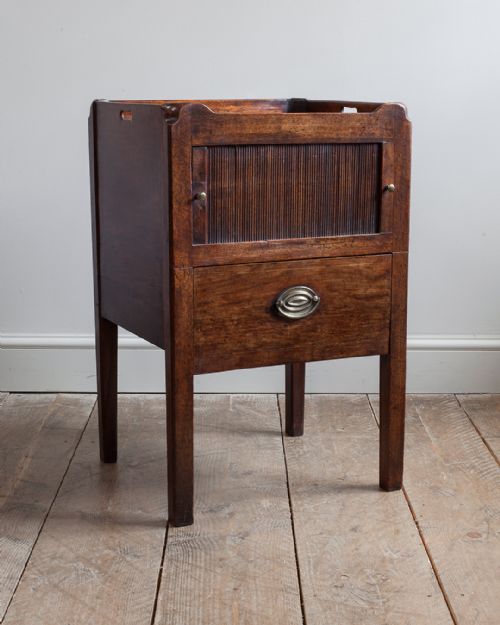
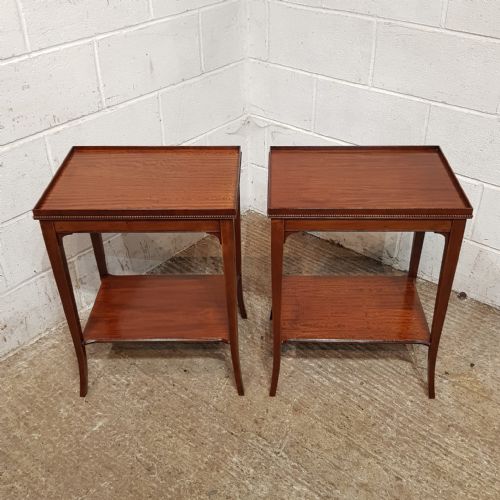
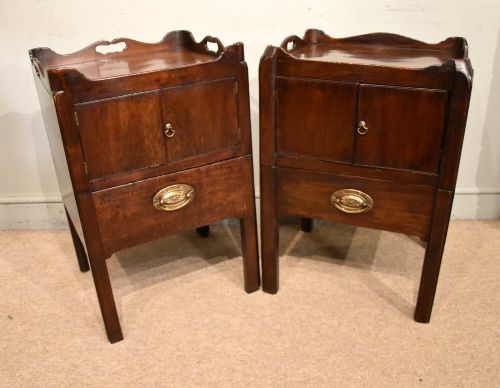
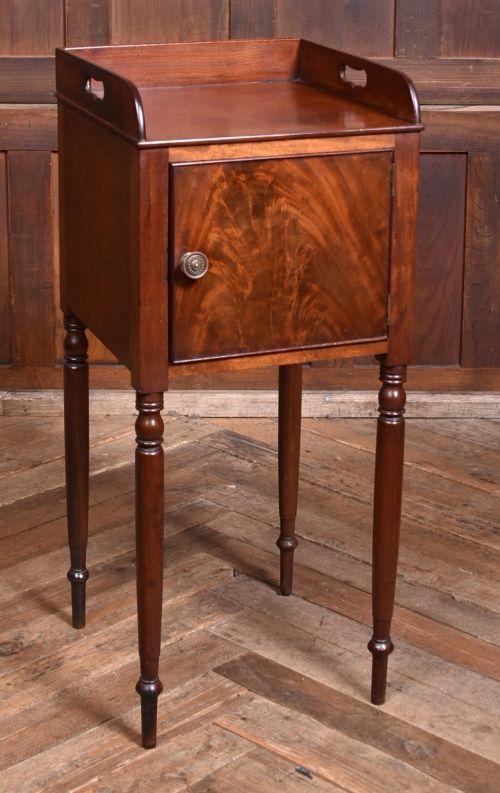
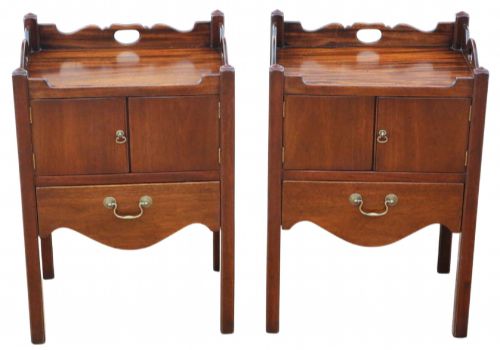
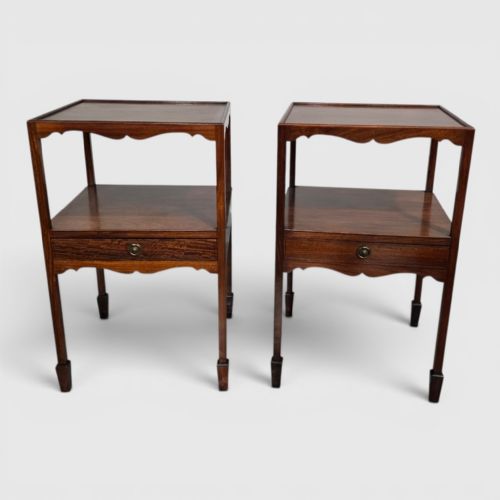
An antique tray top nightstand is a compact bedside table designed with a raised rim around the top surface to keep items secure. These pieces appear in forms such as bedside cupboards, cabinets, and occasional tables.
The examples on this page span the 18th century, the Georgian period, the 19th century, and the 1920s. Buyers will most frequently encounter mahogany and walnut versions originating from these traditional eras.
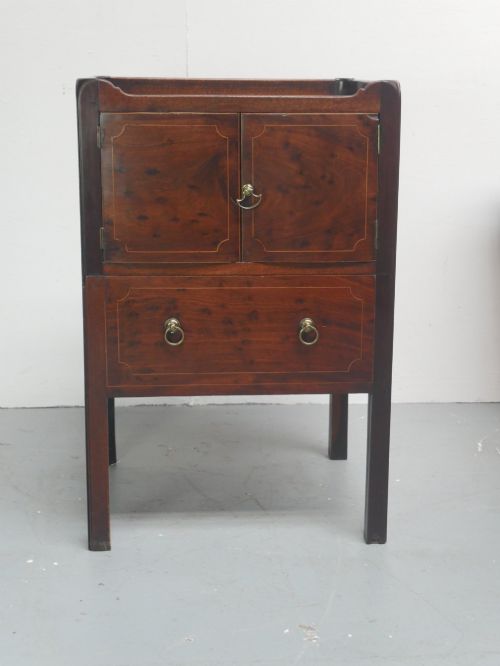
Makers utilised styles including Georgian, Sheraton, and Queen Anne Revival to shape these items. Such designs often incorporate cupboards or cabinet doors beneath the raised tray top to conceal storage.
How they were made
Cabinet makers built these pieces using solid timbers and decorative veneers such as mahogany, burr walnut, and walnut. Artisans selected these woods for their rich grain patterns and durability.
Fine examples feature marquetry inlay and contrasting satinwood details. Brass fittings, including handles and hinges, complete the construction of the doors and drawers.
Retail Price Guide 2026
Typical UK retail prices for tray top nightstand, calculated from the Sellingantiques database of over a million retail prices indexed since 2003. This retail price guide relies exclusively on Sellingantiques data; no external sources or auction records are used, so the figures do not describe the wider market.
Early owners relied on the raised edge of the tray top to keep their morning tea service from sliding onto the floor.
What varies in quality
The distinction between ordinary and superior pieces rests on the choice of timber and the precision of the cabinet work. Finer examples display carefully matched veneers and subtle marquetry inlay rather than plain surfaces.
The execution of the raised tray top and the proportion of the legs or base determine the overall elegance. Quality also shows in the integration of brass hardware and the neat fit of cupboard doors.
The Antique Tray Top Nightstand Glossary
- Tray top
- A tabletop finished with a raised moulded rim designed to prevent objects from rolling off the edge. This feature is characteristic of bedside tables and commodes from the Georgian era.
- Marquetry
- A decorative technique of applying thin pieces of veneer to form intricate patterns and pictures on furniture surfaces. Craftsmen used contrasting timbers like satinwood for visual depth.
- Burr walnut
- Timber taken from a growth on a walnut tree, yielding a swirling and highly figured grain pattern. It was favoured for high-status cabinet work.
- Commode
- A term historically applied to a decorative chest of drawers or a bedside cabinet with enclosed storage. In this context, it refers to a cabinet piece with a tray top.
Frequently Asked Questions
What is a tray top nightstand?
A tray top nightstand is a small bedside table featuring a raised edge around the upper surface. This rim was originally designed to stop wash jugs or personal items from sliding off.
Today, these pieces function as compact bedside storage tables. They combine enclosed cabinet space with a decorative top surface.
How do I date a Georgian nightstand?
Dating a Georgian nightstand involves examining the timber, construction methods, and hardware. Pieces from this period frequently utilise solid mahogany and hand-cut dovetails.
Stylistic cues such as Sheraton lines or marquetry inlay also help indicate the era. Comparing the piece to documented examples from the 18th and early 19th centuries confirms the period.
Where should I place a nightstand?
These nightstands fit beside a bed to hold lamps, books, and small personal items. Their enclosed cupboards provide discreet storage for nighttime essentials.
They also work well as occasional tables in living rooms or studies. The raised tray top makes them practical surfaces for everyday use.
What wood was used?
Cabinet makers predominantly used mahogany and walnut for these bedside tables. Burr walnut and satinwood appear as decorative veneers for contrasting details.
Brass hardware is commonly found on the doors and handles. These materials ensured both structural strength and an attractive appearance.