


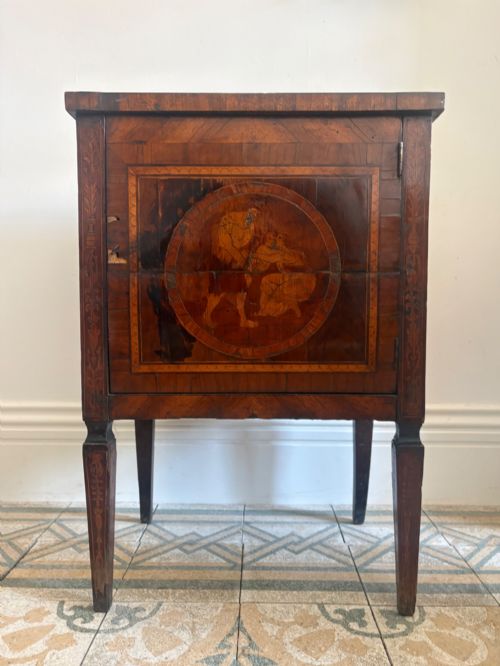
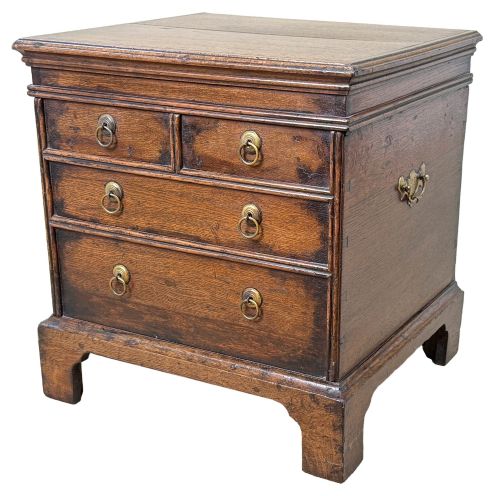
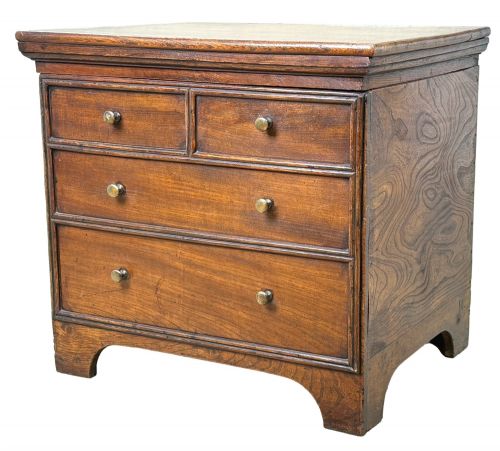
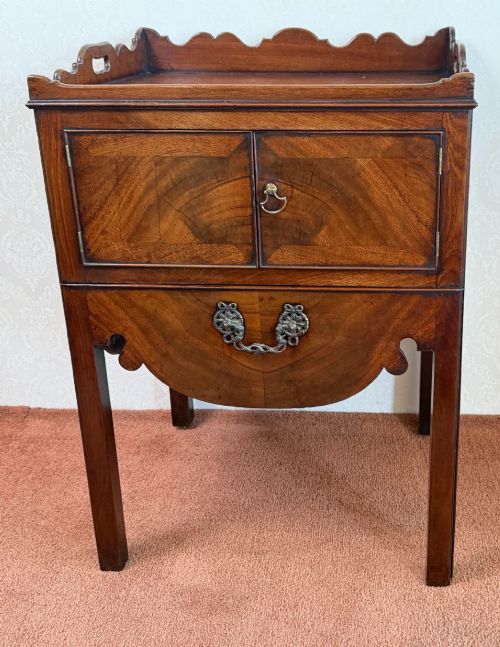
18th Century Bedside Cabinet
An 18th century bedside cabinet offers practical surface space alongside a concealed compartment, bringing refined Georgian proportion to a modern bedroom.

Form and Period
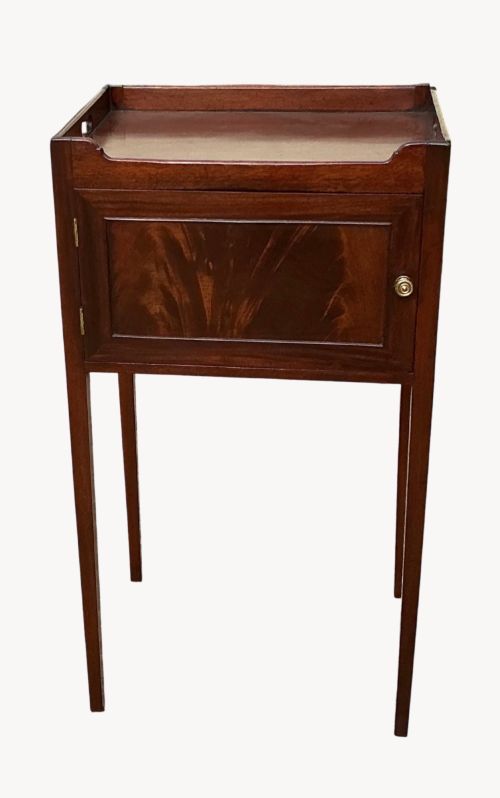
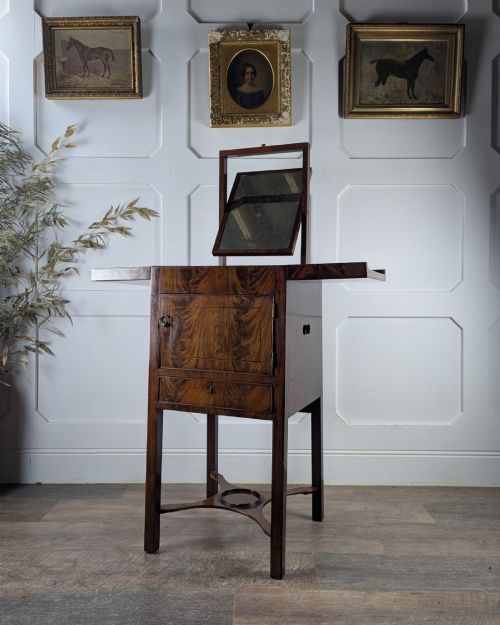
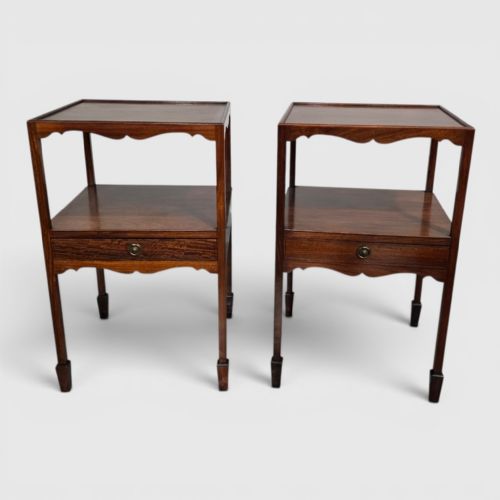
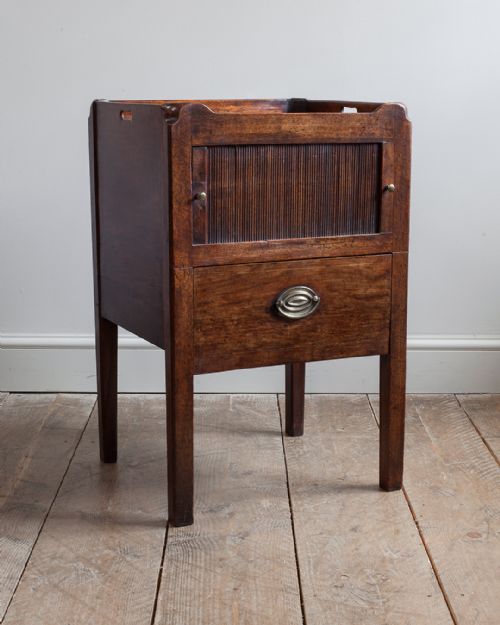
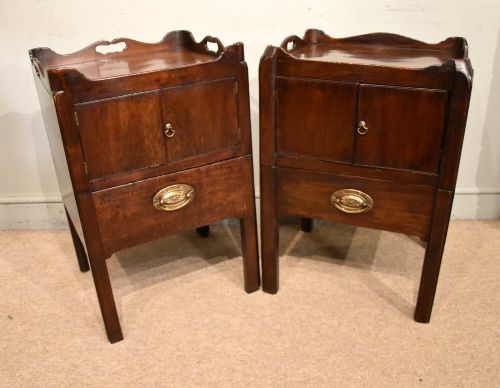
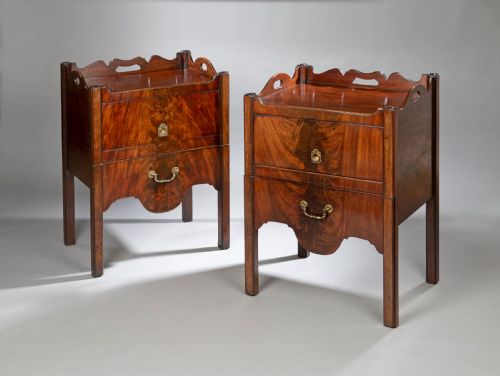
An 18th century bedside cabinet takes several distinct forms, most commonly appearing as a George III mahogany night stand or commode. These pieces date from the Georgian era and feature compact proportions designed to sit beside a bed.
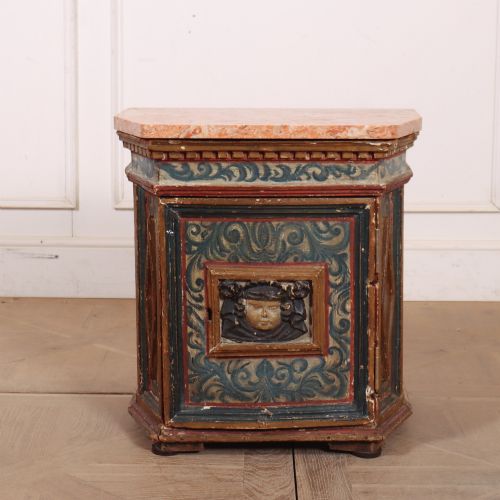
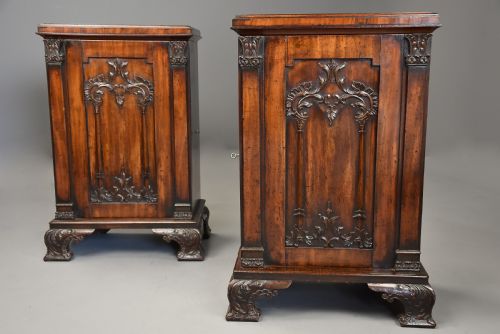
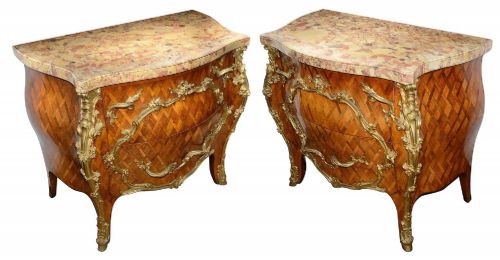
The inventory includes tray top surfaces, tambour fronts, and simple cupboards, reflecting the varied designs commissioned during the period. Mahogany is the predominant timber, though occasional walnut examples appear from Italian origins.
Buyers searching for an 18th century bedside cabinet will encounter pieces described variously as nightstands, tray top commodes, and bedside cupboards. These terms generally refer to small enclosed storage tables intended for nocturnal use.
Materials and Construction
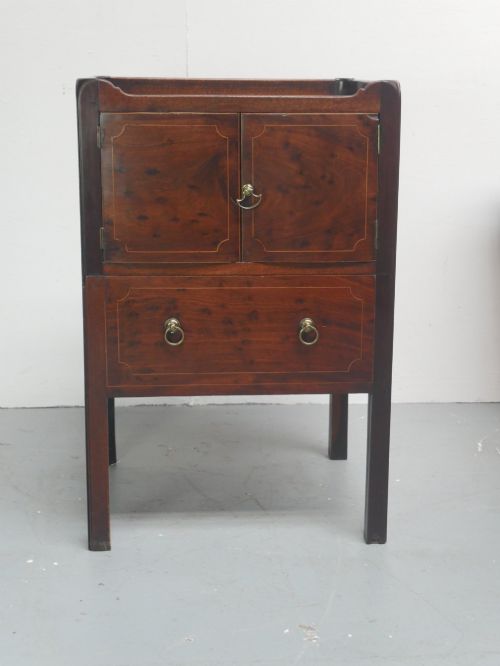
Cabinet makers of the Georgian period constructed these small tables primarily in solid mahogany and flame mahogany veneer, occasionally incorporating satinwood inlay for decorative contrast. Timber selection focused on rich grain figures.
Hardware typically includes cast brass handles and hinges, while functional elements like tambour fronts required precise joinery of narrow wooden slats to slide smoothly within concealed tracks.
Retail Price Guide 2026
Typical UK retail prices for 18th century bedside cabinet, calculated from the Sellingantiques database of over a million retail prices indexed since 2003. This retail price guide relies exclusively on Sellingantiques data; no external sources or auction records are used, so the figures do not describe the wider market.
Listings feature Georgian periods and materials including mahogany, brass, flame mahogany veneer, and satinwood inlay.
Distinctions in Execution
Proportion and restrained detail differentiate standard utilitarian pieces from finer items associated with specific periods like the Chippendale era, where edge moulding and leg carving display greater confidence.
The 18th Century Bedside Cabinet Glossary
- Tambour
- A flexible shutter door constructed from narrow vertical strips of wood glued to a canvas backing, allowing it to slide around a curved track to enclose a cabinet space.
- Tray top
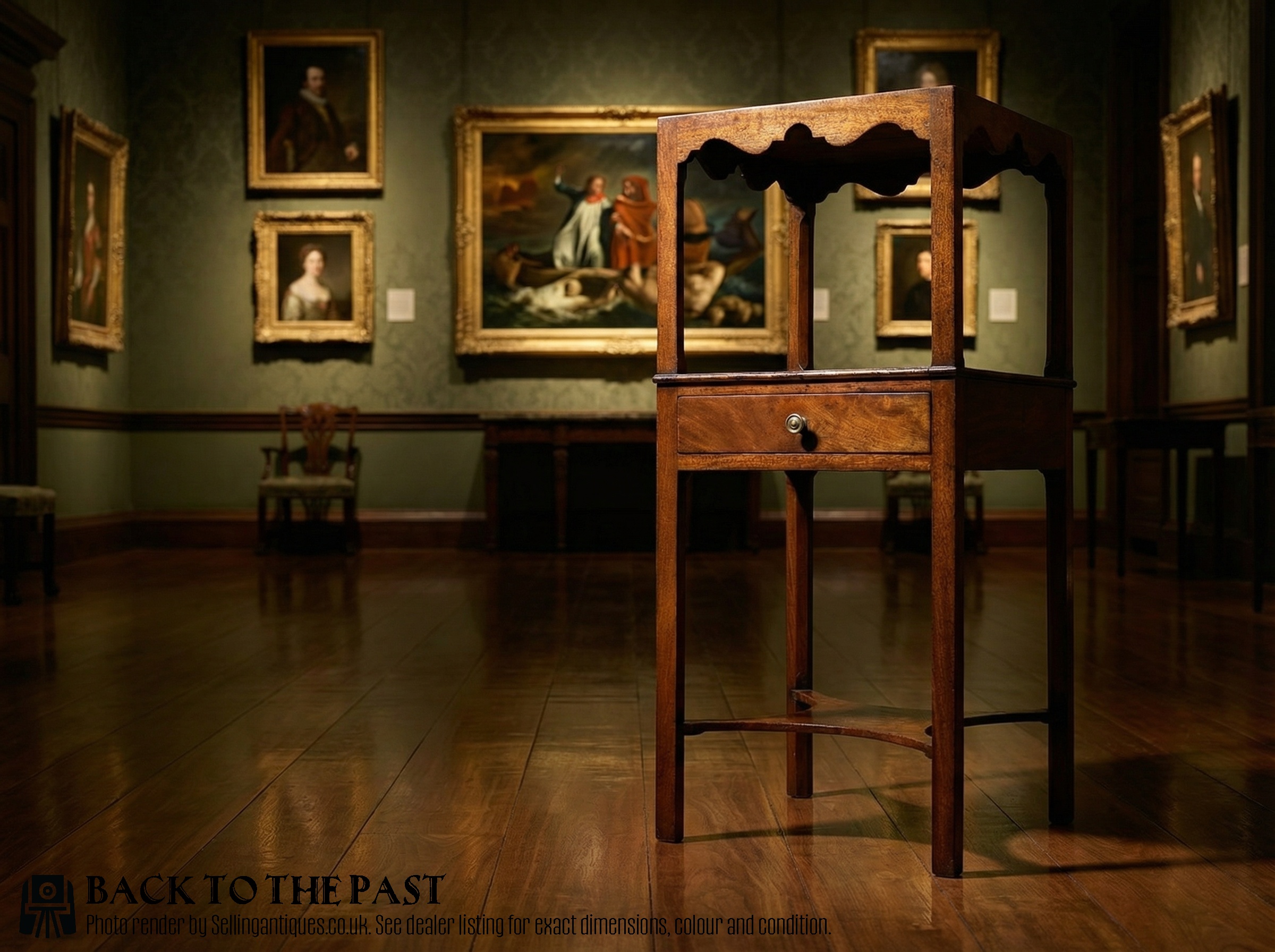
- A tabletop finished with a raised moulded edge or pierced carrying handles designed to prevent items from rolling off the surface.
- Commode
- A term used in the 18th century for a low decorative cabinet or chest of drawers, often applied to bedside cupboards.
- Georgian
- The period spanning the reigns of the first four Georges, characterised in furniture by classical proportions, solid mahogany construction, and understated ornamentation.
Frequently Asked Questions
What is an 18th century bedside cabinet?
An 18th century bedside cabinet is a small wooden storage table designed during the Georgian period to hold nighttime necessities. They usually feature an enclosed cupboard or drawer section below a flat or tray top surface.
These pieces were produced in various forms, including night stands and commodes, primarily utilising mahogany timber with brass fittings.
How were bedside cabinets used originally?
In the Georgian bedroom, these cabinets served to hold chamber pots within the lower cupboard, while the upper surface supported a candle or glass of water. They kept necessary items out of sight and contained within a compact footprint.
Today, the internal space functions easily as general bedside storage while maintaining historical character.
How do I identify a Georgian bedside table?
Identification relies on observing construction methods, timber patination, and stylistic details typical of the 18th century. Characteristics such as square straight legs, brass drop handles, and tray tops point directly to the period.
Examining the interior secondary woods and joinery helps confirm age and authenticity.