

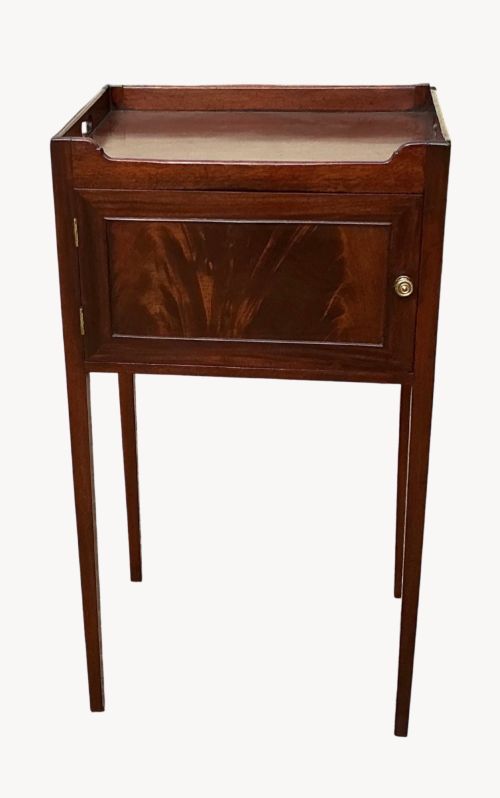
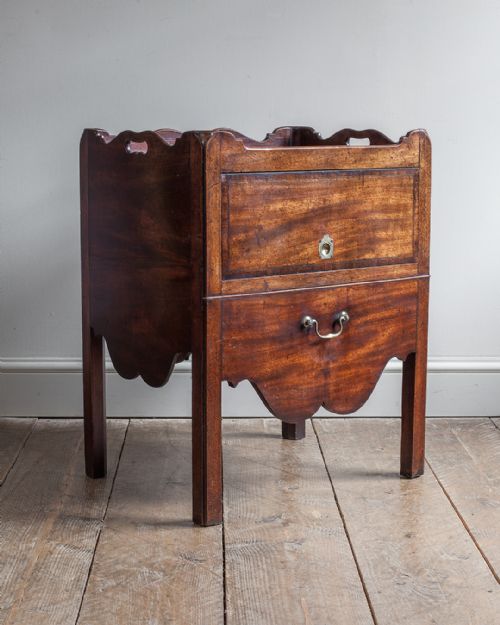
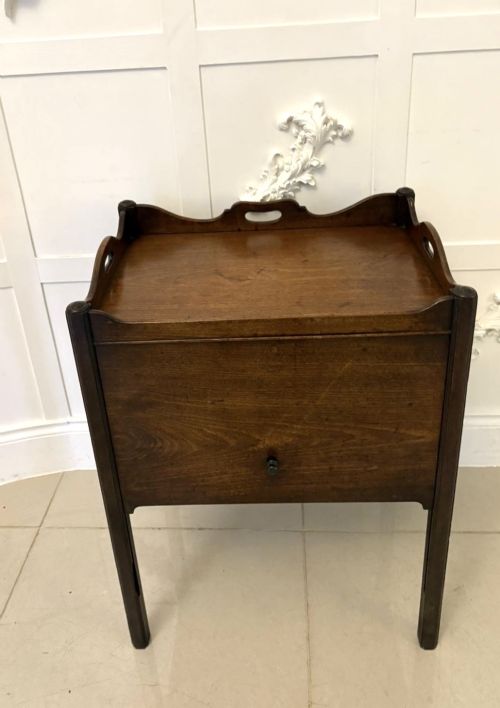
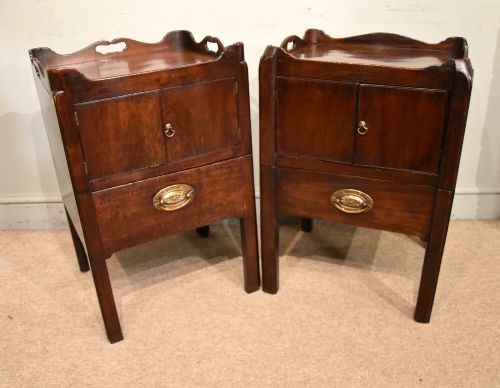

Georgian Tray Top Commode
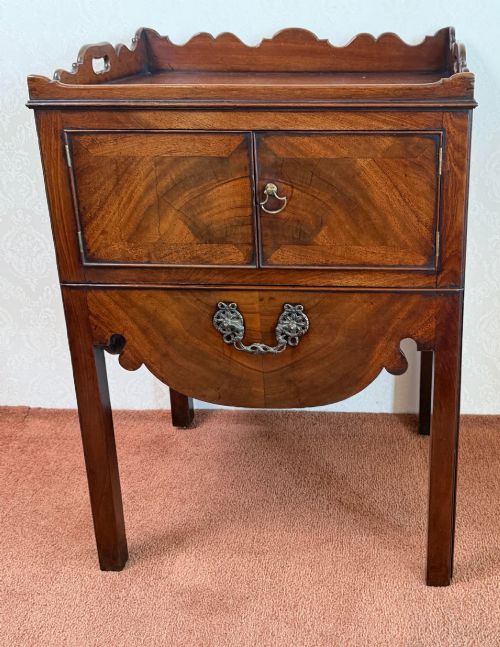
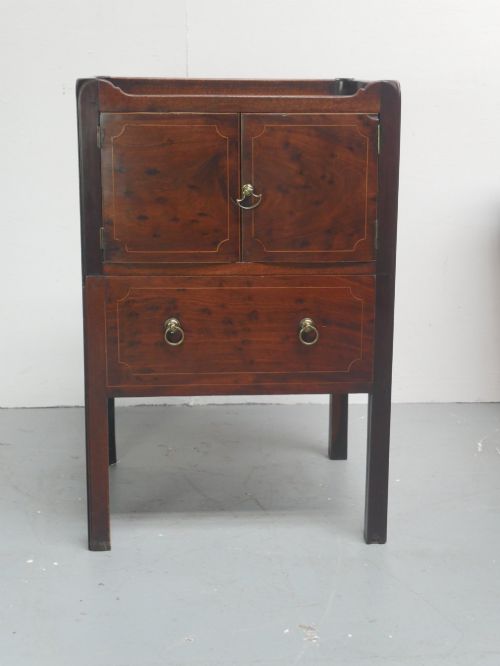
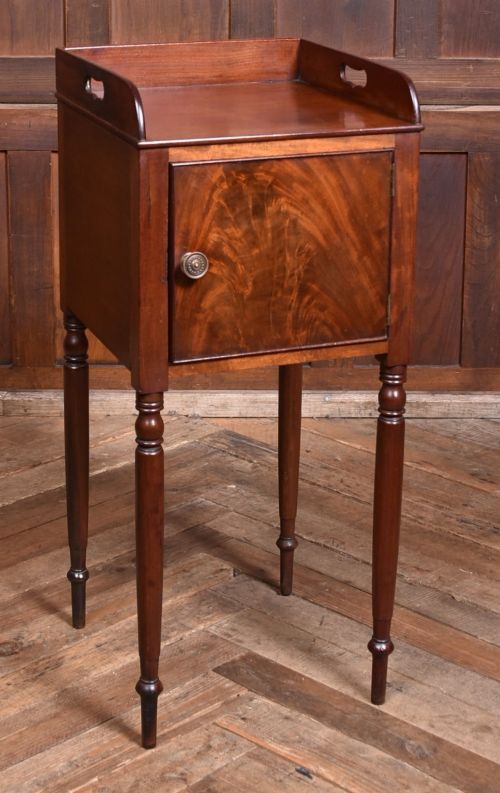
These Georgian tray top commode pieces are timber bedside tables offering enclosed storage and raised galleries.
Georgian Tray Top Commode
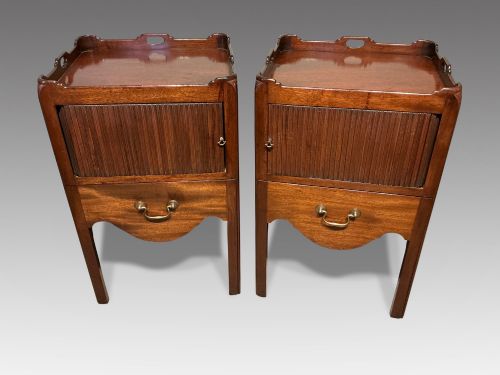
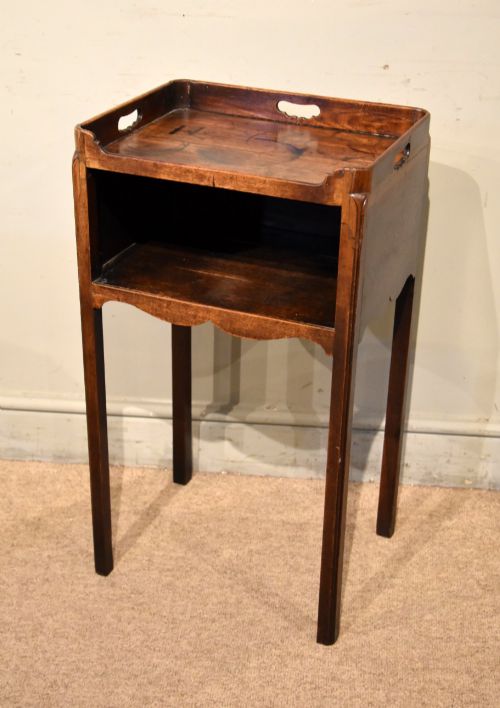
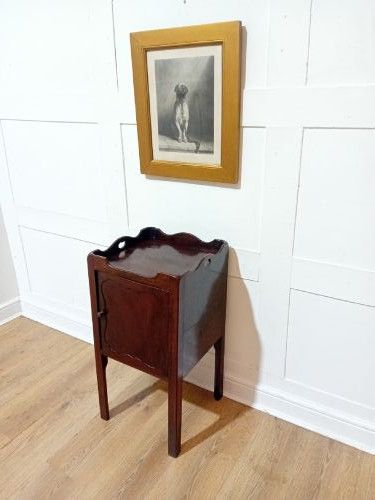
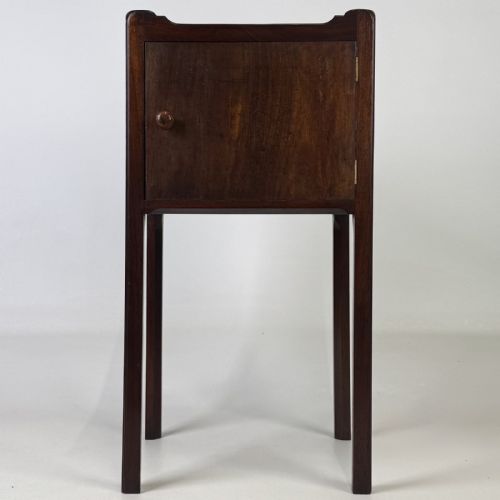
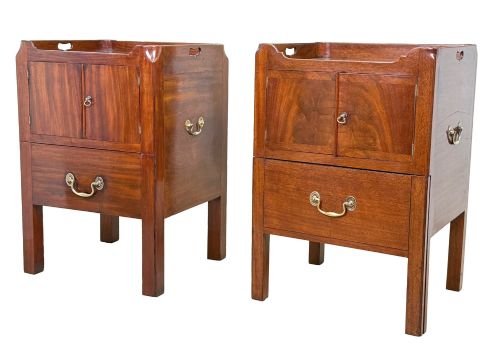
A georgian tray top commode is a specialised bedside table designed to hold washing basins or chamber equipment, emerging chiefly during the 18th century. Most examples found on this page date from the Georgian and George III periods, constructed as small cupboards or cabinets with a shaped gallery rim atop the surface.
The primary forms take shape as bedside nightstands, pot cupboards, and enclosed cabinets with hinged doors. Makers designed these utilitarian pieces to sit discreetly in bedrooms, combining a compact footprint with practical interior storage for nighttime use.
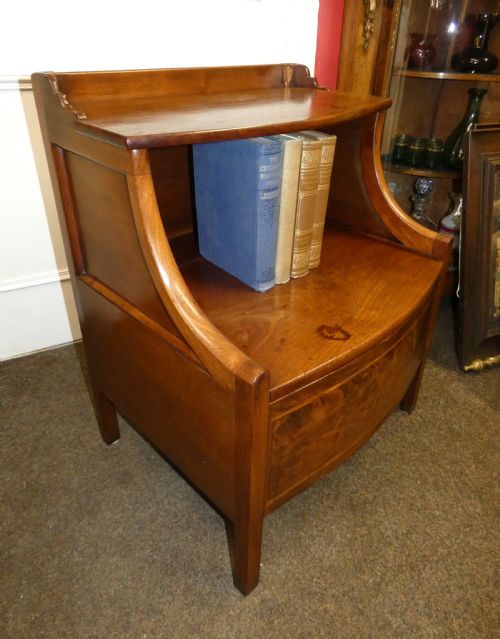
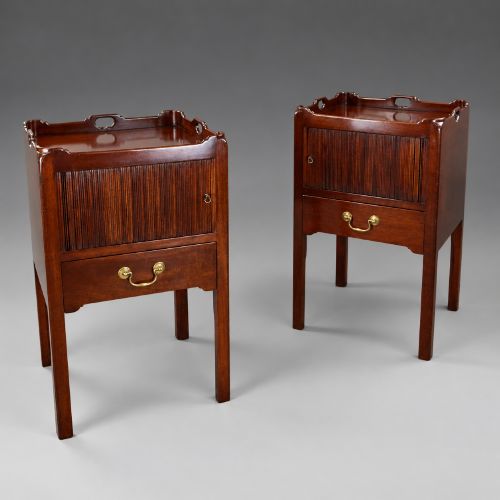
While the core form remains consistent, variations span serpentine fronts, concave shapes, and tambour doors that slide to conceal the interior. Buyers encounter single items as well as matched pairs spanning the 18th century into later revival decades.
How they were made
Cabinet makers built these pieces predominantly using solid mahogany and flame mahogany veneer over secondary timbers. The raised tray top edge was frequently shaped directly from solid wood or assembled with mitred joints to create a secure gallery.
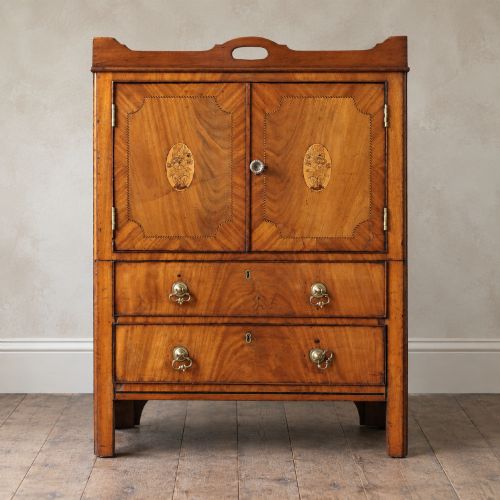
Decorative detailing relies on craftsmanship such as boxwood inlay, satinwood accents, and delicate marquetry. Hardware typically incorporates brass handles and hinges, while functional elements include sliding tambour fronts and panelled doors.
Georgian Tray Top Commode Retail Price Guide 2026
Typical asking prices for georgian tray top commode among the pieces listed under this phrase on Sellingantiques today, from the lower quarter to the upper quarter. They describe what is for sale here now, not the wider market.
Listings feature mahogany, satinwood, boxwood inlay, and brass, spanning the Georgian period, the 18th and 19th centuries, up to later 20th-century revivals.
What varies in quality
Quality rests upon the selection of timber figure, particularly the depth and movement in flame mahogany veneer. Superior examples display meticulous attention to the moulded tray top gallery and precise dovetail construction in the internal compartments.
Distinction also lies in the restraint and execution of decorative elements like boxwood inlay and brass fittings. Pieces that retain harmonious proportions and crisp carving, particularly within Chippendale or Sheraton styles, stand apart from standard utilitarian forms.
The Georgian Tray Top Commode Glossary
- Tray top
- A raised rim or gallery surrounding the upper surface of the table designed to prevent items from rolling off. This feature defines the primary search phrase.
- Commode
- A small cabinet or chest, used in this context as a bedside cupboard for personal sanitary equipment. Eighteenth-century versions rarely resemble modern drawer chests.
- Tambour
- A flexible shutter door formed of narrow vertical strips of wood glued to canvas, allowing it to slide open smoothly in a track.
- Serpentine
- A front contour that curves outward in the centre and inward at the sides, demanding high skill from the cabinet maker.
- Inlay
- A technique where contrasting materials such as boxwood or satinwood are inserted into recesses within the primary mahogany surface to form decorative patterns.
Georgian Tray Top Commode: Frequently Asked Questions
What is a tray top commode?
A tray top commode is an 18th-century bedside cabinet featuring a raised gallery edge around the top surface. They served as functional bedside furniture for holding washbasins or chamber pots.
These compact wooden cabinets typically feature a cupboard door below the main surface, sometimes concealing a pull-out section or interior shelf.
How were these cabinets used?
These pieces functioned primarily as bedside tables in Georgian bedrooms. They kept night-time necessities enclosed out of sight.
The raised gallery prevented water jugs or personal items from sliding off the top surface during use.
How do I identify a Georgian period piece?
Georgian pieces are identified by timber choice, predominantly solid mahogany and mahogany veneer, combined with period construction methods like hand-cut dovetails. Stylistic cues include George III designs, Chippendale details, and Sheraton inlay work.
Later revival examples from the 19th and 20th centuries often replicate these forms, making wood ageing and structural joinery key indicators of original 18th-century manufacture.
How do I live with a commode?
These compact cabinets fit easily beside modern beds as lamp tables or nightstands. The enclosed cupboard space offers practical storage for books or small items.
The raised tray top makes them secure surfaces for drinks or lighting.