

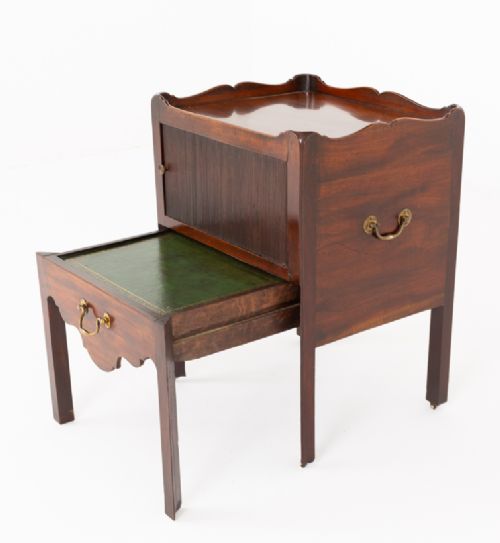


George III Bedside Table
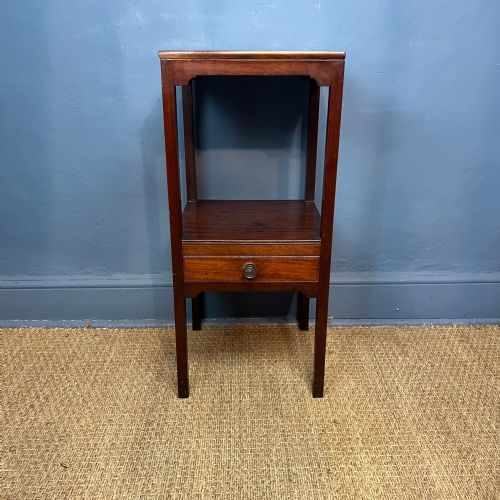
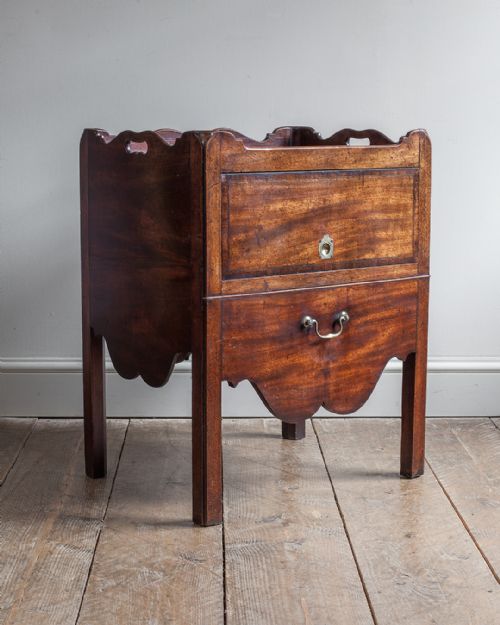
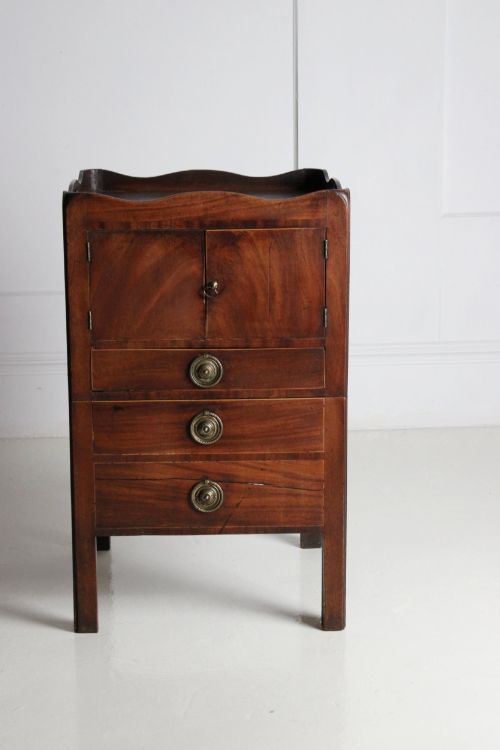
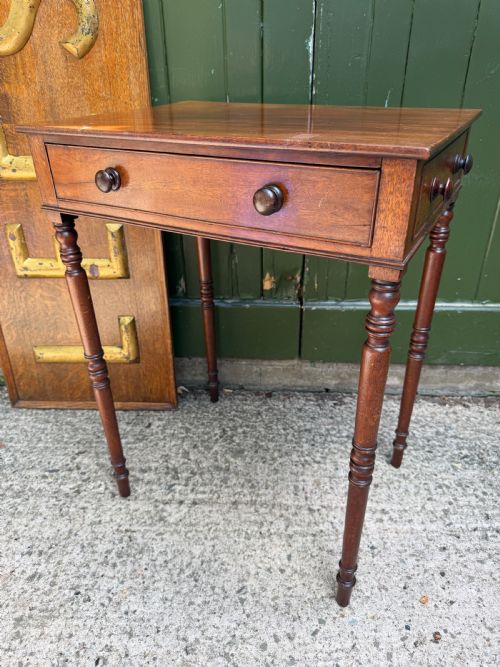
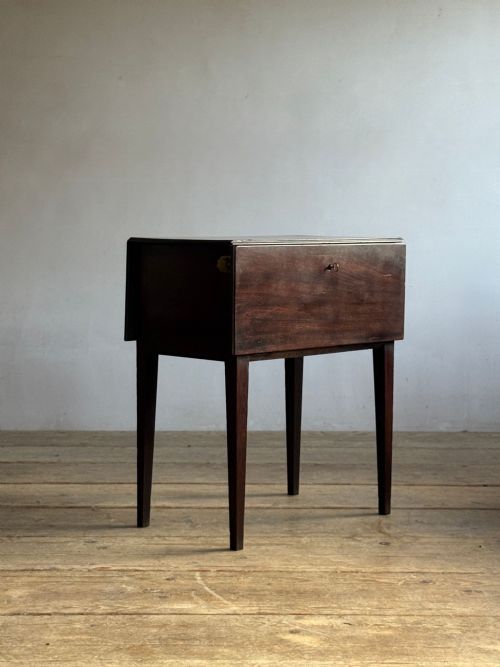
A george iii bedside table offers practical storage with period character, appearing most often as a mahogany cabinet or commode.
George III Bedside Table
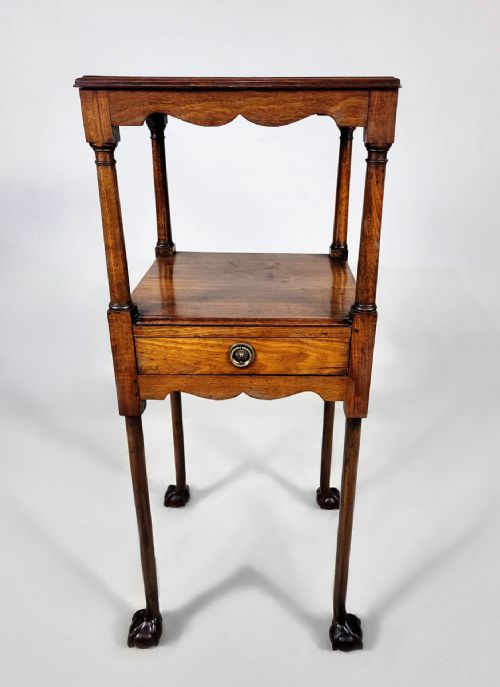
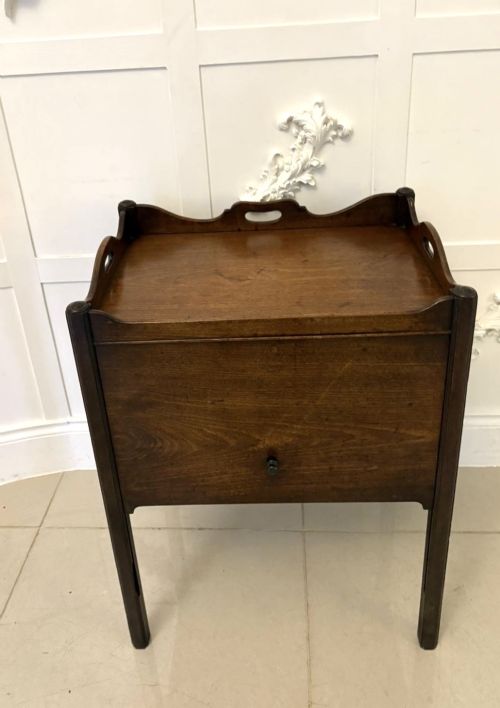
When you examine a george iii bedside table, you are looking at compact eighteenth-century furniture designed for the bedroom, often taking the form of a pot cupboard, nightstand, or commode. The pieces seen most frequently on this page originate from the Georgian period and span various regional workshops.
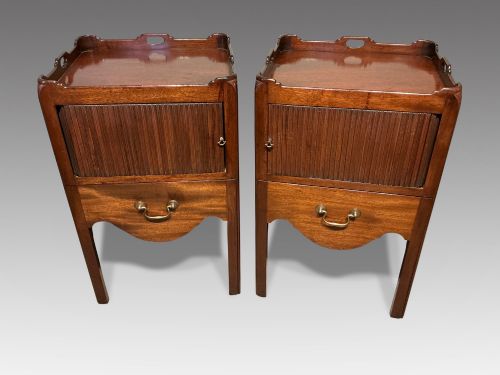
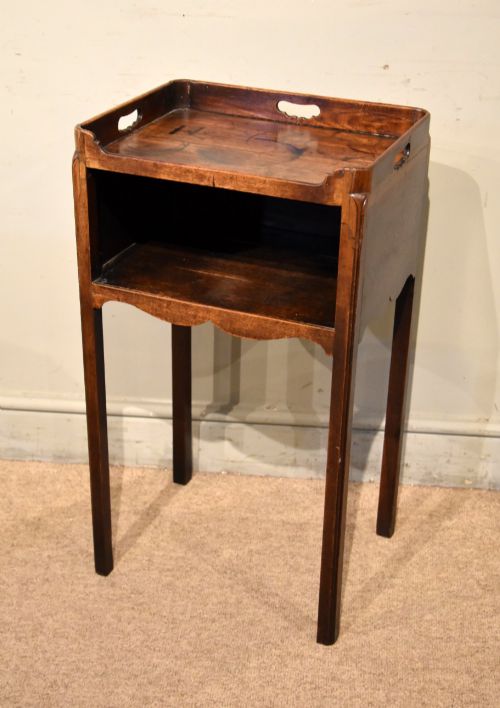
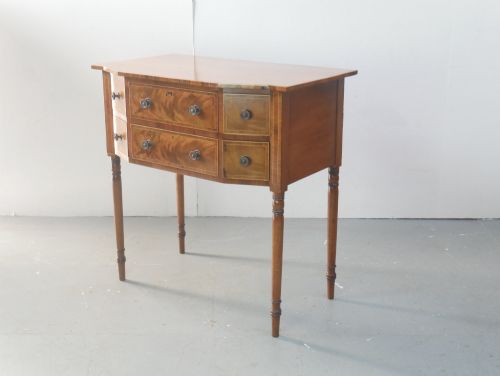
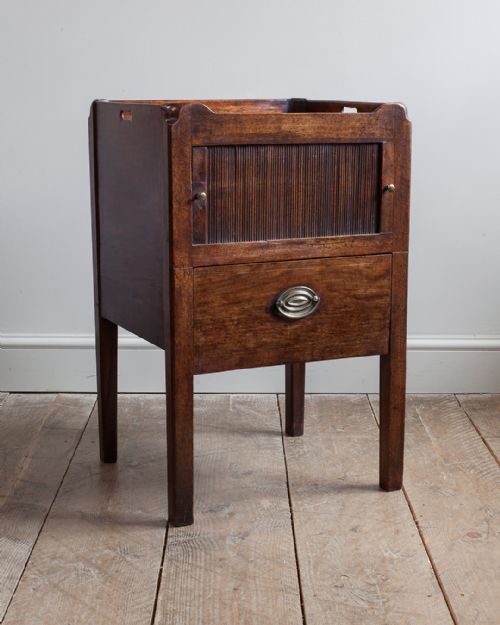
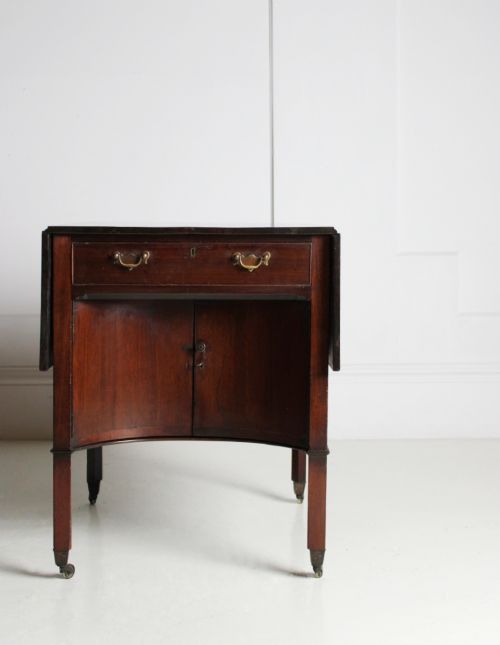
Beyond standard cupboards, the listings include specialised variants such as tray-top tables, tambour-front cabinets, and serpentine-front designs. These diverse forms reflect the functional requirements of domestic spaces during the late eighteenth century.
Later reinterpretations from the nineteenth and twentieth centuries also appear, mimicking the proportions and styles of the original Georgian era. Buyers encounter both single examples and matched pairs suited for placement beside a bed.
Materials and Construction
Cabinetmakers predominantly utilised solid mahogany and mahogany veneers, sometimes pairing them with secondary timbers like satinwood and boxwood for contrasting inlay details. Brass hardware, including hinges, handles, and pull rings, provides functional contrast against the dark timber.
Construction techniques emphasise tight joinery, panelled doors, and sliding tambour fronts made from narrow strips of wood glued to canvas backing. Tray tops are often shaped from single boards with raised edges to contain items, whilst legs range from straight square supports to tapered forms.
George III Bedside Table Retail Price Guide 2026
Typical asking prices for george iii bedside table among the pieces listed under this phrase on Sellingantiques today, from the lower quarter to the upper quarter. They describe what is for sale here now, not the wider market.
Listings feature mahogany as the predominant material, accompanied by brass hardware, satinwood, and boxwood inlay across various Georgian forms.
Craftsmanship and Proportion
The distinction between average and superior pieces rests on the choice of timber and the crispness of the cabinetwork. Finer examples display carefully selected grain patterns, precise dovetail joints, and well-executed stringing or crossbanding.
Proportion and architectural balance dictate the visual success of each piece. Superior items maintain harmonious dimensions and retain original brass fittings, whereas altered or heavily restored examples lack the structural integrity expected of period furniture.
The George III Bedside Table Glossary
- Tambour
- A flexible shutter door formed of thin vertical strips of wood glued to a canvas backing. This mechanism slides smoothly within curved tracks to enclose the cabinet space.
- Tray top
- A tabletop finished with a raised moulded edge or pierced gallery. This design prevents objects from rolling off the surface.
- Commode
- A low cabinet fitted with doors or drawers. In this context, the term often describes a bedside cupboard that originally enclosed a chamber pot.
- Serpentine front
- A furniture front characterised by a wavy contour, curving outward in the centre and inward at the sides. This shape requires advanced woodworking skill.
- Crossbanding
- A border technique where thin strips of veneer are laid so that the grain runs at right angles to the central panel. It provides a neat framing effect.
George III Bedside Table: Frequently Asked Questions
What is a george iii bedside table used for?
These items serve as functional bedside storage for lamps, books, and personal items. Historical versions frequently concealed a chamber pot inside the main cabinet.
Today, they function as practical nightstands or small side tables in contemporary bedrooms. Their compact scale allows them to fit comfortably beside modern bedframes.
How do I identify a genuine george iii bedside table?
Authentic pieces exhibit eighteenth-century construction methods, such as hand-cut dovetails and timber shrinkage consistent with age. Examination of the secondary woods inside drawers reveals period manufacturing practices.
Many listings also include later reproductions made in the George III style during subsequent centuries. Comparing timber patination and hardware helps distinguish original items from later interpretations.
Are these tables usually found in pairs?
Both single cabinets and matched pairs appear across the listings. Pairs are particularly sought after for balancing symmetrical bedroom layouts.
Finding a matching pair from the eighteenth century is uncommon, as many survived as solitary pieces. Consequently, dealers often assemble matched pairs from similar individual items.
How should I care for a mahogany bedside table?
Maintenance requires keeping the timber away from direct sunlight and excessive heat sources to prevent wood splitting. Regular dusting with a dry, soft cloth preserves the polished surface.
Application of traditional wax polish helps nourish the mahogany grain over time. Avoid using modern spray polishes containing silicone, which can damage the antique finish.