



Mahogany Night Commode
A mahogany night commode brings practical 18th-century utility and rich timber grain to the bedside.
Mahogany Night Commode
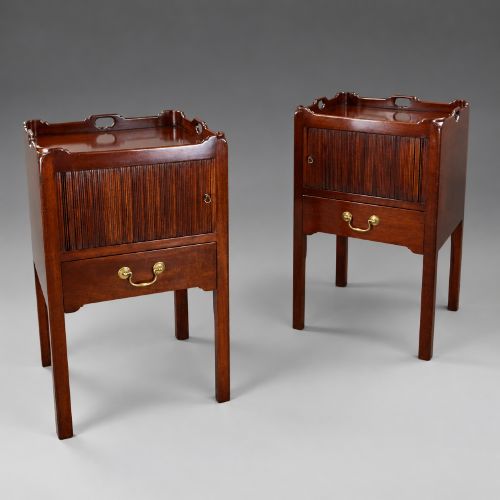
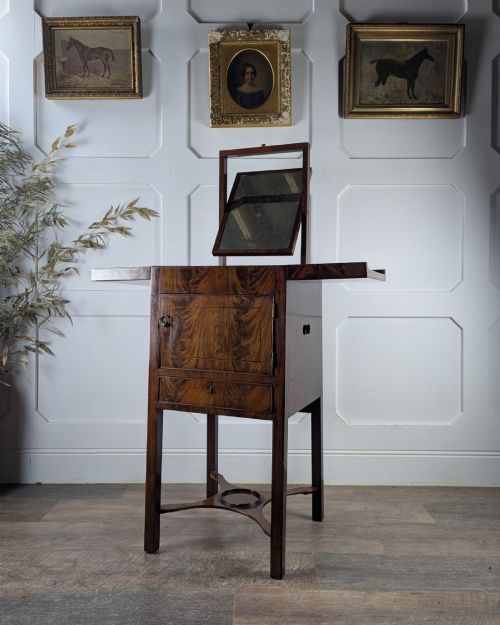
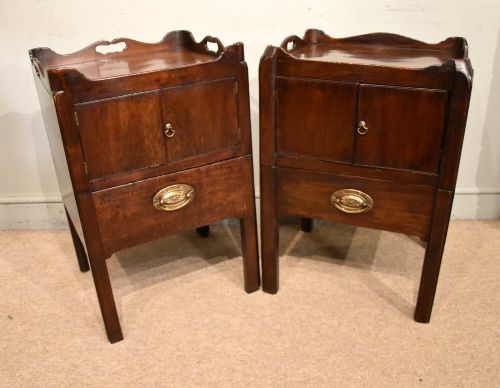
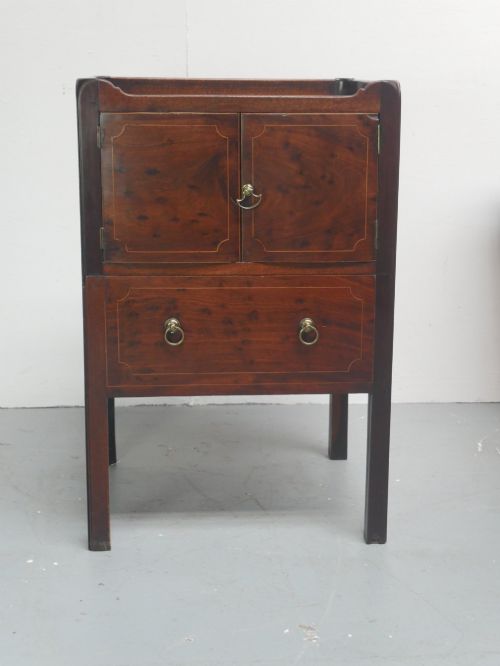
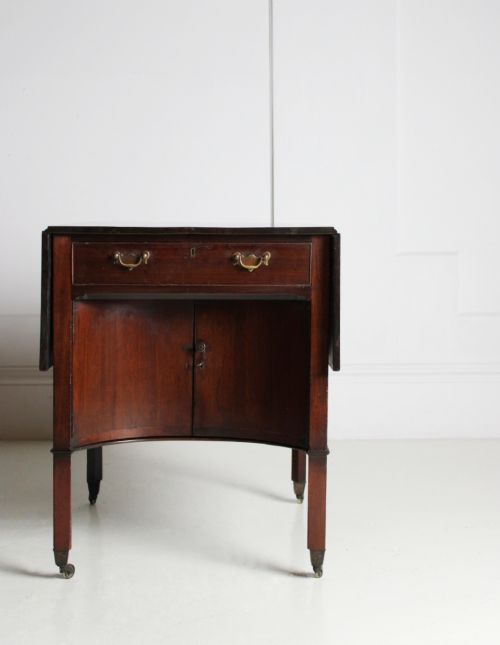
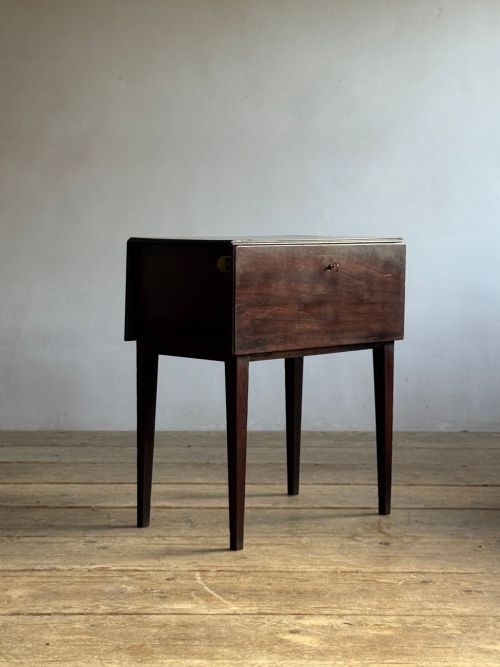
A mahogany night commode is a compact bedside piece designed to conceal chamber pots or hold personal items during the Georgian and Regency periods. The forms range from simple tray-top bedside cupboards to serpentine-front cabinets and cylindrical bedside units.
Most examples date from the 18th century and the George III era, though later 19th-century interpretations and 20th-century Georgian style reproductions also appear. Buyers encounter these primarily as bedside tables, nightstands, and enclosed cupboards.
Materials and construction
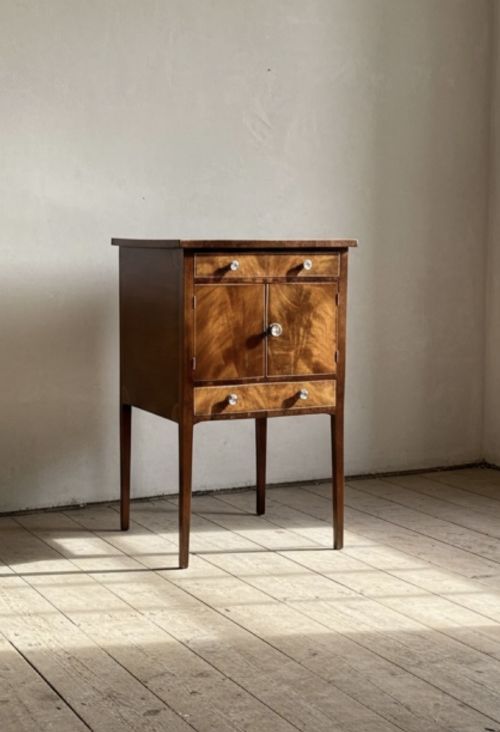
Cabinetmakers utilised solid mahogany and flame mahogany veneer, often accenting the timber with boxwood inlay, satinwood, and brass hardware. These woods provided both structural stability and rich, dark surfaces that took a high polish.
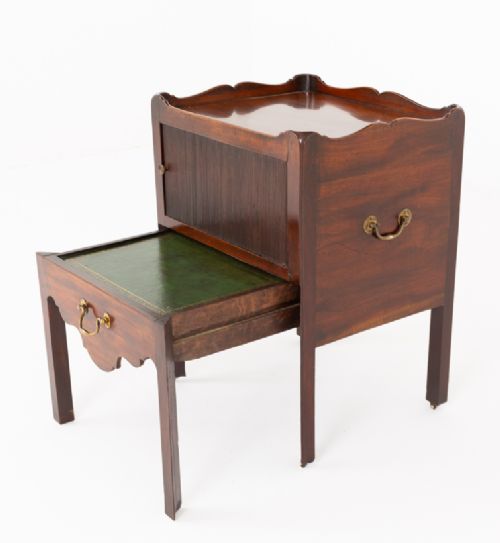
Joinery methods included tightly fitted panel doors, tambour slides, and shaped tray tops designed to keep wash vessels secure. Drawers and pull-out steps reveal secondary softwood framing hidden beneath the primary show woods.
Mahogany Night Commode Retail Price Guide 2026
Typical asking prices for mahogany night commode among the pieces listed under this phrase on Sellingantiques today, from the lower quarter to the upper quarter. They describe what is for sale here now, not the wider market.
Listings feature mahogany, brass, boxwood inlay, flame mahogany veneer, and satinwood across George II, George III, and Regency periods.
Judging quality and proportion
Quality rests in the choice of timber figure, such as highly matched flame mahogany veneer, and the crispness of boxwood inlay. Superior pieces exhibit confident serpentine or concave curves rather than flat, boxy proportions.
The integration of functional elements like tambour doors or pull-out steps demonstrates finer workshop execution. Original brass handles and undisturbed secondary timbers elevate the standing of a piece.
The Mahogany Night Commode Glossary
- Tray top
- A moulded or pierced gallery surrounding the upper edge of a table to prevent items from rolling off. This feature is common on Georgian bedside cupboards.
- Tambour
- A flexible shutter made of narrow vertical strips of wood glued to canvas, allowing curved doors to slide open smoothly. It appears on specialised bedside commodes.
- Serpentine front
- A piece of furniture front shaped with a convex centre flanked by concave curves. This profile requires skilled woodworking and denotes high status.
- Flame mahogany
- A veneer cut from timber where the branch meets the trunk, producing a rippling flame-like pattern. Makers used it to create striking visual movement on cabinet doors.
Mahogany Night Commode: Frequently Asked Questions
What is a night commode?
A night commode is a small enclosed bedside cabinet originally built to house a chamber pot out of sight. They date largely to the Georgian period and offered discreet personal sanitation.
Over time, these versatile little cabinets transitioned from utility items to standard bedside tables and lamp tables. Their enclosed cupboards make them useful for modern bedside storage.
How do I spot an 18th century piece?
Look for construction details such as hand-cut dovetails on drawer boxes, native secondary timbers like oak or pine, and subtle signs of age in the mahogany finish. 18th-century proportions tend to feel balanced and substantial without machine-made uniformity.
Later reproductions from the 20th century often copy Georgian styles but utilise more modern interior fittings and uniform timber stock. Comparing the drawer linings and backboards helps clarify the manufacturing era.
Did they all hold chamber pots?
Many contained compartments specifically sized for ceramic vessels, sometimes with a shelf or a pull-out slide. Others functioned simply as enclosed bedside cupboards for books and nightwear.
Makers also produced variants like deception tables and washstands with fold-away tops. The internal layout usually reveals the primary intended purpose of the cabinet.
How do I use one today?
These compact cabinets fit neatly beside modern beds to hold reading lamps, books, and personal accessories. The enclosed cupboard keeps clutter hidden while providing a sturdy surface on top.
They also serve well as small side tables or lamp stands in hallways and living rooms. Their modest footprint allows them to tuck into tight spaces easily.