





Tambour Door Nightstand
A tambour door nightstand is a clever bedside piece offering discreet enclosed storage through flexible slatted timber shutters.
Tambour Door Nightstand
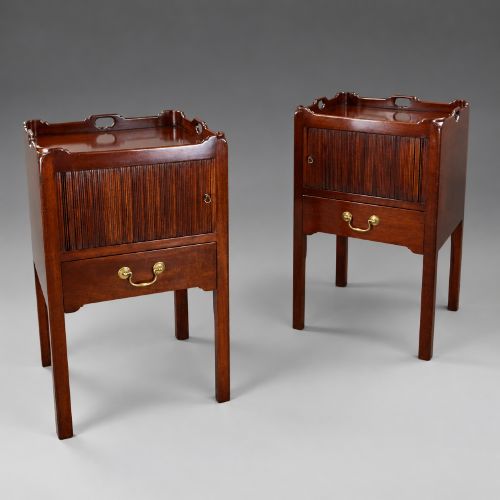
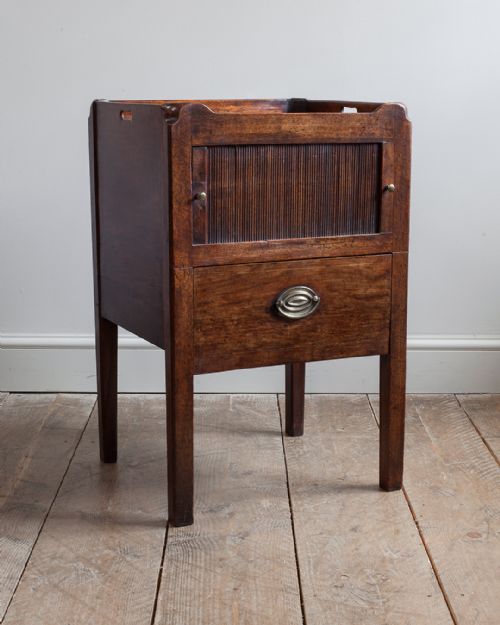
A tambour door nightstand is a compact bedside cabinet designed to keep small personal items neatly concealed behind a sliding slatted wooden shutter. When you search for a tambour door nightstand, you encounter historic forms originating mainly in the Georgian, Regency, and nineteenth-century periods.
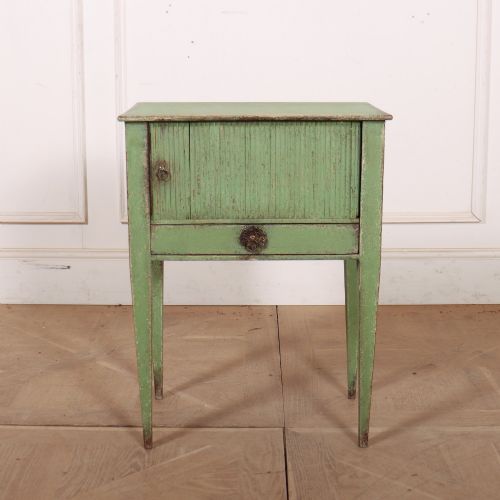
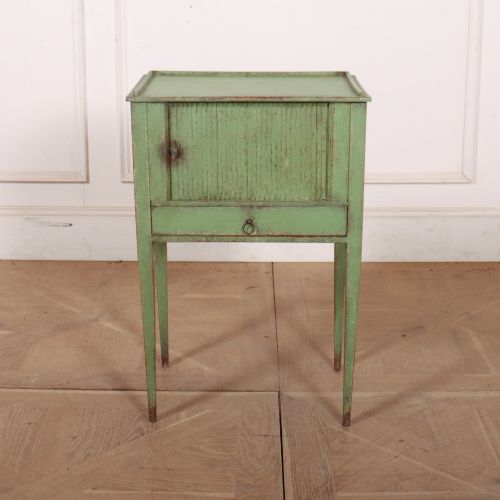
The pieces appearing on this page span several regional styles, including George III mahogany designs, Dutch painted and marquetry examples, and French provincial walnut stands. Bedside cabinets, tray-top commodes, and corner cupboards dominate the forms available.
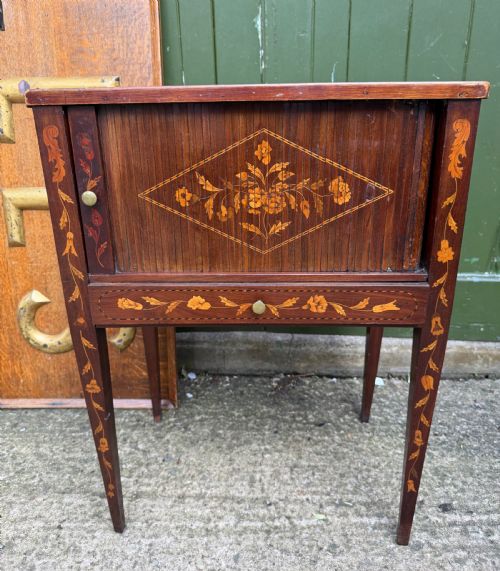
Most examples rely on solid mahogany or walnut construction, occasionally enhanced by boxwood stringing or floral marquetry. These bedside tables bridge the gap between utility and craftsmanship, offering practical bedside storage with distinct period character.
Materials and Construction
Cabinet makers constructed these nightstands primarily using dense timbers such as mahogany and walnut, which provided the structural stability needed for fine joinery. Secondary softwoods often formed internal drawer linings and hidden framework elements.
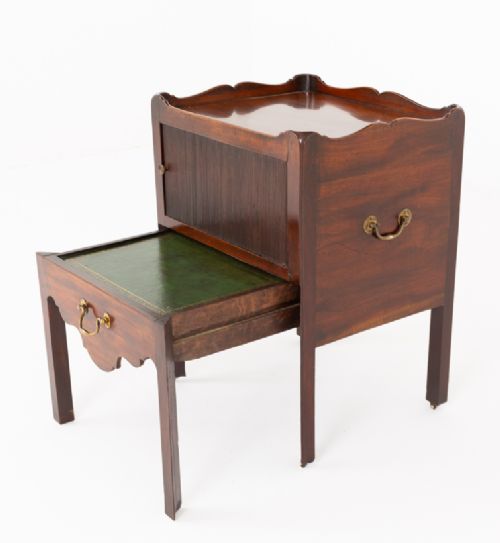
The defining tambour shutter consists of narrow vertical strips of wood glued to a canvas or linen backing, allowing the curtain to slide smoothly within concealed side tracks. Brass hardware, including drop handles and small hinges, frequently accents the drawer and cupboard doors.
Tambour Door Nightstand Retail Price Guide 2026
Typical asking prices for tambour door nightstand among the pieces listed under this phrase on Sellingantiques today, from the lower quarter to the upper quarter. They describe what is for sale here now, not the wider market.
Many Georgian nightstands include discreet pull-out trays lined with leather, designed for holding midnight candles or chamber pots safely away from silk bed hangings.
Judging Quality and Craftsmanship
The finest examples demonstrate exceptional precision in the tambour mechanism, ensuring the slatted door glides effortlessly along its curved track without binding or sagging. Superior pieces also feature finely figured timber veneers, careful dovetail joinery on internal drawers, and intact original brass fittings.
Lower quality or later provincial interpretations often exhibit stiff tambour action due to wood movement or warped tracks. The presence of crisp hand-carved details, balanced proportions, and well-preserved surface patination distinguishes superior workshops from standard production.
The Tambour Door Nightstand Glossary
- Tambour
- A flexible sliding shutter formed from narrow wooden slats attached to a fabric backing. This ingenious mechanism allows doors to open around tight curves without swinging outward into the room.
- Commode
- A historic term for a small decorative cabinet or chest with drawers and doors. In bedroom furniture, it often refers to enclosed bedside tables.
- Marquetry
- The art of applying decorative veneer pieces in geometric or floral patterns onto a solid wood carcase. Craftsmen utilise various tinted woods to create contrasting pictorial designs.
- Tray top
- A raised rim surrounding the upper surface of a bedside table to prevent small items from rolling off. This feature is particularly common on eighteenth-century commodes.
- Stringing
- Thin inlaid lines of contrasting timber, such as boxwood, used to outline panels and drawers. It adds subtle linear definition to plain mahogany surfaces.
Tambour Door Nightstand: Frequently Asked Questions
How do tambour doors actually work?
Tambour doors operate by sliding thin wooden slats along a concealed recessed track routed into the cabinet frame. The fabric backing holds the individual strips together while allowing the entire shutter to bend smoothly around corners.
This design enabled cabinet makers to enclose tight spaces where traditional hinged doors would require clearance to swing open.
Were these pieces originally used as bedside tables?
Many historic tambour cabinets and commodes served multiple domestic purposes before finding permanent homes beside modern beds. Eighteenth-century examples often functioned as pot cupboards or nightstands in formal dressing rooms.
Their compact proportions and enclosed storage naturally suit contemporary bedroom layouts as practical bedside tables.
How do I care for a historic wood nightstand?
Protect antique wood surfaces by keeping them away from direct heat sources, strong sunlight, and excessive moisture fluctuations. Periodic application of a quality microcrystalline wax helps nourish the timber and preserve the historic finish.
Avoid using modern silicone sprays or harsh chemical cleaners that can permanently damage aged French polish or wax patination.
How can I tell a Georgian piece from a later revival?
Distinguishing period pieces relies on examining construction methods, timber maturity, and secondary woods like softwood versus oak. Georgian cabinets typically display hand-cut dovetails, older shrinkage patterns, and period-appropriate hardware fixings.
Revival pieces from later decades often reveal standardised machine-cut elements and different internal structural configurations.