

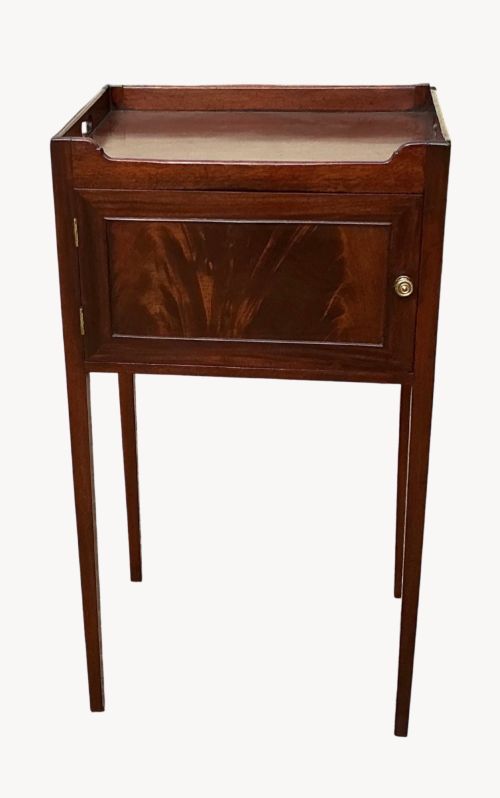
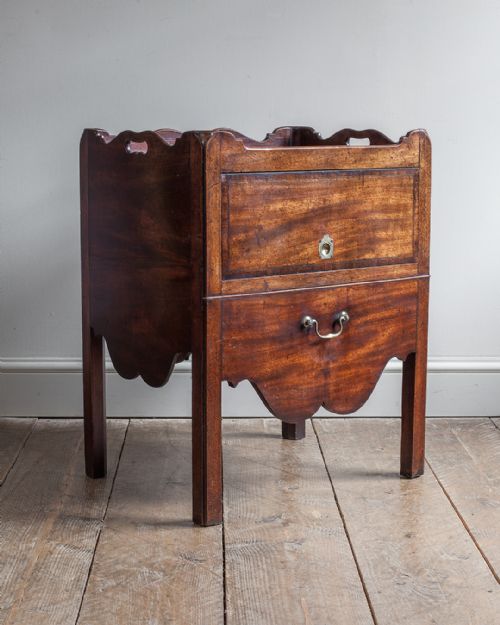
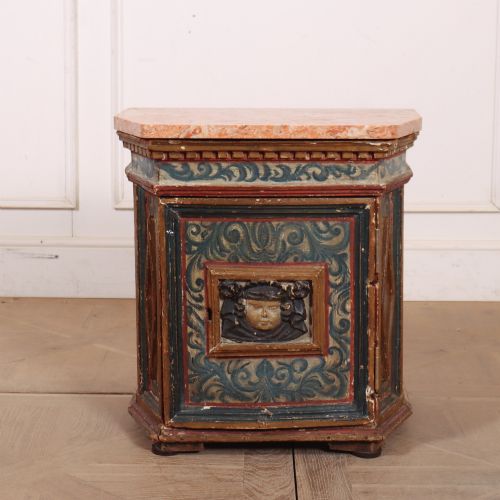

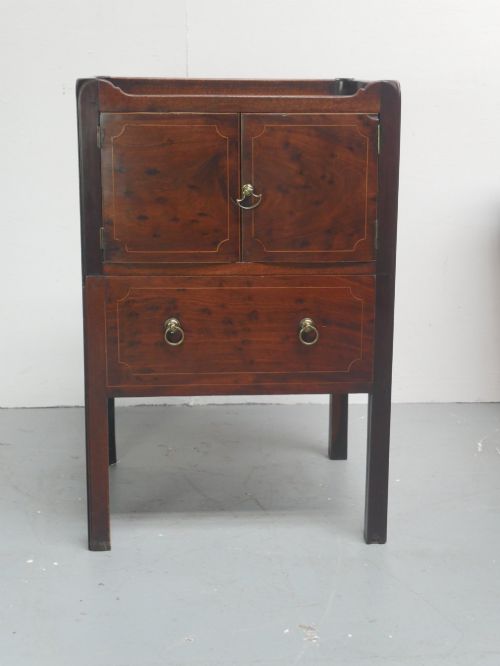
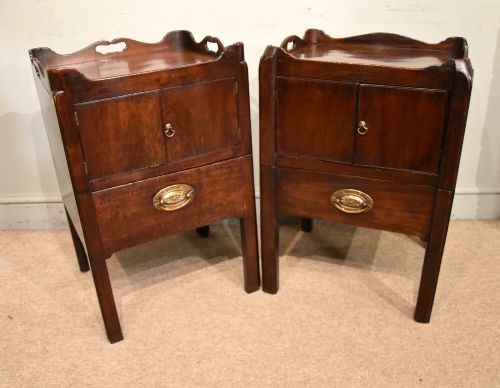


18th Century Bedside Cupboard
An 18th century bedside cupboard provides discreet bedside storage with period character, satisfying collectors seeking functional antique timber furniture.
18th Century Bedside Cupboard
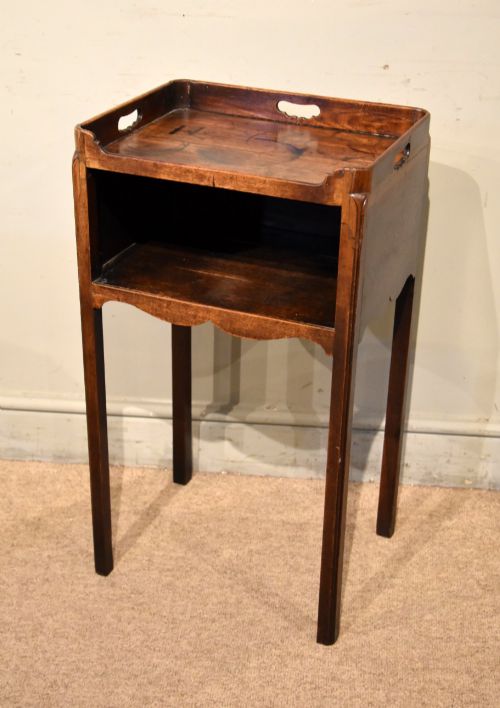
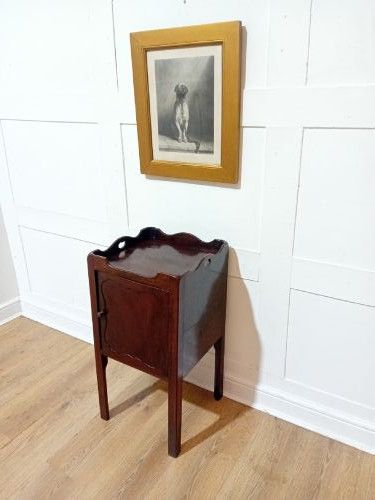
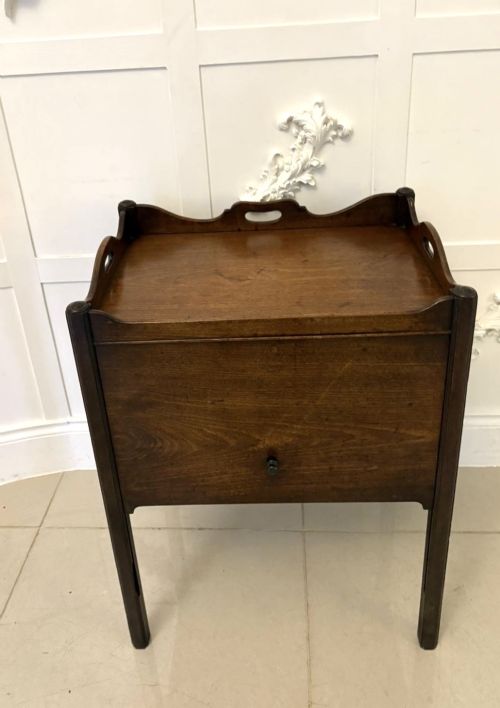
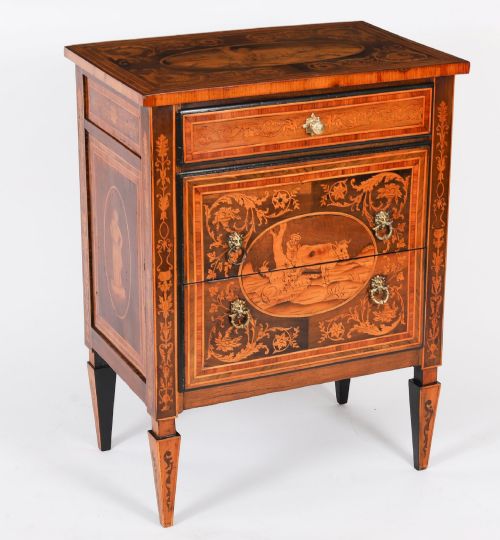
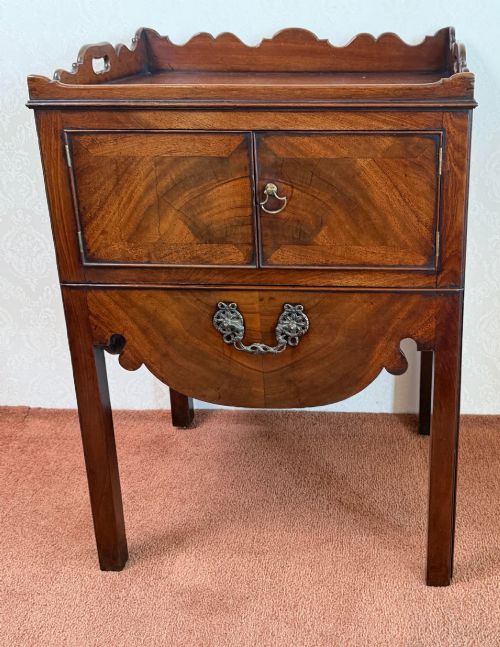
The 18th century bedside cupboard appears primarily in mahogany, oak, and walnut, often taking the form of a nightstand, commode, or enclosed pot cupboard. These pieces originate predominantly from Georgian England, alongside examples from Italy, Sweden, and the Netherlands.
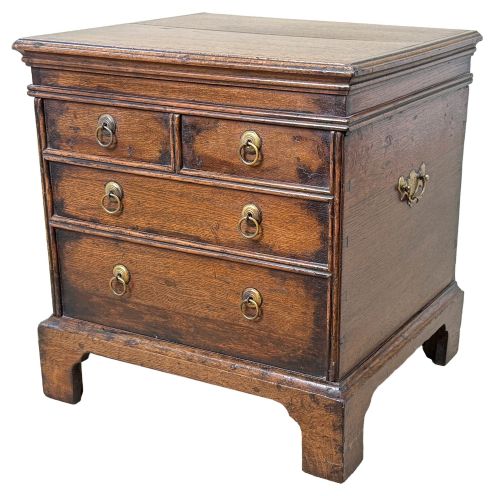
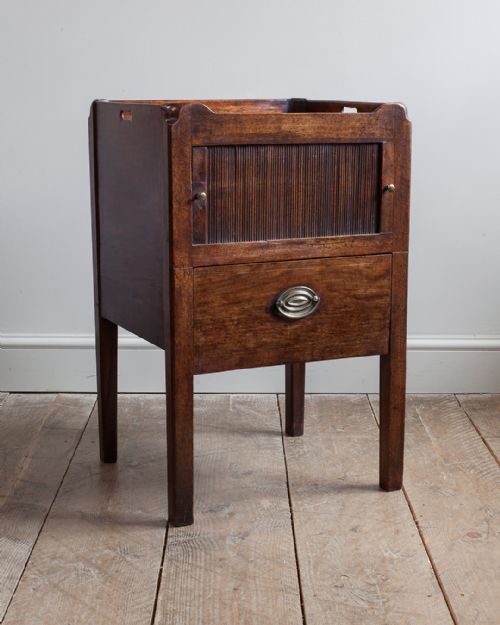
Buyers encounter tray top designs, tambour fronts, and corner cabinets alongside simpler chest forms and close stools. The selection ranges from plain provincial oak to highly decorated marquetry and painted surfaces.
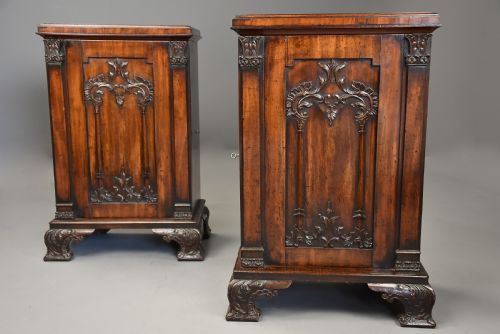
Forms vary from compact square cabinets to serpentine commodes and pedestal cabinets designed to hold chamber pots or personal items. Many survive in pairs, reflecting their original domestic placement flanking a bed.
What Varies in Quality
Quality rests in the choice of timber and the crispness of execution, distinguishing figured flame mahogany or burr walnut veneers from plain utility boards. Superior examples display fine dovetailing, intact original brass hardware, and well-balanced proportions in serpentine or tray top forms.
The sophistication of decorative work separates standard workshop production from high-end pieces, seen in the precision of boxwood inlay, Dutch floral marquetry, or carved Chippendale details. Condition of the original timber and surface finish also determines the standing of a piece within the range.
18th Century Bedside Cupboard Retail Price Guide 2026
Typical asking prices for 18th century bedside cupboard among the pieces listed under this phrase on Sellingantiques today, from the lower quarter to the upper quarter. They describe what is for sale here now, not the wider market.
Some oak and elm close stools disguised themselves as small chests, keeping domestic realities thoroughly out of sight.
The 18th Century Bedside Cupboard Glossary
- Tray top
- A raised rim surrounding the upper surface of a table or cabinet to prevent items from rolling off. This feature is common on Georgian bedside commodes.
- Tambour
- A flexible shutter made of narrow vertical strips of wood glued to canvas, allowing a cupboard door to slide open around a curve. It appears on select George III cabinets.
- Close stool
- A piece of furniture enclosing a chamber pot, often disguised as a small chest or bedside cupboard. These incorporate hinged lids or doors to conceal the interior.
- Marquetry
- Decorative patterns formed by fitting contrasting pieces of veneer into a wooden background. Dutch examples frequently employ floral marquetry in mahogany.
- Serpentine
- A gently undulating curved line, convex in the centre and concave at the sides, used on the fronts of commodes and chests. This shape demands high skill from the cabinetmaker.
18th Century Bedside Cupboard: Frequently Asked Questions
What was an 18th century bedside cupboard used for?
These cupboards served primarily to hold chamber pots and store night-time necessities out of sight in bedrooms.
Over time, their function shifted toward holding candlesticks, watches, and books as domestic habits changed.
How do I identify a George III bedside cabinet?
George III pieces typically feature dense mahogany timber, straight or slightly tapered legs, and sometimes brass carrying handles.
Characteristic details include tray tops, tambour doors, or panelled cabinet doors concealing internal storage space.
Are these cupboards sturdy enough for daily use?
Solid construction in hardwoods like mahogany and oak makes these cabinets durable for everyday placement in modern rooms.
Care should be taken with veneered surfaces and antique drawer runners to preserve their mechanical integrity.
What is the difference between a commode and a nightstand?
In this period context, commodes often feature enclosed cabinet space or drawers designed to conceal a chamber pot.
Nightstands and bedside tables share similar dimensions but may offer open shelf storage alongside enclosed lower cupboards.