
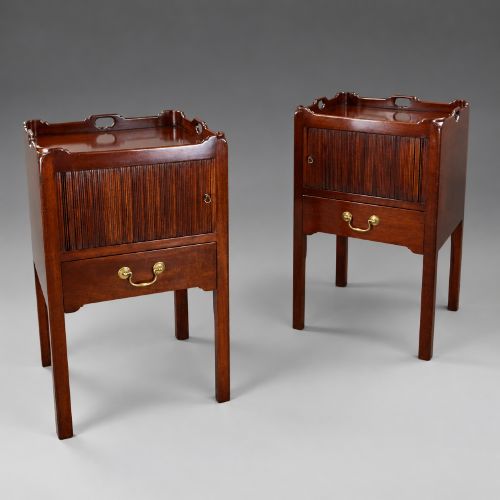
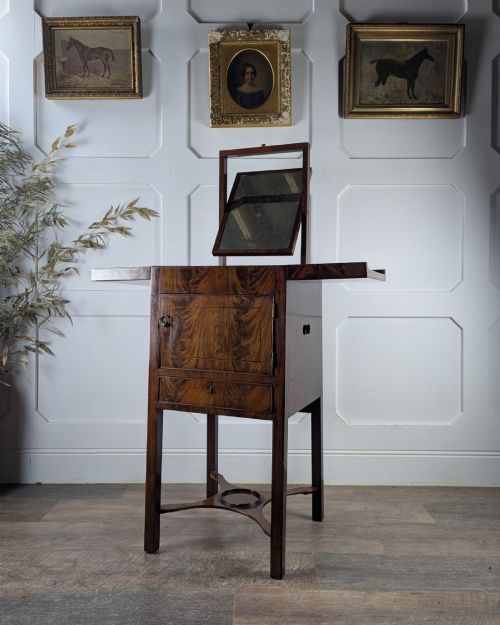
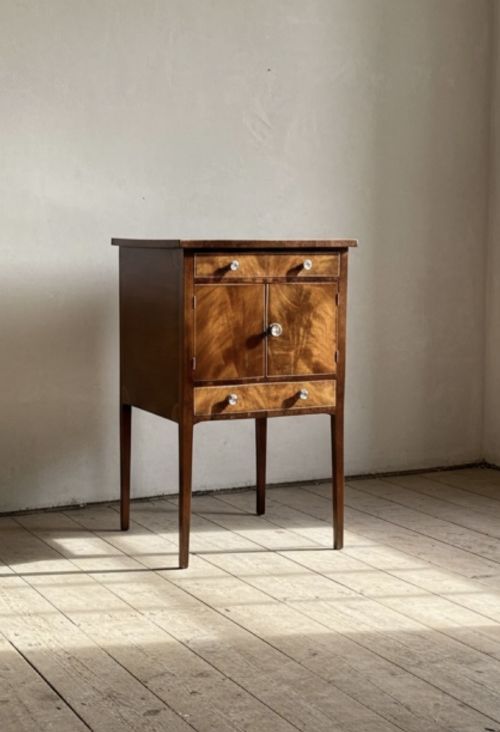

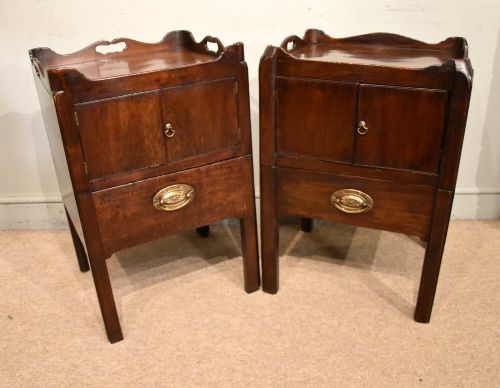


Georgian Mahogany Night Commode
A Georgian mahogany night commode brings eighteenth-century craftsmanship into a modern bedroom with compact practicality and rich, figured timber.
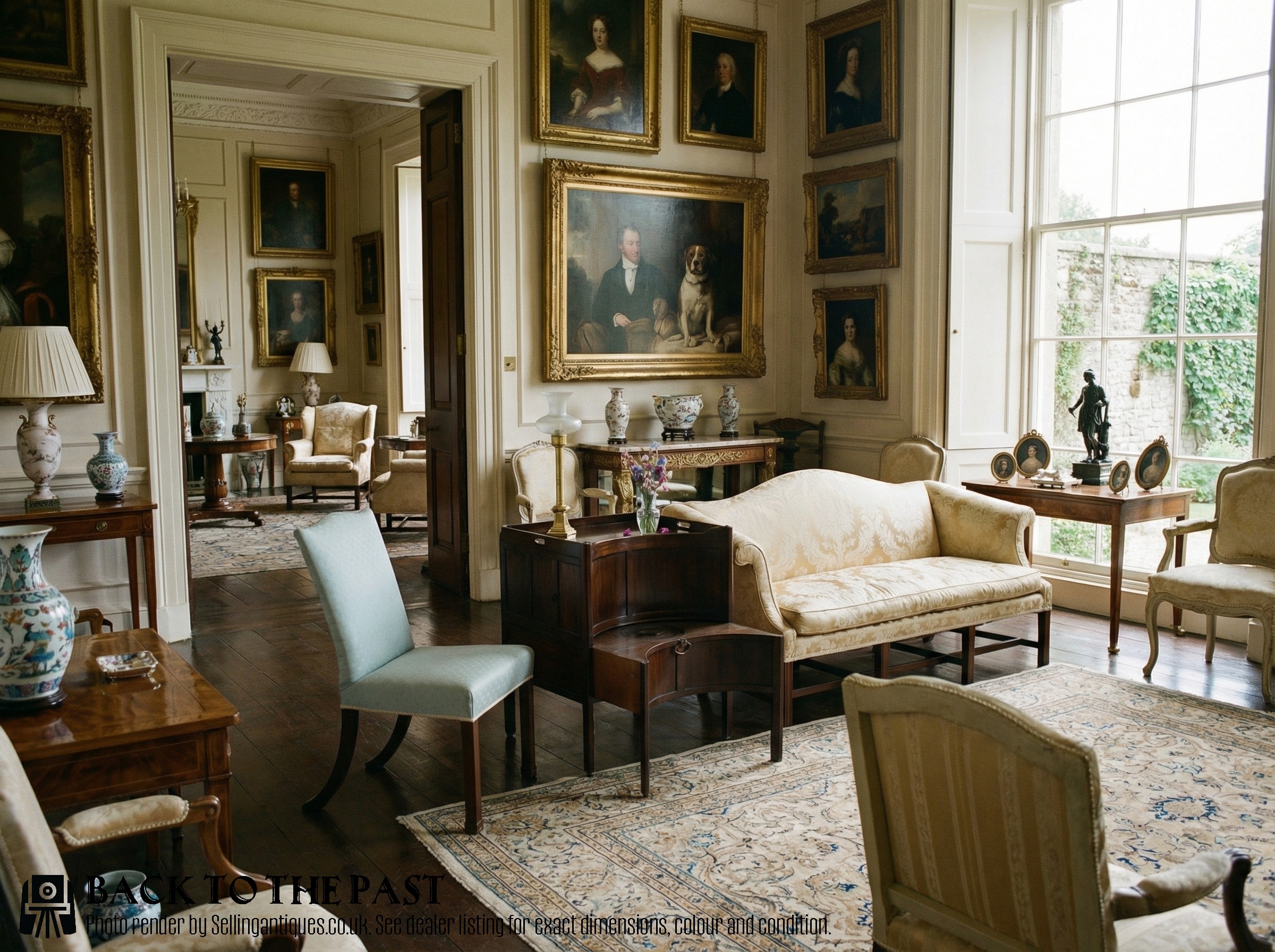
Identifying a Georgian mahogany night commode
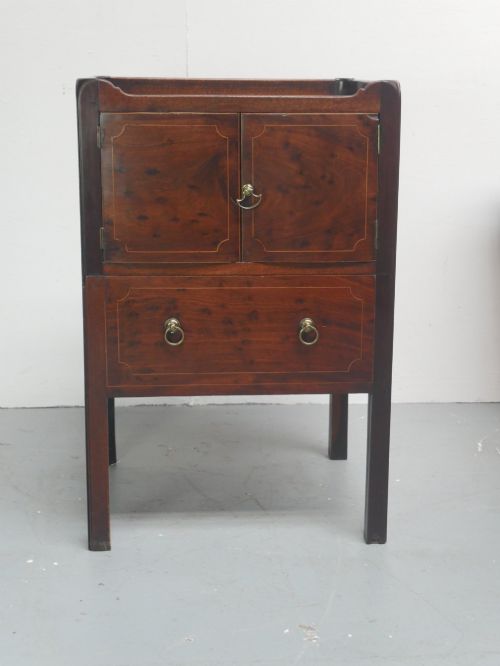
A georgian mahogany night commode is a functional piece of bedroom furniture designed during the eighteenth and early nineteenth centuries to house a chamber pot or serve as a bedside stand. You will most frequently encounter compact cupboards and tray-top cabinets dating from the Georgian and George III eras, alongside occasional nineteenth-century adaptations.
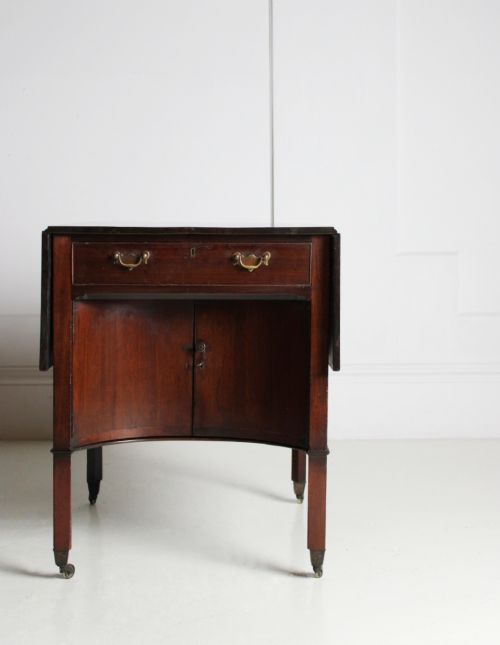
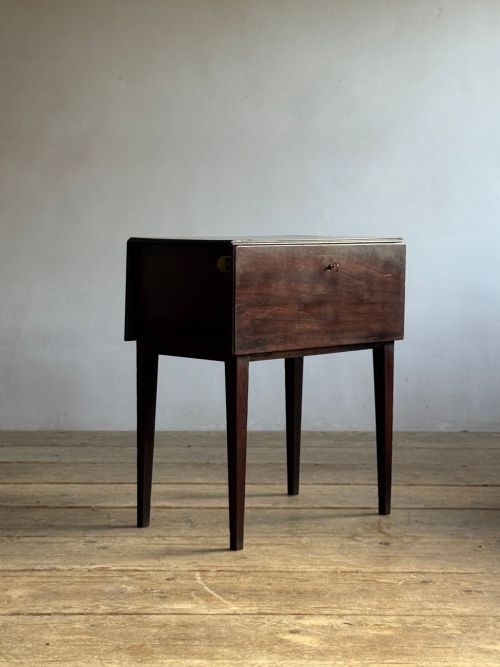
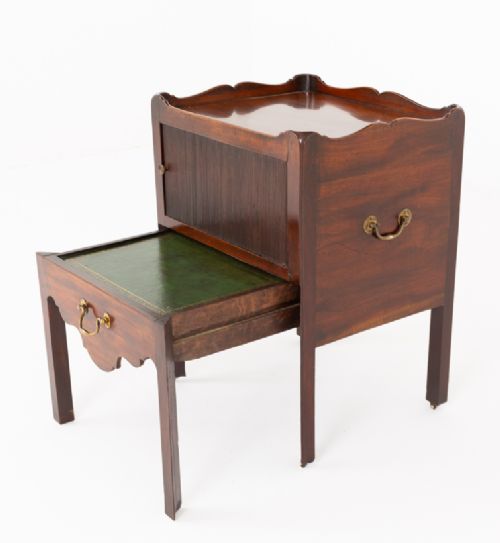
The forms on this page span bedside tables, side cabinets, and commodes, frequently featuring enclosed lower compartments or pull-out sections. Pieces range from simple George III bedside cupboards to more sophisticated George II concave designs and satinwood-inlaid variants.
Makers and cabinetmakers of these periods utilised dense tropical hardwoods to construct sturdy storage items that fit neatly beside a bed. Each piece reflects the domestic requirements of a Georgian household, combining discreet utility with refined cabinetmaking.
Materials and construction methods
Mahogany forms the primary structural and visual foundation of these pieces, often selected for its deep grain and durability. Cabinetmakers paired this timber with contrasting secondary woods, incorporating satinwood inlay and solid brass hardware such as drop handles and hinges.
Joinery techniques from the period rely on hand-cut dovetails for drawers and pegged mortise-and-tenon frames for the body. Tray tops were shaped from solid timber planks with raised edges to prevent items from rolling off the surface.
Retail Price Guide 2026
Typical UK retail prices for georgian mahogany night commode, calculated from the Sellingantiques database of over a million retail prices indexed since 2003. This retail price guide relies exclusively on Sellingantiques data; no external sources or auction records are used, so the figures do not describe the wider market.
Many a midnight visitor tripped over these sturdy little cabinets before the invention of electric bedside lighting.
Judging quality and refinement
Quality in these bedside pieces rests upon the selection of timber and the precision of the cabinetwork rather than sheer size. Superior examples exhibit tightly figured mahogany grain, finely executed satinwood stringing, and well-proportioned concave or tray-top profiles that show the hand of a skilled maker.
Finer items retain their original brass fittings, smooth-running drawer linings, and integrated internal compartments without unnecessary later alterations. The distinction between standard utility items and exceptional pieces lies in the subtlety of the mouldings and the crispness of the carving.
The Georgian Mahogany Night Commode Glossary
- Tray top
- A tabletop finished with a raised moulded border or pierced carrying handles carved directly from the solid wood. This feature prevented water jugs or personal items from sliding off.
- Commode
- A piece of furniture containing a concealed chamber pot or enclosed storage behind doors. In this context, it denotes a bedside cabinet rather than a large chest of drawers.
- Concave
- A curved inward front profile, seen on select George II pieces. This shaping required advanced woodworking skill to execute cleanly on a small cabinet.
- Satinwood
- A pale, lustrous exotic timber utilised for contrasting inlay and bandings. Cabinetmakers employed it to create decorative borders on drawer fronts and cabinet doors.
Frequently Asked Questions
What was a night commode used for?
These cabinets served primarily to house a chamber pot out of sight during the night in Georgian bedrooms. They also functioned as general bedside tables for holding candles, books, and personal belongings.
Over time, many of these pieces lost their original interior fittings and transitioned into standard lamp tables or bedside storage cabinets in modern homes.
How do I spot a George III piece?
George III furniture typically displays classic proportions, balanced symmetry, and restrained decorative details like bracket feet or simple fielded panels. The use of solid mahogany and straight-grained veneers is characteristic of this expansive design era.
Examining the internal drawer construction and timber ageing helps confirm whether a piece belongs to the late eighteenth century.
Will a tray-top commode fit a modern bed?
Most Georgian bedside cabinets feature modest footprints designed for smaller historical sleeping quarters, making them ideal for compact modern spaces. Their height generally aligns well with standard mattress levels.
Checking the specific dimensions listed for each cabinet ensures it clears contemporary bedside furniture and power outlets.
How do I care for antique mahogany?
Mahogany responds best to gentle dusting with a dry lint-free cloth and protection from direct sunlight and extreme humidity changes. Applying a quality natural wax periodically helps nourish the timber and maintain its natural lustre.
Avoiding harsh chemical polishes preserves the historic patina and prevents damage to the original French polish or wax finish.