

Vintage Bowfront Chest
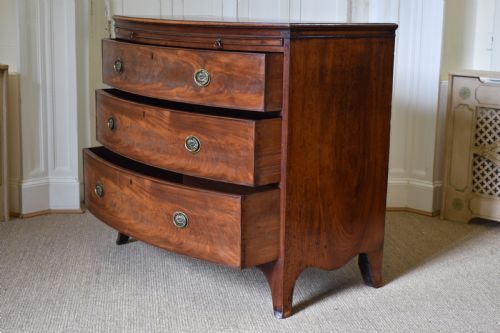
A vintage bowfront chest brings curved fronts and generous storage to a room, offering the distinct cabinetwork of earlier centuries.
Vintage Bowfront Chest
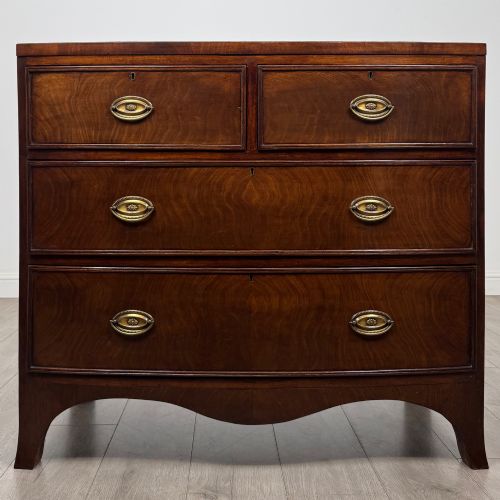
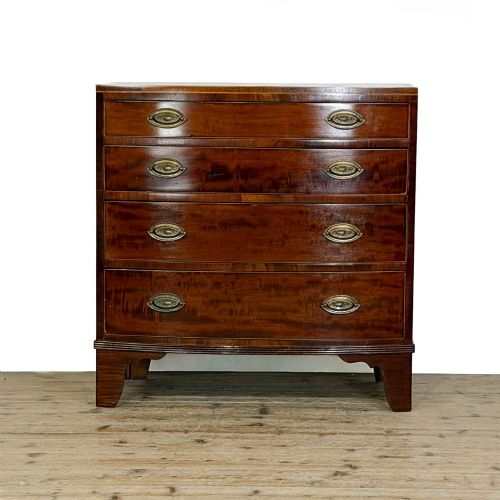
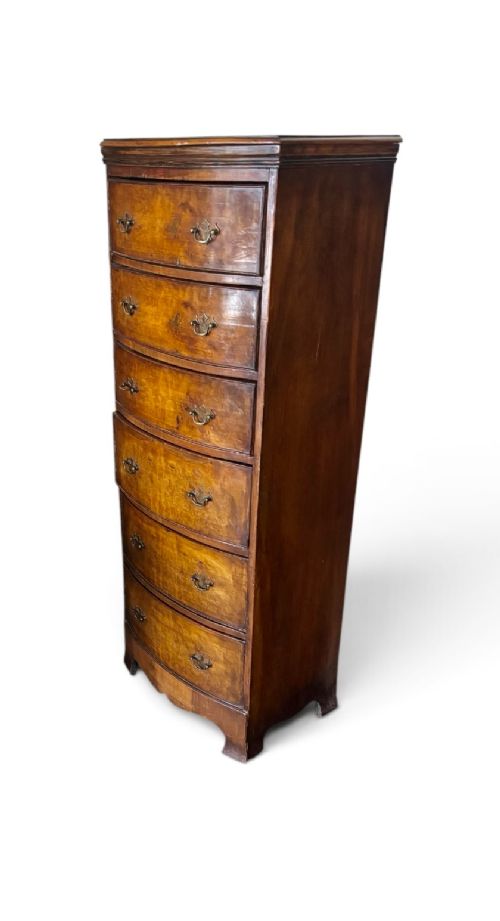
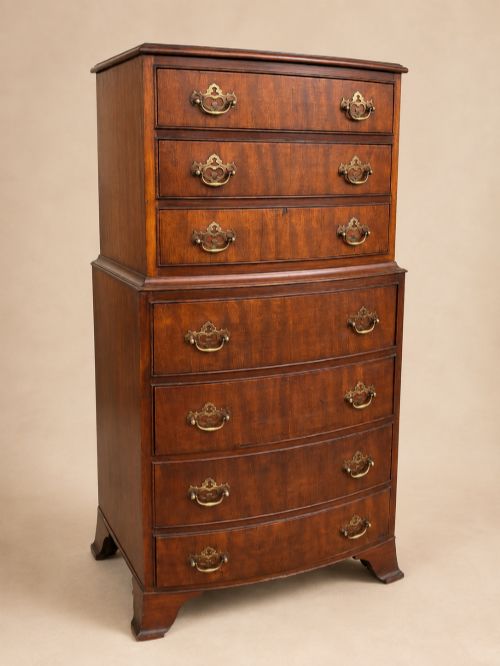
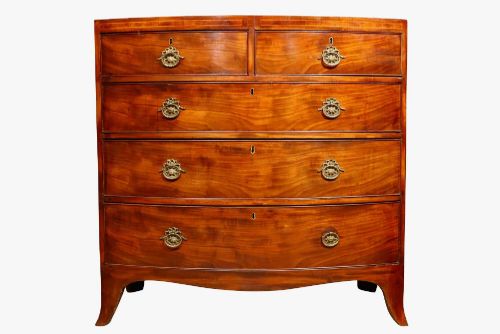
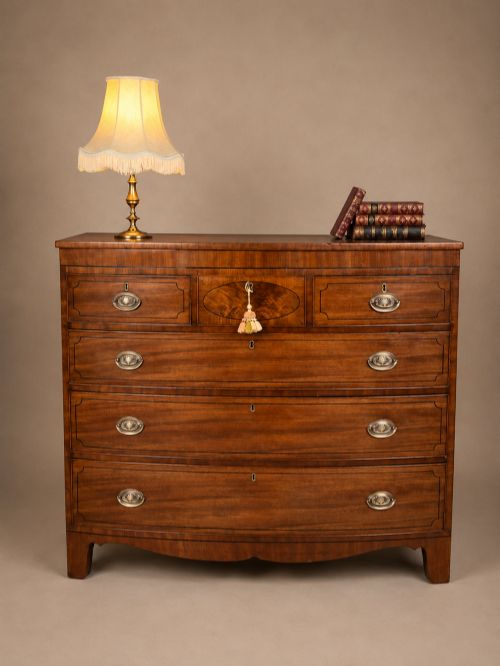
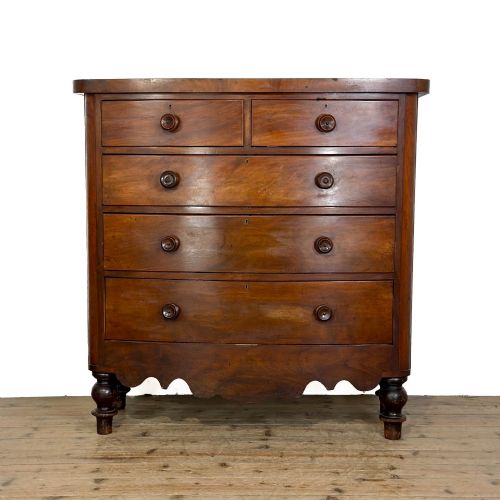
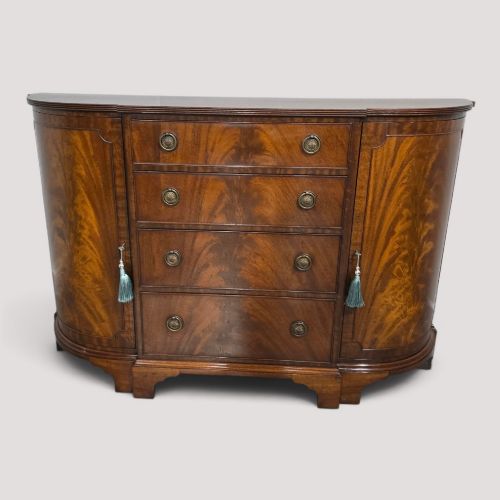
A vintage bowfront chest presents a convex curved front that softens the corners of a room while providing deep drawer storage. These pieces appear primarily as chests of drawers, alongside variations like tallboys, linen presses, and sideboards.
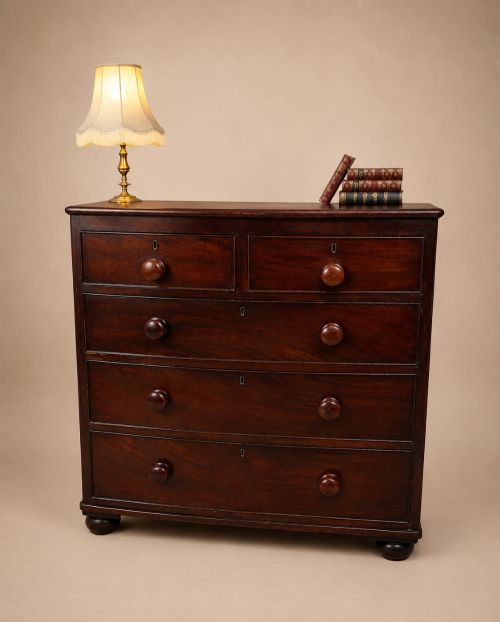
The pieces on this page span several eras, originating from the Georgian, Regency, Victorian, and Edwardian periods, as well as the early twentieth century. Mahogany forms the backbone of these selections, supplemented by walnut, burr walnut, oak, and pine.
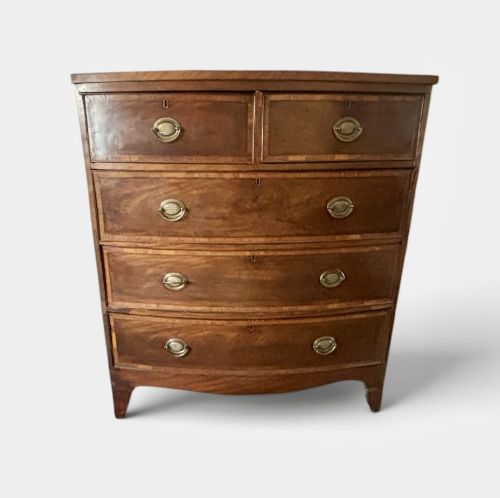
Buyers most frequently encounter mahogany examples featuring multiple graduated drawers, often resting on bracket feet or short legs. The curving facade distinguishes them from standard flat-front chests, demanding precise carpentry to ensure the drawers operate smoothly within the rounded frame.
Materials and construction methods
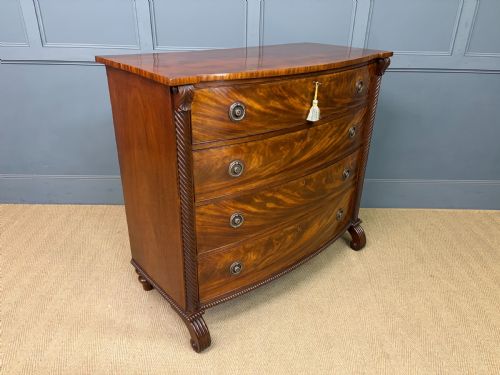
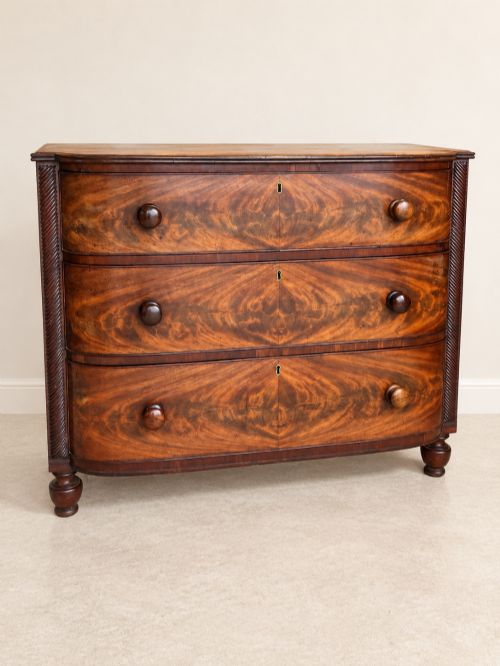
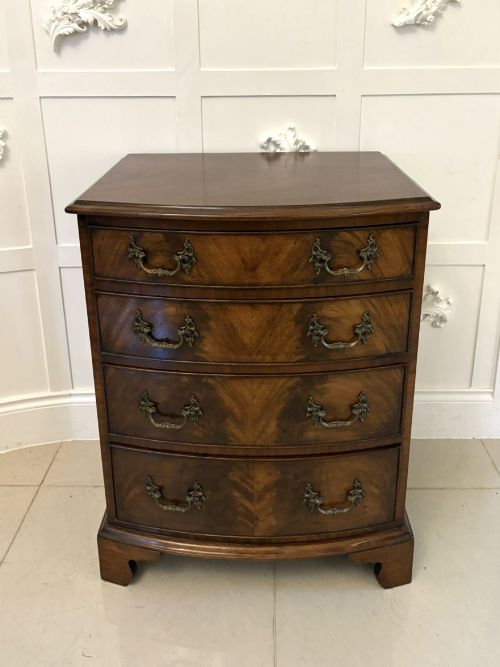
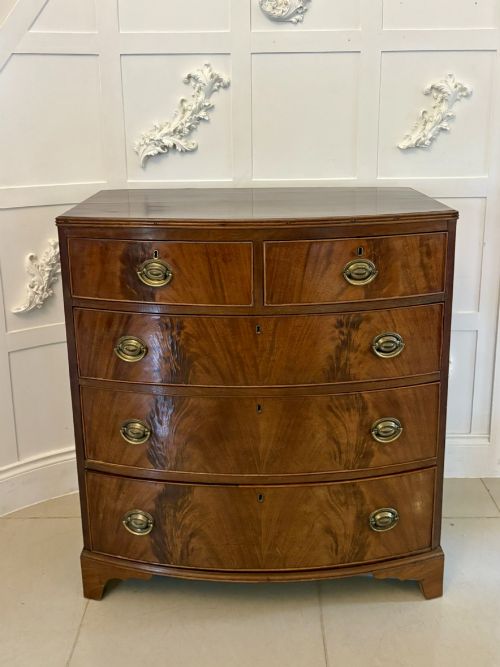
Cabinetmakers constructed these pieces using solid timbers like mahogany, oak, and walnut for the primary frames and drawer linings. Flame mahogany veneer and burr walnut frequently overlay the primary surfaces to create striking grain patterns across the curved drawer fronts.
Craftsmen shaped the carcase and drawer rails to match the outward sweep of the bow, applying crossbanding in contrasting woods such as satinwood on select Regency examples. Brass hardware, including drop handles and backplates, secures the drawer fronts.
Listings feature pieces spanning the Georgian, Regency, Victorian, and Edwardian eras, constructed in mahogany, walnut, oak, and pine.
Distinctions in quality and execution
Quality rests upon the selection of timber veneers, such as richly figured flame mahogany or burr walnut, and the precision of the crossbanding. Superior pieces maintain alignment along the curved drawer edges and retain their original brass handles.
The finesse of the joinery around the curved carcase separates standard examples from exceptional ones. Drawers that follow the precise sweep of the bow without binding indicate superior workshop practice.
The Vintage Bowfront Chest Glossary
- Bow front
- A convex curved cabinet front that projects outward in an arc. This shape requires specialised joinery to fit drawers into the curved frame.
- Flame mahogany
- A veneer cut from the fork of the mahogany tree where branches meet the trunk. It displays a distinctive, flamy pattern.
- Crossbanding
- A strip of veneer applied perpendicularly to the grain of the main surface. It creates a decorative border around drawer fronts.
- Tallboy
- A tall chest of drawers made in two sections, often combining a chest on chest or a chest placed on a stand.
- Graduated drawers
- A set of drawers decreasing in depth from bottom to top. This arrangement provides stability and aesthetic balance to the piece.
Vintage Bowfront Chest: Frequently Asked Questions
What is a bowfront chest?
A bowfront chest is a storage cabinet featuring a convex curved front facade. It typically contains multiple drawers arranged vertically.
Cabinetmakers utilised this curved design during the Georgian, Regency, and Victorian periods to soften straight lines in domestic interiors.
How do I date a bowfront chest?
Dating relies on observing secondary woods, handle styles, construction methods, and overall proportions. Georgian and Regency pieces often exhibit hand-dovetailed drawer construction and specific timber selections.
Later Edwardian and early twentieth-century examples display different internal woods and machine-cut elements while retaining the curved form.
Where should I place a bowfront chest?
These chests function well in bedrooms, hallways, or living spaces as storage units and display surfaces. Their curved fronts make them suitable for placement where sharp corners might impede movement.
Ensure adequate clearance for the drawers to open fully within the chosen room layout.
What woods were used for these chests?
Mahogany serves as the primary timber across the majority of these listings, often enhanced by flame mahogany veneer. Walnut, burr walnut, oak, and pine also appear frequently.
Cabinetmakers occasionally incorporated satinwood banding to create contrast along the edges.