

Antique Tallboy Storage
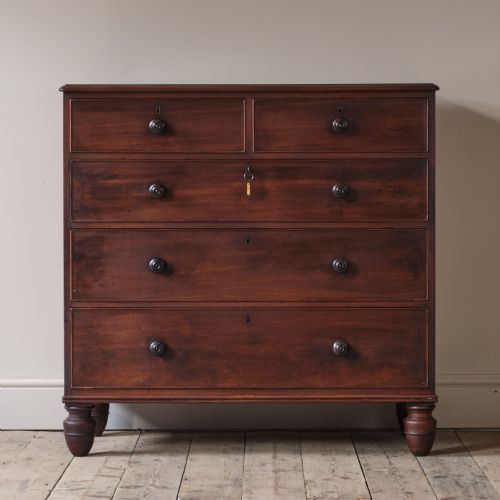
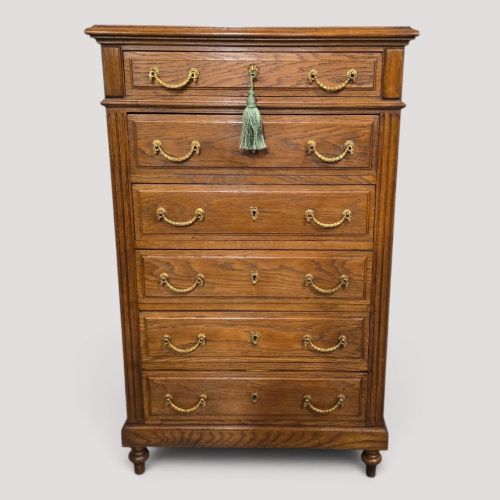
Antique tallboy storage unites height and capacity, offering stately vertical presence and deep drawers that transform how a bedroom holds its linens.
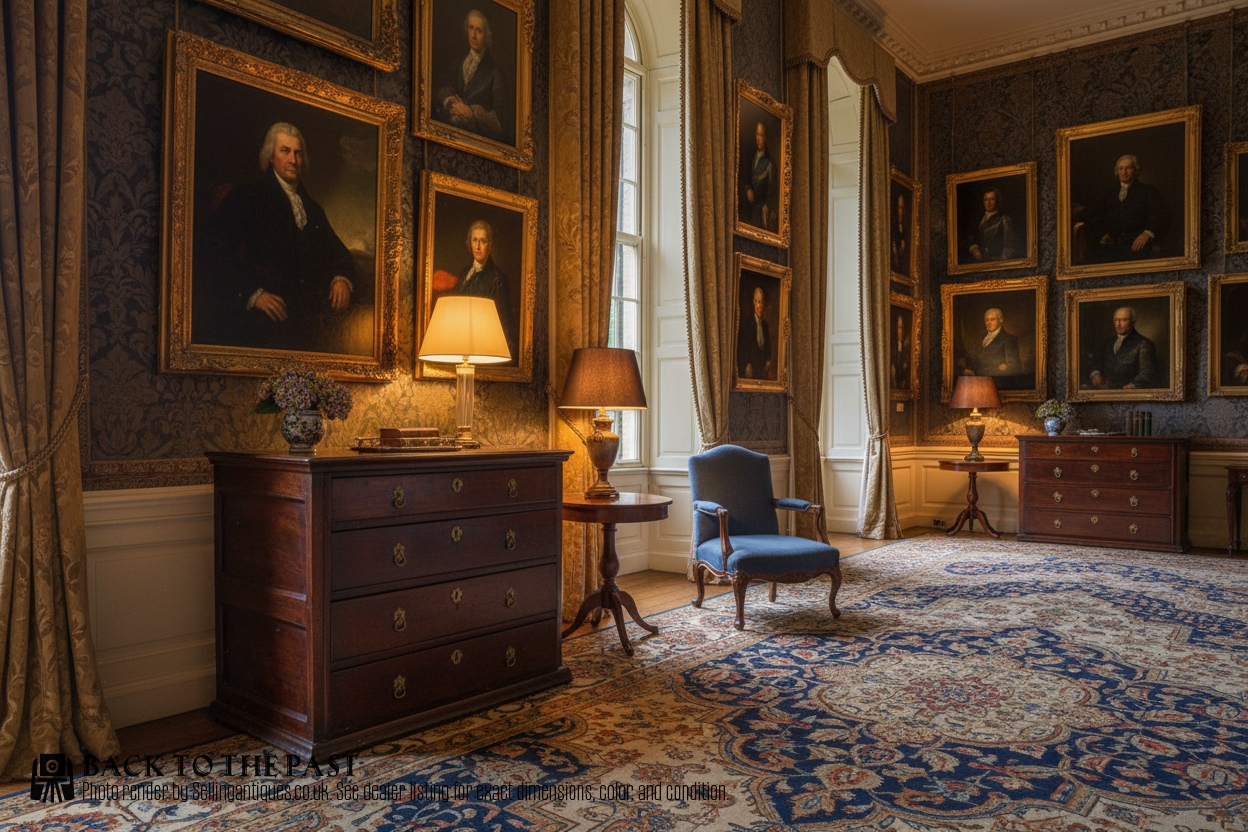
What these pieces are
When you search for antique tallboy storage, you encounter vertical chests of drawers designed to maximise interior capacity while occupying a minimal floor footprint. The selections gathered here span distinct eras from the seventeenth century through to nineteen twenty, uniting various interpretations of tall storage furniture.
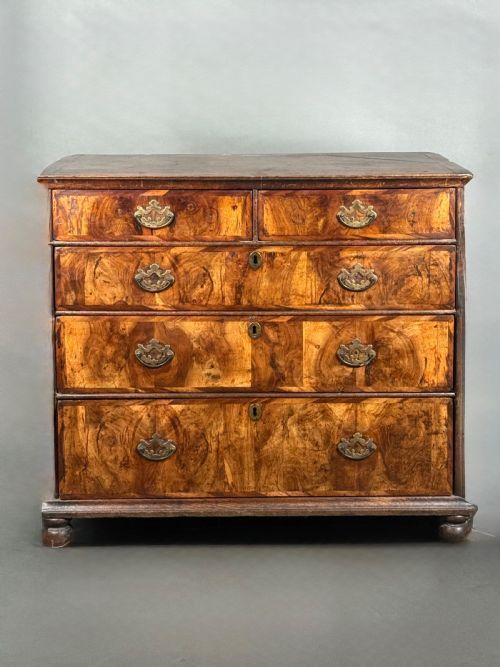
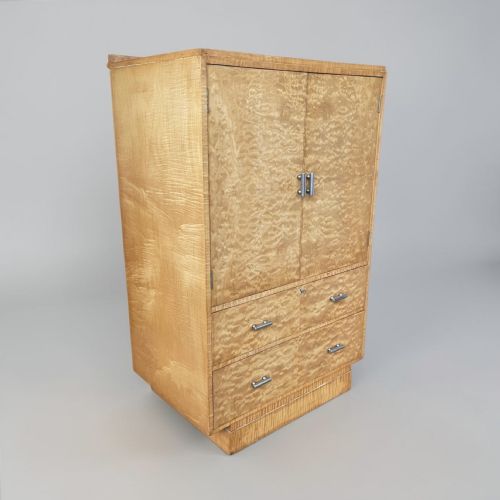
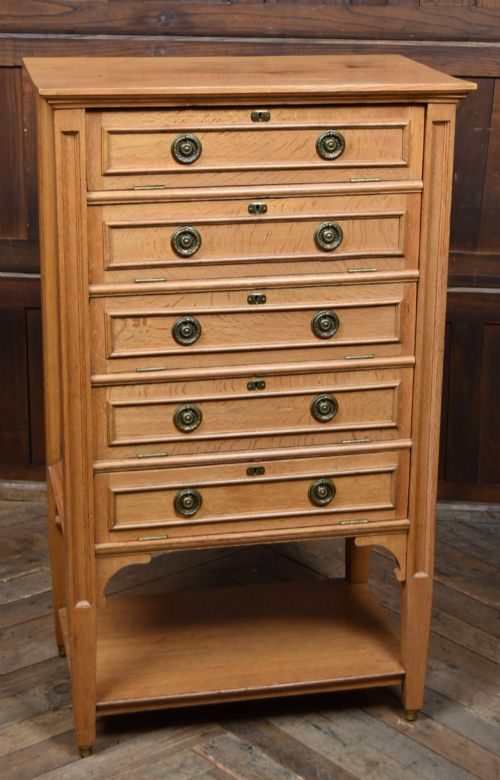
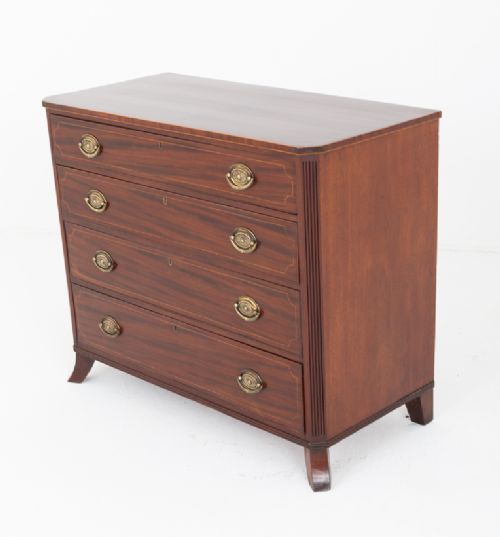
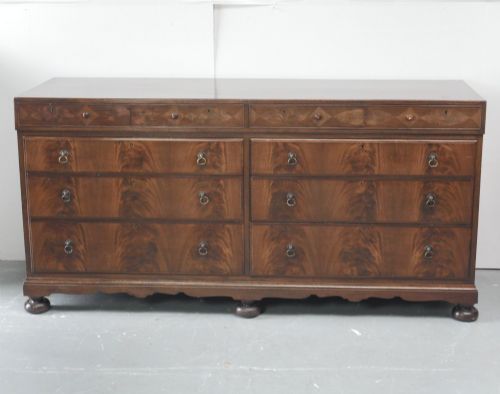
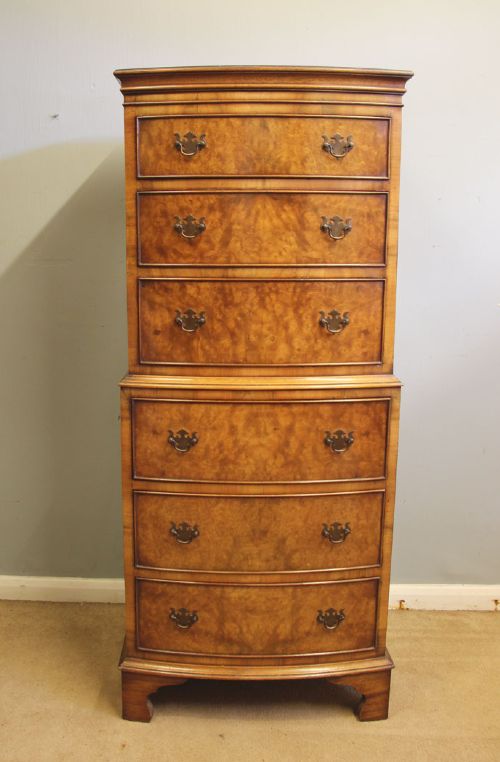
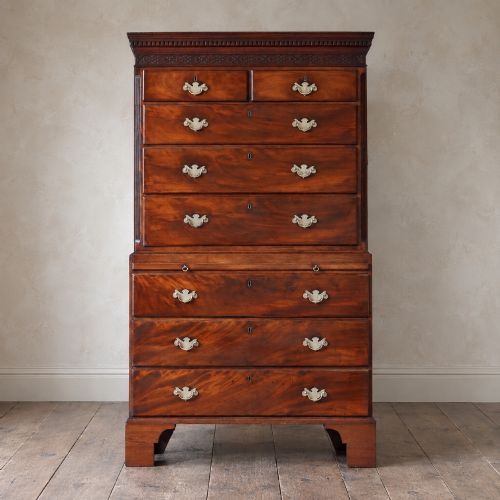
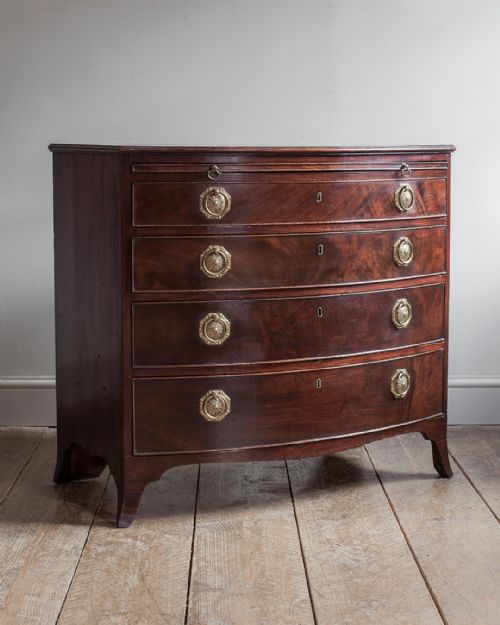
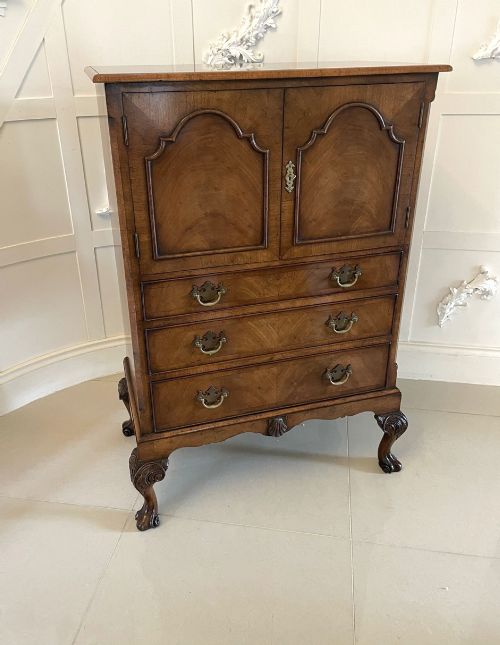
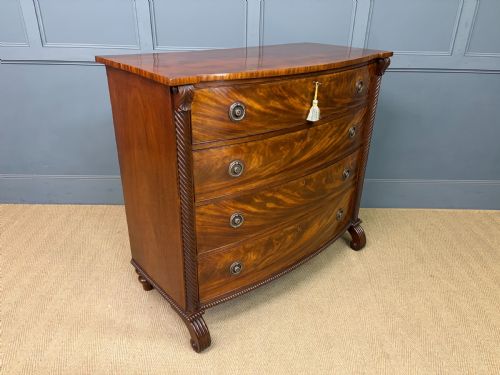
The dominant forms present on this page include mahogany bow fronted chests, burr walnut tall chests, and seventeenth century walnut examples. These pieces typically feature stacked banks of drawers that rise well above standard dressing height.
Makers and designers across these periods utilised substantial proportions to create imposing bedroom furnishings. Each piece reflects the specific stylistic preferences of its origin, ranging from William and Mary influences to Regency and Georgian revival aesthetics.
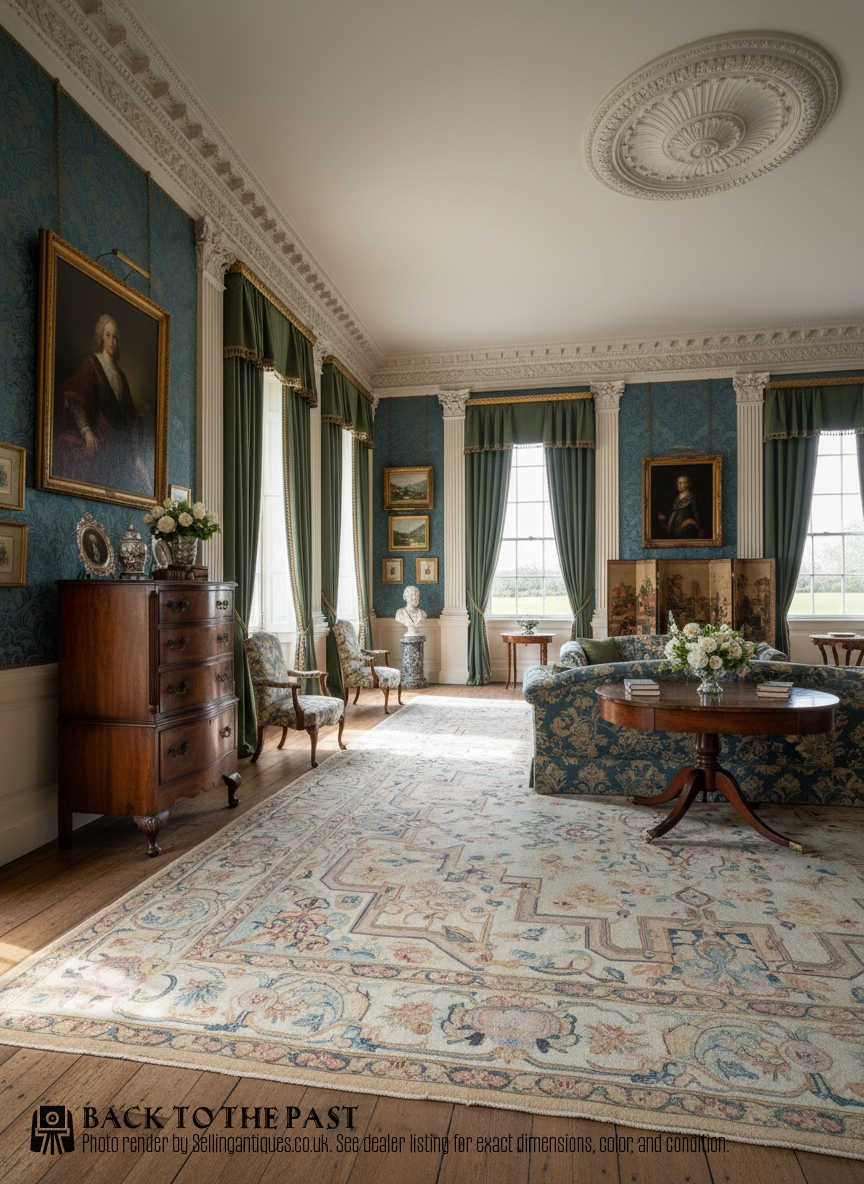
How they were made
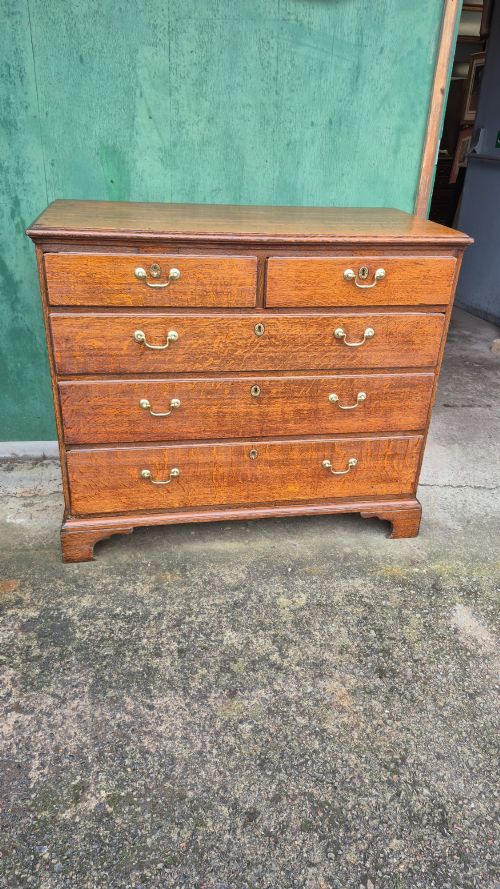
Craftsmen built these tall chests using robust timbers such as mahogany, oak, and walnut, frequently enhancing visible surfaces with figured satinwood or burr walnut veneers. These primary woods provided structural stability necessary to support multiple heavy drawers stacked vertically.
Surface detailing often incorporates fine stringing, crossbanding, and carefully matched grain patterns across the drawer fronts. Cabinetmakers attached brass hardware such as drop handles and backplates to complete the exterior appearance.
Retail Price Guide 2026
Typical UK retail prices for tallboy storage, calculated from the Sellingantiques database of over a million retail prices indexed since 2003. This retail price guide relies exclusively on Sellingantiques data; no external sources or auction records are used, so the figures do not describe the wider market.
Listings span periods from the seventeenth century and the Regency era to nineteen twenty, featuring mahogany, walnut, and oak.
What varies in quality
Quality differences emerge in the selection of timber veneers and the precision of the cabinetwork. Finer examples display symmetrical grain alignment across every drawer front, whereas simpler pieces utilise plain timber planks without decorative banding.
The sophistication of the internal drawer construction and the integration of secondary woods like oak distinguish finer items. Superior examples retain original brass hardware and exhibit meticulous hand-cut joinery throughout the carcass.
The Antique Tallboy Storage Glossary
- Bow front
- A convex curved front elevation that projects outward in the centre, commonly seen on nineteenth century chests to soften the rectangular silhouette.
- Tallboy
- A tall chest of drawers, often constructed in two sections with multiple stacked drawers providing vertical storage capacity.
- Burr walnut
- A highly prized wood timber taken from walnut tree growths, featuring intricate swirling grain patterns used for decorative veneering.
- Caddy top
- A raised or moulded lid style resembling a tea caddy, frequently found on early nineteenth century case furniture.
- Crossbanding
- A decorative border technique where thin strips of veneer are laid across the grain direction of the primary surface.
Frequently Asked Questions
What is antique tallboy storage?
Antique tallboy storage refers to vertical chests of drawers designed to provide substantial capacity while taking up minimal floor space in a room.
These pieces typically feature multiple stacked drawers rising above standard chest height, utilising woods like mahogany and walnut.
How do I date a tall chest?
Dating a tall chest involves examining the construction methods, timber choices, and stylistic details visible on the piece.
Key indicators include the presence of seventeenth century walnut framing, Regency proportions, or nineteenth century satinwood inlay work.
Where were tallboys placed?
These tall chests were traditionally positioned in bedrooms and dressing rooms to store heavy linens, garments, and personal items.
Their vertical design allowed households to maximise storage capacity without sacrificing valuable floor area.
What woods are used?
Cabinetmakers constructed these pieces using sturdy timbers including mahogany, oak, walnut, and satinwood for visible surfaces.
Finer examples often incorporate decorative veneers such as burr walnut to create distinctive visual patterns across the drawer fronts.