
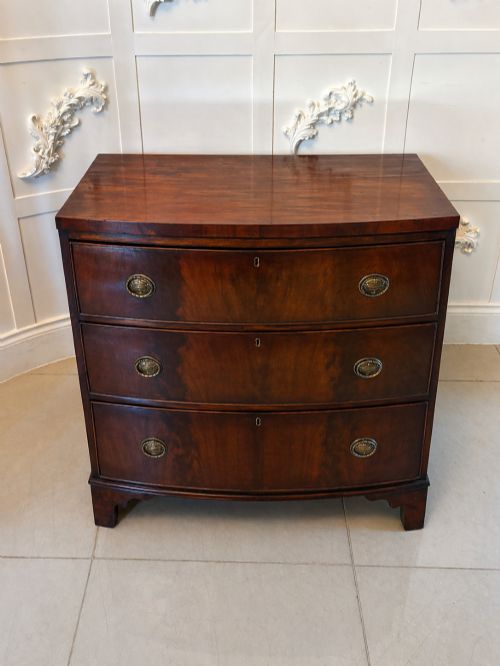
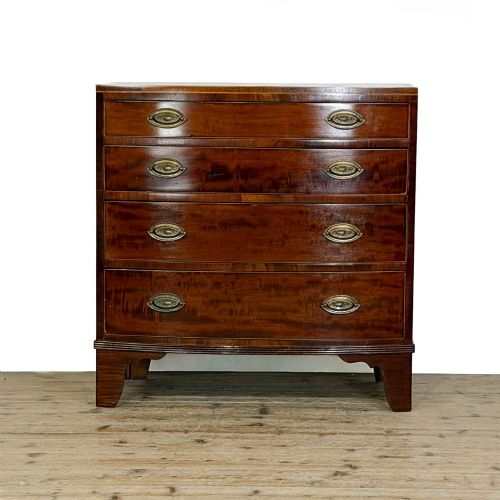
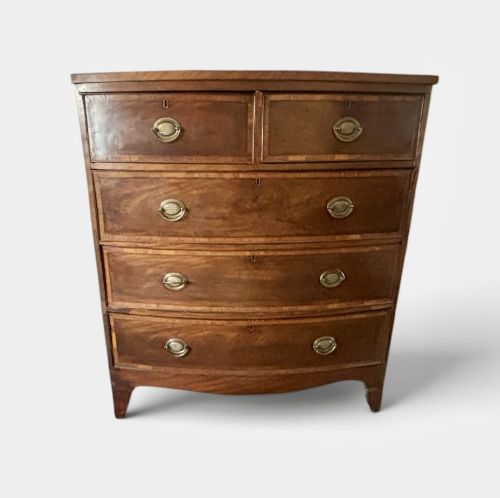
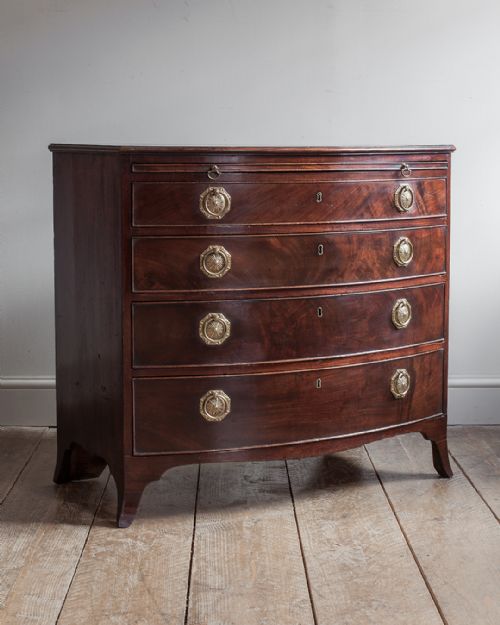
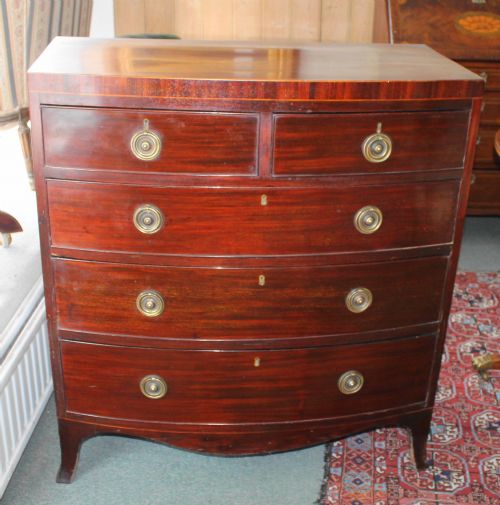
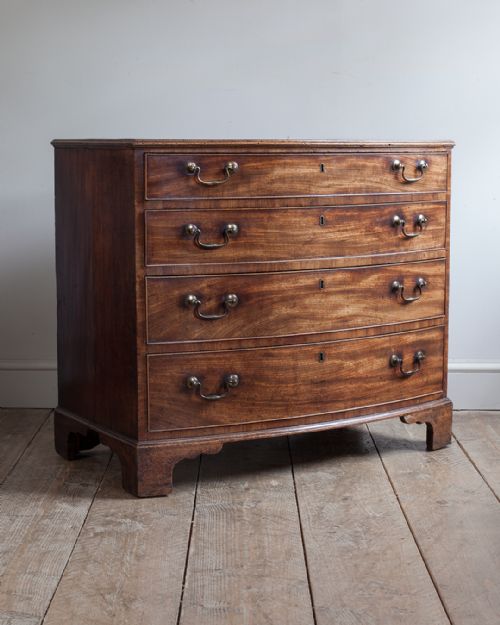


Dark Brown Bowfront Chest
A dark brown bowfront chest brings sweeping curves and rich timber into a room, offering generous storage with genuine period character.
Dark Brown Bowfront Chest
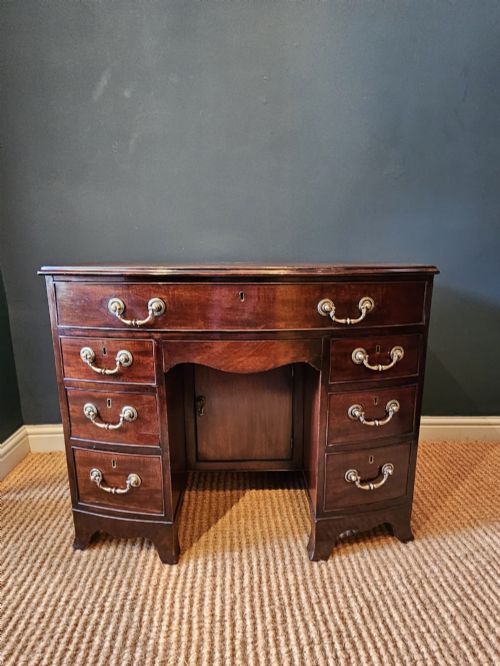
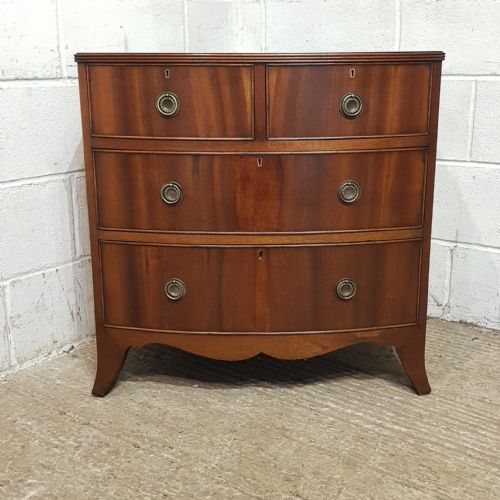
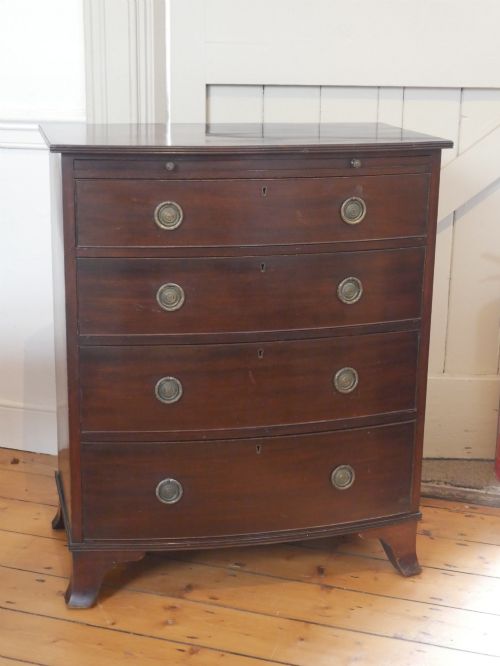
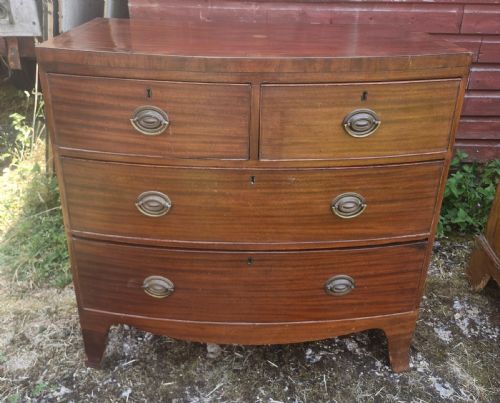
A dark brown bowfront chest presents a curved front that projects outward, softening the rigid angles typical of standard bedroom furniture. These pieces primarily take the form of chests of drawers spanning the Georgian, Regency, Victorian, and later periods.
Buyers encounter various formats within this search, ranging from full-sized bedroom pieces and tallboys to smaller bedside tables, desks, and miniature apprentice pieces. The proportions shift from grand proportions down to neat, compact examples suited for smaller spaces.
Originating predominantly from the eighteenth and nineteenth centuries, these items showcase the enduring appeal of curved cabinetry. Each piece demonstrates how makers adapted traditional storage forms to suit changing domestic tastes.
Materials and construction
Mahogany serves as the primary timber across these pieces, delivering deep, dark brown tones that deepen with age. Secondary woods such as pine and oak appear in concealed structural areas like drawer linings and carcases.
Cabinet makers utilised contrasting stringing and banding in lighter timbers such as boxwood and satinwood to outline the drawer edges and top surfaces. Brass hardware, including drop handles and escutcheons, provides functional and decorative accents.
Constructors shaped the convex front using specialised bending techniques and solid timber or veneered construction over sturdy frames. Drawer dividers and dovetailed joints ensure structural integrity across centuries of daily use.
Miniature apprentice pieces let master craftsmen show off, shrinking full-sized curves into tiny proportions.
Quality variations in craftsmanship
Superior examples display precise matching of mahogany veneers across the curved drawer fronts, ensuring the grain flows harmoniously from side to side. Lesser pieces show disjointed grain patterns or heavy patching where timber repairs occurred.
The refinement of the cockbeading, the delicacy of the satinwood or boxwood inlay, and the crispness of the drawer dovetails separate standard items from finer masterwork. Original brass handles and sound structural timber further distinguish high-grade specimens from heavily altered ones.
Proportion and scale dictate the desirability of smaller formats, where maintaining graceful curves on a miniature or bedside scale demands exceptional joinery skill. The smoothness of the drawer action reflects the underlying precision of the carcase construction.
The Dark Brown Bowfront Chest Glossary
- Bowfront
- A convex curved front that swells outward from the centre. This design maximises internal storage capacity while softening the room's sightlines.
- Cockbeading
- A narrow rounded moulding projecting around the edges of drawer fronts. It protects the drawer edges from damage and provides a neat finish.
- Dovetailed
- A joint formed by interlocking wedge-shaped fingers secured with glue. It represents traditional, durable box construction in cabinet making.
- Secretaire
- A desk disguised as a chest of drawers featuring a pull-down writing flap. It conceals pigeonholes and small drawers for correspondence.
- Tallboy
- A tall chest of drawers stacked one above another, sometimes known as a chest-on-chest. It provides maximum vertical storage in a compact footprint.
Dark Brown Bowfront Chest: Frequently Asked Questions
How do I spot a true period bowfront chest?
Examine the construction methods visible inside the drawers and along the backboards, looking for hand-cut dovetails and genuine age in the timber. Period pieces show natural oxidation and wear patterns consistent with centuries of use rather than artificial distressing.
Check the curve of the front to ensure it sweeps evenly without warping or uneven gaps around the drawer edges. Original feet, backboards, and brass hardware add confidence to the dating of the piece.
Where can I place a bowfront chest at home?
A compact bowfront chest or bedside table fits comfortably in a hallway or bedroom where standard rectangular furniture might obstruct walkways. Their curved profiles allow them to sit gracefully against walls without sharp corners projecting into the room.
Larger chests serve as focal points in living rooms or dining spaces, providing practical surface area and deep drawer storage. Ensure the chosen spot allows adequate clearance for the drawers to pull open fully.
What is the difference between a Georgian and Victorian chest?
Georgian chests typically exhibit restrained classical proportions, finer stringing, and understated bracket or French feet. Their mahogany timbers often display a rich, mellow patina developed over many decades.
Victorian examples frequently feature bolder turned handles, heavier mahogany veneers, and sometimes plinth bases or flattened bun feet. The overall construction tends to be heavier, reflecting the manufacturing shifts of the later nineteenth century.
How should I care for antique mahogany furniture?
Maintain a stable room temperature away from direct sunlight and heat sources to prevent the mahogany timber and veneers from drying out or splitting. Dust regularly with a soft, dry cloth and avoid silicone-based polishes that build up residue over time.
Apply a traditional wax polish sparingly when the wood appears dry to nourish the surface and protect the finish. Lifting rather than dragging the chest when moving it preserves the integrity of the joints.