


Antique Bowfront Commode
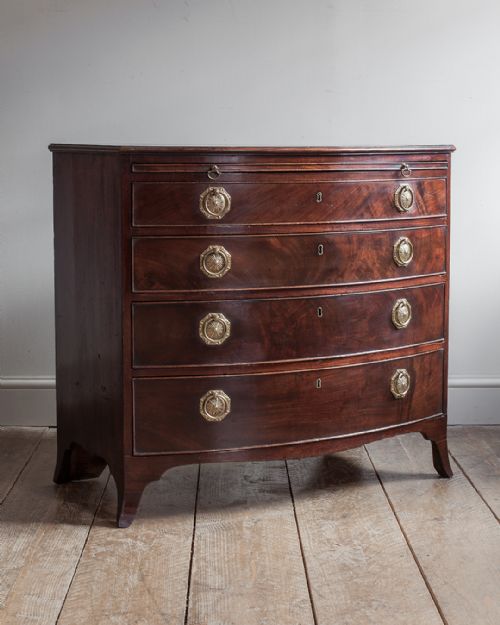
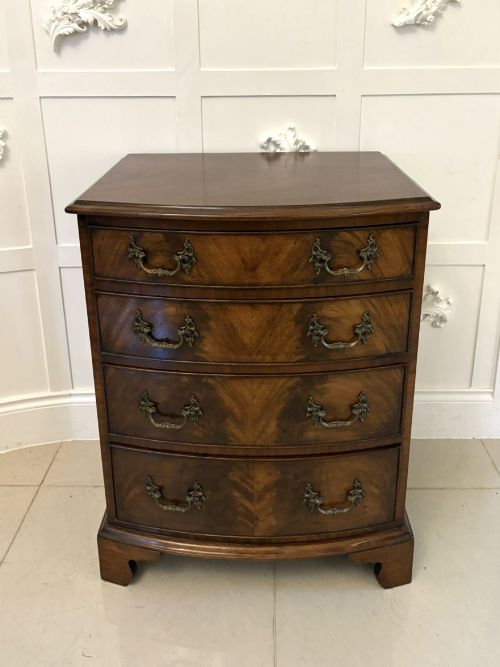
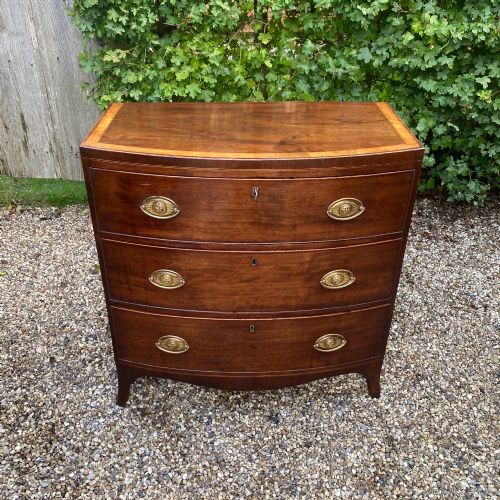
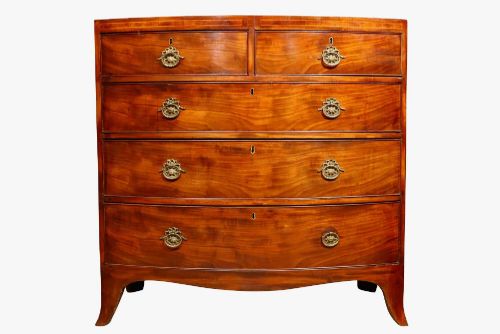
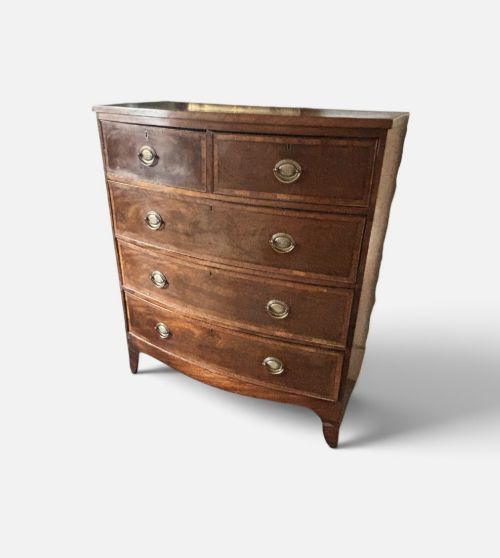
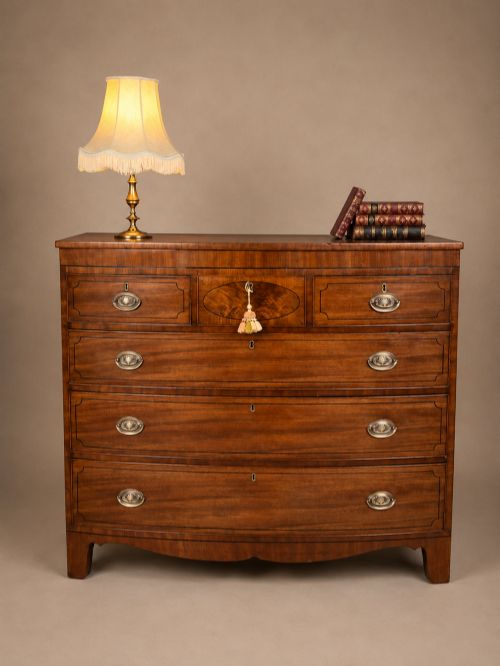
An antique bowfront commode brings the curved front and generous proportions of Georgian and Regency craftsmanship directly into your bedroom.
Antique Bowfront Commode
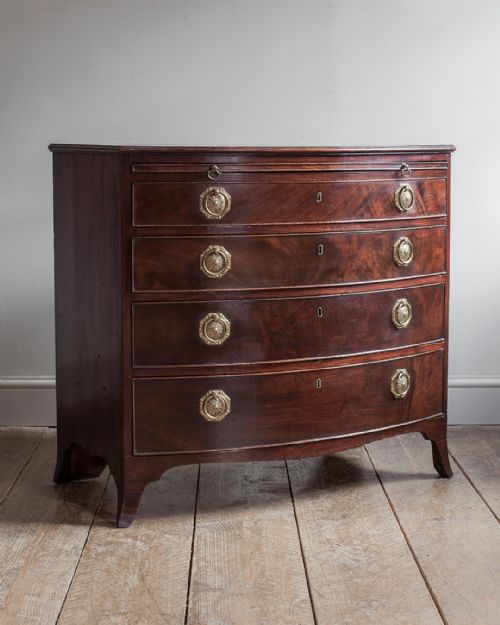
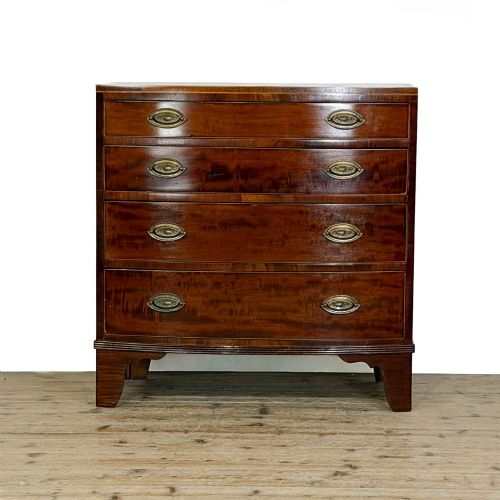
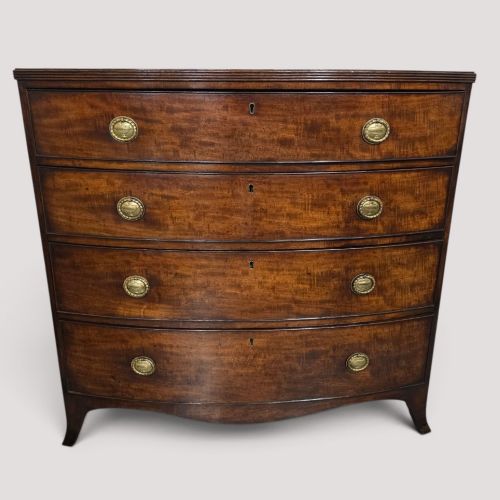
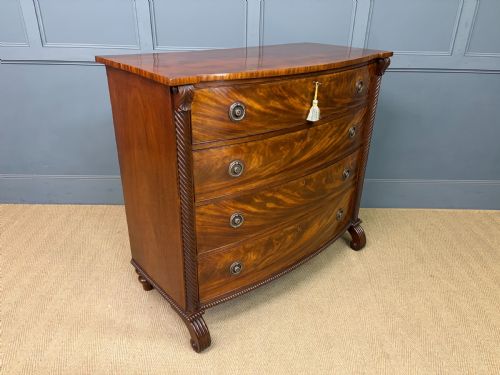
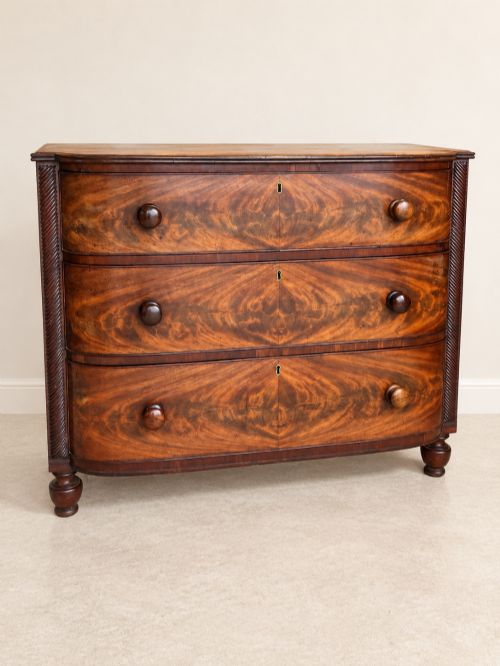
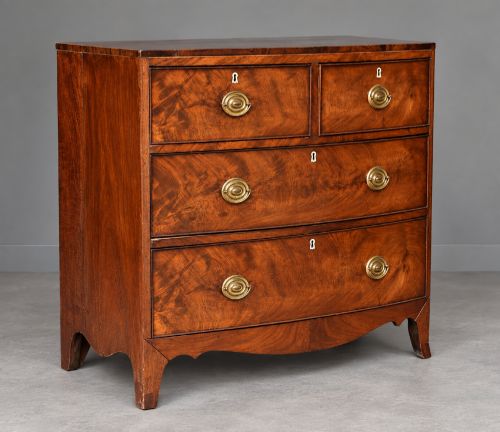
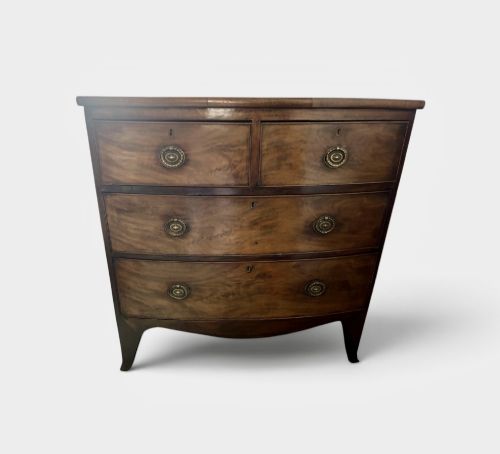
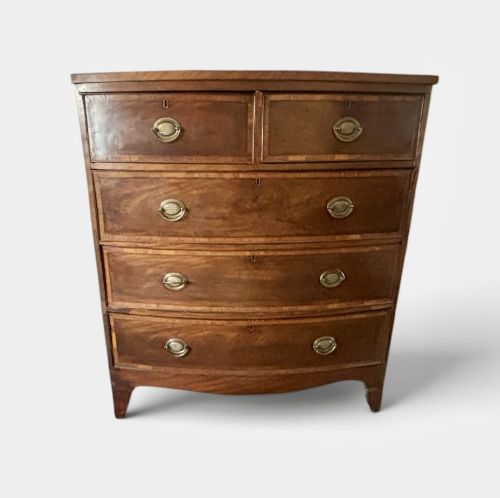
When you search for an antique bowfront commode, you are looking at substantial case furniture designed with a convex projecting curve to the front facade. These pieces function primarily as chests of drawers, offering deep storage capacity while softening the rigid corners typically found in standard bedroom furniture. Most examples encountered on this page date from the Georgian, Regency, and Victorian eras.
The prevailing form on this page is constructed from mahogany, often enhanced by flame veneers or contrasting satinwood banding along the top edge and drawer surrounds. Makers shaped these carcasses with varying widths, ranging from compact small proportions suitable for tight spaces to large, imposing chests with four or five graduated drawers. Regional variations such as Scottish designs also appear among the selections.
Makers during the eighteenth and nineteenth centuries produced these items under diverse stylistic influences including George III, George IV, and Edwardian periods. While catalogued under various names like chest of drawers or sideboard cabinet, the defining architectural element remains the sweeping curved front. Each piece demonstrates how period cabinet makers manipulated solid timber and veneer to create visual movement in domestic interiors.
Materials and construction methods
Cabinet makers built the primary carcass of an antique bowfront commode using solid timbers such as mahogany, oak, or pine, depending on the hidden structural requirements and visible surfaces. Mahogany served as the principal wood for external faces, prized for its stability and rich grain. Secondary woods like oak or pine provided sturdy framing for internal drawer linings and backboards.
The curved front profile was achieved through specialist joinery and veneer work, applying thin sheets of flame mahogany or satinwood over stable core boards. Craftsmen used crossbanding and stringing lines in lighter woods to frame the drawer fronts and top surfaces, creating geometric contrast against the darker body. Brass hardware, including drop handles and escutcheons, was fitted to secure the drawers.
Drawers were constructed with hand-cut dovetail joints at the corners to ensure long-term durability under daily use. The curved drawer fronts required precise planning to follow the exact arc of the commode frame without binding during opening and closing. Finishing involved polishing the wood to highlight the natural figuration of the grain.
Antique Bowfront Commode Retail Price Guide 2026
Typical asking prices for bowfront commode among the pieces listed under this phrase on Sellingantiques today, from the lower quarter to the upper quarter. They describe what is for sale here now, not the wider market.
Listings feature mahogany, satinwood, oak, and pine across Georgian, Regency, and Victorian periods.
Distinguishing quality across examples
The refinement of timber selection separates standard items from exceptional pieces, particularly regarding the choice of figured mahogany and symmetry in flame veneers. Superior examples display striking grain patterns that ripple across the curved drawer fronts in a mirrored layout. Lesser grades rely on plain timber surfaces with minimal natural figuration.
Proportion and scale dictate the visual success of the piece, with narrower or smaller commodes commanding distinct interest due to the skill required to curve timber sharply. The delicacy of crossbanding, stringing details, and original brass furniture further indicates the level of workshop investment. High-end pieces maintain crisp architectural mouldings around the caddy top and base plinth.
Structural integrity relies upon undisturbed original joinery, where drawer linings and backboards remain intact without significant modern timber replacement. The precision of the dovetailing and the smooth operation of the curved drawers reflect the original artisan's competence. Uniform fading and a rich patina developed through age separate well-preserved specimens from heavily altered ones.
The Antique Bowfront Commode Glossary
- Bowfront
- A curved architectural front projecting outward in a convex arc. This shape defines the primary aesthetic of the commode.
- Caddy top
- A raised tabletop design with moulded edges resembling the lid of a tea caddy. It provides a distinct profile to the upper surface of the chest.
- Crossbanding
- A strip of veneer laid perpendicularly to the surrounding grain along the border of a drawer or top. This technique frames the primary wood figure.
- Flame mahogany
- A highly figured wood veneer displaying flickering, flame-like patterns. It is harvested from the fork of the mahogany tree.
- Satinwood
- A pale, lustrous timber used for contrasting inlay and banding. It adds brightness to dark mahogany furniture.
- Dovetail
- An interlocking joint formed by wedge-shaped tenons and mortises. This construction method secures drawer corners against lateral strain.
Antique Bowfront Commode: Frequently Asked Questions
How do I clean an antique bowfront commode?
Dust the surfaces regularly with a soft, dry cloth to prevent particle build-up on the polished mahogany or veneer.
Apply a traditional microcrystalline wax periodically to nourish the timber and maintain a gentle sheen without sealing moisture into the old finish.
Can I place a commode in a modern bedroom?
These chests offer deep storage capacity that suits contemporary clothing organisation while introducing historical warmth to minimalist spaces.
Their curved profiles soften straight architectural lines, making them versatile focal points in hallways or living rooms as well.
What is the difference between Georgian and Regency styles?
Georgian pieces often display heavier proportions and classic architectural mouldings associated with the reigns of George III and George IV.
Regency examples tend to feature bolder contrasting veneers like satinwood banding, alongside refined brass hardware and tighter curves.
Are the drawers on these chests interchangeable?
Due to the precise hand-fitting of curved fronts and traditional dovetail joints, drawers are individually fitted to specific tiers.
Swapping their positions can disrupt the alignment of the grain and prevent the drawer from closing flush against the curved frame.