
Serpentine Mahogany Chest
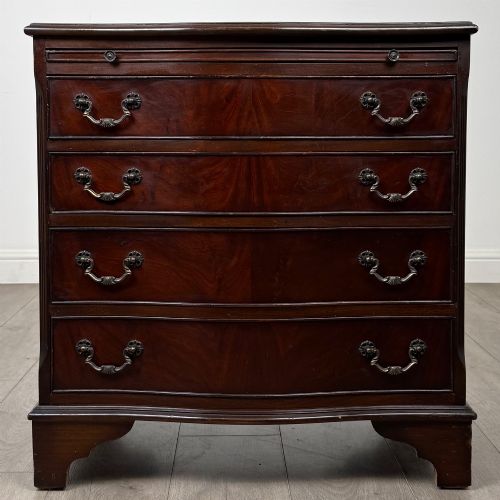
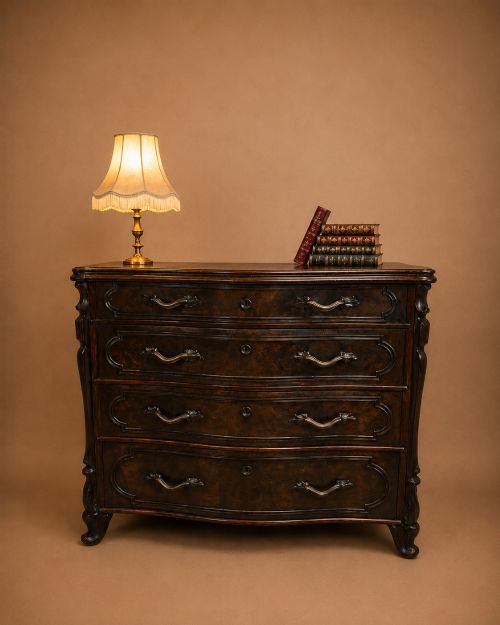
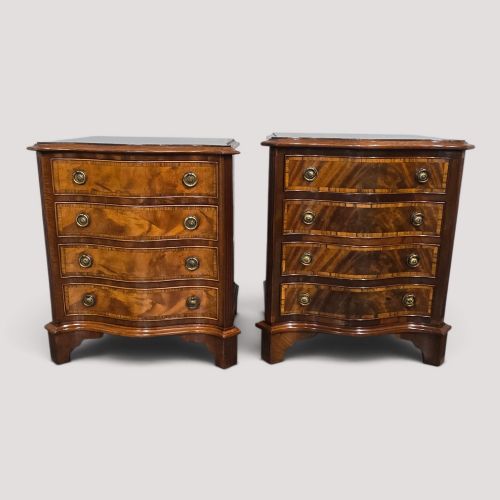
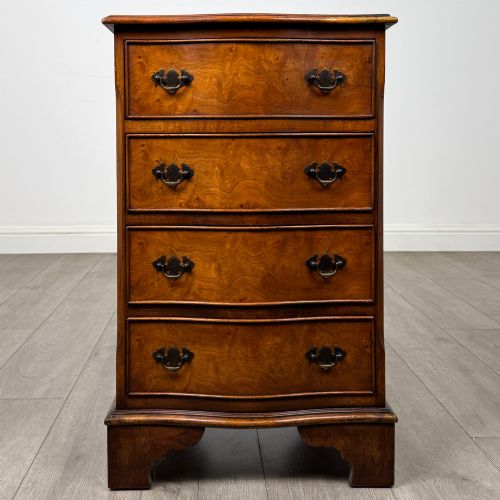
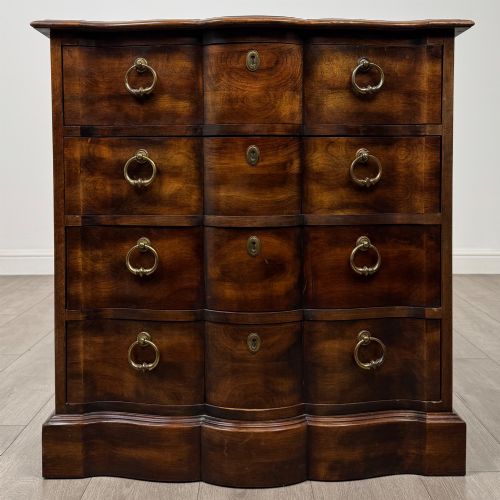
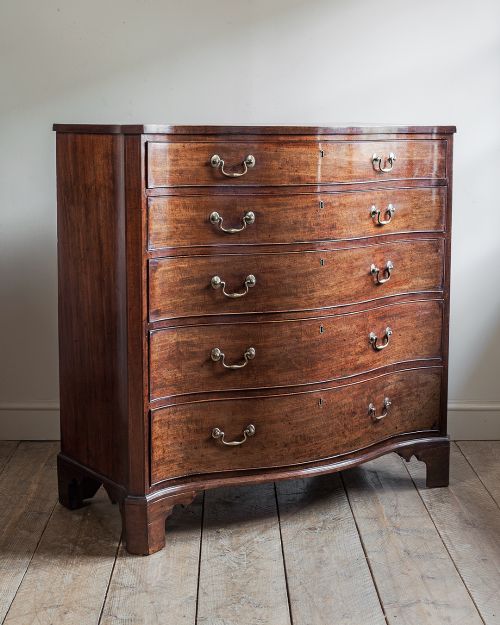
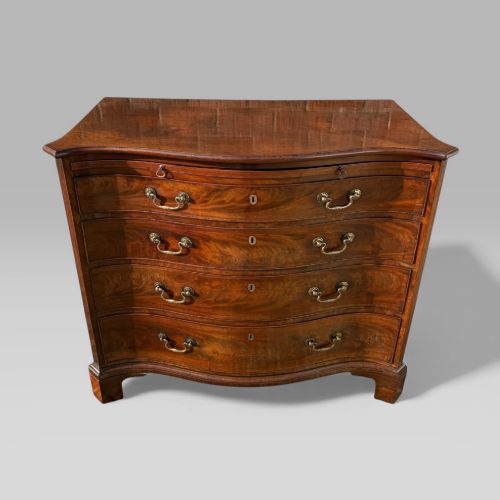
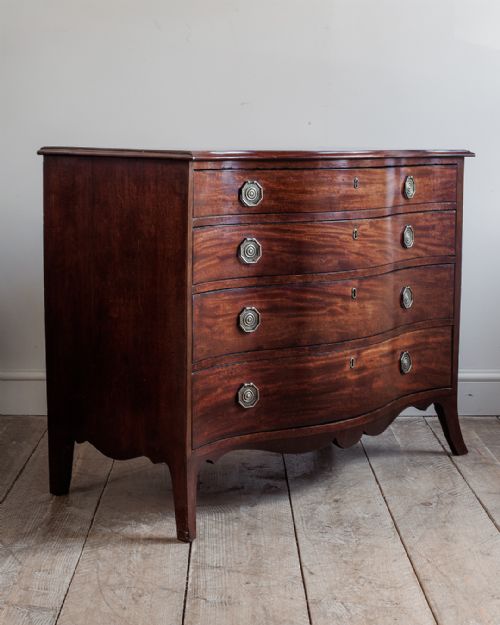
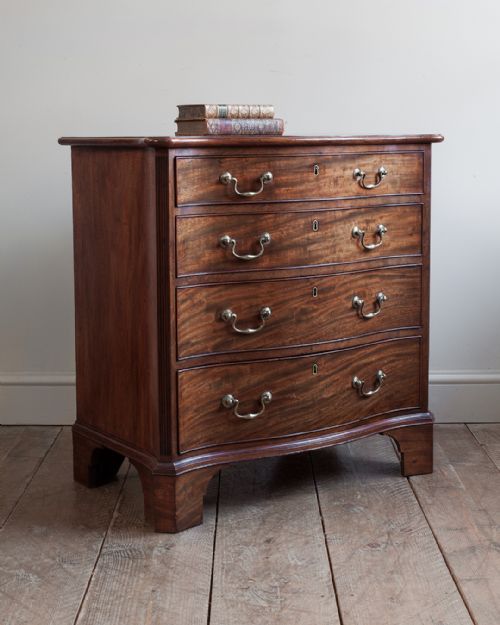
A serpentine mahogany chest brings flowing curves and rich timber grain to an interior.
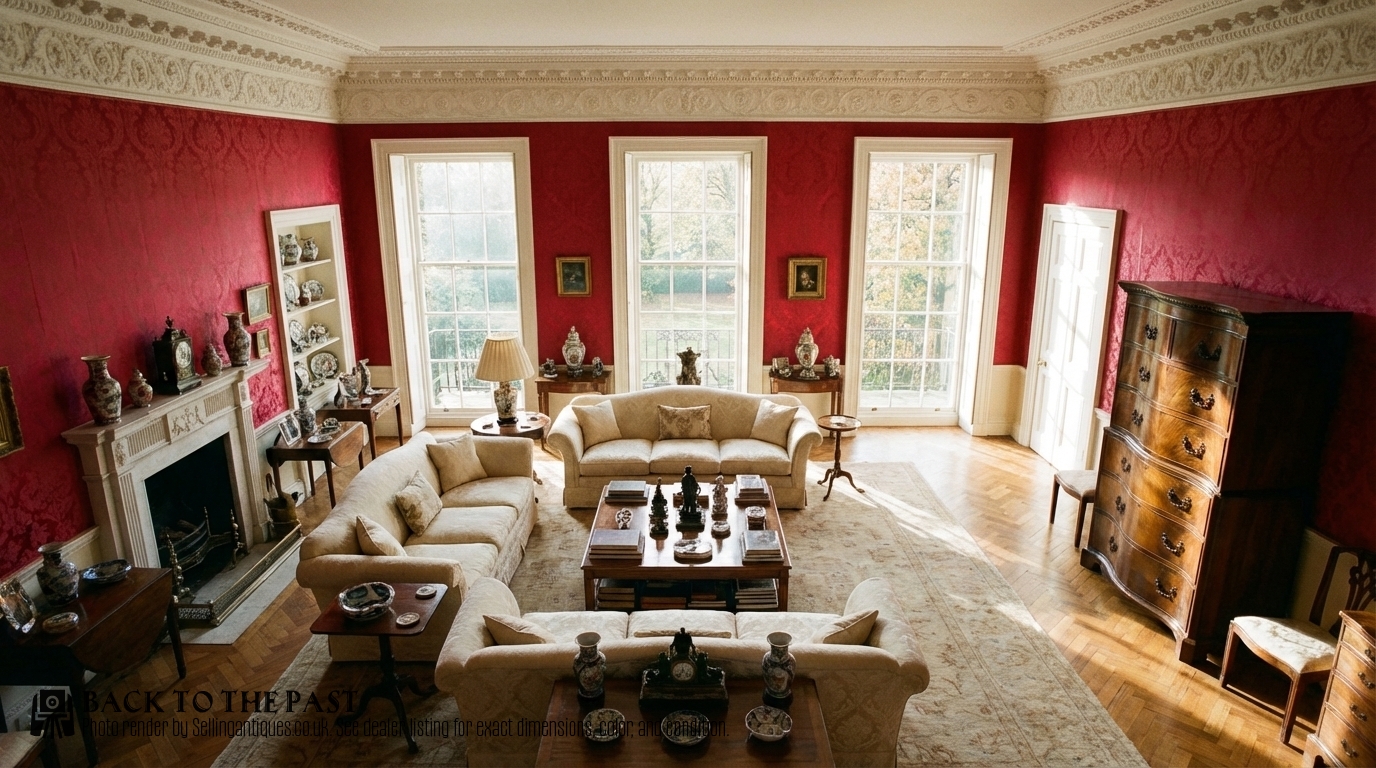
Understanding serpentine mahogany chests
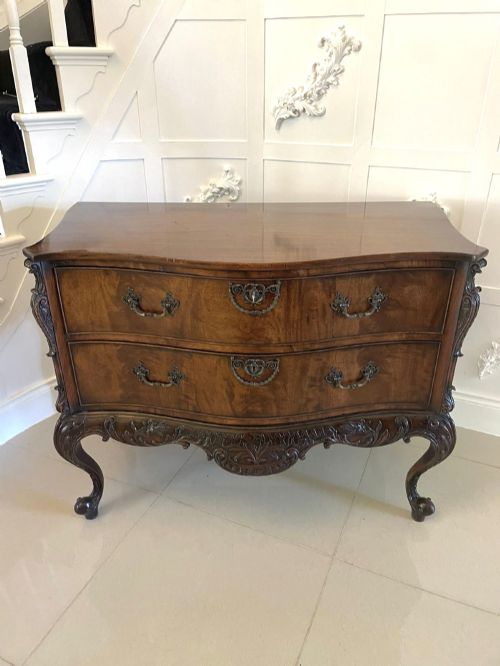
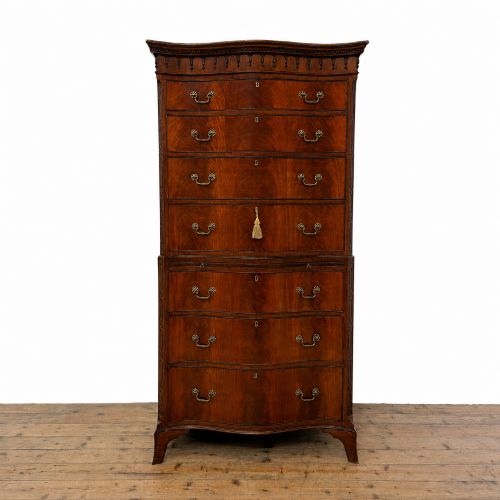
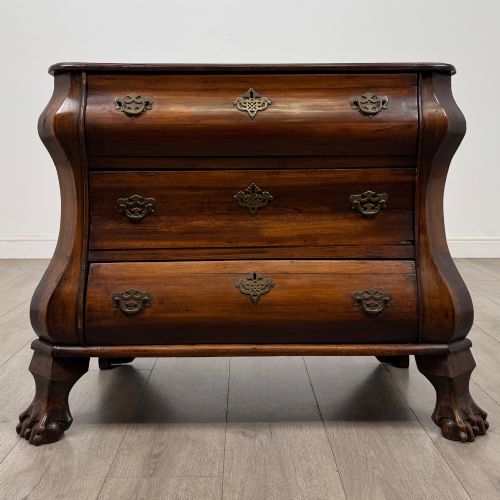
The primary forms found here are chests of drawers, dressing chests, and taller variations such as tallboys and linen presses. Portuguese Rococo and Biedermeier influences also appear, alongside compact and bedside formats designed for smaller spaces.
Buyers encountering this selection will find that Georgian examples set the standard for proportion and joinery. Later revival pieces from the Edwardian era and the 1920s continue the tradition using well figured timber and classic serpentine outlines.

Materials and construction methods
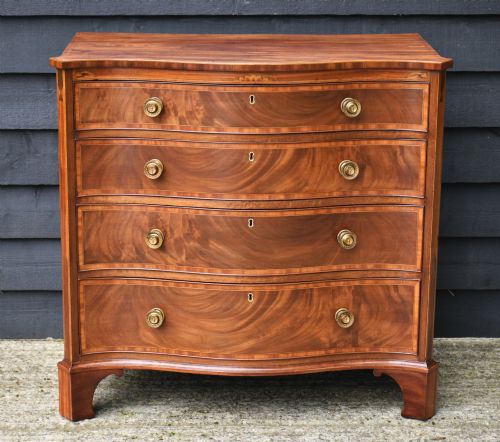
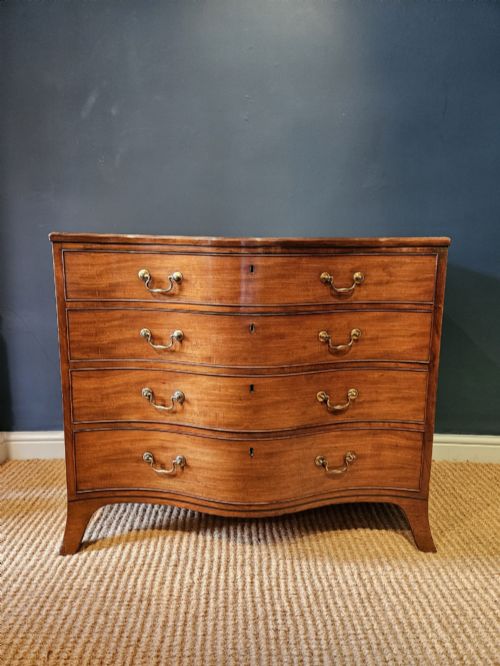
Cabinet makers utilised solid mahogany and flame mahogany veneer applied over secondary timbers to achieve deep, rich grain patterns across the undulating drawer fronts. Decorative accents frequently include satinwood and boxwood inlay, adding crisp linear contrast to the dark tropical wood.
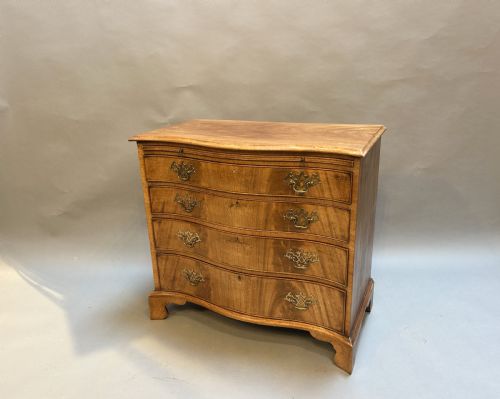
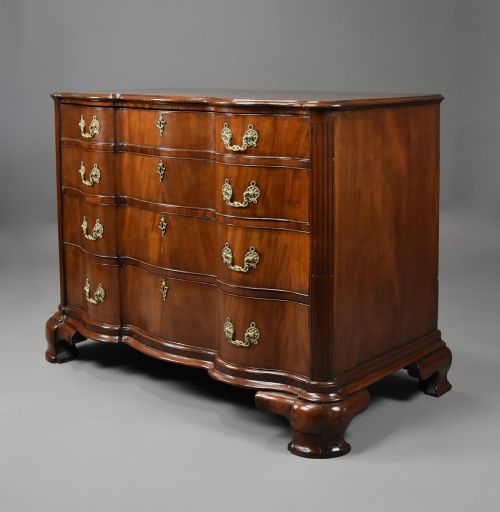
Hardware consists of cast brass handles and escutcheons secured to graduated drawers. Carved detail often appears on the bracket feet, canted corners, or apron, complementing the complex curves of the main carcase.
Retail Price Guide 2026
Typical UK retail prices for serpentine mahogany chest, calculated from the Sellingantiques database of over a million retail prices indexed since 2003. This retail price guide relies exclusively on Sellingantiques data; no external sources or auction records are used, so the figures do not describe the wider market.
Some jewellers chests secreted tiny felt-lined compartments behind serpentine drawers for clandestine valuables.
Distinguishing quality in serpentine furniture
The sophistication of the curve dictates much of the visual success of the piece, with finer examples maintaining a smooth, continuous sweep across the drawer fronts rather than abrupt angles. The choice of timber also separates standard items from the exceptional, particularly where symmetrical flame mahogany veneer is selected for the top and drawer faces.
Construction integrity shows in the dovetailing of the drawers and the crispness of any boxwood or satinwood inlay work. Superior items exhibit careful alignment where the undulating drawer edges meet the surrounding frame, preserving the harmony of the design.
The Serpentine Mahogany Chest Glossary
- Serpentine
- A furniture front characterised by a convex centre flanked by concave curves, creating an undulating wave effect.
- Flame mahogany
- A veneer cut from the fork of the mahogany tree where branches meet the trunk, producing a distinctive fire-like grain pattern.
- Tallboy
- A tall chest of drawers, often constructed as a chest on chest or incorporating a linen press in the upper section.
- Dressing-chest
- A low chest fitted with a writing slide or a mirror arrangement intended for personal grooming.
- Inlay
- A technique where contrasting woods such as satinwood or boxwood are set flush into the primary mahogany surface to form decorative patterns.
Frequently Asked Questions
How do I identify a genuine Georgian serpentine mahogany chest?
Examine the timber construction, secondary woods used inside the drawers, and the hand-cut dovetails. Georgian pieces typically display period-appropriate hand tools marks and traditional timber ageing.
Look closely at the serpentine curve itself. Earlier pieces from the 18th century maintain balanced proportions and subtle hand-shaped contours that later machine-made revivals often lack.
What is the difference between a tallboy and a standard chest?
A standard chest of drawers sits at a lower height designed for general bedroom storage and surface use. A tallboy stacks additional drawer capacity vertically, sometimes taking the form of a chest on chest.
Some tallboy variations incorporate a linen press in the upper portion with cupboard doors enclosing sliding trays. This dual format provides versatile storage for folded textiles alongside standard drawer space.
Where should I place a serpentine chest in my home?
The curved profile makes these pieces ideal for hallways, living rooms, or bedrooms where flat furniture might create a rigid appearance. Placing the chest where side lighting can catch the undulating grain highlights the mahogany.
Ensure adequate clearance around the front curve so the piece functions without obstruction. Avoid positioning the timber in direct sunlight to protect the rich colour of the veneer.
How do I care for antique mahogany veneer?
Dust the surface regularly with a soft, dry cloth to prevent particulate accumulation. Protect the finish from excessive moisture and extreme temperature fluctuations that can cause veneers to lift.
Apply traditional beeswax periodically to nourish the wood and maintain its natural lustre. Avoid modern silicone sprays which can penetrate the pores and damage historical finishes.