
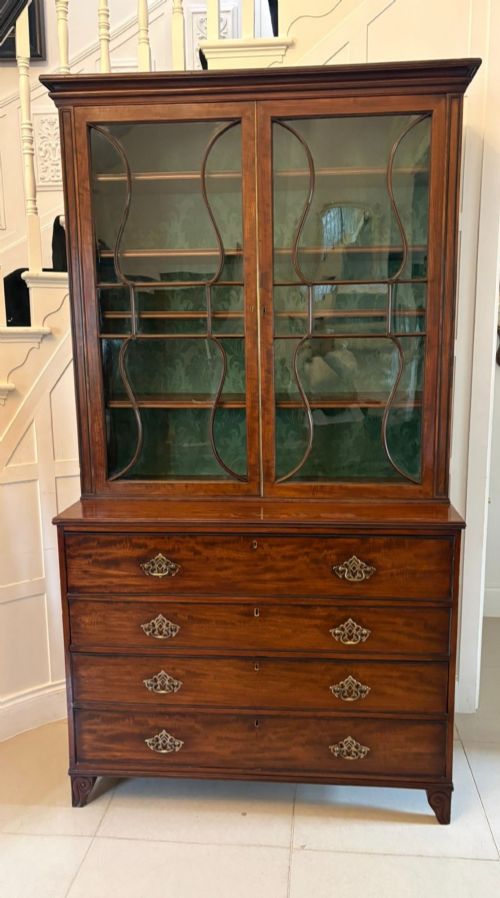
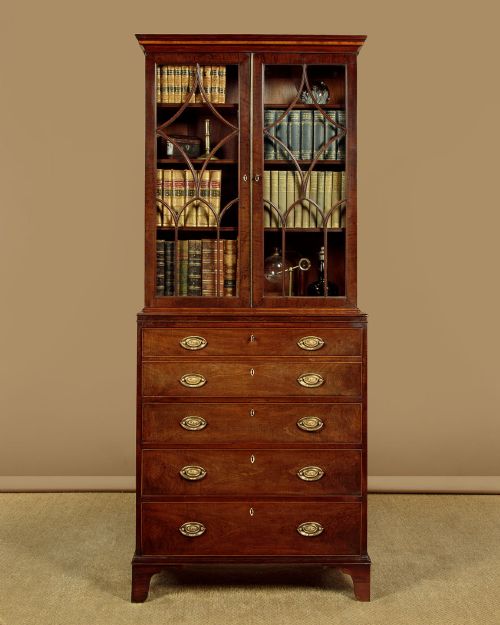
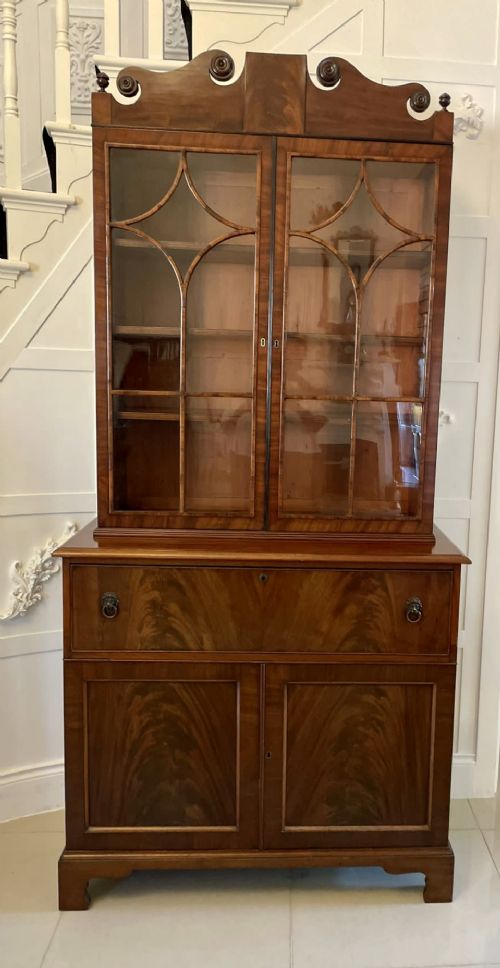
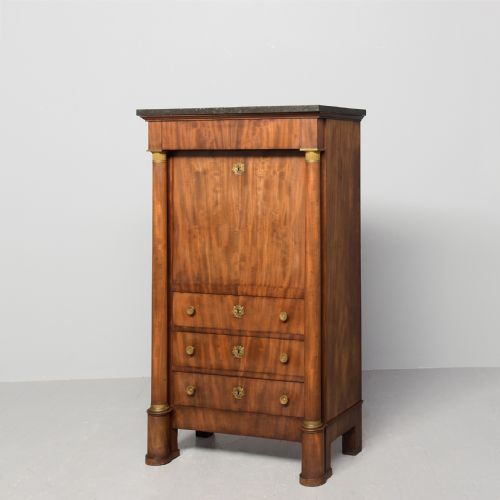
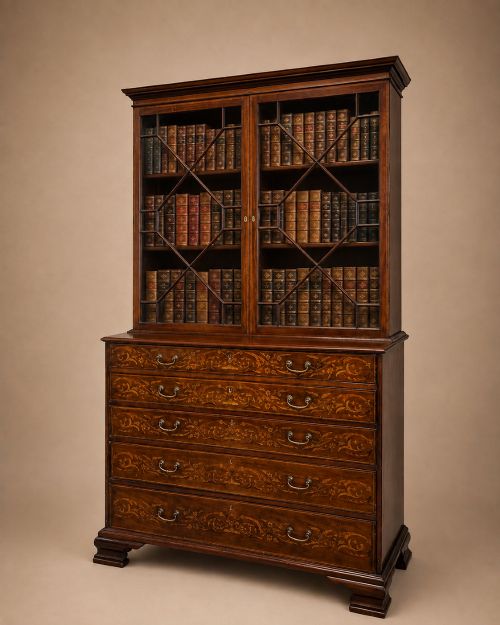
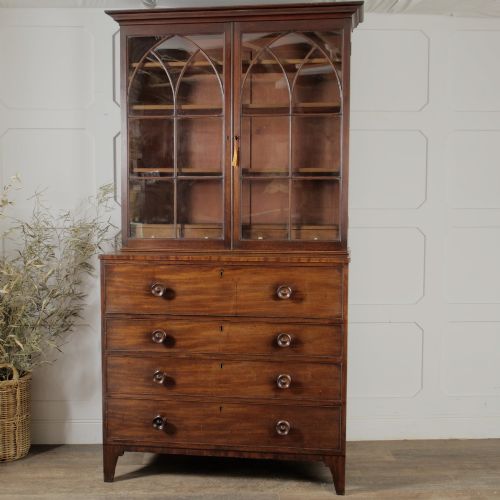
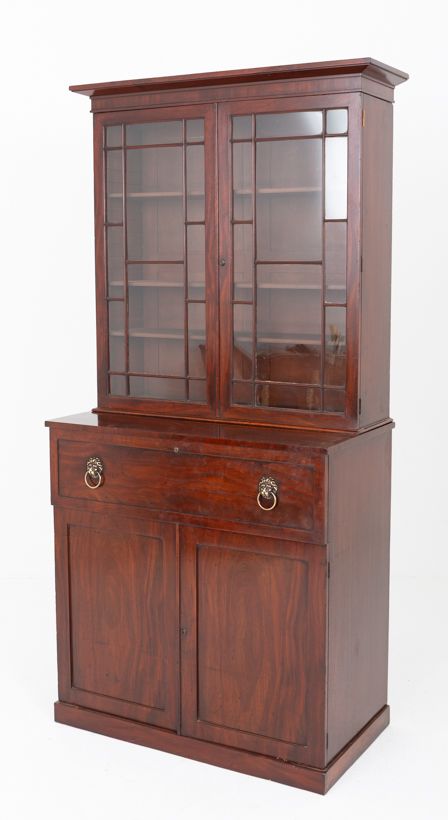
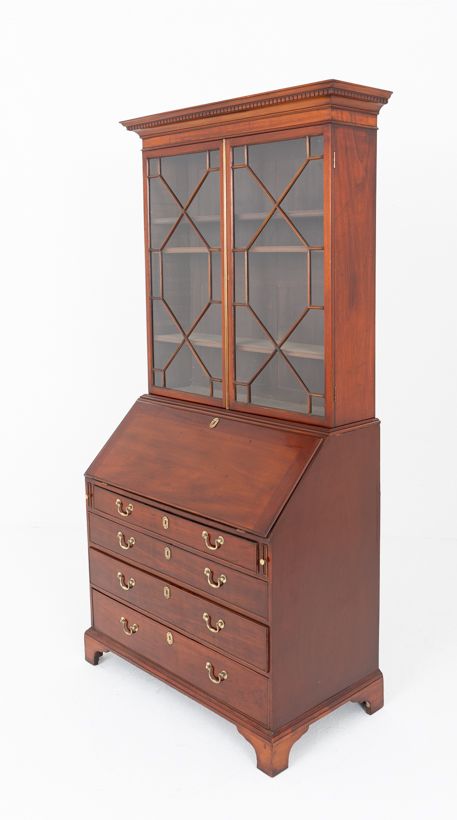
Mahogany Secretaire Cabinet
A mahogany secretaire cabinet combines practical writing space with concealed storage, prized by collectors for its clever architectural ingenuity.
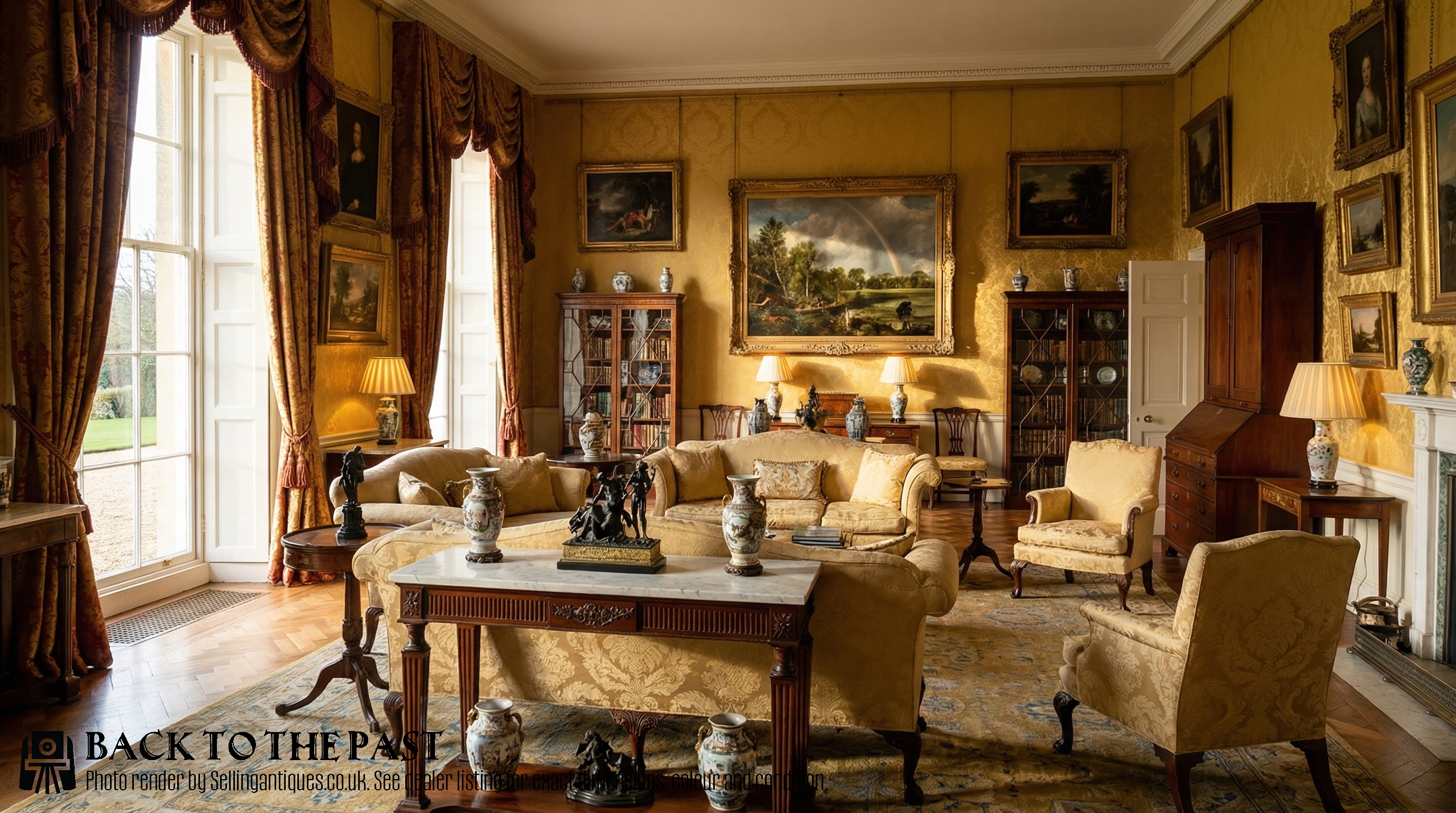
Forms and Origins
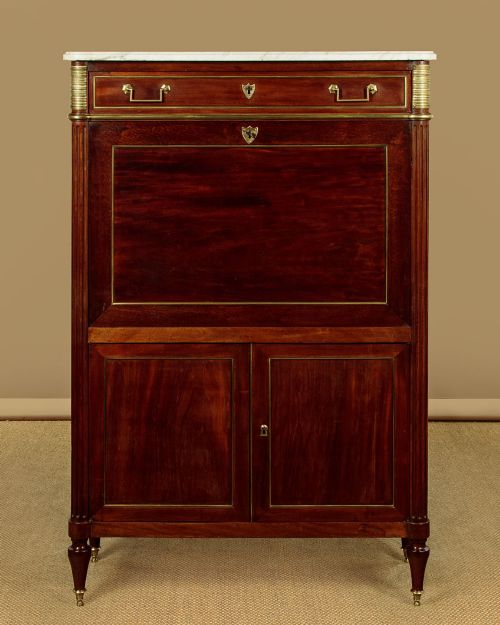
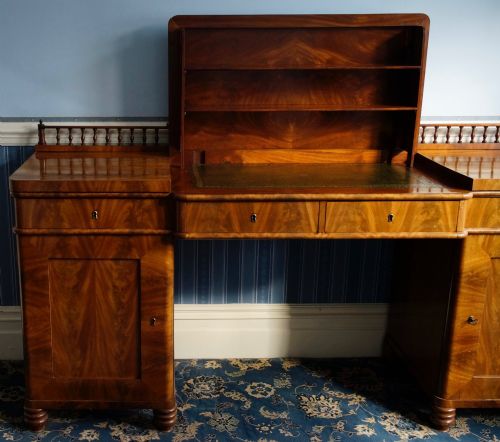
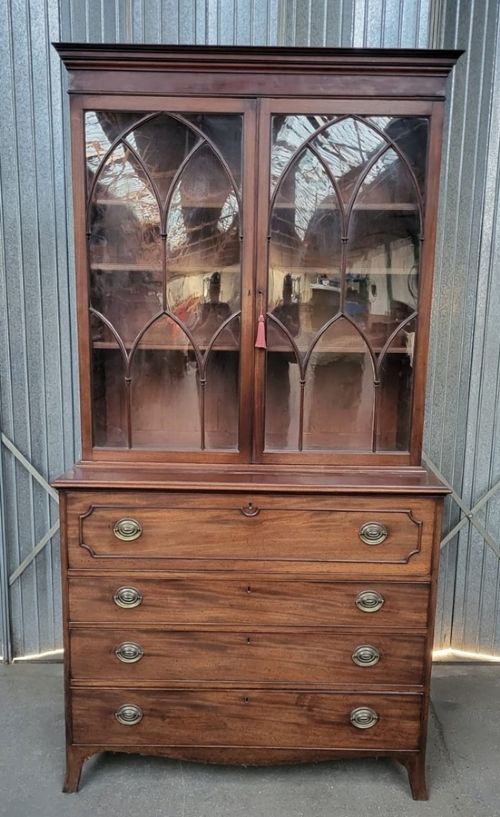
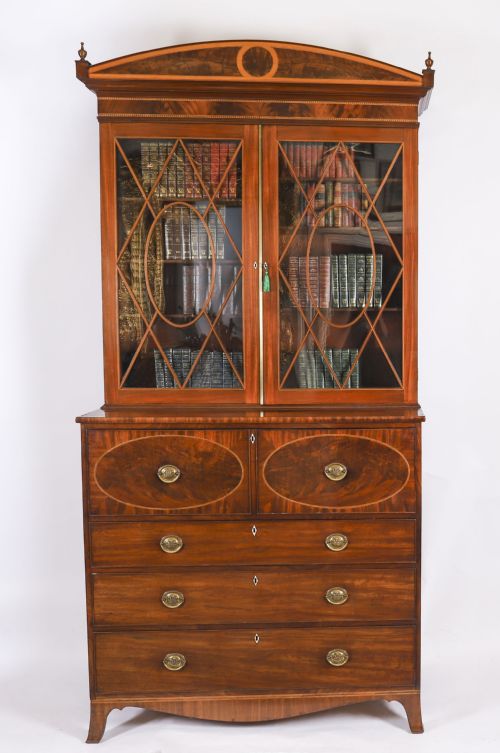
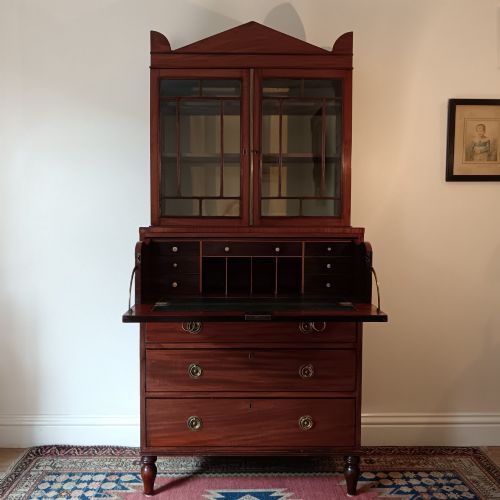
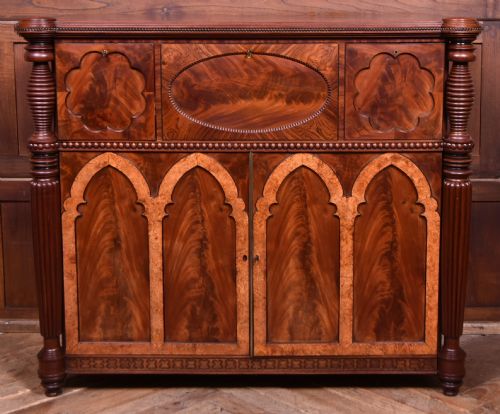
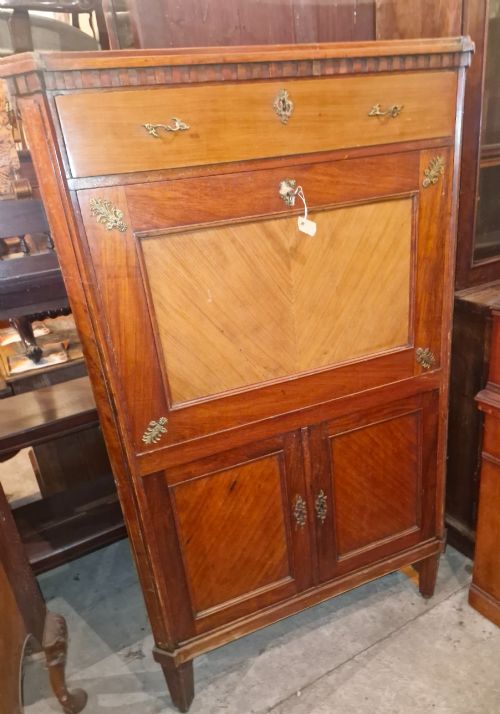
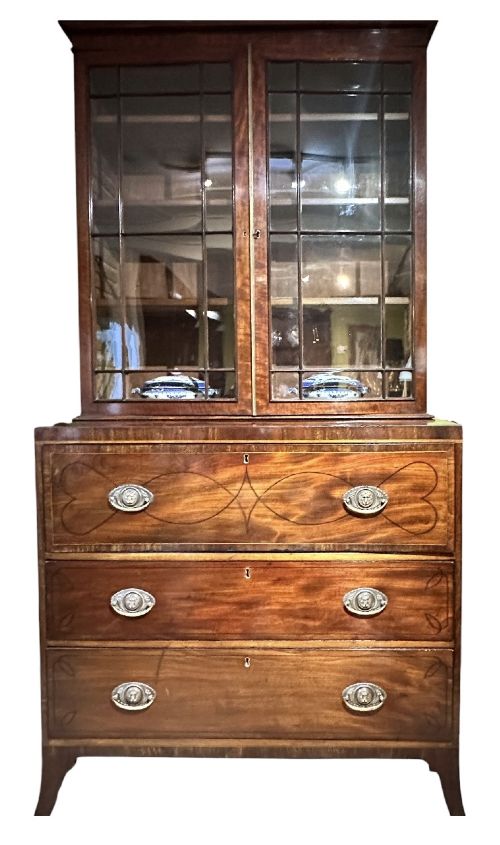
A mahogany secretaire cabinet offers a fitted writing drawer that drops down to reveal internal pigeonholes and small compartments, sitting beneath upper bookcase sections or above lower cupboards. These dual-purpose pieces appear across the Georgian, Regency, and Victorian periods, including architectural forms and dwarf proportions.
Makers designed these items for libraries, estate offices, and formal rooms, combining bookcase display areas with secure writing desks. Examples range from bureau bookcases and side cabinets to chiffoniers and library secretaire cabinets originating from English and Irish workshops.
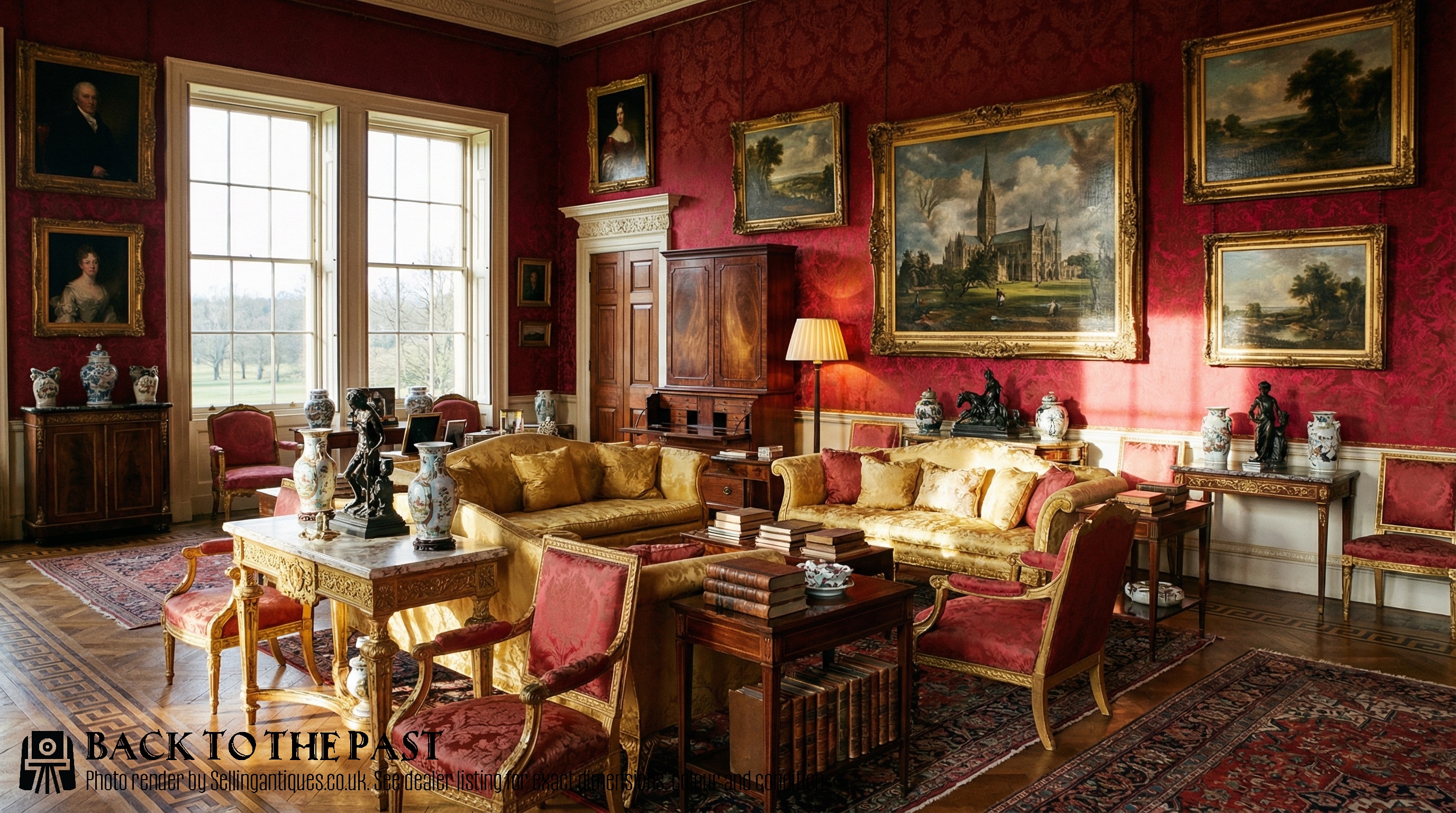
Materials and Construction
Cabinet makers utilised solid timber and flame mahogany veneer over supportive secondary woods, finished with brass hardware and occasionally gold leaf accents or glass panel doors. Surfaces often display figured grain patterns, particularly on drawer fronts and fall-front writing sections.
Interiors incorporate leather writing inserts within the drop-down secretaire drawers, alongside secret compartments. Larger examples are constructed in two sections, separating upper bookcases from lower cabinet bases.
Retail Price Guide 2026
Typical UK retail prices for mahogany secretaire cabinet, calculated from the Sellingantiques database of over a million retail prices indexed since 2003. This retail price guide relies exclusively on Sellingantiques data; no external sources or auction records are used, so the figures do not describe the wider market.
Listings feature mahogany, flame mahogany veneer, brass, leather, and glass across Georgian, Regency, and Victorian periods.
Distinctions in Execution
The sophistication of the internal fittings, such as secret compartments and pigeonhole arrangement, separates standard utilitarian pieces from exceptional cabinet work. Precision in veneer selection, particularly matched flame mahogany figures across drawer fronts, determines visual hierarchy.
Structural complexity also defines the piece, seen in architectural pediments, serpentine shaping, and integrated bookcases or library folio cabinets. Maker attribution through stamps or documented provenance further elevates certain examples above anonymous workshop production.
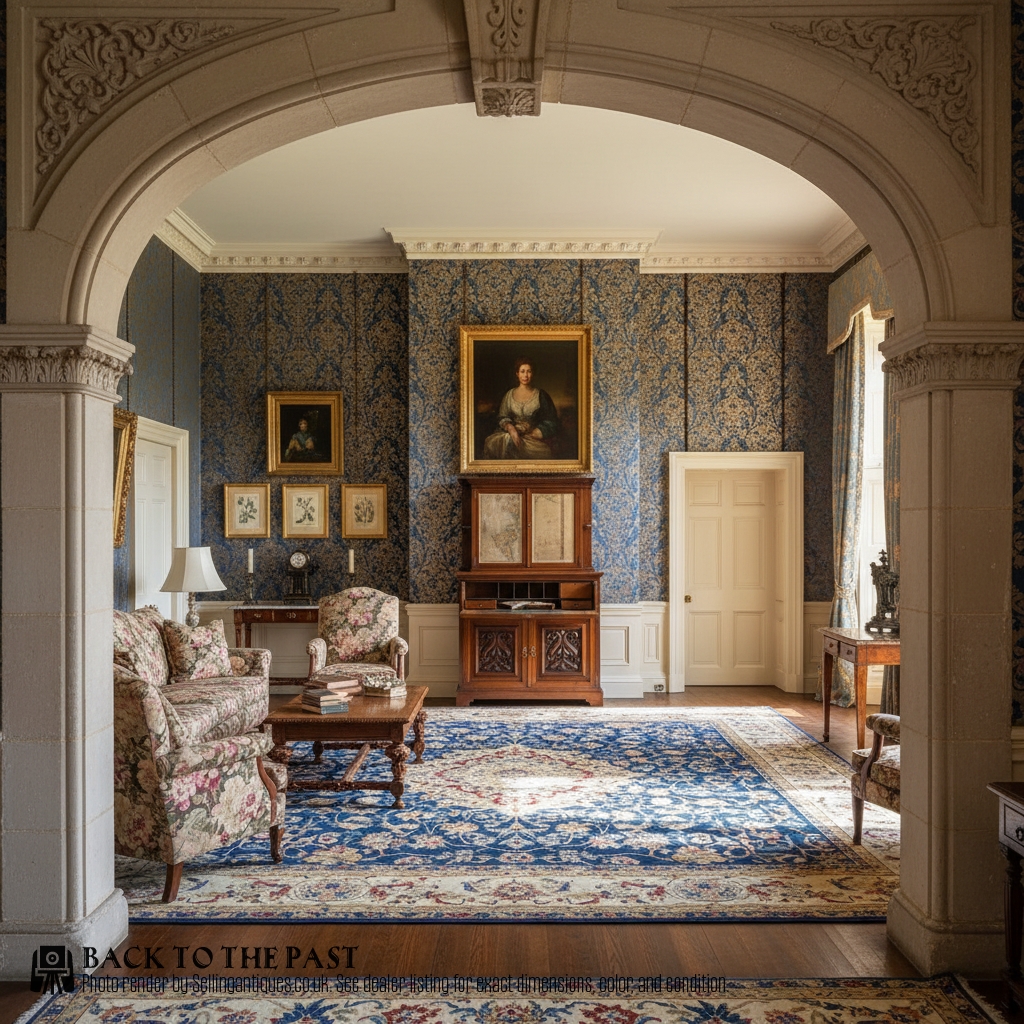
Gillows·Gillington of Dublin
The Mahogany Secretaire Cabinet Glossary
- Secretaire
- A writing drawer with a drop-front mechanism that conceals small drawers and pigeonholes. This serves as the defining functional element of the furniture type.
- Flame mahogany veneer
- Thin slices of mahogany timber sliced to reveal a rippling, flame-like grain pattern. Cabinet makers applied these decorative veneers to primary visual surfaces.
- Bureau bookcase
- A taller furniture form combining a slant-front or secretaire desk base with an upper glazed bookcase. These pieces dominated Georgian and Victorian libraries.
- Chiffonier
- A low cabinet featuring shelving or cupboards, sometimes incorporating a secretaire drawer. Regency examples often display compact proportions for domestic interiors.
- Serpentine
- A gently undulating curved front line found on select cabinet drawers. This shaping requires advanced woodworking skill to execute properly.
Frequently Asked Questions
How do I use a secretaire drawer?
The front of the drawer pulls forward and hinges downward to horizontal, supported by internal brass quadrants or runners. This reveals a fitted interior surface lined with leather for writing.
Once finished, lift the fall front back into place and secure the lock to conceal your correspondence and papers.
Are these cabinets made in two sections?
Larger library and bookcase variants are constructed in two separate vertical sections to facilitate movement and placement. The upper bookcase rests upon the lower secretaire chest or cupboard base.
Smaller dwarf cabinets and side cabinets are built as single unified carcases.
What is a secret compartment?
Secret compartments are concealed spaces built behind the small pigeonholes or central cupboard inside the drop-down writing drawer. Owners used them to store valuables and private documents.
Accessing them usually requires releasing hidden spring catches or sliding panels within the internal fitments.
How do I date a mahogany cabinet?
Dating relies on stylistic markers such as the architectural cornices and bracket feet of the Georgian period, contrasted with the brass inlay of Regency pieces or the larger proportions seen in Victorian examples. Timber selection and construction methods inside the drawers also provide chronological clues.
Maker stamps or labels offer definitive evidence of workshop origin and date.