
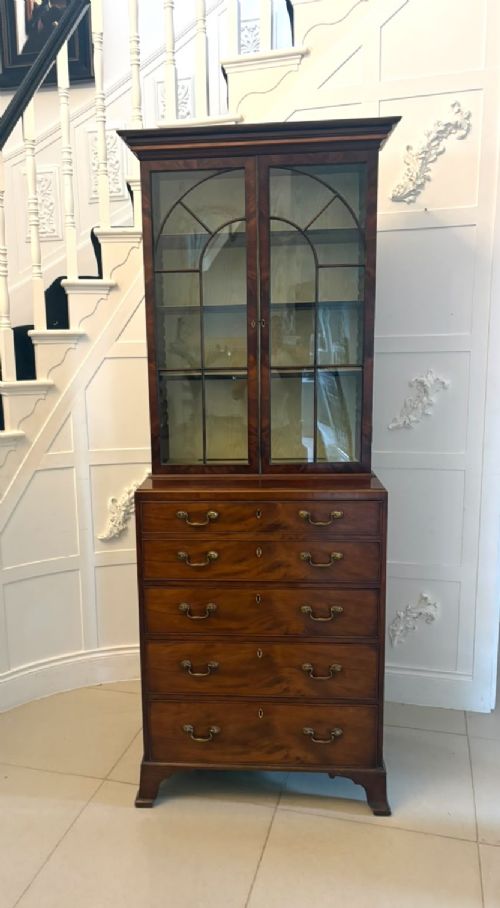
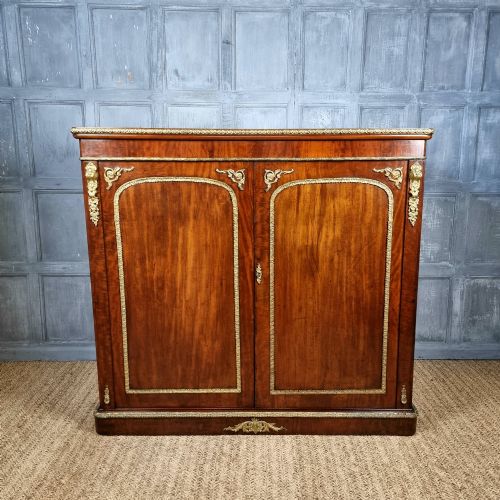
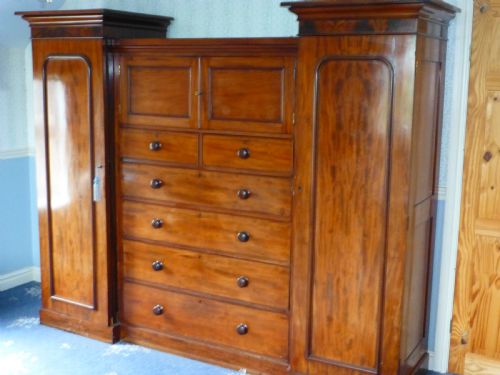
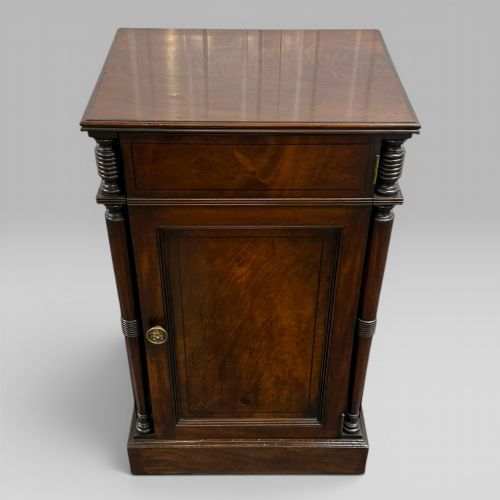
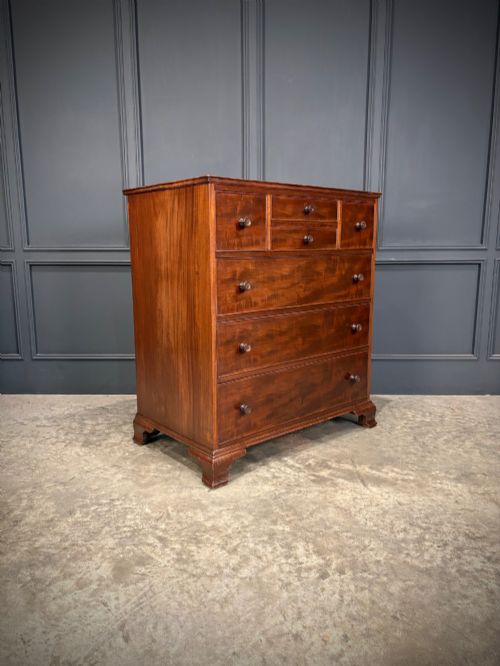


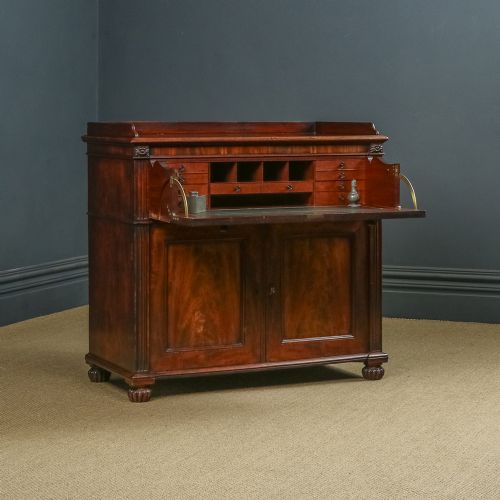


Gillows Mahogany Chest
A gillows mahogany chest brings disciplined Lancaster craftsmanship and dense timber grain into a room with quiet authority.
Gillows Mahogany Chest
A gillows mahogany chest is a storage piece originating from the renowned Lancaster and London workshops, appearing across the Georgian, Regency and Victorian periods. Buyers search for this phrase to find standard chests of drawers, secretaire desks, and specialised forms like cellarettes and teapoys.
The selections on this page span straightforward bow-fronted and straight-fronted chests alongside more complex combination pieces. Most examples demonstrate the robust proportions and functional intelligence associated with the firm's documented output.
How they were made
Construction relies heavily on solid mahogany and figured flame mahogany veneers, supported by secondary timbers such as oak for drawer linings. Cabinetmakers applied brass hardware, leather writing inserts, and occasionally ormolu or glass details to finish the surfaces.
Joinery techniques focus on structural longevity, utilising tight dovetailing for drawers and precise framing for panelled carcases. Carved relief work and subtle inlay appear on select examples to accent the natural grain without obscuring the timber.
Several pieces include dedicated compartments for locking away expensive tea leaves and vintage wine bottles from sticky-fingered houseguests.
What varies in quality
Quality rests upon the selection of timber figures, where richly patterned flame mahogany or plum pudding grain distinguishes finer commissions from standard utility pieces. The crispness of carved mouldings and the retention of original brass fittings further separate exceptional examples from the ordinary.
Internal execution matters just as much as external appearance, shown through cleanly finished oak secondary woods and smooth drawer action. Pieces bearing stamps or clear attribution records carry a stronger assurance of workshop origin.
Gillows·Waring and Gillow·John Barrow·Robert Gillows II
The Gillows Mahogany Chest Glossary
- Flame mahogany
- A veneer cut from the fork of the mahogany tree to create a distinctive, flickering flame pattern. It appears on the principal drawer fronts of higher-grade furniture.
- Secretaire
- A cabinet or chest featuring a fitted pull-down writing drawer with small compartments and pigeonholes. This hybrid form combined storage with a practical writing surface.
- Cellarette
- A fitted container designed for storing wine bottles safely, often lined with lead or divided internally. These pieces sit low to the ground and frequently feature secure locking mechanisms.
- Teapoy
- A small pedestal table or box designed to hold tea canisters and blending bowls. Gillows versions often incorporate internal compartments and elaborate mahogany turning.
- Compactum
- A large, multi-functional wardrobe providing comprehensive clothing storage through a combination of hanging space and internal drawers. They represent the more ambitious scale of nineteenth-century cabinetmaking.
Gillows Mahogany Chest: Frequently Asked Questions
How do I spot a real Gillows chest?
Authentic pieces often feature maker stamps, distinctive brasses, or specific construction traits like numbered drawers and oak linings. Documentation and provenance records help confirm attribution when physical stamps are absent.
Matching the timber quality and secondary woods against known workshop standards provides further reassurance. Lancaster makers maintained rigorous carpentry methods across both marked and attributed furniture.
What is a secretaire chest?
A secretaire chest combines a standard chest of drawers with a pull-down top drawer that conceals a writing desk. This fitted interior includes small drawers and pigeonholes for correspondence.
Closed, the piece maintains the clean facade of a normal drawer unit. Opened, it offers a functional writing space without requiring a separate desk.
How should I care for mahogany furniture?
Keep mahogany pieces away from direct heat sources and strong sunlight to prevent the timber and veneer from drying out or fading. Regular dusting with a dry, soft cloth maintains the finish safely.
Avoid using silicone-based polishes, opting instead for traditional beeswax applied sparingly. This preserves the natural lustre of the wood over time.
Are these chests suitable for daily bedroom use?
These chests were built for practical storage and handle everyday use reliably. The deep drawers and sturdy timber carcases accommodate modern clothing needs without difficulty.
Placing them in stable indoor environments protects the antique joints and drawer runners. Their classic proportions allow them to fit comfortably into contemporary domestic layouts.