
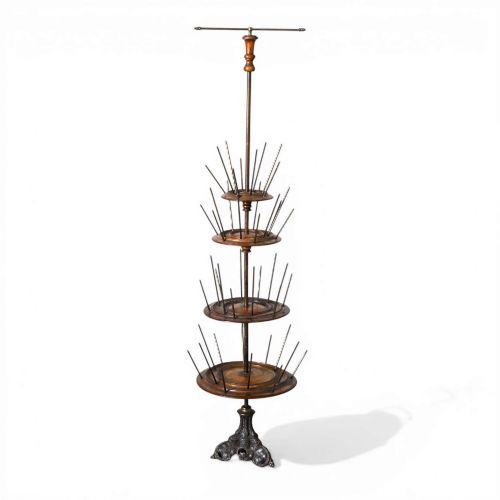


Brass Retail Counter
A brass retail counter brings commercial character into domestic interiors, offering practical display space with sturdy metal framing.
Brass Retail Counter
A brass retail counter serves as a functional display unit combining glazed panels, timber structures, and metal framing for merchandise presentation. Buyers searching for a brass retail counter will encounter various shop fittings originating from the Victorian period through to the 1930s.
The selection ranges from large floor-standing shop counters and display cabinets to smaller countertop display stands and hat stands. Common configurations include Edwardian haberdashery units, mahogany drapers counters, and Art Deco window display stands designed for commercial environments.
How they were made
Construction relies on durable hardwoods like mahogany and oak combined with structural cast iron, steel, and brass framing to support heavy glass panels. Makers utilised velvet for interior linings in specialist display cases and integrated mirrored interiors to enhance light distribution.
Joinery techniques reflect traditional commercial workshop standards, featuring sturdy cabinetry built to withstand daily retail use. Metal components such as brass frames and cast iron bases provide both structural integrity and decorative contrast to the timber carcasses.
Listings span from the Victorian era through the Edwardian period, 1910, 1920, and the 1930s, featuring brass, glass, mahogany, and oak.
What varies in quality
Quality differences stem from the original commercial maker, the sophistication of the cabinetry, and the grade of materials utilised in construction. Pieces produced by established shopfitters exhibit superior timber selection, refined brass framing, and more intricate architectural detailing.
The integrity of the original glass, mirrors, and internal fittings distinguishes standard utilitarian shop fixtures from finer display cabinets. Refurbished examples retain varying degrees of their original patina depending on the extent of restoration applied to the brass and wood surfaces.
F. Sage & Co.·Saml. Elliott & Sons
The Brass Retail Counter Glossary
- Haberdashery
- A shop fitting style characterised by multiple small drawers and glazed compartments designed for selling small sewing goods and accessories. These units typically feature timber frames with glass fronts.
- Drapers Counter
- A long retail counter historically used in textile shops for measuring and cutting fabrics. They often incorporate timber construction with display shelving underneath.
- Display Stand
- An elevated structure utilised for showcasing specific merchandise in shop windows or on top of counters. These freestanding or countertop items utilise brass and iron supports.
- Countertop Cabinet
- A smaller glazed display case designed to sit upon a main shop counter for secure merchandise presentation. These units usually feature timber bases and brass framing.
Brass Retail Counter: Frequently Asked Questions
What is a brass retail counter used for?
These fixtures were originally designed for commercial shops to display merchandise securely while allowing customers to view goods clearly through glass panels.
Today, buyers utilise them in domestic settings as statement storage furniture, kitchen islands, or specialist display cabinets for collections.
How do I date a brass retail counter?
Dating relies on examining the timber types, construction methods, and architectural styles associated with specific eras like the Victorian period or the 1930s.
Maker signatures, patent stamps on brass fittings, and commercial design characteristics also help establish the correct historical period.
Are these counters suitable for modern kitchens?
Many buyers integrate these glazed cabinets and shop counters into contemporary kitchens to store glassware, tableware, or dry goods.
The combination of glass, brass, and hardwood provides durable work surfaces and visible storage that complements various interior styles.
What maintenance do brass and wood counters require?
Routine care involves dusting timber surfaces with a dry cloth and cleaning glass panels with standard glass cleaner.
Brass framing benefits from occasional gentle polishing if a bright finish is preferred, though many owners prefer to maintain the aged patina.