


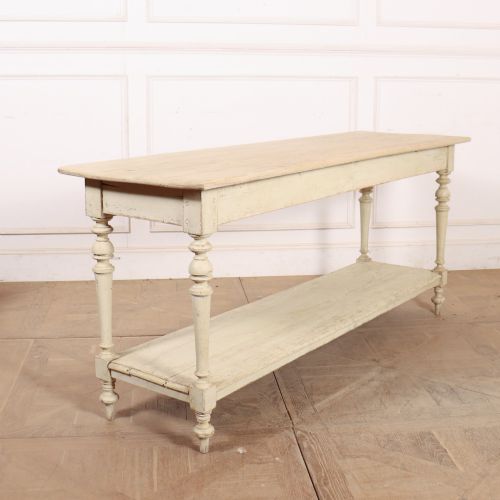


Haberdashery Display Table
These haberdashery display table pieces are commercial shop fittings designed to showcase merchandise with glass and timber.
Haberdashery Display Table
A haberdashery display table is a commercial shop fitting originating from late nineteenth and early twentieth century retail spaces. These pieces are built to display merchandise clearly while keeping items protected behind glass or laid out upon substantial timber surfaces.
The versions most commonly met on this page span the Victorian and Edwardian eras through to the 1930s. They take the form of shop counters, drapers tables, vitrines, and console tables designed for commercial use.
Origins vary across English, French, and American workshops. Examples range from painted pine shop fittings to mahogany and glazed display cabinets of generous proportions.
How they were made
Construction relies on durable timbers such as mahogany, oak, and pine, often paired with structural metals like brass and cast iron. Painted softwood and iron appear frequently in French provincial and commercial shop fittings.
Glazing forms a central element of the construction, utilising large panes of glass to create table top cabinets, vitrines, and display counters. Brass hardware, velvet linings, and bow end framing complete the fabrication of these commercial pieces.
Haberdashery Display Table Retail Price Guide 2026
Typical asking prices for haberdashery display table among the pieces listed under this phrase on Sellingantiques today, from the lower quarter to the upper quarter. They describe what is for sale here now, not the wider market.
Several tables retain the faint aroma of old textiles and century-old polish trapped inside their glazed compartments.
What varies in quality
Quality separates simple utility furniture from pieces produced by notable commercial makers like Quincy Showcase Works. Superior examples display exceptional cabinetmaking, robust glazing, and refined proportions suited for prominent shop floors.
The choice of materials dictates the standing of a piece, with dense hardwoods like mahogany and oak contrasting against simpler painted pine or softwood constructions. Original surface treatments and intact structural ironwork elevate the character of surviving shop fittings.
Quincy Showcase Works Illinois
The Haberdashery Display Table Glossary
- Vitrine
- A glass-sided display cabinet or table designed for exhibiting delicate items. These pieces utilise glazed panels to allow all-round visibility.
- Shop Fitting
- Fixtures and furniture built specifically for commercial retail environments. These items prioritize robust construction and clear merchandise presentation.
- Draper's Table
- A long table traditionally used in fabric and textile shops for measuring and displaying cloth. They often incorporate lower shelves or display surfaces.
- Bow End
- A curved cabinet or counter end featuring rounded glass or timber framing. This shaping softens the rectangular geometry of commercial shop counters.
- Console Table
- A table designed to stand against a wall, frequently utilised in commercial displays or entrance spaces. They offer a narrow profile combined with a stable surface.
Haberdashery Display Table: Frequently Asked Questions
What is a haberdashery display table?
A haberdashery display table is a commercial shop fitting created to showcase small wares, fabrics, and dry goods in retail environments. They combine timber framing with glass panels and open surfaces.
These pieces originate from the nineteenth and early twentieth centuries, reflecting the practical needs of drapers and outfitters.
How were these tables used originally?
Merchants utilised these counters and tables to display goods securely while allowing customers to inspect merchandise easily. Glass tops and cabinets kept delicate items free from dust and handling.
They stood on shop floors as central counters or against walls to organise stock effectively.
How do I date a display table?
Dating relies on examining the timber species, construction methods, hardware, and stylistic indicators such as Edwardian or Victorian design traits. Commercial pieces often carry maker stamps or distinct structural ironwork.
Earlier examples from the nineteenth century typically feature hand-cut joints and dense hardwoods like mahogany.
Can I use these tables at home?
These commercial tables adapt well to domestic interiors as kitchen islands, sideboards, or statement display furniture. Their glazed compartments and timber shelves provide practical storage.
Living with them brings a distinct industrial or commercial character to modern residential spaces.