



Georgian Credenza Table
When you search for a georgian credenza table, you are looking at substantial timber sideboards and dresser bases built to anchor a dining room.
Georgian Credenza Table
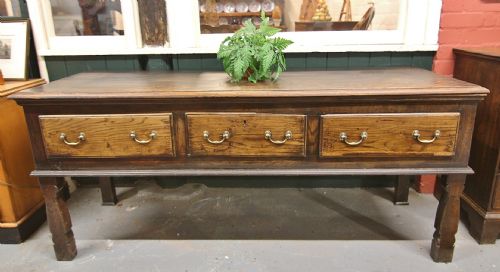
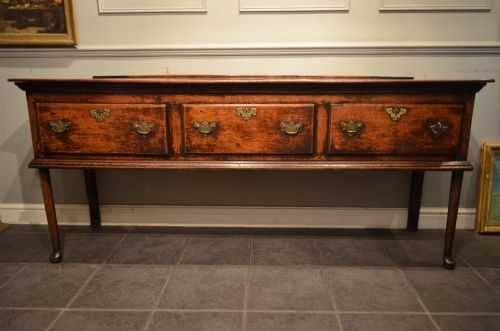
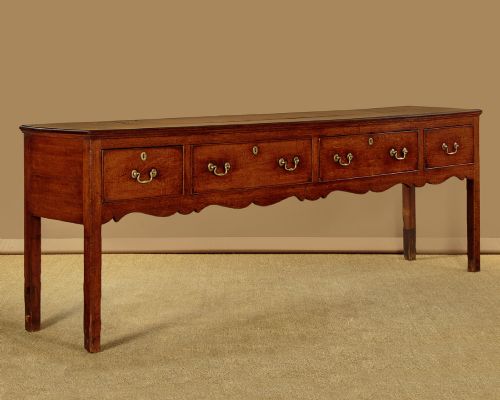
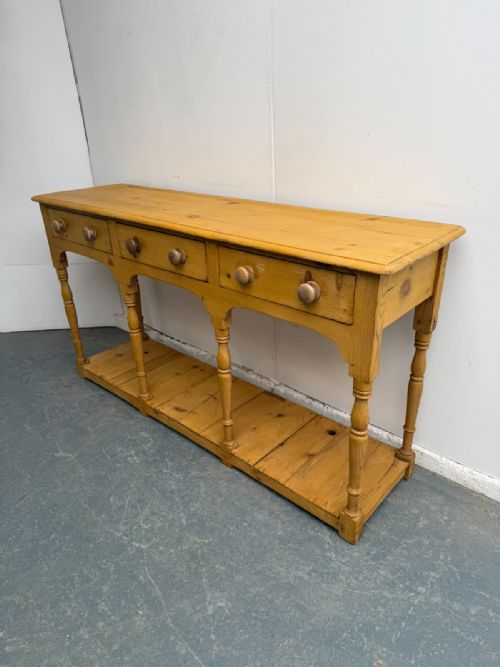
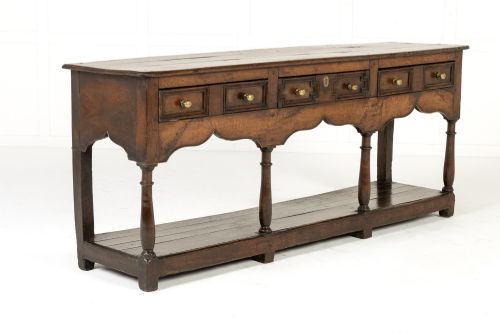
A georgian credenza table search leads you primarily to robust timber sideboards and oak dresser bases originating from the eighteenth and nineteenth centuries. These pieces provided essential storage and display space in formal dining rooms and country kitchens alike.
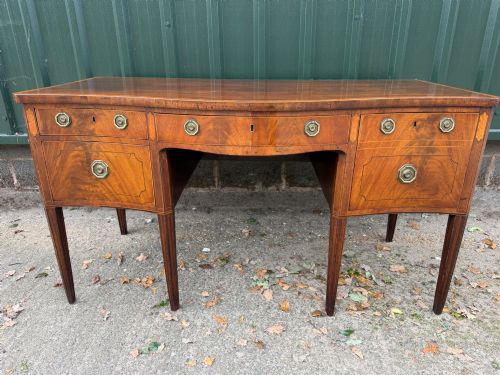
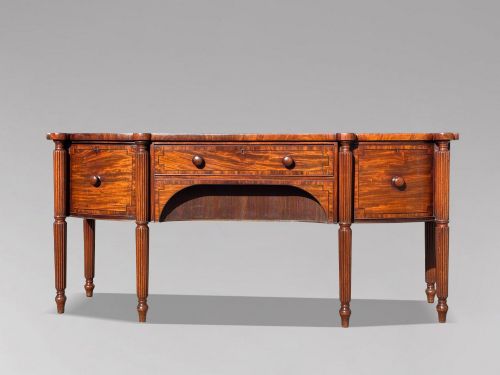
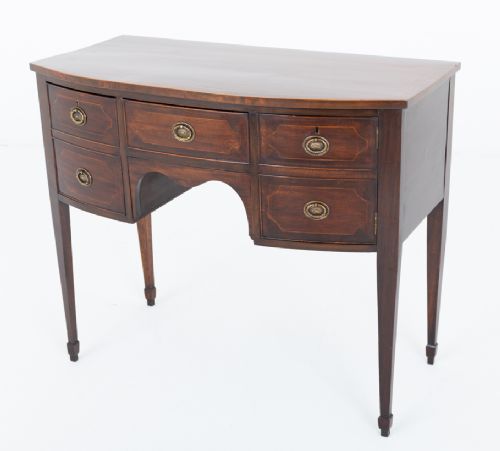
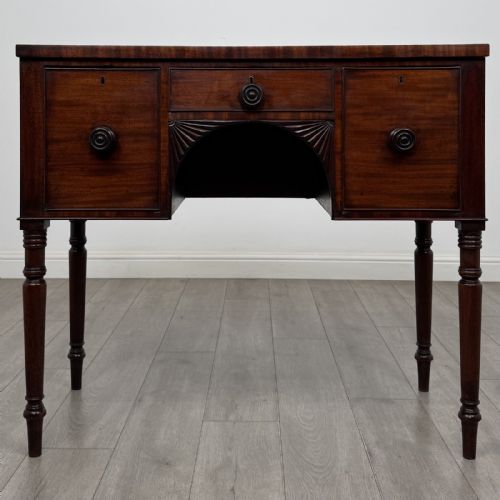
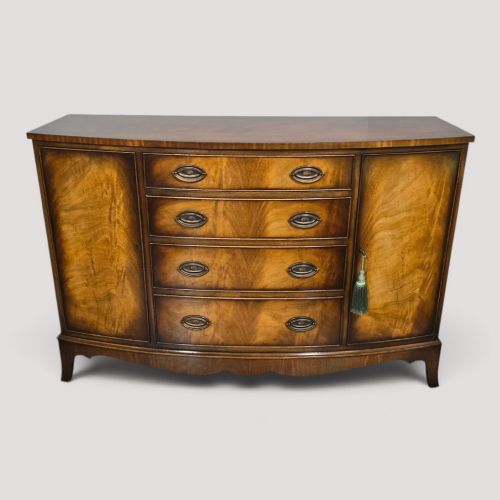
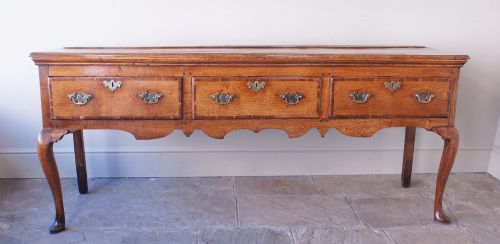
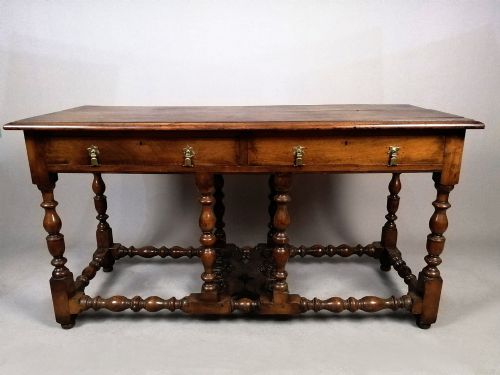
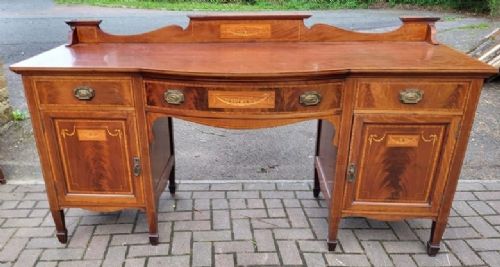
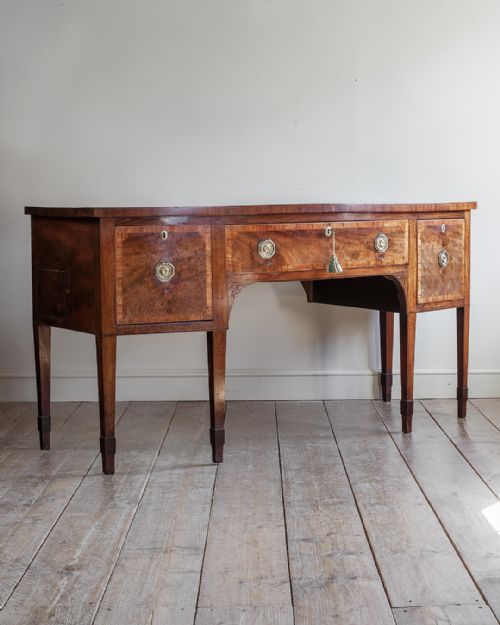
The selections span distinct regional variations, from simple oak Lancashire dresser bases to refined George III mahogany breakfront and serpentine sideboards. You will also encounter later revivals from the Edwardian and 1920s periods mimicking these classical forms.
How they were made
Cabinet makers built the primary carcases of these pieces using sturdy native timbers like oak and mahogany, often applying flame mahogany veneers to principal display surfaces. Secondary structural elements inside drawers and backs frequently utilised pine.
Decoration relied on skilled cabinet work rather than heavy applied ornament, incorporating contrasting boxwood and satinwood inlay, delicate purpleheart banding, and carved brass hardware.
Georgian Credenza Table Retail Price Guide 2026
Typical asking prices for georgian credenza table among the pieces listed under this phrase on Sellingantiques today, from the lower quarter to the upper quarter. They describe what is for sale here now, not the wider market.
Many an eighteenth-century oak dresser base still bears the faint, dark stain of spilt ale from centuries of hearty country suppers.
What varies in quality
The calibre of a piece depends heavily on the selection of timber, visible in the grain matching of figured mahogany and the density of the native oak used for country dresser bases. Superior examples maintain crisp lines in their serpentine or bow fronts without warping.
Fine construction details dictate longevity, such as the precision of dovetail joints in the drawer construction and the original condition of brass handles and escutcheons rather than replaced hardware.
M. D. Miller & Sons
The Georgian Credenza Table Glossary
- Breakfront
- A cabinet form where the central section projects forward from the flanking outer sections. This arrangement creates a pronounced architectural rhythm across the front of larger sideboards.
- Serpentine
- A front profile characterised by a gentle convex curve in the centre flanked by concave curves. It requires exceptional skill from the cabinet maker to shape the timber accurately.
- Bow-front
- A convex curved front that swells outward from the edges towards the centre. This shape became popular during the Regency period for softening the corners of formal dining furniture.
- Potboard
- An open slatted lower shelf fitted between the legs of a dresser base. Historically, it was utilised for storing heavy pots and ceramic serving dishes.
- Dresser base
- A low utilitarian table fitted with drawers and occasionally a potboard beneath. These pieces originated in kitchens and provincial dining rooms before evolving into formal sideboards.
Georgian Credenza Table: Frequently Asked Questions
How do I use a sideboard today?
These large timber pieces serve effectively as storage credenzas in dining rooms for table linens and crockery. Their wide tops also provide practical surface area for serving food or displaying table lamps.
In living spaces, smaller bow-front or breakfront variations function as media consoles or statement display surfaces. Their deep drawers accommodate household items while keeping rooms organised.
How do I tell oak from mahogany pieces?
Oak pieces generally exhibit a pronounced, visible grain texture with distinct medullary rays, and they typically date to the earlier eighteenth century or provincial country workshops. They carry a heavy, honest construction designed for utilitarian household tasks.
Mahogany items display a smoother, reddish-brown grain that often takes a higher polish, frequently enhanced with veneer and string inlay. These pieces usually reflect the refined urban tastes of the George III and Regency periods.
How do I care for antique timber furniture?
Maintain antique oak and mahogany by applying a quality beeswax polish sparingly to nourish the dry timber. Avoid placing these pieces in direct sunlight or near heat sources that cause wood to split.
Dust surfaces regularly with a soft, dry cloth rather than using silicone sprays that damage historic wax finishes. Consistent indoor humidity levels prevent the timber from expanding and contracting excessively.