
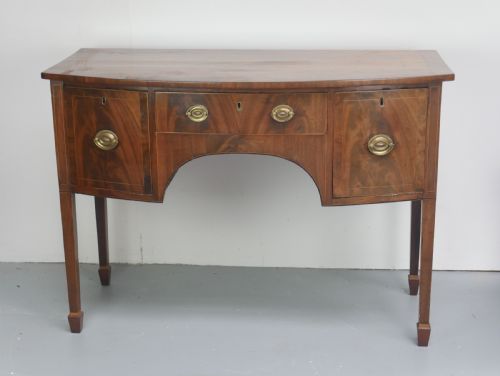

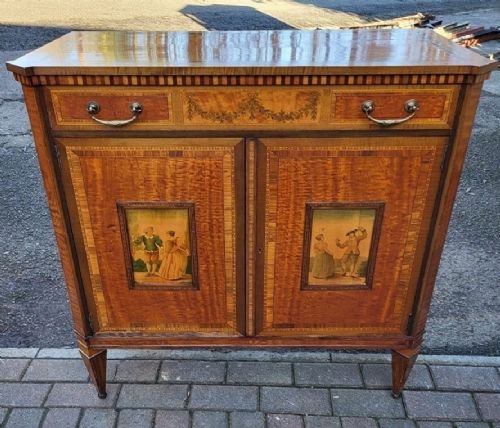


Small Mahogany Credenza
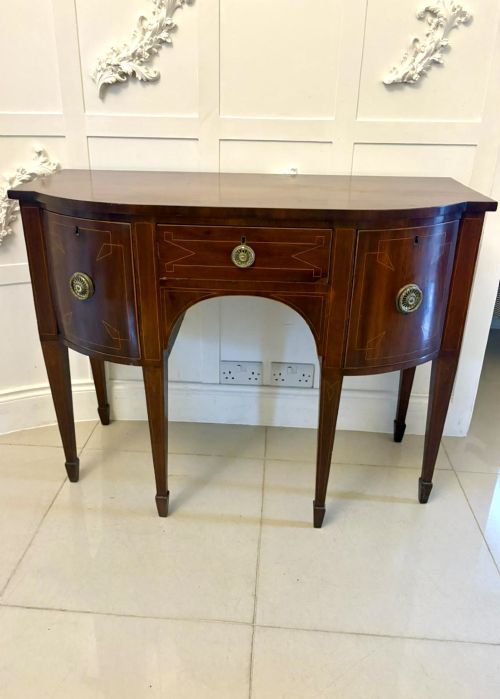
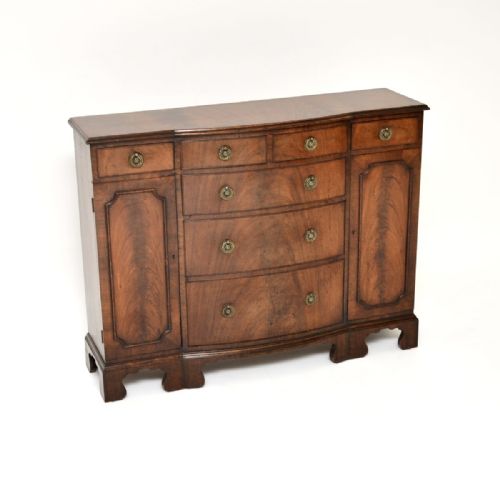
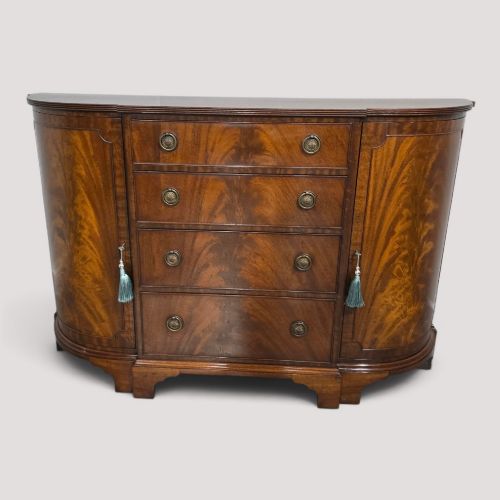
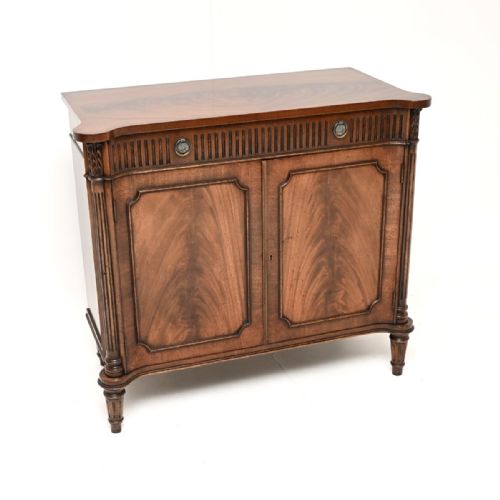
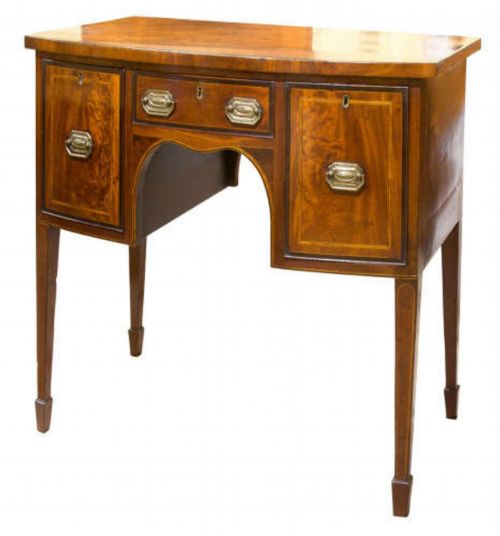
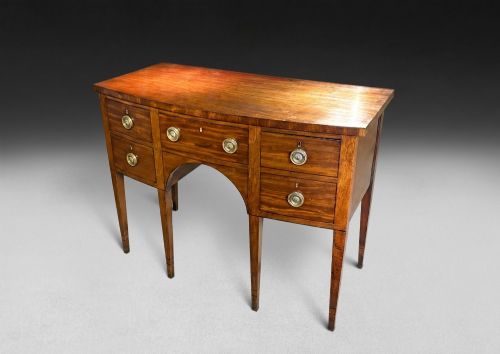
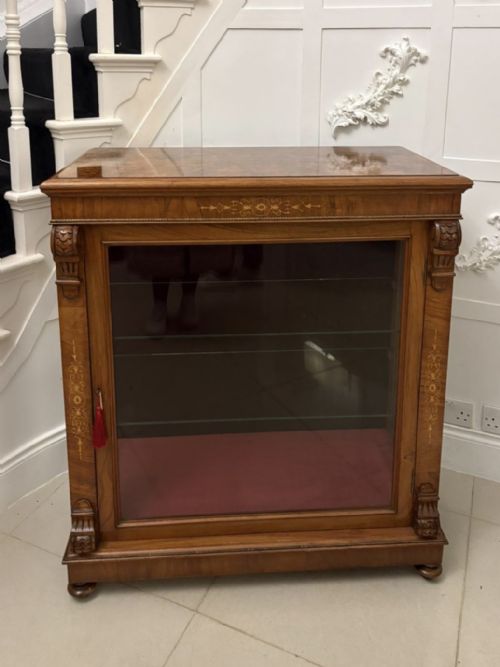
These small mahogany credenza and sideboard examples bring compact proportions and rich timber grain to dining rooms and hallways.
Small Mahogany Credenza
A small mahogany credenza or sideboard provides compact storage and serving space, originating primarily across the Georgian, Regency, and Victorian periods. Buyers seek these items to fit narrower rooms while retaining the traditional timber presence of larger dining furniture.
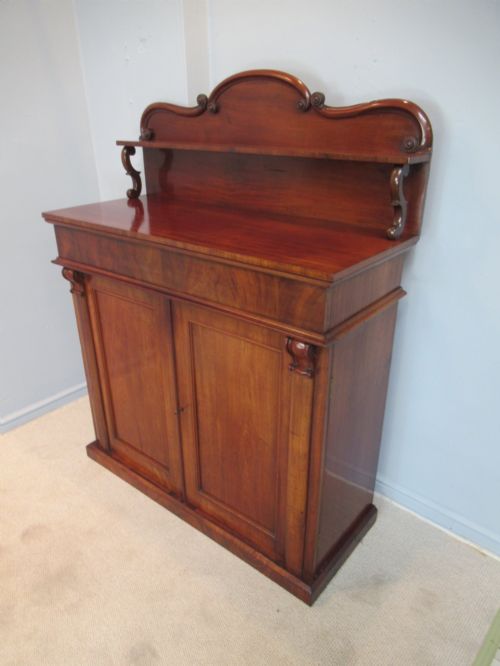
The selections on this page lean heavily toward bowfront sideboards and compact chiffoniers. Pieces range from late eighteenth-century George III designs to mid-nineteenth-century Victorian cabinets.
How they were made
Cabinetmakers built these pieces using solid mahogany and flame mahogany veneers applied over secondary woods such as oak. Workshops enhanced the timber surfaces with contrasting stringing and banding in satinwood, boxwood, and ebony.
Structural elements frequently include brass hardware, glass doors on display variants, and fabric-lined interiors. Joinery techniques reflect traditional cabinetmaking standards of the eighteenth and nineteenth centuries.
Apprentice pieces appear among the smaller cabinets, built by learners to prove their joinery skills on a miniature scale.
What varies in quality
Quality depends upon the selection and matching of mahogany veneer figures across the drawer fronts and doors. Superior examples display careful timber grain alignment and precise decorative stringing.
Construction details such as drawer linings, original brass mounts, and the crispness of inlaid borders separate standard production items from fine workshop output.
Maple and Co·Gillows
The Small Mahogany Credenza Glossary
- Credenza
- A low cabinet or sideboard used for storage and display. These items often feature enclosed cupboards rather than the open shelving seen on earlier servers.
- Bowfront
- A curved convex front profile popular on sideboards and cabinets from the Georgian period onward. This shape softens the corners of furniture placed in narrow spaces.
- Chiffonier
- A compact sideboard or cabinet equipped with drawers and lower doors, frequently topped with a small shelf superstructure. They emerged as versatile storage units in nineteenth-century parlours.
- Stringing
- Thin inlaid lines of contrasting light wood, such as boxwood or satinwood, set into mahogany surfaces. This technique outlines drawers, borders, and panel edges.
- Flame mahogany
- A distinctive wood veneer figure resembling flickering flames, created by cutting across the branch forks of the tree. Cabinetmakers reserved this material for the most prominent surfaces.
Small Mahogany Credenza: Frequently Asked Questions
Where should I place a small mahogany credenza?
These compact units suit dining rooms, hallways, and living spaces where full-sized sideboards overwhelm the floor plan. Their shallow depth allows them to function as serving surfaces or storage credenzas without blocking walkways.
Position them against interior walls away from direct sunlight to protect the polished mahogany finish and delicate veneer work over time.
How do I distinguish Regency from Victorian pieces?
Regency pieces often display restrained classical lines, brass inlay, and clean geometric proportions dating from the early nineteenth century. Victorian examples tend to feature heavier mouldings, turned supports, and darker finishes.
Examining the secondary woods inside drawers and the style of the brass hardware helps confirm the manufacturing era.
What is the difference between a sideboard and a chiffonier?
Sideboards traditionally offer wider serving surfaces with multiple drawers and cupboards designed for dining room use. Chiffoniers generally appear as smaller, self-contained cabinets intended for general parlour storage.
Many nineteenth-century chiffoniers include a raised back shelf or small gallery above the main top surface.
How do I care for mahogany veneer surfaces?
Maintain the timber by dusting regularly with a soft, dry cloth and applying traditional beeswax sparingly when the finish appears dry. Avoid placing wet items or hot dishes directly onto the polished top.
Keep the furniture away from direct heat sources and rapid temperature fluctuations to prevent the veneer from lifting.