
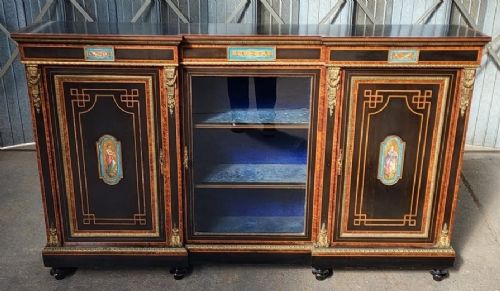
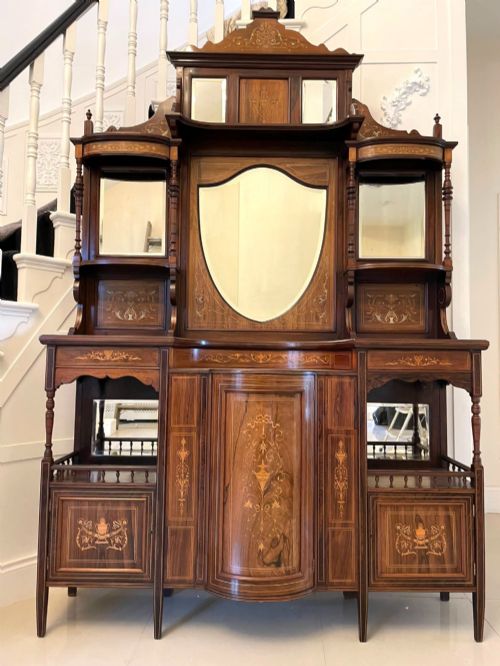
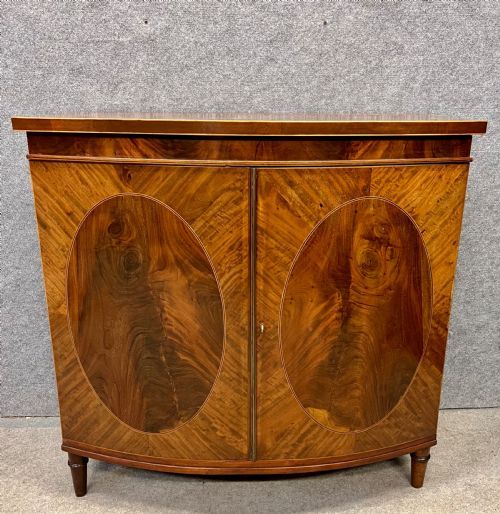
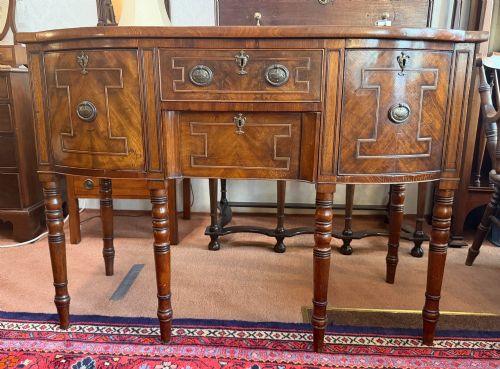
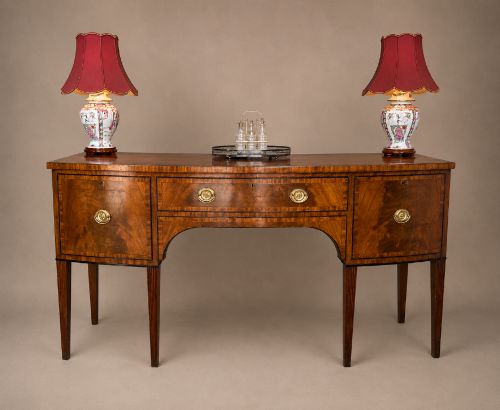
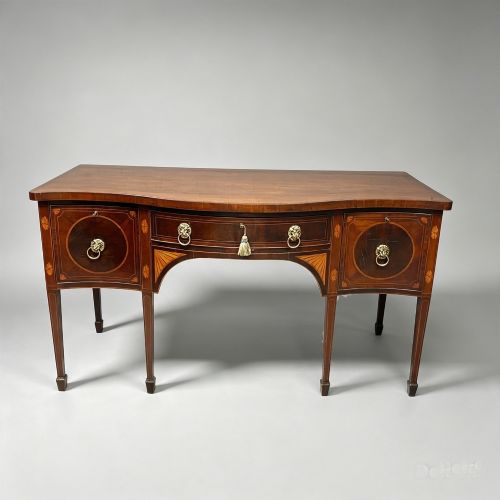
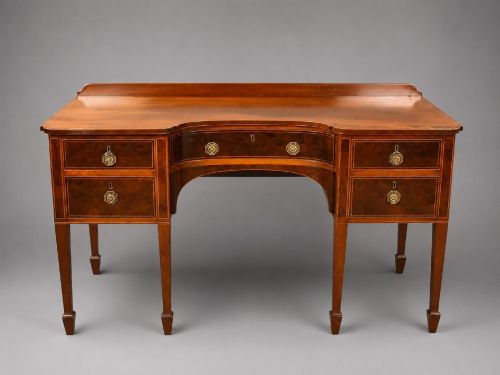
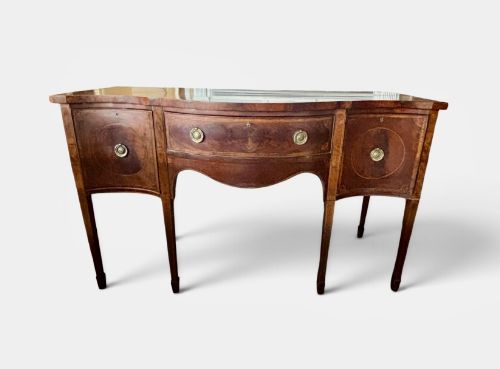
Inlaid Wooden Credenza
An inlaid wooden credenza brings tactile warmth and refined storage to a room, uniting rich timber grains with delicate decorative contrast.
Inlaid Wooden Credenza
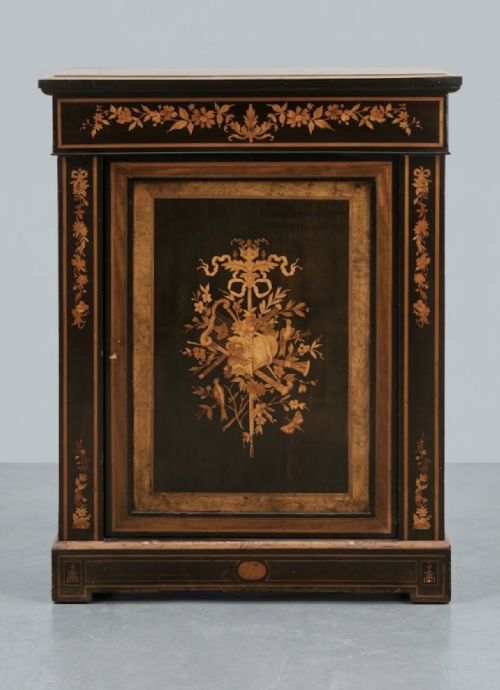
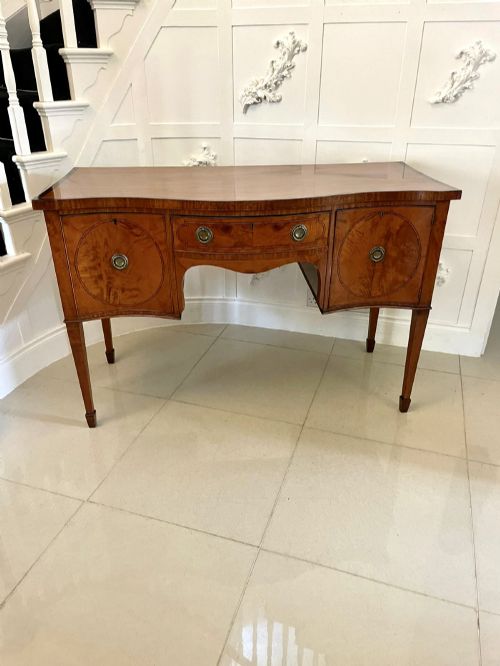
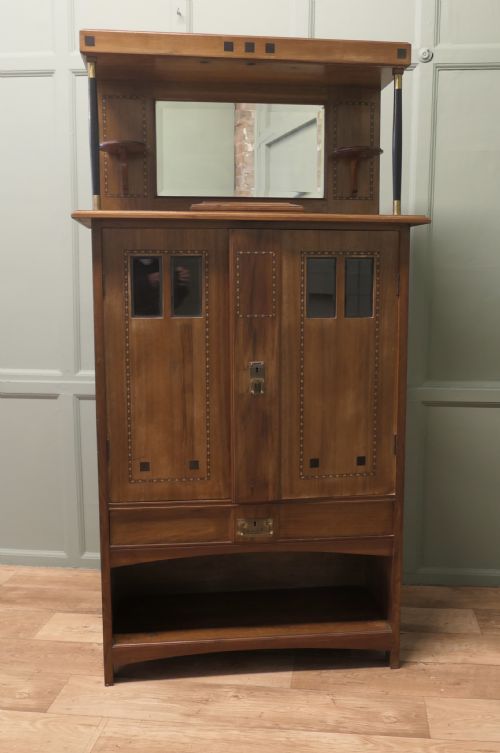
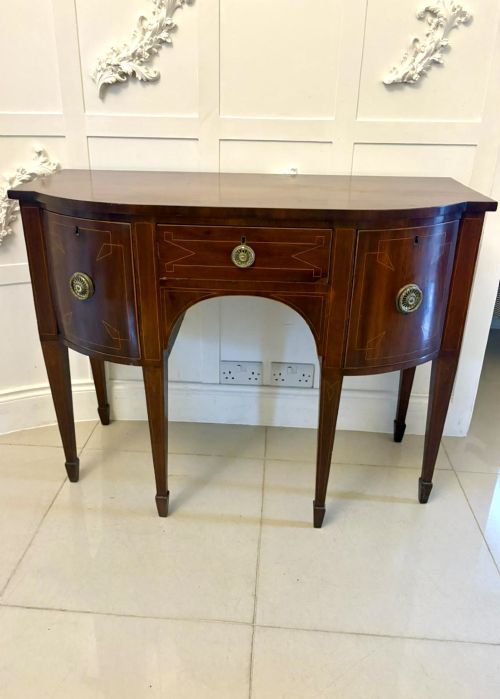
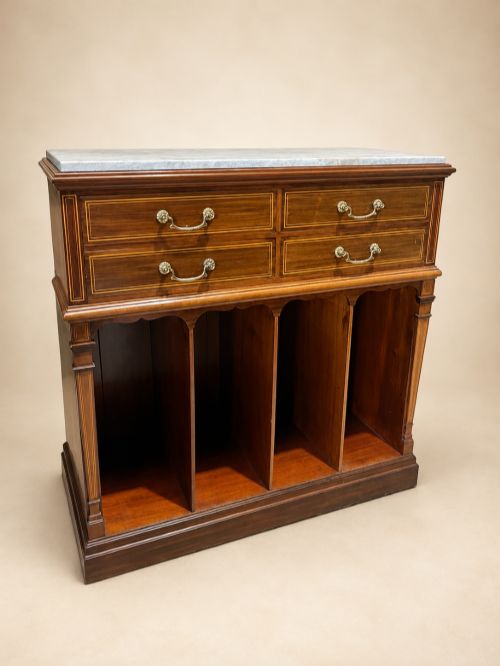
When you search for an inlaid wooden credenza, you encounter a selection of sophisticated sideboards, side cabinets, and chiffoniers designed for formal living spaces and dining rooms. The pieces appearing here span George III, Georgian, Regency, and Victorian periods, alongside later Edwardian and Sheraton Revival interpretations.
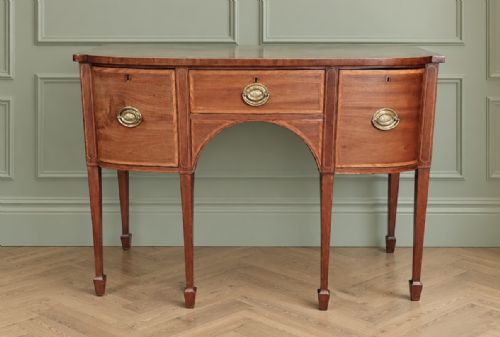
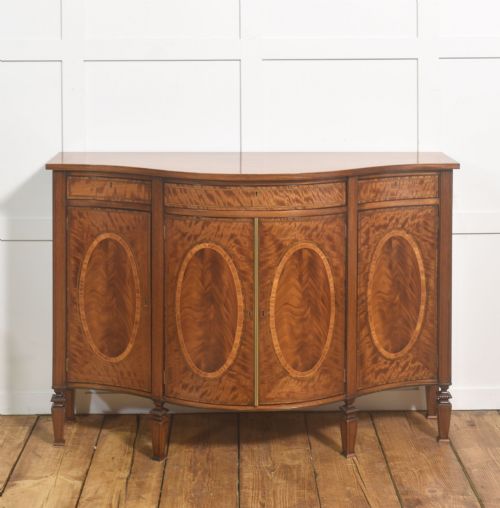
The dominant forms include serpentine shapes, bow-front designs, and breakfront profiles executed in mahogany, burr walnut, and satinwood. These furniture pieces served historically to display silver and store dining paraphernalia, functioning as both practical storage and focal architectural elements.
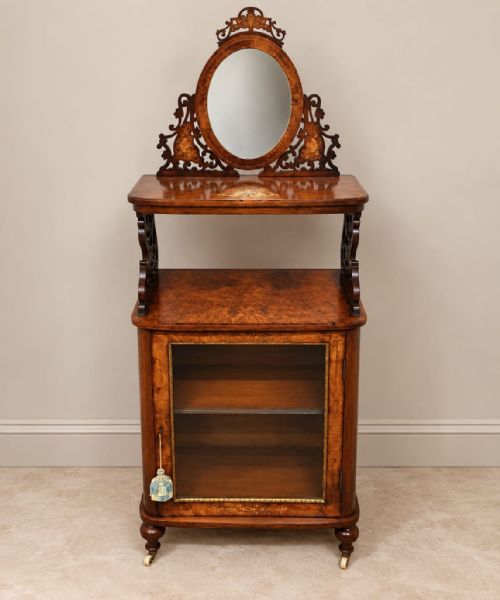
Victorian burr walnut marquetry credenzas and Georgian mahogany server cabinets represent the core of what you will meet on this page. Their scale varies from compact cabinets to large breakfront sideboards featuring multiple doors and glass panels.
Materials and construction methods
Cabinetmakers constructed these pieces primarily from solid and veneered timbers including mahogany, walnut, satinwood, and amboyna, chosen for their rich grain patterns. Flame mahogany and burr walnut provided striking surface movement for primary display areas.
Inlay work incorporated contrasting woods such as boxwood alongside detailed marquetry motifs to create geometric and floral patterns. Ormolu mounts, brass stringing, and mother of pearl details were frequently applied to enhance the decorative finish of Victorian and Regency examples.
Listings feature mahogany, satinwood, and burr walnut alongside brass and ormolu mounts across Georgian, Regency, and Victorian periods.
Distinctions in quality
The standard of timber selection and veneer matching defines the upper tier of these pieces, where highly figured grains run continuously across drawer fronts and doors. Superior examples display crisp, finely detailed boxwood inlay and marquetry without gaps or crude repairs.
Hardware integrity and internal secondary woods also separate finer pieces from ordinary production, with solid mahogany drawer linings and original brass or ormolu mounts indicating superior workshop origins.
The Inlaid Wooden Credenza Glossary
- Credenza
- A low cabinet or sideboard designed for storage and display, frequently featuring glass doors or central cupboards.
- Marquetry
- The art of applying pieces of veneer to a structure to form decorative patterns and pictorial designs.
- Serpentine
- A curved furniture front characterised by a convex centre flanked by concave ends, creating a gentle wave shape.
- Crossbanding
- A strip of veneer applied across the grain of the primary wood to form a decorative border around a panel or drawer front.
- Ormolu
- Gilded bronze used for decorative mounts and feet on high-status cabinets, particularly during the Regency and Victorian periods.
Inlaid Wooden Credenza: Frequently Asked Questions
What is an inlaid wooden credenza used for?
These cabinets function primarily as sophisticated storage units in dining rooms, living spaces, and hallways. They provide surface space for serving or display while concealing tableware or linens behind decorative doors.
Historically, they evolved from serving tables into enclosed cupboards designed to showcase the wealth of the household through fine timber and detailed craftsmanship.
How do I identify a Georgian credenza?
Georgian and George III pieces typically feature solid mahogany or flame mahogany veneers accented with subtle boxwood stringing. Their proportions are balanced and architectural, relying on natural timber grain rather than heavy applied ornamentation.
Look for hand-cut dovetails on the internal drawers and traditional cabinet construction methods that predate mass manufacturing.
What distinguishes Victorian marquetry?
Victorian examples often utilise burr walnut or ebonised woods combined with elaborate marquetry and floral inlays. They frequently incorporate glass display doors, brass mounts, and occasional ormolu detailing.
The aesthetic leans towards ornate decoration and rich surface contrast, reflecting the eclectic tastes of the nineteenth century.
How do I care for a satinwood cabinet?
Keep satinwood furniture away from direct sunlight and heat sources to prevent the light timber from darkening or the veneers from drying out. Regular dusting with a soft, dry cloth maintains the surface without the need for heavy polishes.
Maintain a stable room humidity to protect both the underlying carcase and the delicate inlay work from movement.