



Ornate Walnut Sideboard
These ornate walnut sideboard examples combine rich timber and elaborate carving, offering both grand presence and practical storage for the home.
Ornate Walnut Sideboard
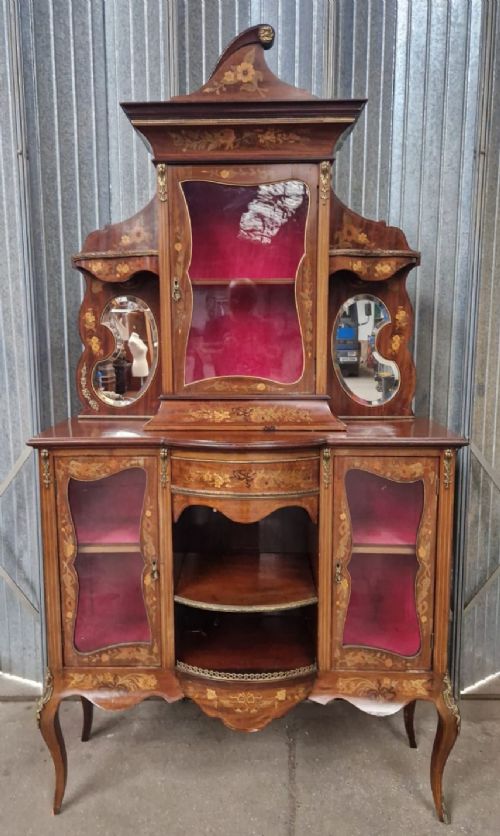
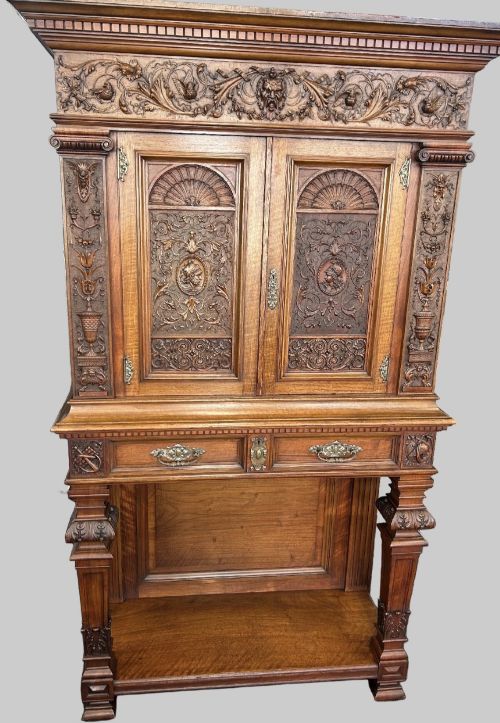
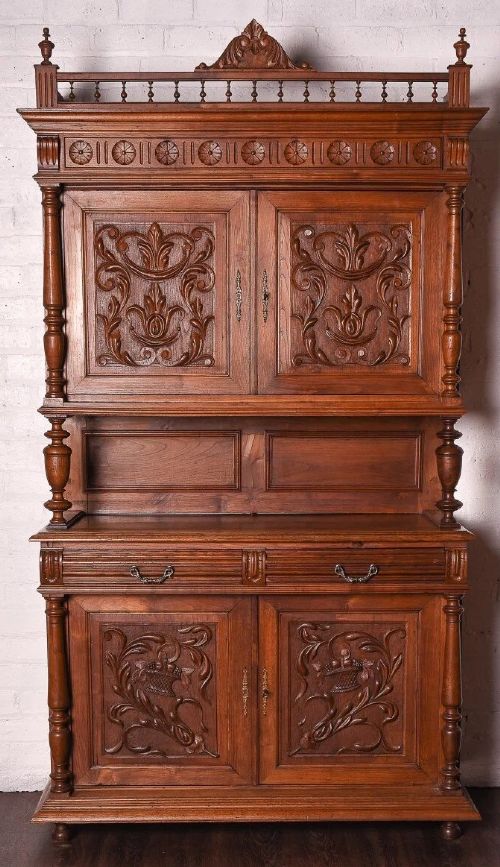
When you search for an ornate walnut sideboard, you encounter substantial storage furniture predominantly from the nineteenth century, including Victorian credenzas, mirror-back side cabinets, and Renaissance revival pieces. These forms often feature architectural carving, glazed or mirrored doors, and generous proportions designed for formal dining rooms and reception spaces.
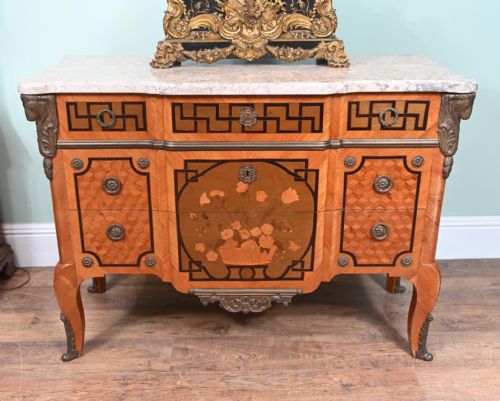
Makers and workshops of the period utilised the timber's natural grain alongside decorative techniques to create visually striking furniture. Whether you examine a French Louis XV revival commode or an English Victorian inlaid credenza, each item reflects the era's taste for heavy ornamentation and dark, figured wood.
Materials and construction methods
Cabinet makers constructed these pieces primarily using solid walnut and burr walnut veneers, selecting timber with highly figured grain for prominent exterior surfaces. They enhanced the rich brown tones of the wood by incorporating contrasting materials such as boxwood inlay, brass hardware, and gilt bronze or ormolu mounts.
Structural elements frequently include carved relief details, panelled doors, and applied mouldings executed in the Renaissance and Louis revival styles. Surface decoration also relies on intricate marquetry and parquetry patterns, sometimes paired with marble tops or mirrored backs to increase the visual complexity of the furniture.
Ornate Walnut Sideboard Retail Price Guide 2026
Typical asking prices for ornate walnut sideboard among the pieces listed under this phrase on Sellingantiques today, from the lower quarter to the upper quarter. They describe what is for sale here now, not the wider market.
Listings feature walnut furniture spanning the nineteenth and twentieth centuries, encompassing Victorian, Art Deco, and multiple revival periods.
Assessing craftsmanship and finish
Quality in these walnut pieces depends heavily on the depth and crispness of the hand carving, along with the precision of the marquetry and boxwood inlay. Superior examples display seamless veneer matching across large surfaces and tightly fitted joints that withstand structural weight.
The refinement of the cast metal mounts, the quality of the marble slabs, and the intact state of original mirror glass distinguish finer items from standard production. Interior fittings, such as specialised drawers or secretaire compartments, further indicate the level of bespoke attention given to the original commission.
Gillows
The Ornate Walnut Sideboard Glossary
- Burr walnut
- A wood veneer taken from the wart-like growths on walnut trees, prized for its swirling, highly figured grain patterns. It appears frequently on the facade of nineteenth century credenzas and cabinets.
- Ormolu
- Gilded bronze mounts applied to furniture as decorative feet, escutcheons, and frame borders. This technique adds metallic contrast to dark walnut surfaces.
- Marquetry
- The art of applying small pieces of veneer to form decorative patterns and pictorial scenes. Craftsmen utilise various coloured woods to achieve detailed floral or geometric motifs.
- Credenza
- A sideboard or cabinet form, often low in height and featuring central doors flanked by curved glass panels. Victorian versions frequently include mirrored backs and inlaid decoration.
- Secretaire drawer
- A pull-out drawer fitted with a drop-front writing surface and small internal compartments. It conceals a functional desk space within the structure of a larger cabinet.
Ornate Walnut Sideboard: Frequently Asked Questions
How do I date a walnut cabinet?
Dating relies on examining the construction methods, secondary timbers used inside, and stylistic revival cues. Nineteenth-century pieces often display machine-sawn elements alongside hand-cut joints, matching the specific revival taste of their decade.
Hardware styles, mirror bevelling, and the presence of specific inlay techniques also help narrow the manufacturing period from the early Victorian era through to later twentieth-century interpretations.
Where should I place a credenza?
These long, low cabinets suit dining rooms, grand hallways, or spacious living areas where their decorative fronts can be fully appreciated. Their substantial proportions require a wall with enough clearance to avoid crowding adjacent furniture.
Because many examples incorporate mirrors, marble tops, or delicate inlay, positioning them away from direct, harsh sunlight helps protect the walnut timber and any polished surfaces from fading.
How do I care for walnut furniture?
Maintaining walnut furniture involves keeping pieces away from direct heat sources and rapid humidity changes that can cause timber to split or veneer to lift. Dusting regularly with a soft, dry cloth prevents particle buildup on carved surfaces.
Periodic application of appropriate wax polish nourishes the wood grain and maintains the satin sheen without leaving a heavy, synthetic buildup on the antique finish.
What is the difference between a credenza and a sideboard?
While both provide storage, traditional sideboards often feature a raised back or serving surface designed strictly for dining rooms. Credenzas typically present a lower, symmetrical profile with enclosed cupboards and glass-fronted side display sections.
Nineteenth-century makers adapted these forms interchangeably depending on the revival style, sometimes adding mirror backs or marble tops to blur the distinction between dining room and drawing room furniture.