

Victorian Mirror Back Cabinet
These victorian mirror back cabinet examples bring together deep timber and reflective glass to lift a room.

What a Victorian Mirror Back Cabinet is
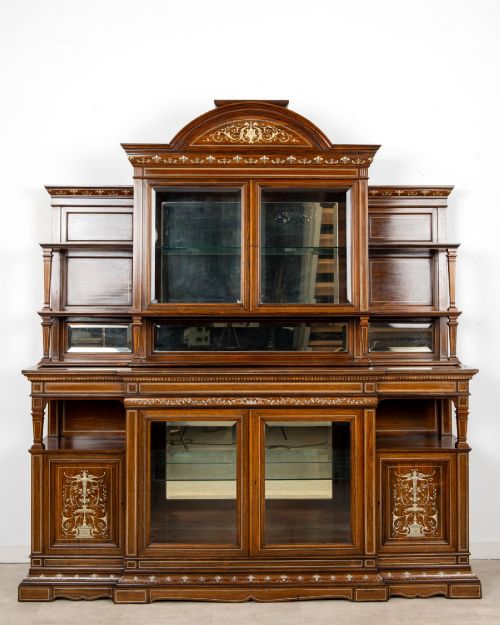
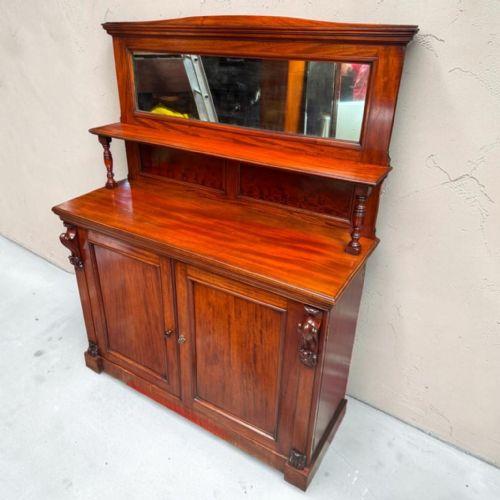
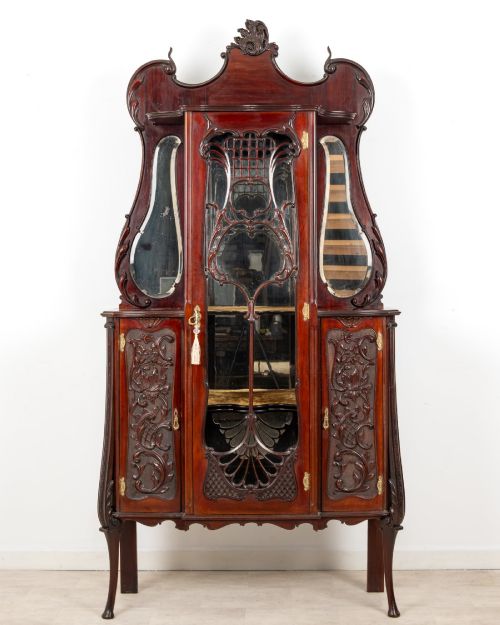
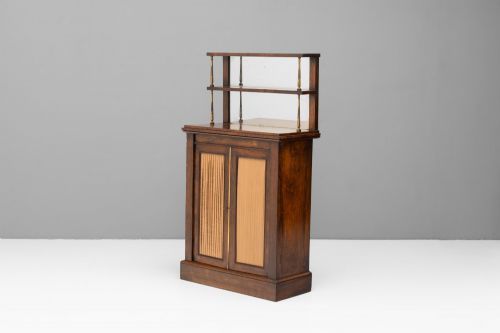
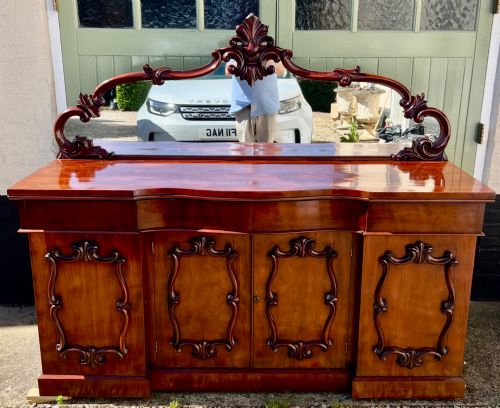
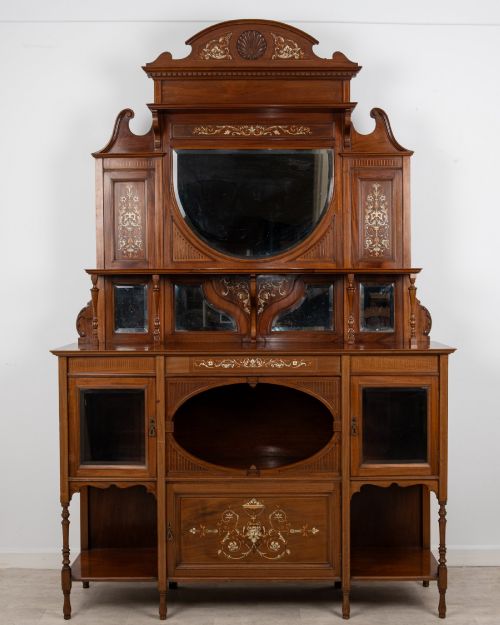
A victorian mirror back cabinet combines a low storage base with an upright timber frame holding a reflective glass panel. These pieces serve as display furniture and practical sideboards across parlours and reception rooms.
Most pieces seen here date from the Victorian era, spanning the decades between eighteen sixty and nineteen hundred. Walnut and rosewood dominate the output, alongside mahogany and oak.
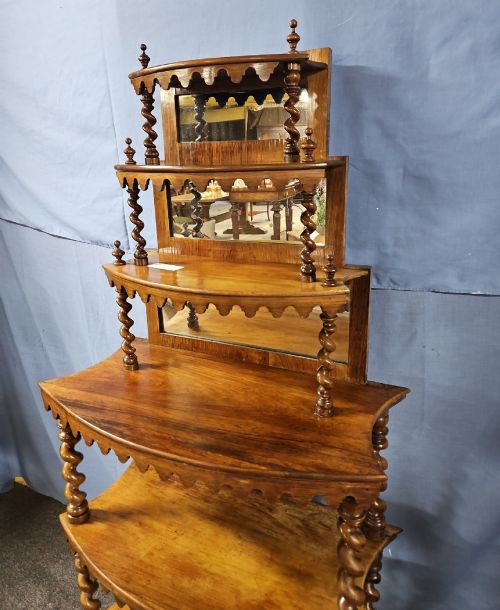
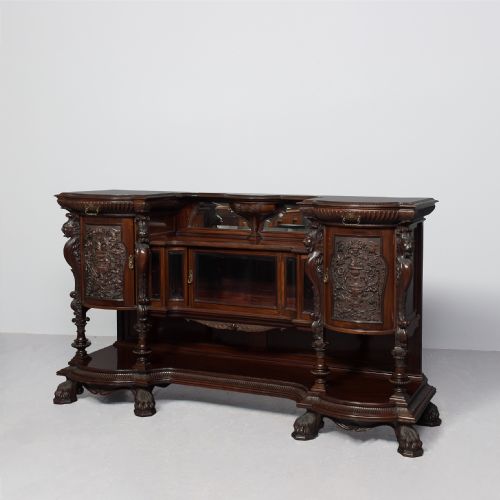
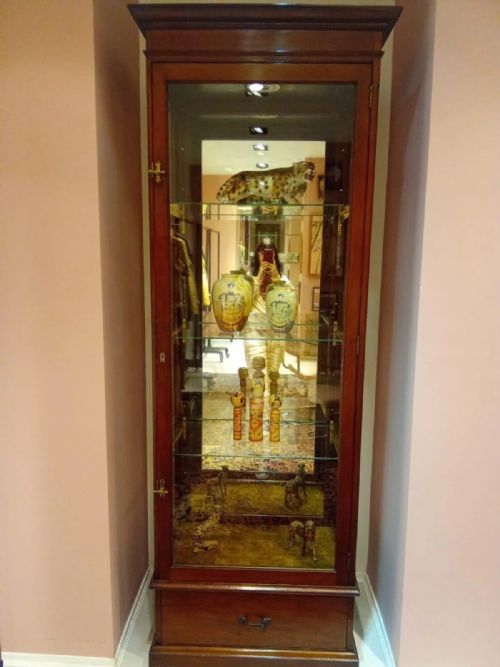
Forms vary from side cabinets and credenzas to display cabinets and dedicated music cabinets. The integration of mirror glass visually expands the interior space while showcasing decorative porcelain or glassware.
How they were made
Cabinet makers utilise dense hardwoods such as walnut, rosewood, mahogany and oak for the structural carcass. Boxwood inlay adds fine linear detail across many surfaces.
The glass elements integrate into shaped timber frames above the main storage compartments. Brass hardware provides secure hinges and locking mechanisms for doors and bottle sections.
Retail Price Guide 2026
Typical UK retail prices for victorian mirror back cabinet, calculated from the Sellingantiques database of over a million retail prices indexed since 2003. This retail price guide relies exclusively on Sellingantiques data; no external sources or auction records are used, so the figures do not describe the wider market.
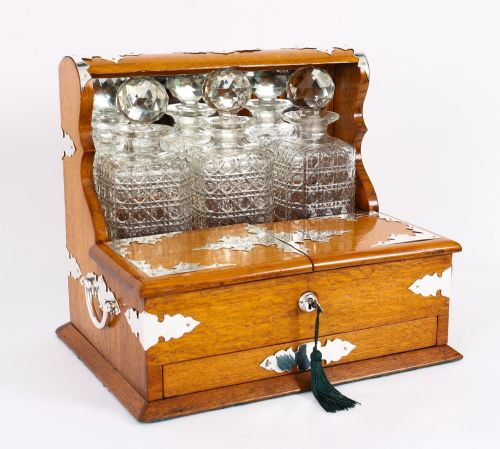
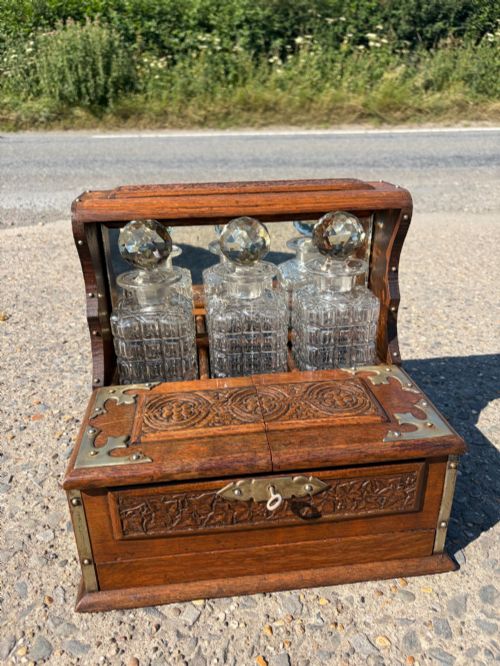
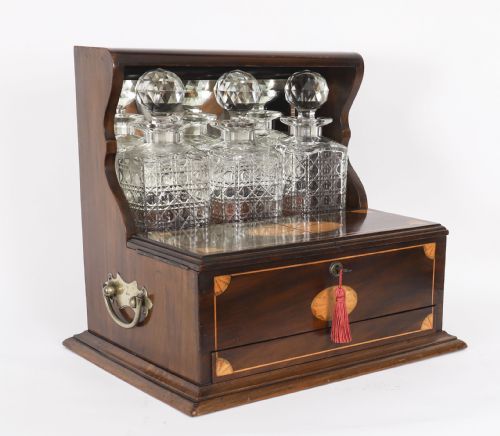
Some Victorian drinks cabinets feature locking tantalus frames that keep the gin secure from thirsty parlour staff.
What varies in quality
Superior examples display crisp marquetry and delicate boxwood inlay set into deeply polished rosewood or walnut. The depth of the timber grain and the precision of the carved ornamentation dictate the tier of craftsmanship.
The integration of the mirror back separates standard utility items from ambitious parlour showpieces. Clean bevelling on the glass and robust joinery in the underlying cabinet define the upper end of the scale.
The Victorian Mirror Back Cabinet Glossary
- Marquetry
- Decorative veneer work forming intricate patterns or pictures using various woods. Craftsmen cut thin sheets of timber to fit together precisely within the surface.
- Credenza
- A sideboard or buffet unit designed for dining rooms or parlours. These forms often feature enclosed cupboards flanked by open display shelves.
- Tantalus
- A small locking drinks cabinet holding decanters securely in a frame. The mechanism prevents access to the contents while displaying the bottles.
- Ebonisation
- A chemical or finishing process that darkens light timber to imitate ebony. This technique achieves a uniform, formal black surface.
Frequently Asked Questions
Where do people place these cabinets?
These pieces suit living rooms, dining spaces and hallways where reflective glass enhances natural light. The flat top surface also offers space for lamps or decorative objects.
Larger credenzas require substantial wall space, while music cabinets or smaller display units fit neatly into alcoves or corners.
How do I care for the timber?
Apply traditional beeswax periodically to nourish walnut, rosewood and mahogany surfaces. Avoid placement near direct heat sources to prevent timber splitting.
Clean mirror glass gently using standard glass cleaner applied to a cloth rather than sprayed directly near the wooden frame.
What periods do these cabinets span?
The pieces originate primarily from the Victorian era, spanning the mid to late nineteenth century up to around nineteen hundred. Later examples sometimes incorporate transitional Edwardian or Art Nouveau motifs.
Stylistic shifts appear in the complexity of the inlay work and the shaping of the upper mirror frames.
How do I identify a mirror back cabinet?
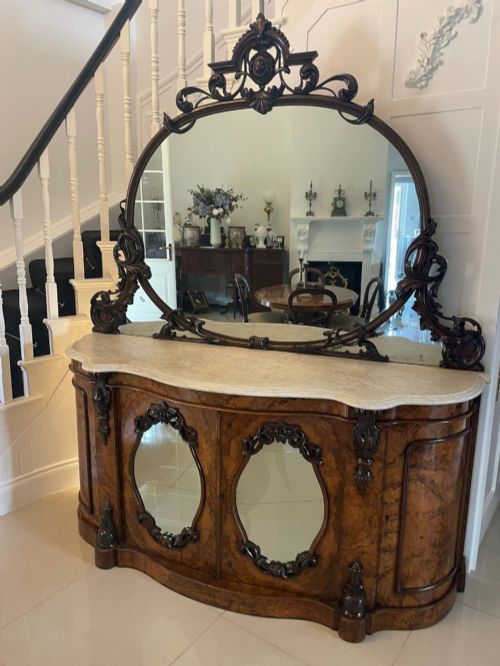
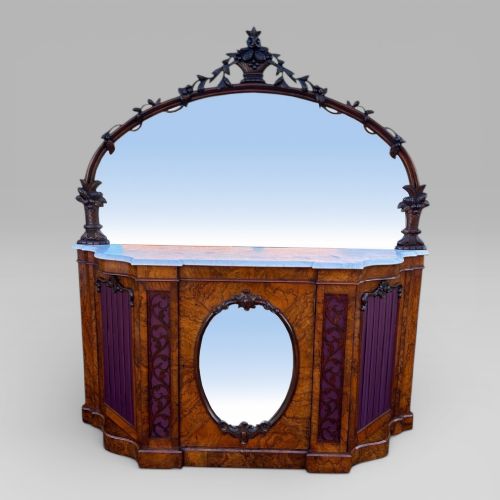
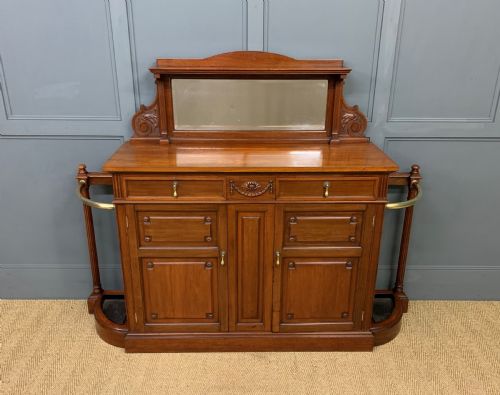
Look for an upright wooden superstructure containing an integrated mirror attached to the rear of a sideboard or credenza base. The glass panel sits above the main surface, often framed by carved pediments or shelving.
Base units typically feature panelled doors, drawers or open display compartments.