


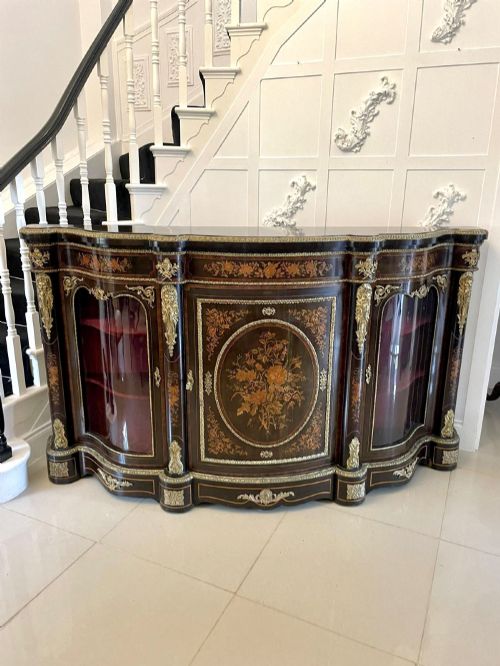
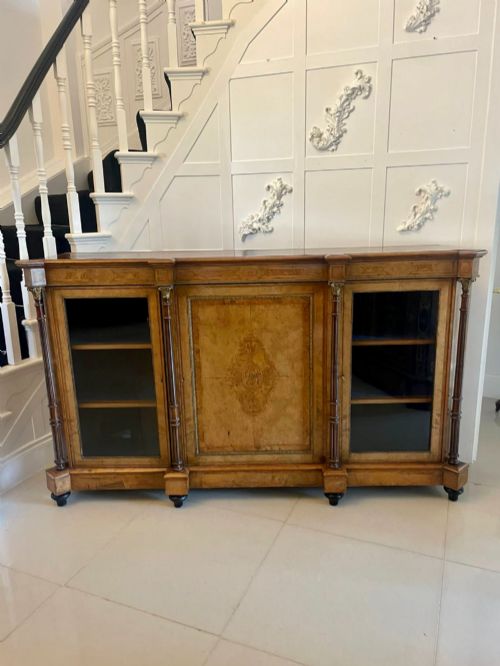
Marquetry Sideboard Cabinet
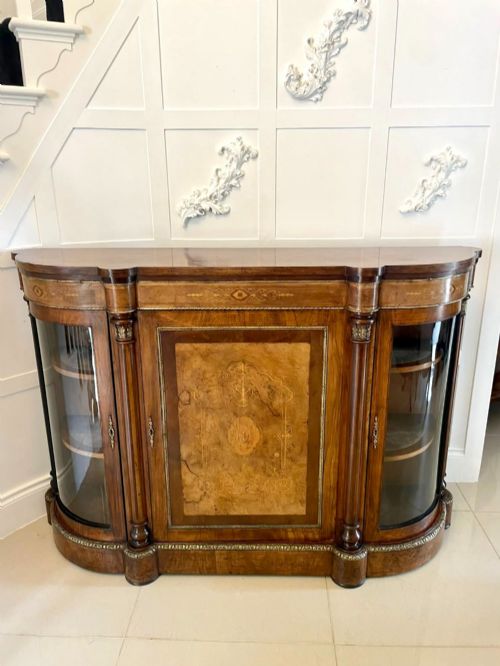
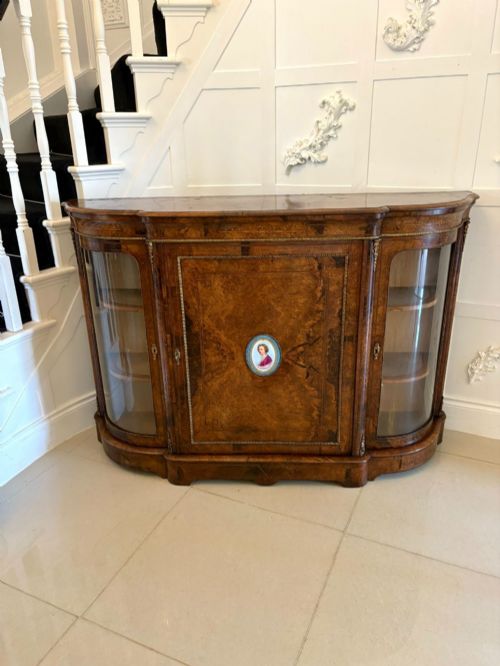
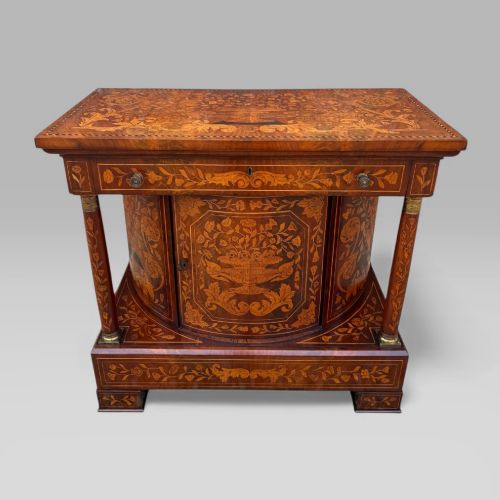
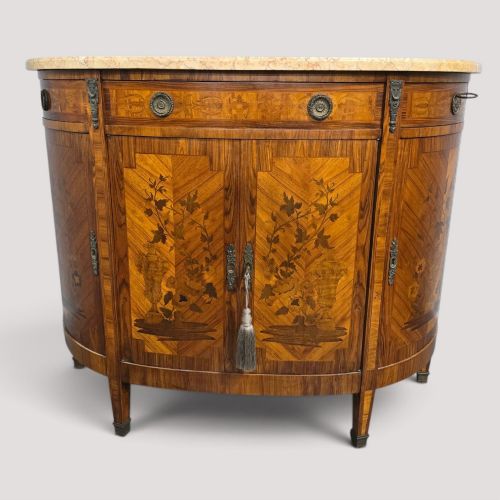
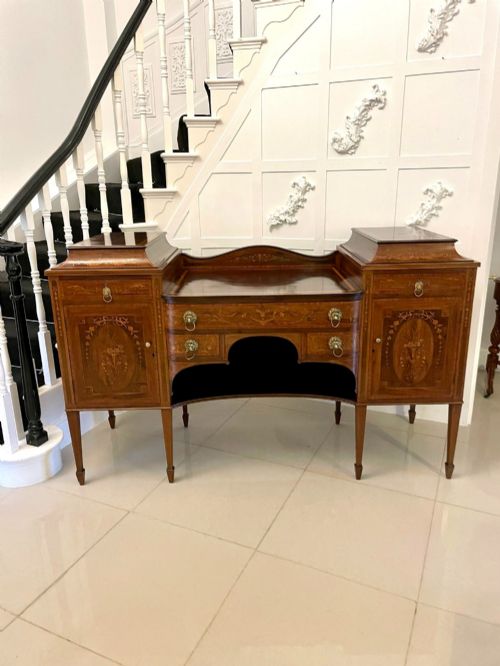
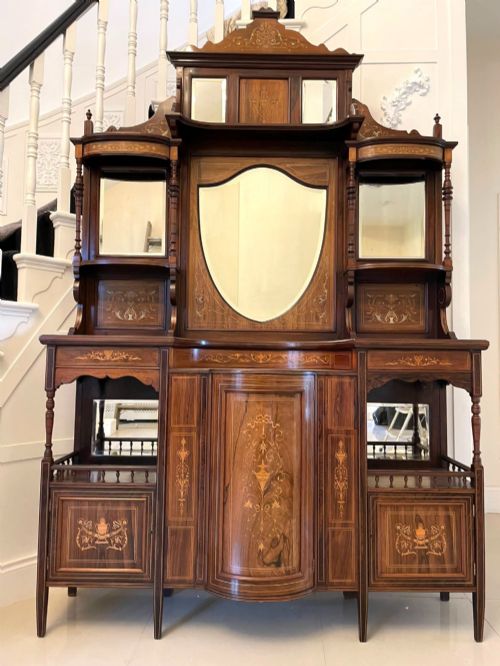
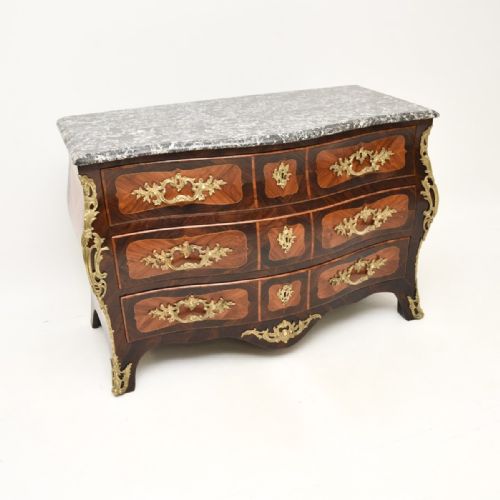
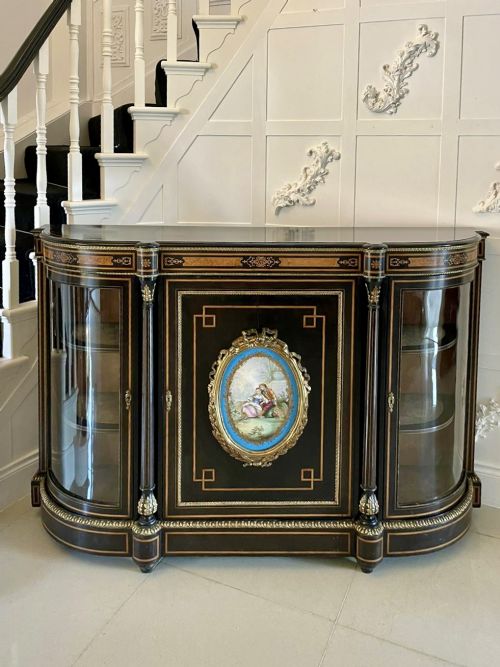
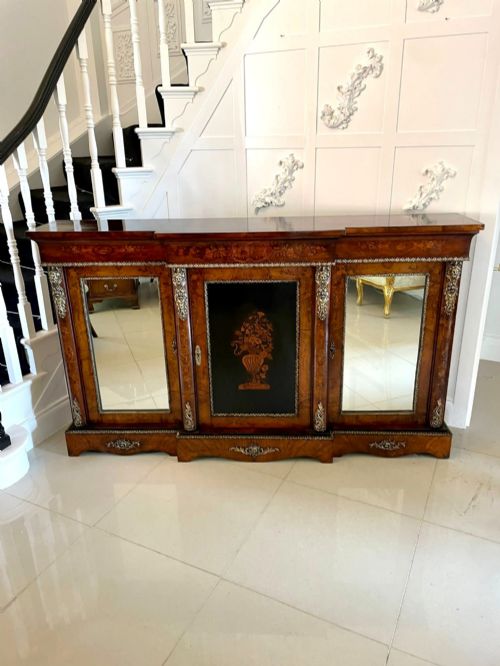
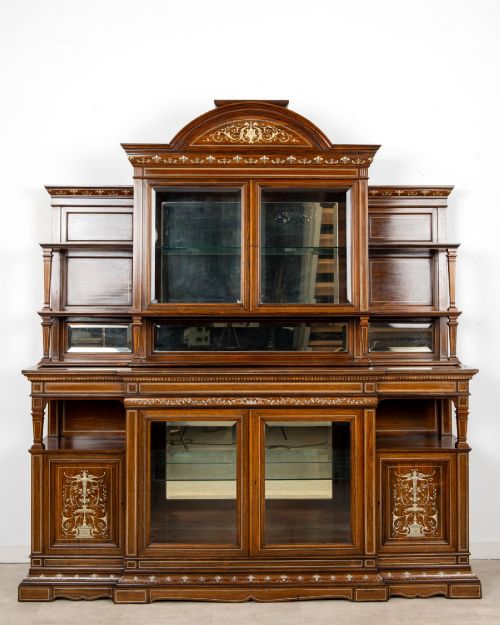
These marquetry sideboard cabinet pieces combine intricate floral woodwork with deep burr walnut, mahogany, and satinwood, offering both grand display surfaces and refined interior storage.
Marquetry Sideboard Cabinet
A marquetry sideboard cabinet serves as a grand storage piece and display surface, frequently combining the functions of a credenza, pier cabinet, or chiffonier. Buyers searching this phrase encounter low-profile credenzas and multi-door display cases that draw on Victorian, Edwardian, and continental design traditions.
The pieces appearing on this page date predominantly from the Victorian and Edwardian eras, stretching back through the nineteenth century into eighteenth-century Dutch and French traditions. Forms vary from serpentine credenzas and bow-front sideboards to upright pier cabinets and marble-topped commodes.
Makers and workshops often utilised rich timbers such as burr walnut, rosewood, and mahogany as a canvas for complex floral and geometric inlays. These items functioned historically as reception room centrepieces, designed to display porcelain while concealing dining linen or silver.
How they were made
Cabinetmakers constructed carcass frames from solid woods like mahogany or walnut before applying decorative veneers, notably burr walnut, satinwood, and amboyna. The patterned surfaces rely on meticulous marquetry, where contrasting timber slices, dyed woods, and occasional engraved metals fit together to form floral or scrollwork panels.
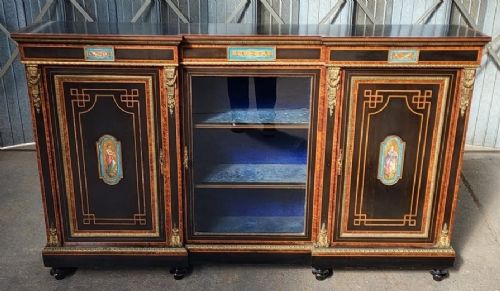
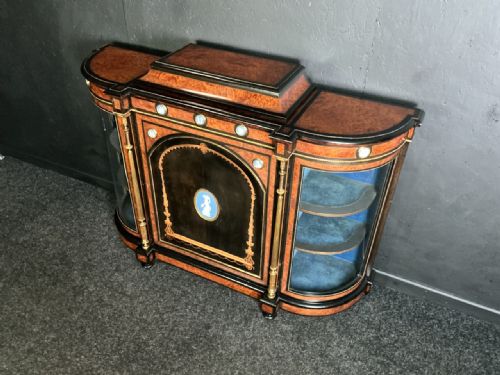
Many Victorian and continental examples incorporate cast ormolu mounts, brass banding, and glazed glass doors to frame the central storage compartments. Ebonised wood often provides a dark structural contrast to the bright fruitwood inlays and porcelain plaques set into the friezes.
Object forms include side cabinets, credenzas, pier cabinets, commodes, and bow-front sideboards with glass and ormolu details.
What varies in quality
Quality rests in the depth of the timber grain, the crispness of the marquetry cutting, and the integration of bronze or ormolu mounts. Finer pieces display dense burr walnut figures and tightly fitted floral inlays that retain their flush surface across seasonal humidity shifts.
The architecture of the cabinet itself dictates its standing, moving from simple veneered carcasses to serpentine shapes with curved glass doors and signed or stamped maker bronze work. Superior examples balance heavy cast mounts with balanced proportions and original interior shelving.
Hewetsons London·Jacques Bircklé·Collinson & Lock·Edwards & Roberts·Gillows·August Ungethüm·Maison Gagneau
The Marquetry Sideboard Cabinet Glossary
- Marquetry
- Decorative veneer work created by assembling small pieces of wood, shell, or ivory into pictorial patterns. This technique transforms a flat timber surface into a detailed floral or geometric scene.
- Credenza
- A low dining or reception room cabinet used for storage and display, lacking high legs. Victorian iterations often feature three doors and extensive ormolu mounts.
- Ormolu
- Gilded bronze used for decorative mounts, feet, and framing on furniture. It adds metallic highlights to the dark ebonised or walnut carcasses.
- Burr walnut
- Timber taken from the abnormal growth of a walnut tree, producing highly swirled and mottled grain patterns. It forms the primary veneered surface on many nineteenth-century cabinets.
- Pier cabinet
- A narrow upright display cabinet designed to stand against the wall space between windows. These pieces frequently house glass doors and delicate marquetry panels.
Marquetry Sideboard Cabinet: Frequently Asked Questions
What is the difference between a credenza and a sideboard?
A credenza traditionally sits lower to the ground with enclosed cupboards, while a sideboard often incorporates drawers and open serving surfaces designed for dining rooms.
Many nineteenth-century makers blurred these definitions, producing hybrid forms that combined glass display compartments with traditional sideboard storage.
How do I care for marquetry surfaces?
Marquetry veneer requires stable room temperatures and protection from direct sunlight to prevent timber shrinkage and glue degradation. Regular dusting with a dry lint-free cloth preserves the polish without introducing excess moisture.
Applying microcrystalline wax periodically helps nourish the old wood finishes and protects the inlaid fruitwood details from drying out.
How can I distinguish a Victorian piece from an Edwardian one?
Victorian cabinets tend to feature heavier timbers, darker burr walnut veneers, and elaborate ormolu mounts with rich floral marquetry. They often prioritize dark, imposing elegance and deep storage capacity.
Edwardian iterations frequently utilise brighter satinwood, lighter mahogany frames, and neoclassical Sheraton Revival motifs that reflect a preference for airier drawing-room aesthetics.
Where were these cabinets placed in a historic home?
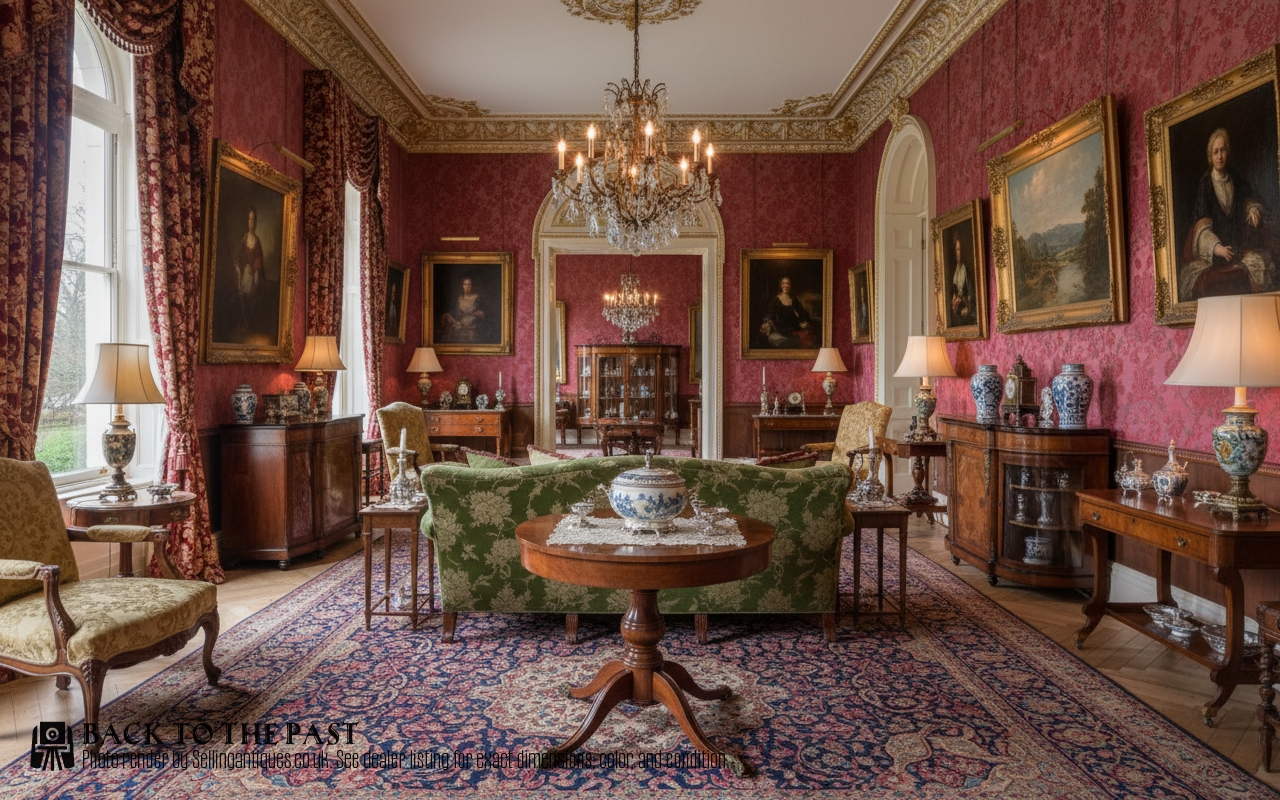
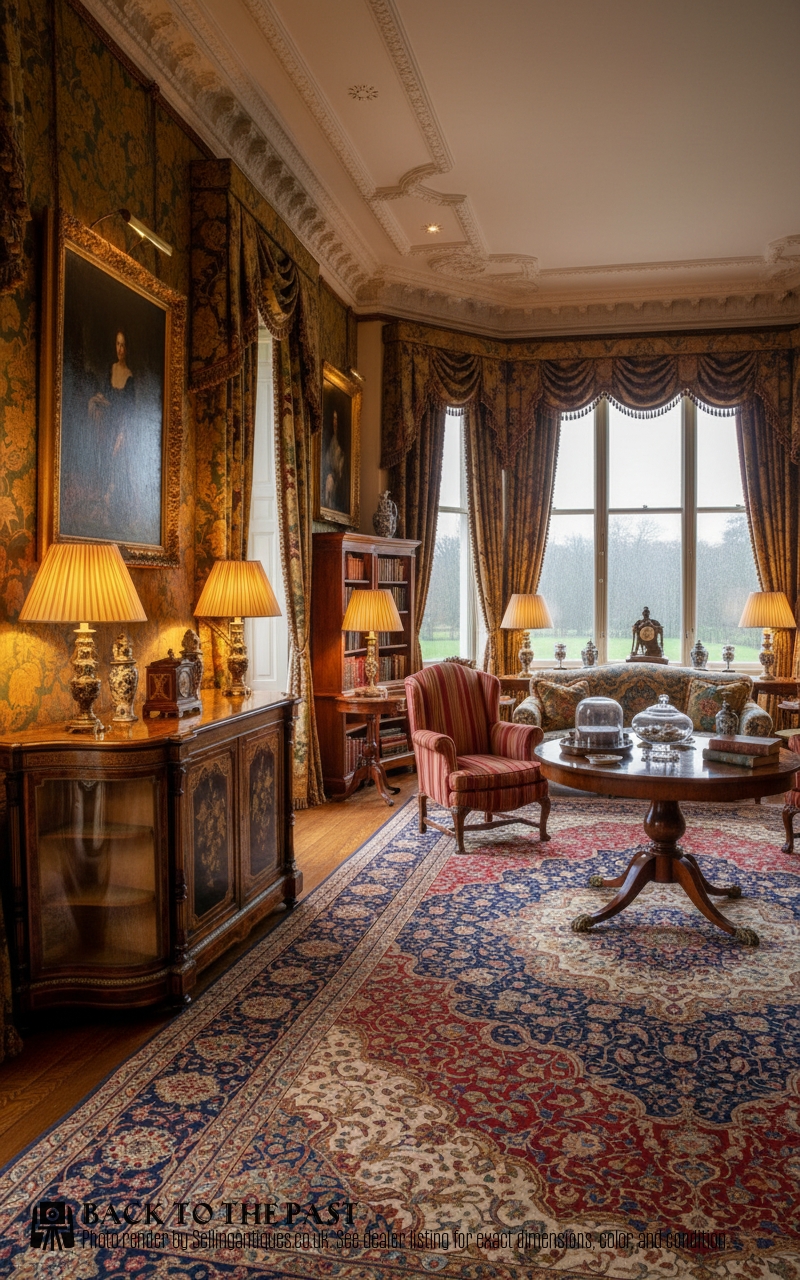
These pieces found their primary homes in formal drawing rooms, parlours, and dining spaces where hosts entertained guests. They functioned as status symbols designed to showcase valuable porcelain collections behind glass doors.
The wide top surfaces also served as serving ledges or display plateaus for decorative bronzes and candelabra.