




Victorian Curved Glass Cabinet
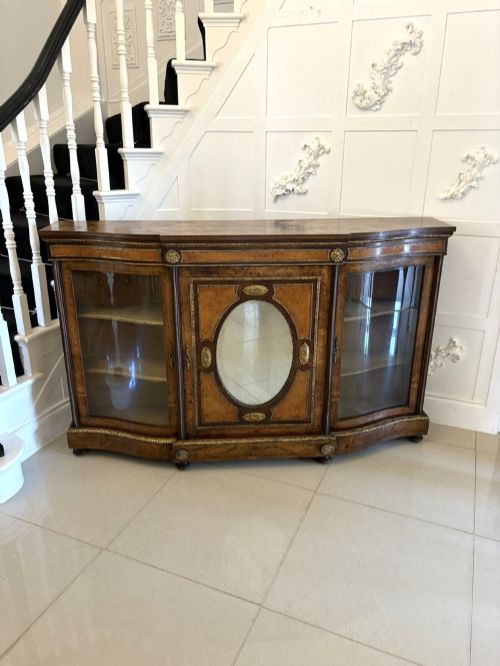
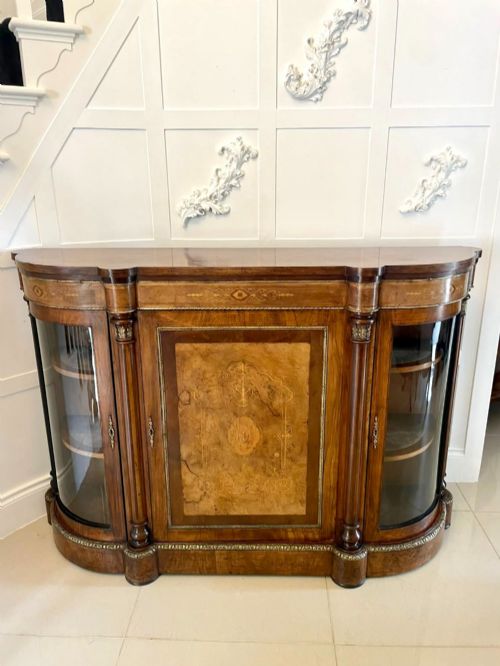
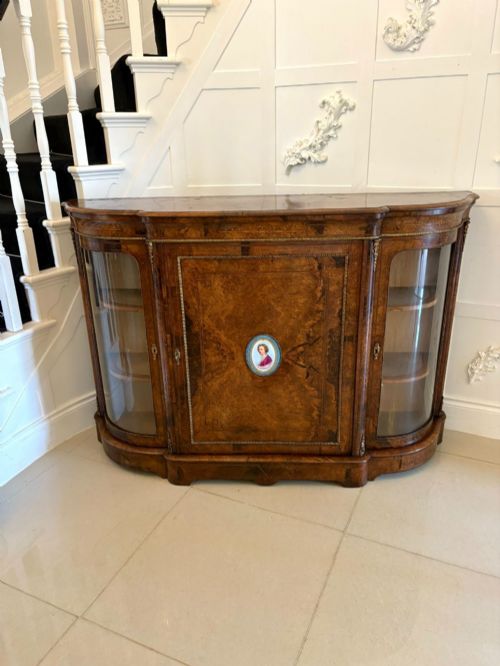
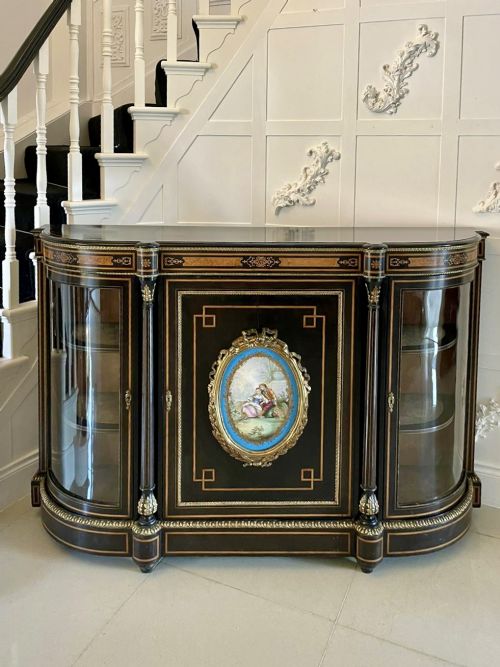
A Victorian curved glass cabinet brings the refined display craft of the nineteenth century into a room, offering polished timber and glazed panels for precious objects.
Victorian Curved Glass Cabinet
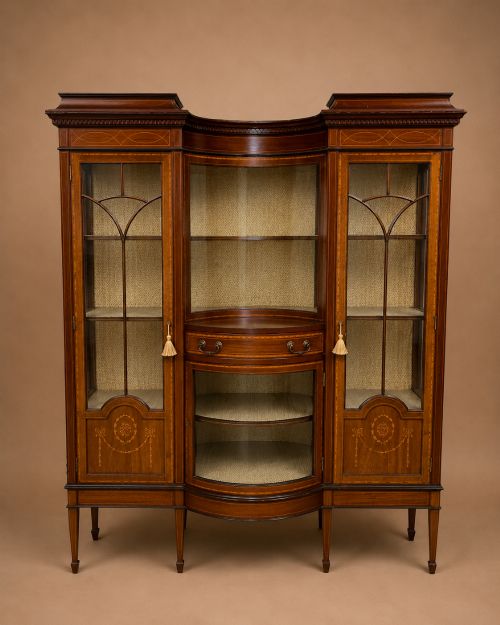
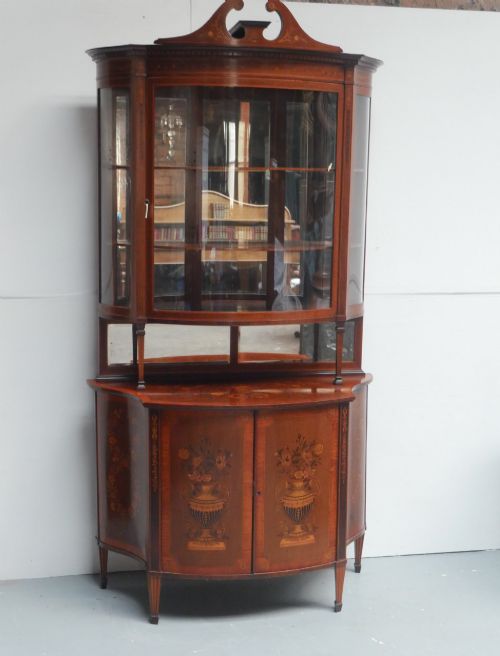
A victorian curved glass cabinet primarily takes the form of credenzas, sideboards, display cabinets, corner cabinets, and side cabinets originating from the nineteenth century. These pieces emerge across periods spanning from eighteen fifty to nineteen hundred, reflecting the diverse domestic tastes of the Victorian era.
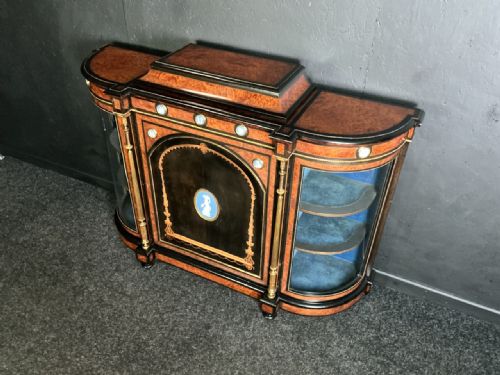
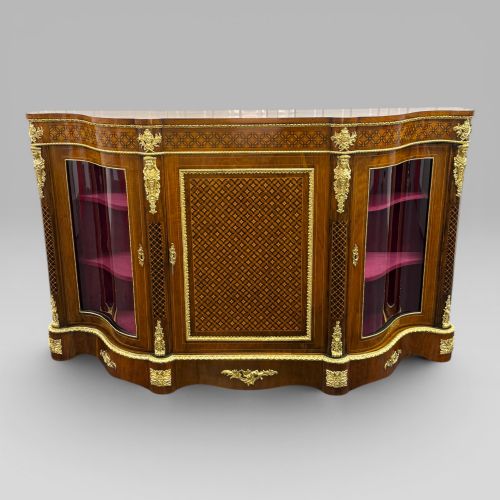
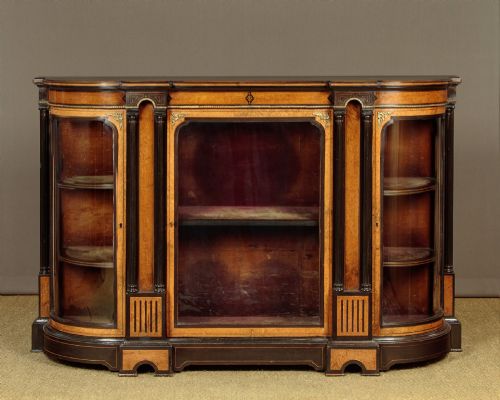
The domestic interior of this era utilised these glazed display vessels to exhibit porcelain, silver, and decorative objects behind shaped or serpentine doors. Walnut forms dominate the selection, frequently enhanced by rich veneers and detailed marquetry.
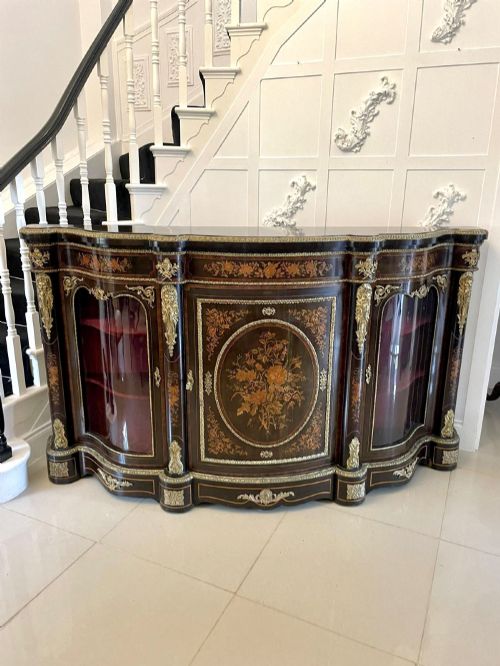
Makers and workshops responded to continental influences, producing variations that range from strict Victorian walnut constructions to French revival models and Aesthetic Movement designs. Each piece provides practical storage alongside a formal display surface suited to nineteenth century drawing rooms.
Quality and Craftsmanship
The distinction between standard commercial output and exhibition quality lies in the depth of timber selection and the precision of the marquetry. Superior examples employ deeply figured burr walnut and meticulous fruitwood or satinwood inlay that remains flush with the surrounding surface.
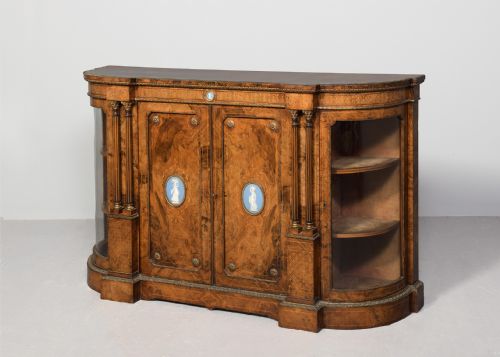
Mount quality dictates the distinction at the upper tier, where heavy, finely chased ormolu replaces simpler brass accents. The integration of hand-painted porcelain plaques and robust, smoothly operating curved glass doors further separates workshop standards.
The listings show a prevalence of burr walnut and mahogany, combined with marquetry and ormolu mounts across the Victorian period.
Edwards & Roberts·Maison Gagneau·Gillow
The Victorian Curved Glass Cabinet Glossary
- Credenza
- A low cabinet or sideboard designed for display and storage, typically featuring a central cupboard flanked by curved glazed side compartments.
- Ormolu
- Gilded bronze or brass mounted onto furniture as decorative enrichment, popular in French revival and Victorian cabinet making.
- Marquetry
- The art of applying pieces of veneer to a structure to form decorative patterns, often utilising fruitwood, boxwood, and satinwood.
- Serpentine
- A furniture front or top shaped with a central convex curve flanked by two concave curves, creating a fluid movement across the piece.
- Vitrine
- A glass-fronted cabinet or display case specifically constructed for the exhibition of small objects and porcelain.
Victorian Curved Glass Cabinet: Frequently Asked Questions
What rooms suit a Victorian cabinet?
These cabinets suit reception rooms and drawing rooms where their glazed compartments can display ceramics and small decorative objects.
Their finished backs and detailed marquetry also allow them to sit effectively as freestanding room dividers or against principal walls.
How do I identify French revival styles?
French revival pieces incorporate heavier ormolu mounts, serpentine curves, and boullework that distinguish them from plainer English Victorian designs.
Cabinet makers often combined amboyna and ebonised wood to echo the distinct aesthetic of Napoleon III interiors.
What timber veneers were used?
Burr walnut forms the primary timber across the majority of these pieces, providing a heavily figured and rich brown surface.
Cabinet makers also utilised amboyna, kingwood, burr yew, and mahogany, often enhanced with satinwood and boxwood inlay.
Where were porcelain plaques placed?
Sevres style porcelain plaques were set into the frieze or doors of the cabinet, framed directly by ormolu mounts.
This technique added colour and a Continental aesthetic to the polished walnut ground of the furniture.