
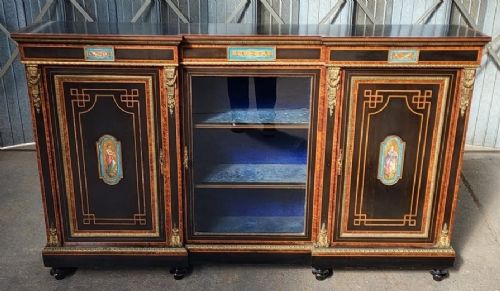
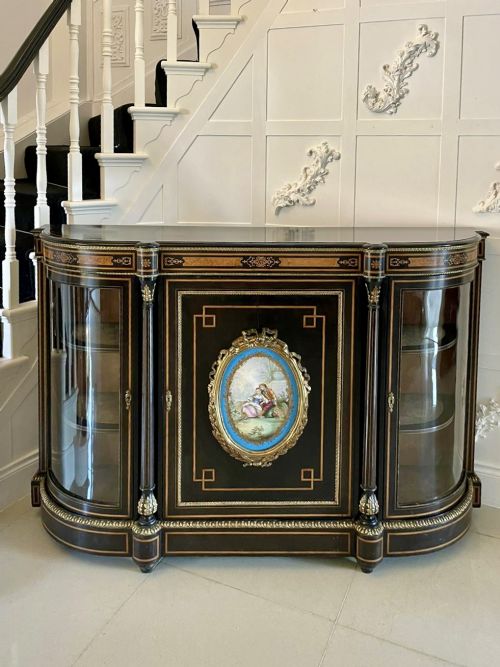
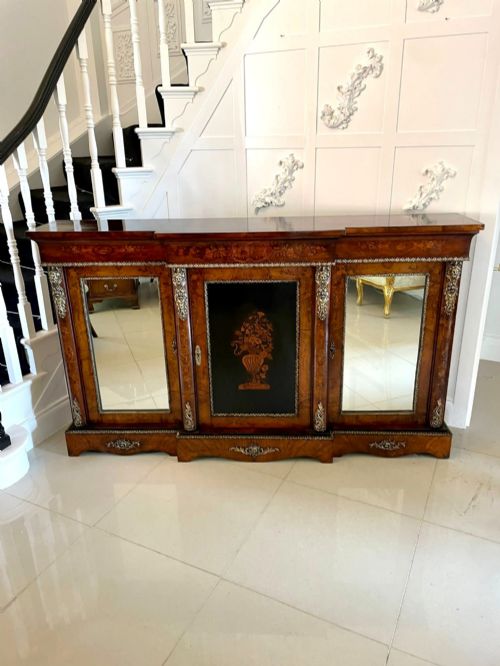
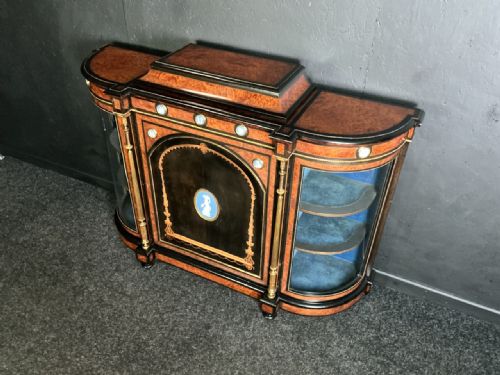


Ebonised Marquetry Sideboard
An ebonised marquetry sideboard brings dark timber and intricate floral or tortoiseshell inlay together for grand nineteenth-century reception rooms.
Ebonised Marquetry Sideboard
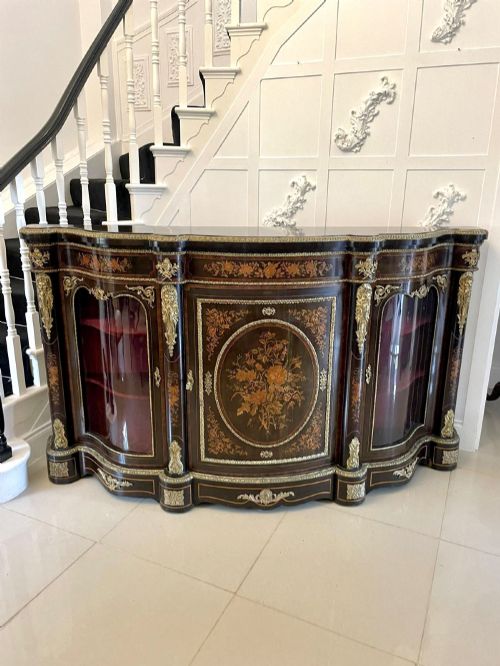
An ebonised marquetry sideboard combines dark, blackened wood surfaces with contrasting botanical or geometric wood and brass inlays. Buyers seeking this form will frequently encounter nineteenth-century Victorian and French Napoleon III credenzas, side cabinets, and breakfront display pieces.
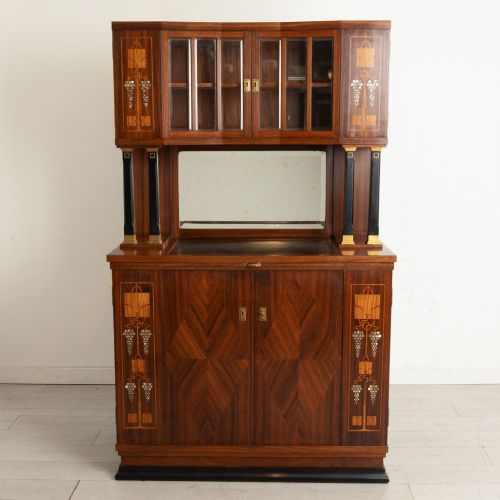
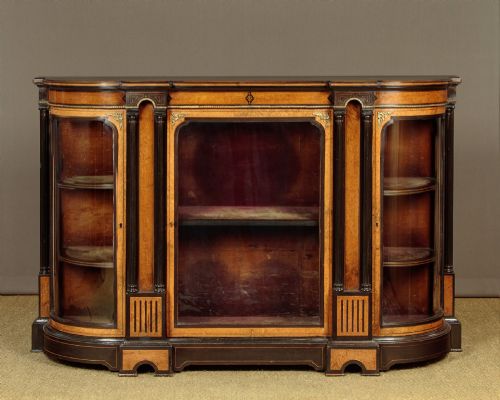
The objects span varied configurations, from serpentine-fronted glazed cabinets to tiered credenzas with mirrored backs and marble tops. These low-profile storage pieces served historically to display porcelain and silver in formal dining and drawing rooms.
Materials and construction methods
Cabinet makers utilised dense hardwoods, applying ebonising treatments to mimic expensive ebony alongside contrasting veneers of burr walnut, amboyna, and tortoiseshell. Intricate marquetry panels were hand-cut from thin sheets of wood, bone, or brass and set flush into the primary timber surfaces.
Gilt bronze and ormolu mounts, cast and chased with foliage or scrolls, were screwed to corners, framing borders, and feet to accentuate the architectural lines. Glass panels were frequently curved to fit bow-end doors, while marble slabs provided durable tops for side cabinets and commodes.
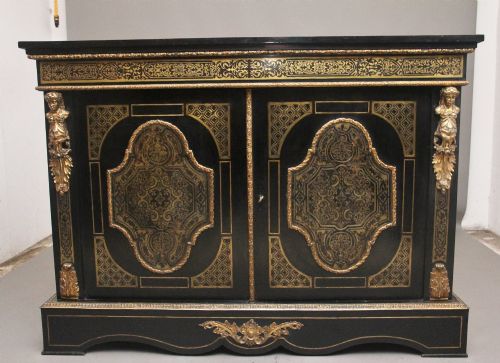
A tiny child's ebonised boulle credenza proves that miniature grandeur was entirely acceptable in the nineteenth-century parlour.
Judging the standard of execution
Quality rests in the precision of the marquetry and the crispness of the cast ormolu mounts rather than the mere presence of decoration. Superior examples display seamless junctions where contrasting veneers meet, with minimal filler and sharp, unblurred engraving on the brasswork.
The structural integrity of the carcase, the fluidity of serpentine or bow-front shaping, and the depth of the ebonised finish separate standard production pieces from master-workshop creations. Subtleties in timber selection, such as highly figured burr walnut panels framed by ebony borders, elevate individual pieces.
August Ungethüm·Gillow
The Ebonised Marquetry Sideboard Glossary
- Ebonised
- Wood treated with stain, dye, or paint to imitate the dark, dense grain of genuine ebony. This finish was widely favored during the Victorian and Napoleon III periods for dramatic contrast.
- Marquetry
- A decorative technique where thin veneers of wood, metal, or shell are assembled into pictorial or geometric patterns. These designs are glued onto the carcase of a cabinet.
- Ormolu
- Gilt bronze mounts used as decorative enrichment on furniture. High-quality mounts feature hand-chased detailing to sharpen the cast motifs.
- Boulle
- A style of marquetry utilising tortoiseshell and brass inlay developed in France. It creates a rich, reflective surface pattern across cabinet doors and panels.
- Credenza
- A low dining or reception room cabinet used for display and storage. Nineteenth-century versions often feature central glazed doors flanked by curved side cupboards.
Ebonised Marquetry Sideboard: Frequently Asked Questions
Where were these cabinets placed originally?
These low cabinets stood against principal dining or drawing room walls where they functioned as serving surfaces and display spaces. Their finished backs and mirrored structures allowed them to reflect light and decorative objects across large reception rooms.
Today, they suit similar principal living spaces, functioning as credenzas or sideboards beneath artwork or mirrors while providing enclosed shelving for glassware or books.
How do I care for ebonised wood?
Ebonised surfaces require gentle dusting with a dry, soft cloth to prevent abrasion of the dark finish. Avoid modern silicone polishes and excessive moisture, which can dull the lustre and affect vulnerable veneer joints.
Maintaining stable room humidity protects the delicate brass and wood marquetry from lifting or shrinking away from the primary timber carcase.
How can I distinguish French Napoleon III from Victorian pieces?
French Napoleon III examples often incorporate heavier use of Boulle brass and tortoiseshell inlay alongside extravagant ormolu mounts. Victorian pieces frequently favour burr walnut veneers, floral marquetry, and architectural breakfront or serpentine lines.
Both styles emerged concurrently during the mid-nineteenth century, sharing construction techniques while reflecting distinct continental aesthetic preferences.