



Gilt Bronze Credenza
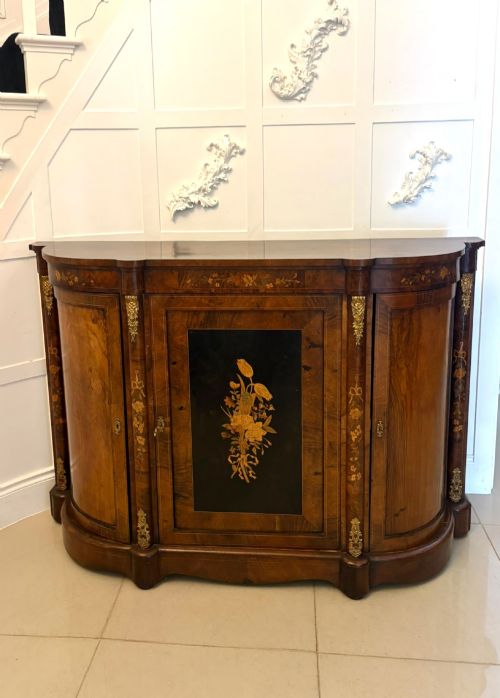
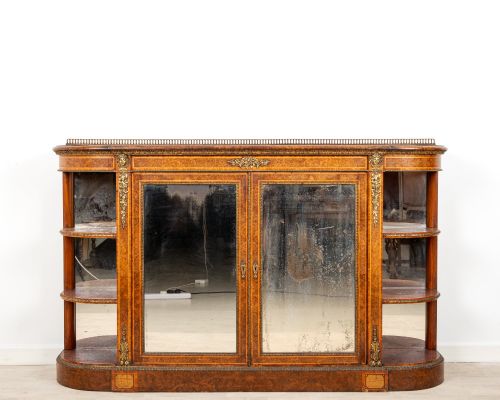
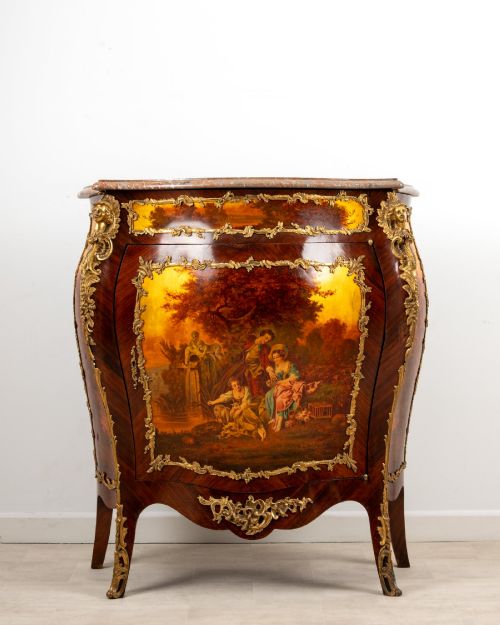
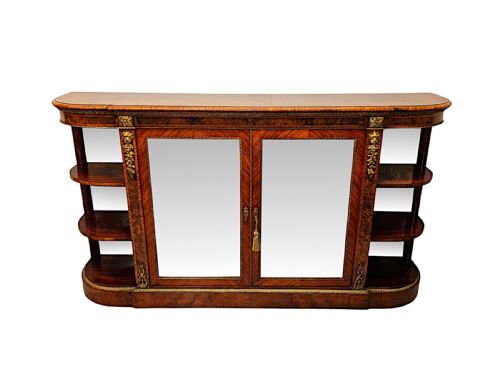
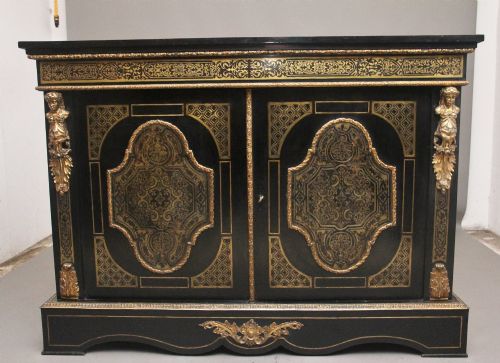
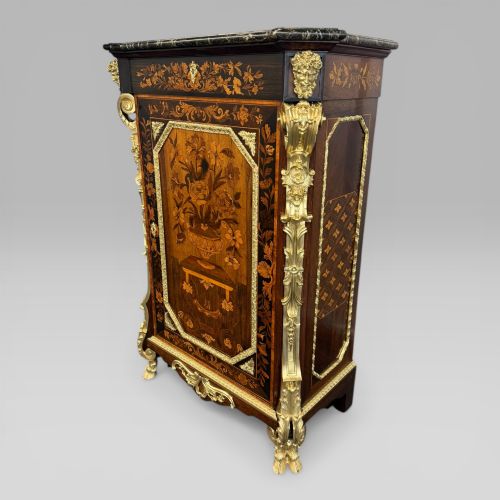
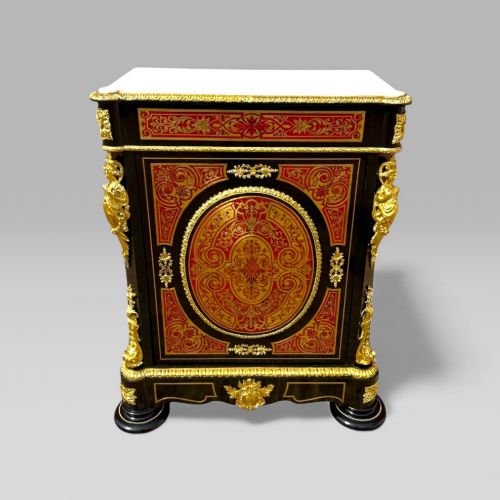
These gilt bronze credenza pieces combine rich timbers and metallic mounts to bring striking presence into a room.
What a gilt bronze credenza is
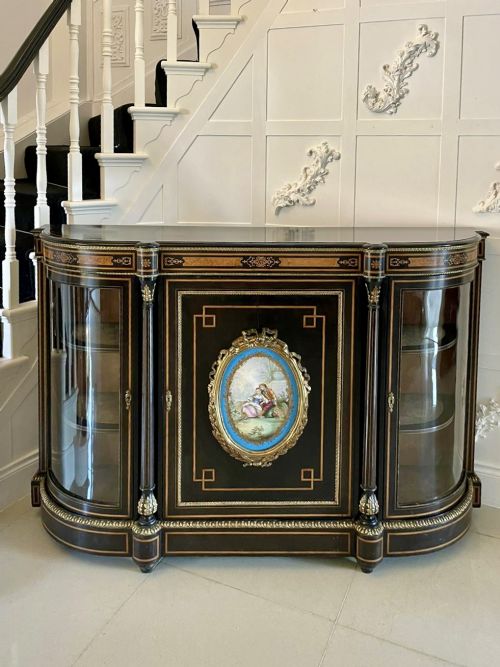
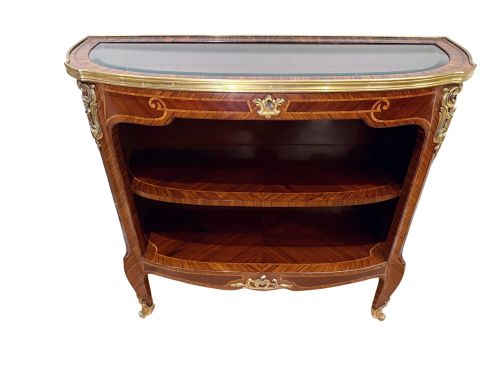
When you search for a gilt bronze credenza, you are looking at substantial display furniture designed to anchor a formal interior. These pieces function as side cabinets, sideboards, and pier cabinets, offering surface display space alongside enclosed storage.
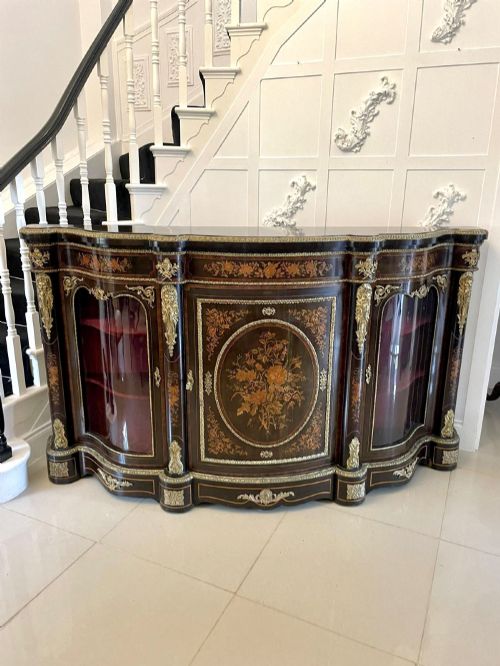
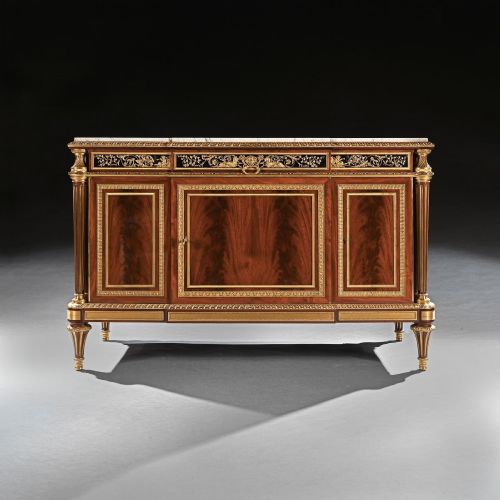
The versions you are most likely to meet on this page hail from the nineteenth century, including Victorian examples and French Revival pieces. They draw on Napoleon III, Louis XVI Revival, and French Neoclassical aesthetics to create a dramatic focal point.
Materials and construction
Cabinet makers utilised burr walnut, amboyna wood, ebonised wood, and ebony as primary timbers for these carcasses. Surfaces frequently showcase floral marquetry, satinwood inlay, and intricate pieta dura work.
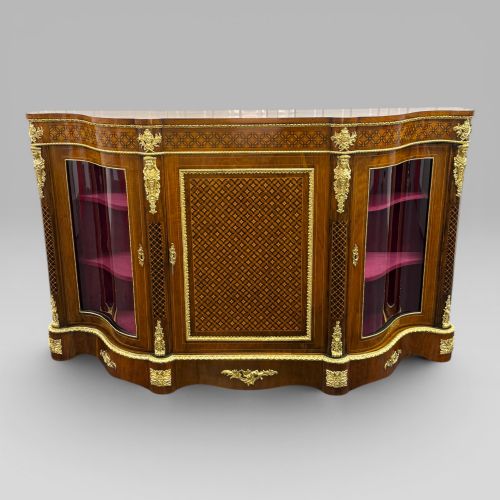
Ormolu and gilt bronze mounts accent the structure, paired with glass panels and porcelain plaques. Marble often tops the cabinets, adding weight and a cool tactile contrast to the warm timber.
Retail Price Guide 2026
Typical UK retail prices for gilt bronze credenza, calculated from the Sellingantiques database of over a million retail prices indexed since 2003. This retail price guide relies exclusively on Sellingantiques data; no external sources or auction records are used, so the figures do not describe the wider market.
Some credenzas hide delicate velvet-lined shelves behind heavy bronze mounts, designed to pamper delicate porcelain collections.
Measures of quality
The distinction between standard examples and top-tier items rests on the ambition of the materials and the crispness of the decoration. Pieces labelled as exhibition quality or featuring specific maker attributions display a higher fidelity in their marquetry and metalwork.
The integration of porcelain plaques and pieta dura panels elevates a piece above simpler timber carcases. Richer secondary woods, such as amboyna and burr walnut, signal superior craftsmanship compared to plain ebonised surfaces.
Edward Holmes Baldock
The Gilt Bronze Credenza Glossary
- Ormolu
- Gilded bronze applied as mounts and decorative highlights. This technique gives metallic ornamentation a bright, uniform golden lustre.
- Marquetry
- Fitted wood veneers arranged in pictorial or floral patterns across the surface. Artisans use contrasting natural timbers to achieve tonal depth.
- Pieta dura
- Hardstone inlay work utilising polished slices of coloured stones like jasper and marble. It creates intricate, permanent mosaic imagery.
- Pier cabinet
- A narrow display cabinet designed to stand against the wall space between windows. These pieces often feature glass doors for exhibiting collections.
Frequently Asked Questions
What is a gilt bronze credenza used for?
These cabinets serve as principal display and storage furniture in grand reception rooms. Their glass doors and surface tops allow for the presentation of decorative objects and porcelain.
Historically, they also functioned as sideboards for serving food or displaying silver during formal dining occasions.
How do I identify a Victorian credenza?
Victorian examples often incorporate dark timbers like burr walnut alongside elaborate floral marquetry and gilt bronze mounts. You will frequently find them influenced by French revival styles.
Look for architectural proportions, marble tops, and detailed inlay work that typifies mid-nineteenth-century British and French cabinet making.
Where should I place a side cabinet?
These pieces suit principal living spaces or formal dining rooms where their substantial proportions can be appreciated. They require a clear wall space, such as a pier or central partition, to balance their visual weight.
Keep them away from direct sunlight to protect sensitive timber veneers and polished marble surfaces.